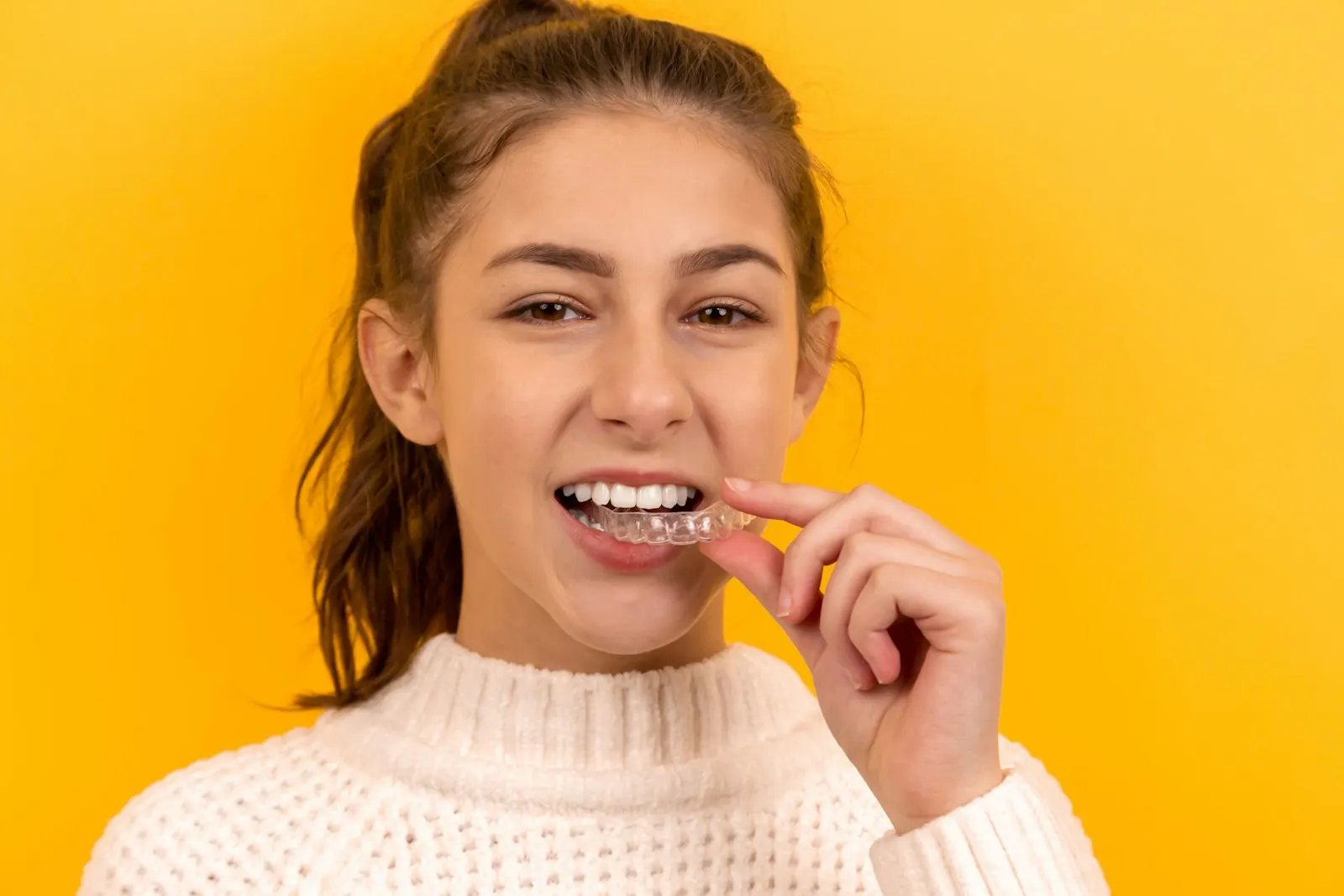
E.max laminate veneers, 0.3-0.7 mm thin, designed from a mock-up you approve and hand-finished to reflect light like enamel. One trip to Istanbul of about 5-7 days.
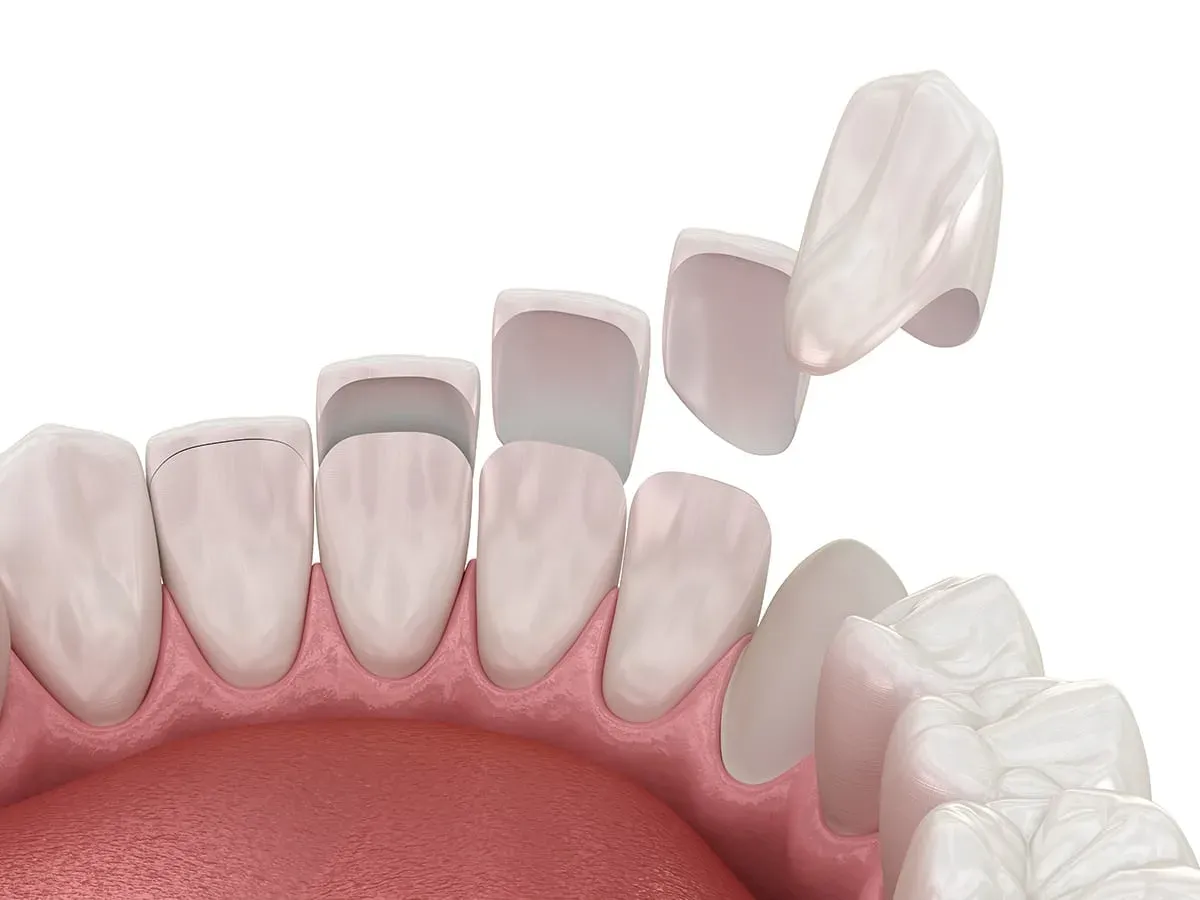
Lithium disilicate (E.max) 0.3-0.7 mm thin, bonded to enamel
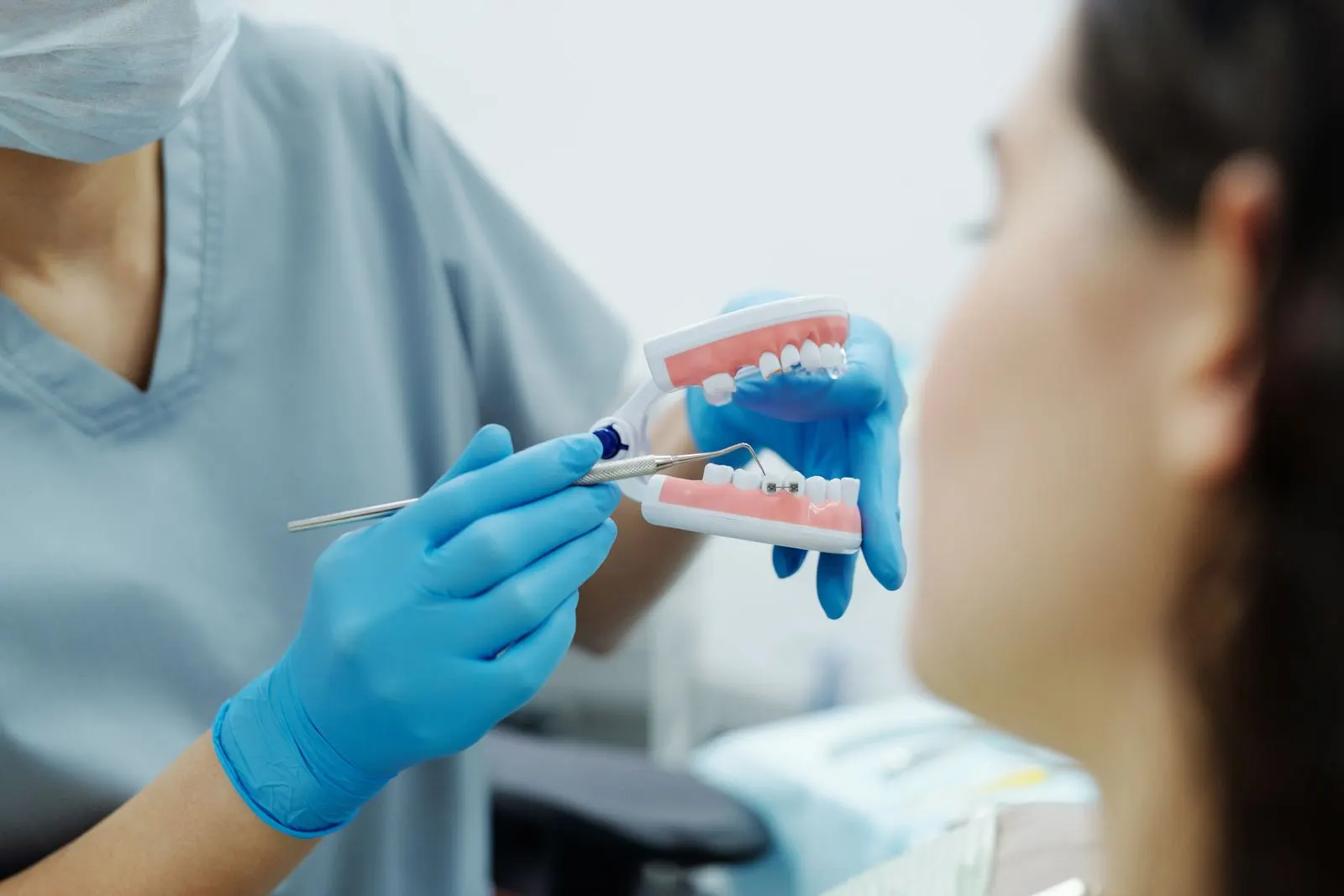
Mock-up and try-in before anything is final
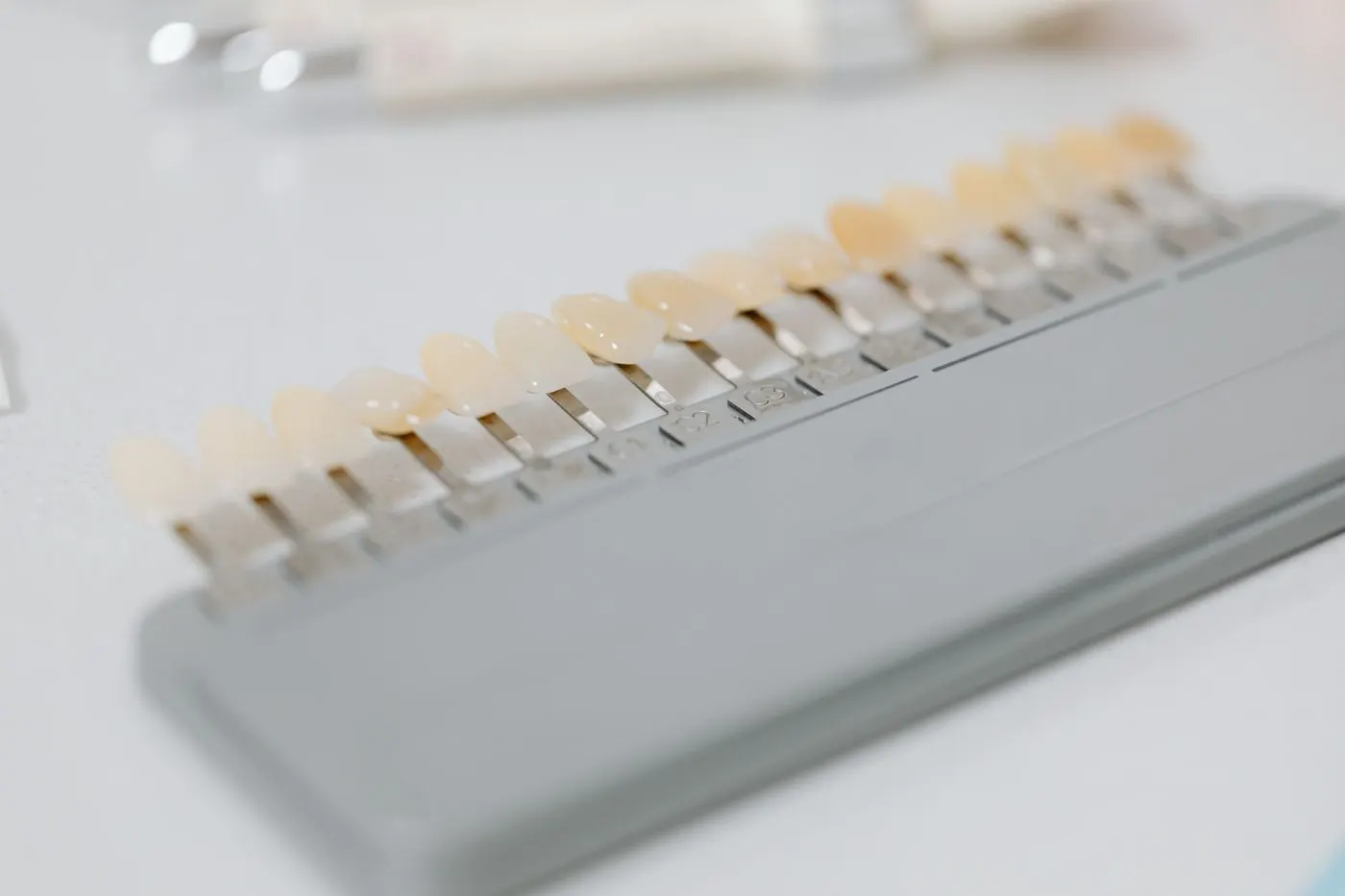
Shade with natural translucency, not one flat white
“I was really nervous at first, but the dentists were honestly lovely.”Serra · Trustpilot
E.max veneers in Turkey are porcelain (laminate) veneers 0.3 to 0.7 mm thin, designed from a mock-up you approve and hand-finished to reflect light like enamel.
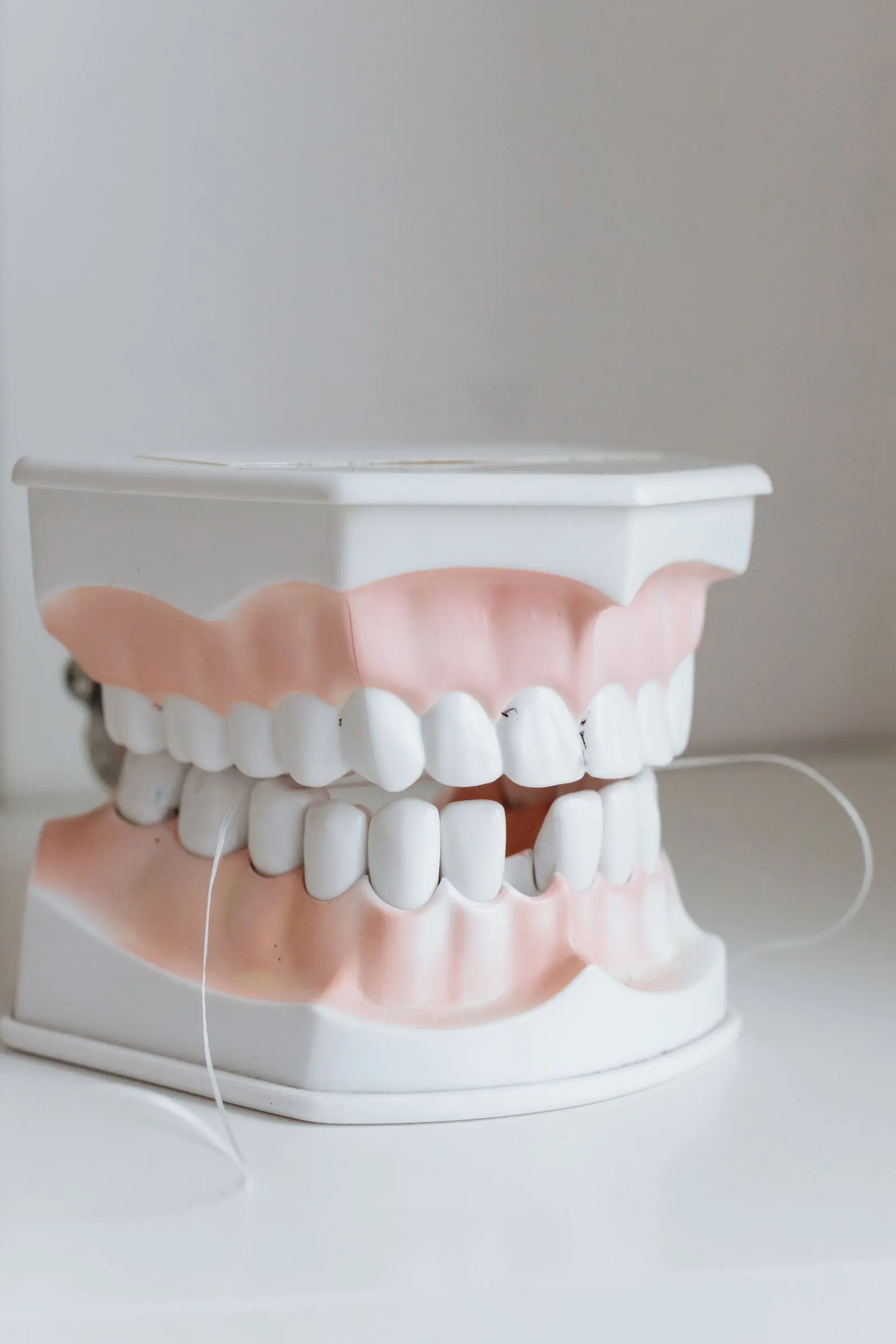
Porcelain veneers in Turkey are thin ceramic shells, usually 0.3-0.7 mm, made in a dental laboratory and bonded to the front of your teeth. At Doctor Turka we make them mainly from E.max lithium disilicate by Ivoclar, the same glass ceramic used by cosmetic dentists across Western Europe. You will also see them called laminate veneers or porcelain laminates; the name describes the thin shell, E.max describes the material.
Porcelain is the choice when you want a result that keeps its colour and shine for many years. Glazed ceramic does not absorb coffee, tea or red wine, it lets light pass into the tooth the way enamel does, and bonded to enamel it is strong enough for normal biting. The price of that durability is a small amount of preparation on most teeth, which makes the treatment largely irreversible.
They suit adults with healthy teeth and gums who want to change colour and shape together: dark or patchy teeth, worn or chipped edges, small gaps, uneven lengths or teeth that are slightly out of line. Chipped front teeth were the starting point in Ben Affleck's veneers and crowns story. They are not suitable while gum disease or decay is active, for heavily crowded teeth, or for teeth that are mostly filling, where an E.max crown or aligners first may be the better route.
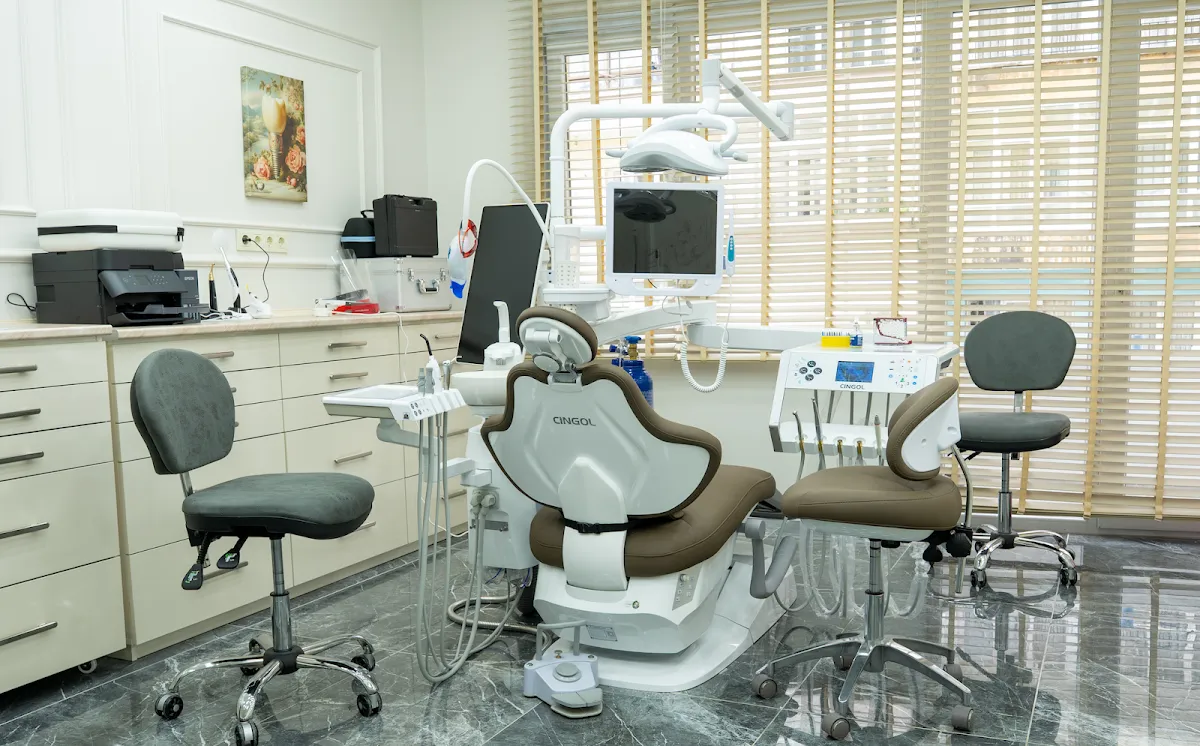
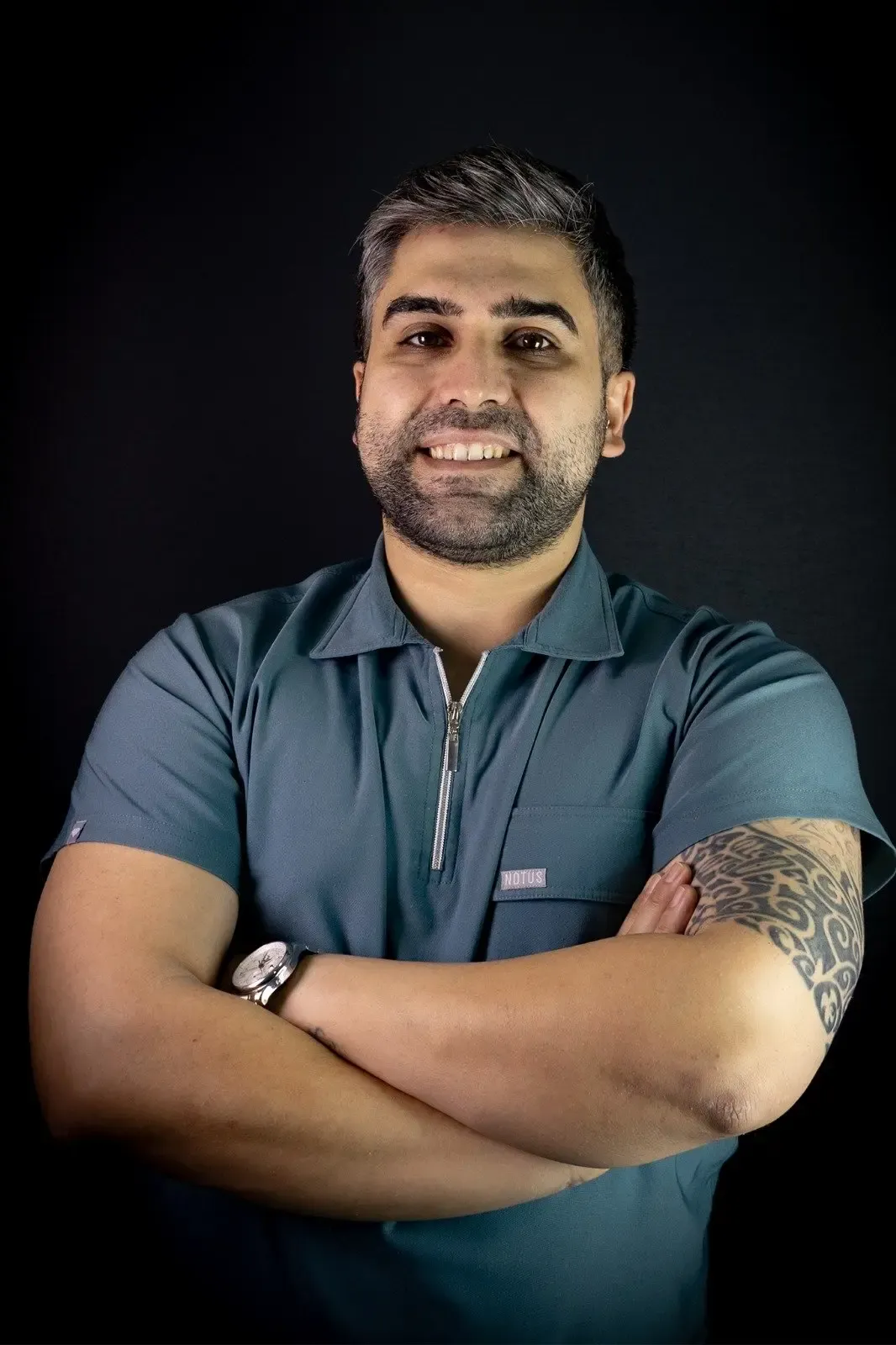
Your smile is planned by Dr. Taha G or Dr. Hatice G at our clinic in Ataköy, Istanbul, previewed in your mouth as a mock-up, and completed in one trip of about 5-7 days. Packages include hotel nights and VIP airport-hotel-clinic transfers, and a coordinator who speaks English and German is with you throughout.
In the press
As featured on AP News, Google News and 36 TV news websites
“I had my implants and zirconia crowns done here and I’m sooo happy with my new teeth!! 🥹 I was really nervous at first, but the dentists were honestly lovely. They explained everything and made me feel so comfortable. Everyone looked after me from start to finish, and my teeth look so natural. I can’t stop smiling now haha. Thank you all so much!! 🤍🦷”
SSerra Akaoglu Dental Implants · Trustpilot
★★★★★
Verified review
“I had my zirconium crowns done a couple of weeks ago and thought I'd share my experience because I know how difficult it can be to decide where to go. I spent ages looking at different clinics and reading reviews before finally booking.
I was a bit nervous when I arrived, mainly because I wasn't sure how my teeth would look afterwards. I really didn't want them to be too white or have that obvious fake look. The dentist was lovely and we talked about the colour and shape before starting, which made me feel a lot better.
The first few days were a little uncomfortable, especially with the temporary teeth, but nothing I couldn't manage. I actually asked to change the shape of my front teeth slightly during the fitting and they were completely fine with it. I'm so glad I did because the final result is exactly what I had in mind.
I've been home for a little while now and everything feels good. My friends keep saying I look different but they can't quite figure out why 😂 I think that's probably the nicest compliment I could get because I wanted them to look natural.
Also have to mention how helpful everyone was during my stay. I had a few questions along the way and always felt comfortable asking. Really happy with how everything turned out and glad I finally went ahead with it ❤️”
DDough Zirconia crowns · Trustpilot
★★★★★
Verified review
“I had zirconia crowns fitted at Doctor Turka and I am very happy with my new smile. I wanted a result that suited me, so it mattered that the team listened to what I liked and what I was unsure about. They took my questions seriously and explained the treatment without making me feel rushed. The staff were friendly throughout my appointments, which made the whole experience easier. What I appreciate most is feeling comfortable smiling again. Thank you to everyone involved in my care.”
JJnae Ford Zirconia crowns · Trustpilot
Patient videos
Our patients tell their story
Real treatments at our clinic in Istanbul, filmed with the patients' consent. Ask us for cases similar to your Porcelain veneers case.
Our patient coordinator takes your questions; medical questions are answered by Dr. Hatice G and the team: whether Porcelain veneers suits you, how long it takes and what the alternatives are.
Before you travel, you know what happens on which day.
Gum and bite check, X-ray in the clinic, photos, intraoral scan and a talk about your goals. Your smile is designed digitally.
The design is placed on your teeth in resin. After you approve it, teeth are prepared through the mock-up under local anaesthetic, scanned and given temporaries.
The ceramist presses or mills the E.max, then adds colour, translucency and surface texture by hand. You have free time in Istanbul.
The veneers are tried in with water-soluble paste so you can judge shade, shape and length in daylight. Adjustments go back to the lab.
Teeth are isolated, the ceramic is etched and silanised, and each veneer is bonded with resin cement. Excess is removed and the bite is refined.
Gums, margins and bite are checked, a night guard is fitted if planned, and you fly home with your records.
1/6
What shapes your personal plan
Number of veneers, usually 4-10 upper teeth depending on smile width
Material and technique: E.max pressed or milled, or layered feldspathic porcelain
Degree of individual layering and characterisation by the ceramist
Treatment needed first: fillings, gum treatment or root canal treatment
Whitening of lower or neighbouring teeth before the shade is chosen
A night guard if you grind or clench
Package extras such as additional hotel nights and VIP transfers
Starting prices from our price list, next to typical private fees at home. Your exact price is in your written plan after a dentist’s assessment.
Number of teeth8
USA€7,160 to €17,5453
UK€4,185 to €7,9056
Germany€7,200 to €16,0007
Istanbulfrom €1,640
UK, Germany, USA: published private fees, source numbers on the price list. Saving is calculated against the lower end of each range. Istanbul: our starting price. Your exact price is in your written plan after a dentist’s assessment. Sources
You save
up to 77%
compared with a private clinic at home, with the same implant systems and ceramics.
Digital diagnostics3D CT scan and intraoral scanning
Hygiene standardsProtocol-based sterilisation
Named dentistsYou know who treats you
English & GermanCoordinator at every appointment
In-depth guide
Porcelain and laminate veneers in Turkey: what E.max veneers are
A porcelain veneer is a thin ceramic shell bonded to the front and edge of a tooth. "Laminate veneer" describes the shape, a thin layer laminated onto enamel. "E.max veneer" describes the material, lithium disilicate glass ceramic made by Ivoclar. "Porcelain teeth" is the everyday term for both. In most modern clinics, including ours, a laminate veneer is an E.max veneer unless the plan states otherwise.
What makes porcelain veneers work is bonding to enamel. The ceramic is etched and treated with a coupling agent, the enamel is etched, and resin cement joins them into one unit. A thin shell that would snap in your fingers becomes very strong once bonded to the tooth. That is why good preparation stays in enamel wherever possible, and why veneers are not simply thin crowns.
E.max, feldspathic, zirconia and composite compared
E.max (lithium disilicate)
Feldspathic porcelain
Zirconia
Composite
How it is made
Pressed or milled, then stained or layered
Built up by hand in layers
Milled
Sculpted on the tooth or in a lab
Typical thickness
0.3-0.7 mm
0.2-0.5 mm
0.5 mm and more
0.3-1.0 mm
Flexural strength
High, several times feldspathic
Low before bonding
Very high
Moderate
Translucency
High, adjustable by ingot
Highest
Low
Good when fresh
Masks dark teeth
Yes, with opaque ingots or layering
Limited
Very well
Moderately
Etch-bonding to enamel
Excellent
Excellent
Less predictable
Excellent
Colour stability
Excellent
Excellent
Excellent
Dulls over years
E.max is our default for porcelain veneers because it balances strength, thinness and translucency. Feldspathic porcelain can look even more alive in the hands of a skilled ceramist, but it is fragile and needs a calm bite. Zirconia is strong but opaque and harder to bond, so zirconium "veneers" are often closer to thin crowns; we use it only where masking a very dark tooth matters more than translucency. For the resin option see composite veneers, and for a wider overview of materials our veneers guide.
See it before it is final
Aesthetic work is checked and tried in, so you can give feedback before anything is fixed for good.
Who porcelain veneers suit, who they don't, and the alternatives
Good candidates have healthy gums, sound enamel on the front teeth and a bite that does not overload the edges. Typical reasons are discolouration that whitening cannot shift (tetracycline staining, fluorosis, a dark root-treated tooth), worn or chipped edges, small gaps, and teeth that are too short, too small or unevenly shaped.
Porcelain veneers are not the right first step if you have active gum disease, if your teeth are clearly crowded or protruding, if a tooth is more filling than tooth, or if you grind heavily and will not wear a splint. Alternatives:
Teeth whitening if the shape is fine and only colour bothers you
composite bonding for chips and small gaps without drilling
clear aligners first, so fewer and thinner veneers are needed
an E.max crown for a heavily filled or broken tooth, often combined with veneers on the neighbours
How many porcelain veneers do you need?
Count the teeth you show in a broad smile. Most people show 8 to 10 upper teeth, from premolar to premolar, and that is the usual number for a full change of colour. If only the front four or six are covered and they are much lighter than the teeth beside them, the corners of the smile look dark. A narrow smile, or side teeth that already match the planned shade after whitening, may need only four or six. Lower teeth are usually whitened rather than veneered.
One or two porcelain veneers
Matching a single veneer to natural neighbours is the most demanding job in cosmetic dentistry, because the ceramist has to copy colour, translucency and texture exactly. It is possible, but it may need an extra try-in, and whitening the other teeth first often helps. For a single dark, root-treated tooth, internal bleaching before the veneer can reduce how much the ceramic has to mask.
How much tooth is prepared for E.max veneers
Preparation depth is set by the gap between your current teeth and the planned result, not by habit.
Design
Reduction
When it is used
No-prep
None, or light smoothing
Small, worn or set-back teeth; gaps
Minimal-prep
0.3-0.5 mm, within enamel
Small colour and shape changes
Conventional veneer
0.5-0.7 mm, edge wrapped
Moderate to large change, darker teeth
Crown (for comparison)
1-2 mm on every surface
Broken, heavily filled or root-treated teeth
Most veneers wrap slightly over the biting edge, which spreads load and hides the join. On very dark teeth a little more depth is needed so the ceramic has room to mask the colour; the alternative is a thicker, bulkier veneer. Because we prepare through the mock-up with depth guides, the dentist removes only what lies outside the planned shape. "Porcelain veneers without shaving" is possible in selected cases, and your mock-up shows whether yours is one of them.
Digital smile design, mock-up and temporaries
Your smile is planned from photos, videos and a 3D scan. The dentist considers your face: the line of the pupils, lip length at rest (a few millimetres of upper edge usually shows), how much gum you show, and the curve of the lower lip when you smile.
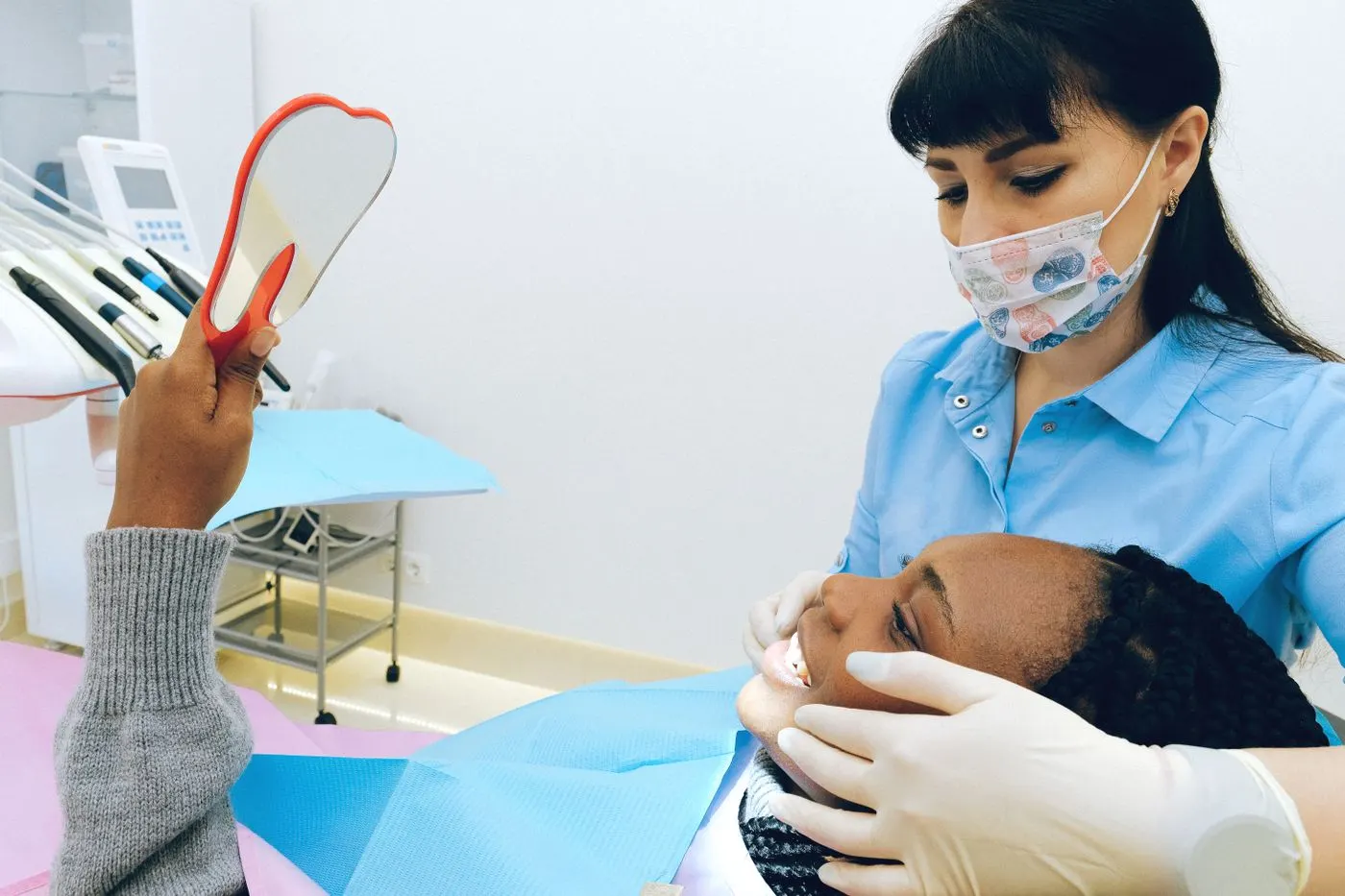
The design is turned into a wax-up and then a mock-up: resin pressed over your teeth in the new shape, with no drilling. You see it in the mirror, speak with it and can ask for changes before anything is irreversible. After preparation, temporaries made from the same design protect the teeth and let you test the shape for a few days. They are resin, slightly bulkier and less glossy than porcelain, so treat them gently. If something bothers you in daily life, tell us before the ceramist finishes.
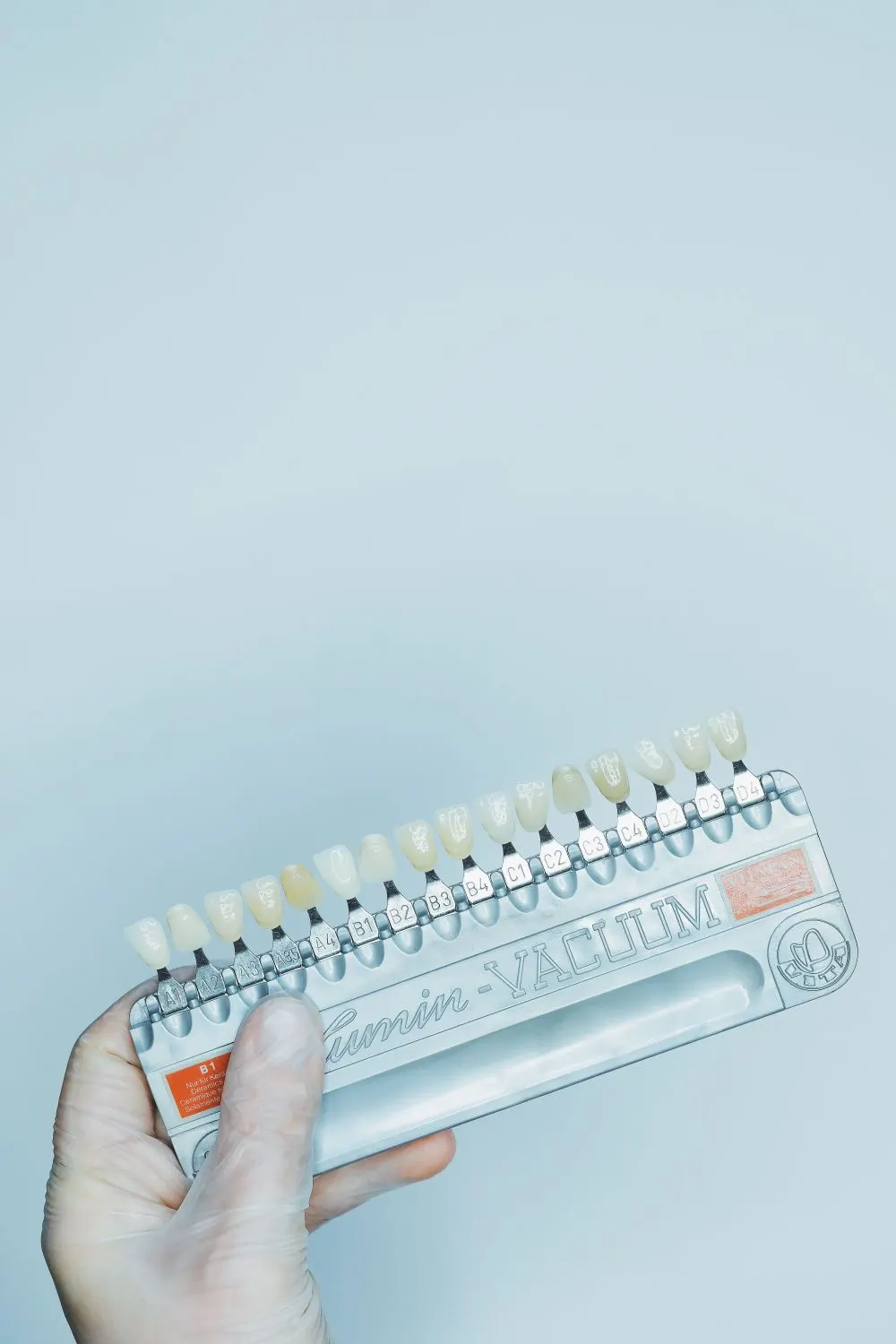
Shade chosen with you
Colour is selected together, in daylight, so the result suits your face, skin tone and neighbouring teeth.
Shade and translucency: how to avoid "Turkey teeth"
A natural tooth is warmer near the gum, more translucent at the edge and has gentle surface texture. The "Turkey teeth" look comes from opaque material, one flat bleach shade and identical teeth. Our article on Turkey teeth and how to avoid them explains the background.
E.max ingots come in different translucency levels, from high translucency for light teeth to more opaque ingots for masking dark stumps. The ceramist combines this with internal stains and a thin layer of enamel porcelain at the edge. We choose the shade in daylight with you, next to your eyes and skin, and match any teeth that stay natural. Very bright shades can suit some faces, but they should be a deliberate choice, not a default.
How your E.max veneers are made in the laboratory
After the final scan the design is sent to the ceramist. E.max is either pressed from an ingot using a wax pattern or milled from a block. For front teeth the ceramist often uses a cut-back technique: the incisal third is reduced and rebuilt with layered porcelain for translucency and depth. The veneers are then stained, glazed and fired, with surface texture and slight irregularities that stop them looking like plastic. This handwork is why porcelain veneers need a few working days between preparation and try-in.
Try-in and bonding: the appointment that decides how long they last
At the try-in the veneers are seated with a water-soluble paste in the shade of the planned cement. You judge them in daylight and in the mirror at conversation distance. Small changes to shape or cement shade are made now.
Bonding follows a strict protocol:
The teeth are isolated from saliva and cleaned.
The inside of each E.max veneer is etched with hydrofluoric acid for around 20 seconds and treated with silane.
The enamel is etched with phosphoric acid and an adhesive is applied.
Each veneer is seated with light-curing resin cement and cured.
Excess cement is removed from the margins and between the teeth, and the bite is checked in all movements.
Contamination, bonding to old composite or dentine, and leftover cement are the most common causes of debonding and gum irritation, so this appointment is never rushed.
Care explained to you
Before you fly home, the team shows you how to clean and look after your new teeth.
Your porcelain veneers in Istanbul, day by day
Day
Appointment
1
Examination, X-ray, gum check, photos, scan, digital smile design
2
Mock-up approval, preparation through the mock-up, final scan, temporaries
3-4
Laboratory work; free time in Istanbul
5
Try-in, adjustments to shape or cement shade
6
Bonding, excess removal, bite refinement
7
Review, night guard fitting if planned, flight home
Can you get porcelain veneers in Turkey in fewer days? Milled veneers can be made faster, but a full smile with hand finishing and a proper try-in fits better into five to seven days. Porcelain done in two days usually means skipped mock-ups or stock shades.
How long porcelain veneers last and how to look after them
Clinical studies of bonded glass-ceramic veneers commonly report survival of around 90 % or more after ten years, and long-term series show many still in service after 15-20 years. The typical reasons they fail are chipping, debonding, decay at the margins and gum recession exposing the edge.
To give them the best chance:
wear a night guard if you grind or clench; it is the single most useful protection
clean the margins daily with floss or interdental brushes
avoid biting nails, ice, pens or packaging
use a low-abrasion toothpaste and have check-ups every 6-12 months
Risks, and how they are reduced
Debonding: prevented by enamel bonding, isolation and the manufacturer's protocol.
Chipping or fracture: reduced by enough ceramic at the edge, bite adjustment in all movements and a night guard.
Gum irritation or dark lines: avoided with smooth, well-fitting margins, thorough cement removal and gum treatment beforehand.
Bulky, over-contoured teeth: avoided by planning volume on the mock-up rather than adding porcelain on top of prominent teeth.
Sensitivity: usually mild and short-lived; deeper preparation into dentine raises the risk, which is another reason to stay in enamel.
Porcelain veneers vs E.max crowns vs composite veneers
Choosing the best clinic for E.max veneers in Turkey
Ask any clinic, including us:
Is each tooth planned as a veneer or a crown, and how much will be removed?
Will I see a mock-up and have temporaries?
Which ceramic and which translucency will be used?
Will there be a try-in before bonding?
Is my gum health checked and treated first?
What are the guarantee terms, and what happens if a veneer debonds at home?
Be wary of quotes that name no dentist, porcelain veneers finished in one or two days, a fixed number of 20 regardless of your smile, and deposits requested before a dentist has assessed your case.
What shapes your treatment plan and follow-up
Your quote depends on the number of veneers, the material and degree of hand layering, treatment needed first, whitening of the other teeth, a night guard and your package of hotel nights and VIP transfers. It is written and itemised before you book, with starting prices on our dental costs in Turkey page.
The written guarantee terms are explained in your plan. Your records list the ceramic, shades and cement used, so a dentist at home can maintain your veneers, and your coordinator remains your contact after you fly home.
Answers about Porcelain veneers. Not listed? Ask us directly.
How much are porcelain veneers in Turkey?
The total depends on how many veneers you need (usually 4-10 upper teeth), whether they are pressed or milled E.max or layered feldspathic porcelain, how much individual layering the ceramist does, any treatment needed first, whitening of the other teeth and your package. A dentist assesses your case and you receive a written, itemised quote before booking. Starting prices are on our dental costs in Turkey page.
What is the difference between laminate and E.max veneers?
"Laminate" describes the form, a thin shell laminated onto the front of the tooth. "E.max" is the material most laminate veneers are made from today, a lithium disilicate glass ceramic. So an E.max laminate veneer is simply a thin porcelain veneer made from E.max. Older laminates were often feldspathic porcelain, which is still used for selected high-aesthetic cases.
Are E.max veneers strong enough?
Yes, for normal biting. On its own a thin veneer is fragile, but bonded to enamel it becomes part of the tooth and very resistant. E.max has several times the flexural strength of traditional feldspathic porcelain. The main risk is grinding or using your teeth as tools, which is why a night guard is recommended if you grind or clench.
Do porcelain veneers look fake?
They should not. Fake-looking veneers are usually opaque, too white, too thick or all identical. Natural results come from translucent ceramic, a shade chosen next to your face, individual shapes with slight variation, and preparation that leaves room for the porcelain instead of adding bulk. The mock-up and try-in let you judge the look before bonding.
Do I need veneers on my lower teeth?
Usually not. The lower teeth are often hidden by the lower lip when you smile, and whitening is enough to bring them into harmony. Veneers on the lower front teeth make sense if they are clearly visible when you speak, very worn, chipped or dark. Your dentist checks this in your smile photos and videos at the examination.
What happens if a porcelain veneer chips or comes off?
If it comes off intact, keep it; it can often be cleaned and re-bonded. A small chip at the edge can sometimes be smoothed or patched with composite, but a larger fracture usually means a new veneer. Contact your coordinator first. The written guarantee terms in your plan explain how repairs and replacements are handled.
How much are E.max veneers in Turkey compared with other porcelain?
E.max is a specific porcelain, lithium disilicate by Ivoclar, and it is what most clinics mean by porcelain or laminate veneers today. Hand-layered feldspathic veneers usually involve more laboratory time. Zirconia is priced differently again. Your written plan names the exact material for every tooth, so you can compare quotes like for like. Our 2026 veneers guide explains what a quote should include.
Can you get porcelain veneers in Turkey without shaving your teeth?
In selected cases. No-prep veneers work on teeth that are small, worn, set back or spaced, where a thin shell adds volume without looking bulky. Most people need minimal preparation of 0.3-0.5 mm within enamel, or 0.5-0.7 mm for larger changes. Your mock-up shows how much is needed, and your plan states the expected reduction per tooth before you agree to anything.
How long do porcelain veneers last?
Studies of bonded glass-ceramic veneers commonly report around 90 % or more still in service after ten years, and many last 15-20 years with good care. Grinding, gum recession, decay at the margins and biting hard objects shorten their life. A night guard, daily flossing along the margins and check-ups every 6-12 months all help.
Can porcelain veneers be whitened later?
No. Ceramic does not change colour with bleaching. If you want your lower or neighbouring teeth lighter, whiten them before the veneer shade is chosen, ideally a couple of weeks before your trip so the colour has settled. If your natural teeth darken over the years, they can be whitened again to match the veneers.
Are my teeth sensitive after porcelain veneers?
Some people notice mild sensitivity to cold for a few days after preparation or bonding. It usually fades within one to two weeks. Keeping preparation in enamel lowers the risk. Sensitivity that increases, throbbing pain or pain on biting is not normal and should be checked by a dentist.
Are porcelain veneers or crowns better for my teeth?
On a healthy tooth a veneer is more conservative, removing 0.3-0.7 mm from the front instead of 1-2 mm all round, and keeping the nerve safer. A crown is better when a tooth is broken, heavily filled or root-treated. Many plans combine both: E.max crowns where needed and veneers on healthy neighbours, in matching ceramic.
Question not answered here?
Ask us, a coordinator replies personally, and a dentist answers medical questions.
 and
 Read reviews
































 USA
 UK
 Germany
 Istanbul