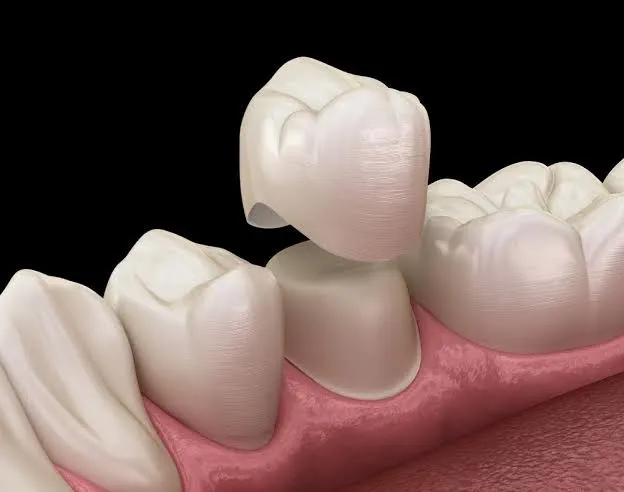
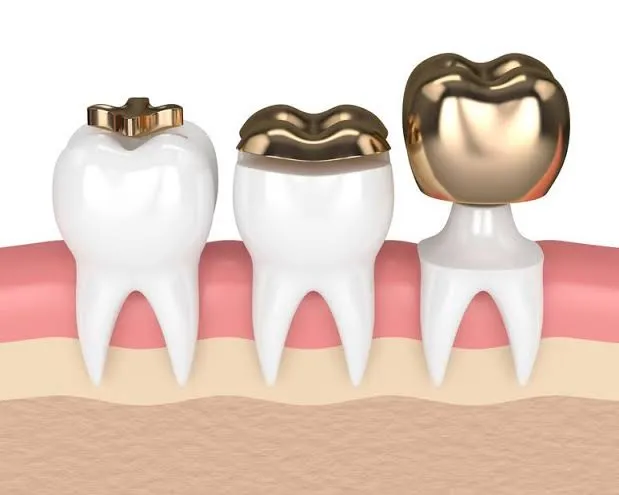
Lithium disilicate crowns from Ivoclar with enamel-like translucency, adhesively bonded and colour-matched in daylight. Planned in Istanbul and usually completed in one trip of 5-7 days.
Enamel-like translucency for front teeth
Same material family as E.max veneers
Adhesively bonded to the tooth
“I was really nervous at first, but the dentists were honestly lovely.”Serra · Trustpilot
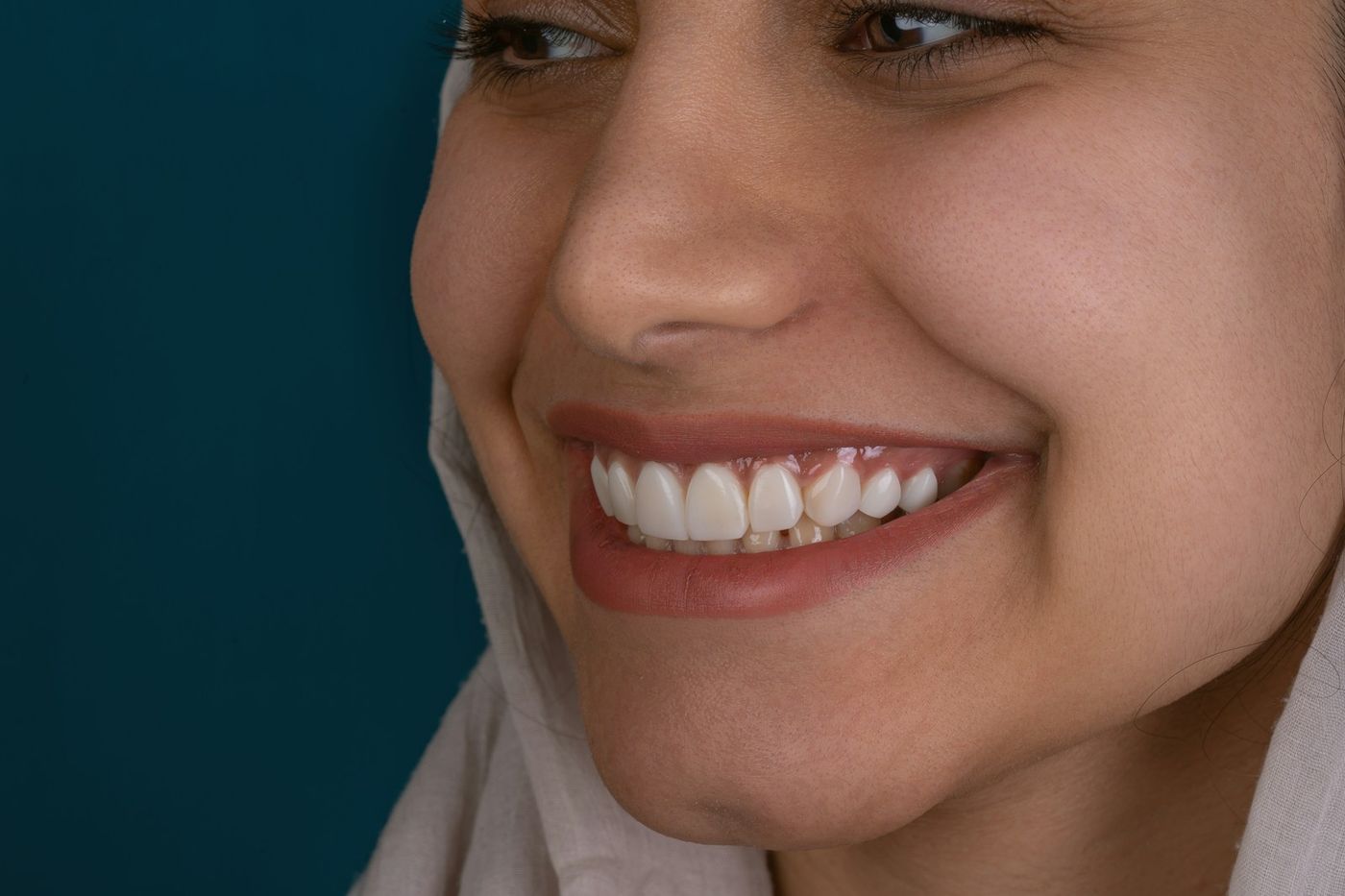
E.max crowns in Turkey are the usual choice when a front tooth needs a full crown and has to look like its natural neighbours. E.max is Ivoclar's lithium disilicate glass-ceramic. Its fine, needle-shaped crystals sit in a glass matrix that lets light enter, scatter and return in a way similar to enamel, so a well-made E.max crown has depth rather than the flat, chalky look of older crowns.
E.max is strong enough for single crowns on front teeth and premolars, and often on molars in people with a normal bite, but it is not as strong as zirconia. It is not the right material for long bridges or for heavy grinders, and its translucency means a very dark tooth underneath can show through. It is also a crown, which means reshaping the whole tooth: if your front teeth are healthy and you only want to change colour or shape, veneers or bonding remove much less.
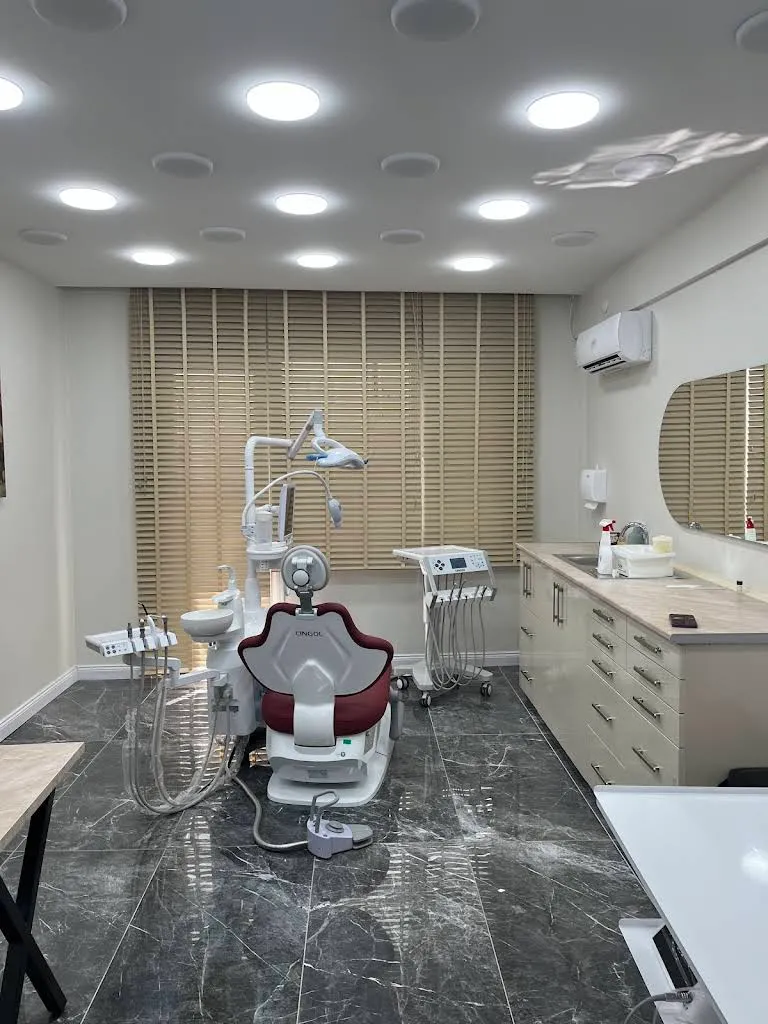
Patients from the UK, Ireland, Germany, Austria and Switzerland come to our clinic in Ataköy, Istanbul, for E.max crowns because they receive the original Ivoclar material, a digital workflow with a try-in in daylight, and a written, itemised plan. Dr. Taha G or Dr. Hatice G decide tooth by tooth whether E.max, zirconia or something more conservative is right. Most cases are completed in one trip of five to seven days, and packages can include hotel nights and VIP transfers, with a coordinator who speaks English and German.
In the press
As featured on AP News, Google News and 36 TV news websites
“I had my implants and zirconia crowns done here and I’m sooo happy with my new teeth!! 🥹 I was really nervous at first, but the dentists were honestly lovely. They explained everything and made me feel so comfortable. Everyone looked after me from start to finish, and my teeth look so natural. I can’t stop smiling now haha. Thank you all so much!! 🤍🦷”
SSerra Akaoglu Dental Implants · Trustpilot
★★★★★
Verified review
“I had my zirconium crowns done a couple of weeks ago and thought I'd share my experience because I know how difficult it can be to decide where to go. I spent ages looking at different clinics and reading reviews before finally booking.
I was a bit nervous when I arrived, mainly because I wasn't sure how my teeth would look afterwards. I really didn't want them to be too white or have that obvious fake look. The dentist was lovely and we talked about the colour and shape before starting, which made me feel a lot better.
The first few days were a little uncomfortable, especially with the temporary teeth, but nothing I couldn't manage. I actually asked to change the shape of my front teeth slightly during the fitting and they were completely fine with it. I'm so glad I did because the final result is exactly what I had in mind.
I've been home for a little while now and everything feels good. My friends keep saying I look different but they can't quite figure out why 😂 I think that's probably the nicest compliment I could get because I wanted them to look natural.
Also have to mention how helpful everyone was during my stay. I had a few questions along the way and always felt comfortable asking. Really happy with how everything turned out and glad I finally went ahead with it ❤️”
DDough Zirconia crowns · Trustpilot
★★★★★
Verified review
“I had zirconia crowns fitted at Doctor Turka and I am very happy with my new smile. I wanted a result that suited me, so it mattered that the team listened to what I liked and what I was unsure about. They took my questions seriously and explained the treatment without making me feel rushed. The staff were friendly throughout my appointments, which made the whole experience easier. What I appreciate most is feeling comfortable smiling again. Thank you to everyone involved in my care.”
JJnae Ford Zirconia crowns · Trustpilot
Patient videos
Our patients tell their story
Real treatments at our clinic in Istanbul, filmed with the patients' consent. Ask us for cases similar to your E.max crowns case.
Our patient coordinator takes your questions; medical questions are answered by Dr. Taha G and the team: whether E.max crowns suits you, how long it takes and what the alternatives are.
Starting prices from our price list, next to typical private fees at home. Your exact price is in your written plan after a dentist’s assessment.
Number of teeth1
USA€1,2253
UKfrom €1,4008
Germany€700 to €1,0009
Istanbulfrom €120
UK, Germany, USA: published private fees, source numbers on the price list. Saving is calculated against the lower end of each range. Istanbul: our starting price. Your exact price is in your written plan after a dentist’s assessment. Sources
You save
up to 91%
compared with a private clinic at home, with the same implant systems and ceramics.
Digital diagnostics3D CT scan and intraoral scanning
Hygiene standardsProtocol-based sterilisation
Named dentistsYou know who treats you
English & GermanCoordinator at every appointment
In-depth guide
What E.max crowns are
E.max crowns are made of lithium disilicate, a glass-ceramic developed by Ivoclar. The material contains fine, elongated lithium disilicate crystals embedded in glass. The crystals give strength; the glass lets light through. Typical flexural strength is around 360-500 MPa depending on the processing, several times stronger than traditional feldspathic porcelain but well below high-strength zirconia at around 900-1,200 MPa.
E.max crowns are made in two ways. E.max Press crowns are pressed from a heated ingot into a mould created from a wax or printed pattern. E.max CAD crowns are milled from a partly crystallised block and then fired in a furnace, which turns the block from blue to tooth-coloured and gives it full strength. Both are then stained and glazed; on front teeth the edge may be cut back and layered by hand for more depth.
Why E.max looks so natural
Natural teeth are not uniformly white. The enamel at the biting edge is almost clear, the body is more saturated, and light passes into the tooth and scatters inside it. Opaque crowns reflect light straight back, which is why older crowns can look flat or "too white" next to natural teeth.
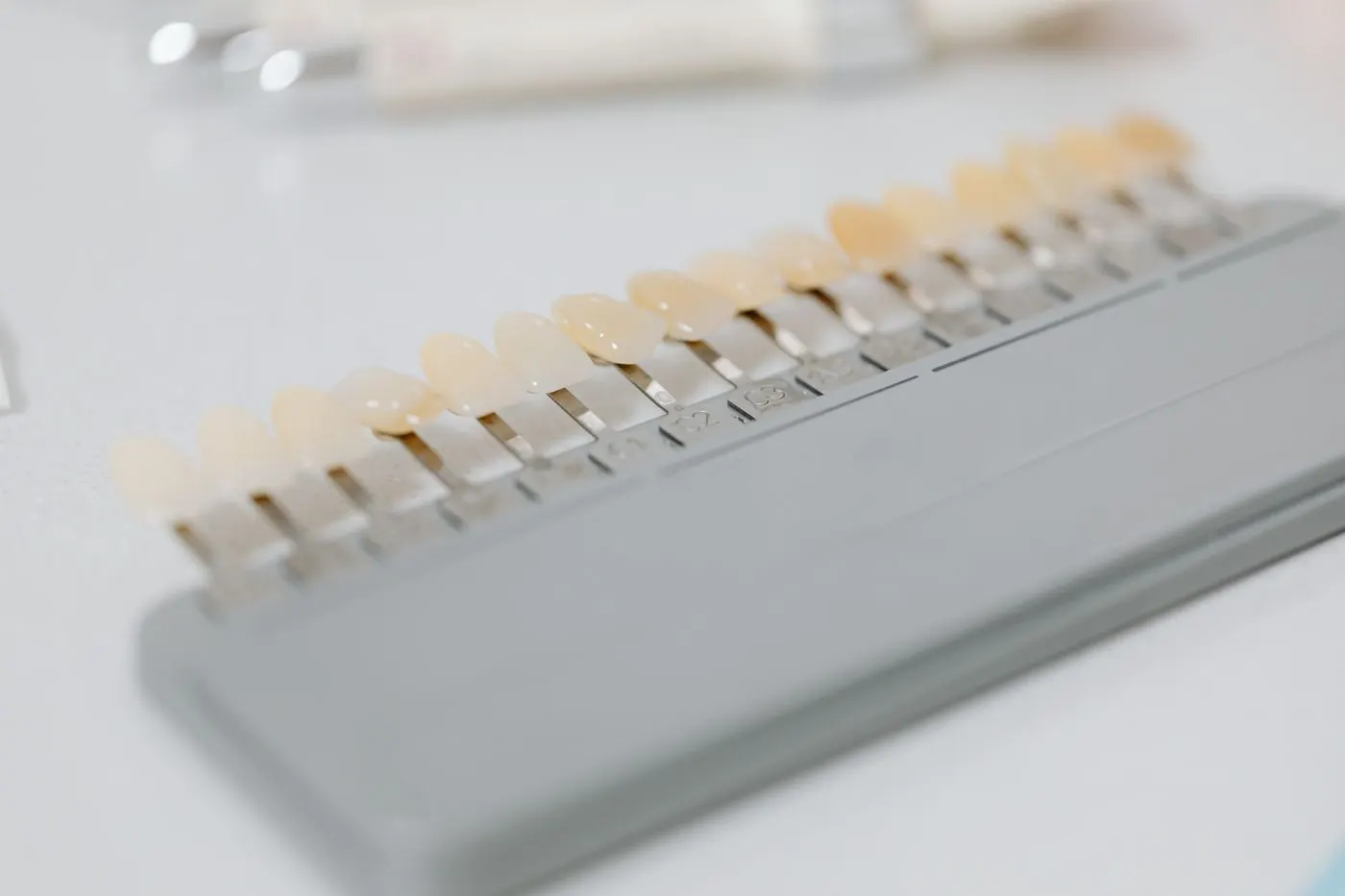
E.max comes in several translucency levels, so the technician can choose how much light passes through and how much of the prepared tooth's colour shows. That is why the dentist records the stump shade, the colour of the tooth after preparation, as well as the target shade. A normal-coloured stump gives the most lifelike result with a translucent E.max. A dark stump needs a more opaque ingot, internal bleaching, or a switch to zirconia.
See it before it is final
Aesthetic work is checked and tried in, so you can give feedback before anything is fixed for good.
When E.max is the right crown, and when it is not
Situation
E.max suitable?
Usually preferred
Single upper front tooth next to natural teeth
Yes, first choice
E.max
Several front crowns in a smile design
Yes
E.max, sometimes multilayer zirconia
Crowns next to E.max veneers
Yes
E.max for one consistent shade
Premolar with normal bite
Yes
E.max or zirconia
Molar, normal bite, enough space
Often
Zirconia or E.max
Molar in a heavy grinder
Not advised
Monolithic zirconia
Bridge longer than three units or behind the premolars
No
Zirconia
Very dark stump or metal post
With care
Opaque E.max or zirconia
If the tooth is still largely healthy, a crown may not be necessary at all. For colour and shape on intact front teeth, porcelain veneers remove far less enamel. The dental crowns overview explains how dentists decide between filling, onlay, veneer and crown.
Who E.max crowns are not suitable for, and the alternatives
E.max is an excellent material in the right place, but several situations call for something else.
Healthy front teeth that only need a colour or shape change. Whitening, composite bonding or veneers keep most of the enamel. A full crown removes roughly three to four times more tooth than a thin veneer.
Heavy grinders and clenchers. Especially on molars, monolithic zirconia tolerates the load better. If E.max is used at the front, a night guard is essential.
Bridges beyond three units or behind the premolars. The connectors would need to be too thick; zirconia is the standard here.
Very short teeth or deep margins that cannot be kept dry. Adhesive bonding depends on a clean, dry surface; crown lengthening or a cemented zirconia crown may be more reliable.
Active gum disease or an untreated root infection. These must be treated first, whatever the crown material.
Teeth with little remaining structure but strong walls. An onlay may protect the tooth with far less drilling.
A good dentist will suggest the least invasive option that will last, even if that means no crown at all.
Your dentist explains how the tooth and the treatment work, so you know what to expect at every appointment.
Preparation and adhesive bonding
An E.max crown needs enough thickness to be strong: typically about 1.0-1.5 mm on the sides and 1.5-2.0 mm at the biting edge or surface, with a rounded shoulder or deep chamfer margin and no sharp internal angles. Front-tooth margins are often placed just at or slightly under the gum so the edge disappears.
Bonding is what sets E.max apart. The inside of the crown is etched with hydrofluoric acid and treated with a silane primer; the tooth is cleaned and treated with an adhesive; then the crown is seated with resin cement and light-cured. This creates a chemical and micromechanical bond that makes crown and tooth behave like one unit. It requires a dry field, so the dentist uses isolation such as cotton rolls, retraction cord or a rubber dam, and removes excess cement carefully before it sets fully.
E.max crowns with veneers in a smile design
In a smile design, not every tooth needs the same treatment. Healthy front teeth may receive veneers, while a root-treated or heavily filled tooth in the same row receives a crown. Using E.max for both helps the technician match translucency and shade, so the crowned tooth does not stand out. The design is usually checked first with a mock-up or temporaries in the planned shape, so you can see and approve the proportions before the final restorations are made. For full smile transformations, see Hollywood smile.
E.max crowns in Turkey, day by day
Before you travel, you leave your contact details, your coordinator gets in touch, a dentist assesses your case and you receive a written, itemised plan. The final plan is confirmed after the examination in Istanbul.
Day
What happens
Day 1
Examination, X-rays and CBCT, vitality tests, photos, smile planning
Day 2
Preparation, stump shade, digital scan, temporaries in the planned shape
Days 3-4
E.max pressed or milled, crystallised, stained and glazed or layered
Day 5
Try-in with coloured try-in paste in daylight; adjustments if needed
Day 6
Adhesive bonding, bite and front guidance checked, polishing
Day 7
Final check and flight home
If a root canal, internal bleaching or gum contouring is needed first, plan a few extra days.
Care explained to you
Before you fly home, the team shows you how to clean and look after your new teeth.
Lifespan, risks and failure modes
Systematic reviews report five-year survival for lithium disilicate single crowns typically around 95 % or higher, and data up to ten years is encouraging. Failures are usually related to the situation rather than the material:
Fracture in heavy grinders or where the crown was made too thin.
Decay or staining at the margin if plaque is left at the gum line.
Gum recession exposing a darker root surface above the crown edge.
Debonding if the bonding surface was contaminated by saliva or blood.
Nerve irritation in a vital tooth that was deeply filled before.
Chips on E.max are uncommon and small ones can sometimes be polished or repaired with composite; larger fractures mean a new crown.
Aftercare and follow-up from home
Most people return to normal activities the same day. Clean the margins daily with floss or interdental brushes, use a non-abrasive toothpaste, avoid biting into very hard objects with your front teeth, and wear a night guard if you grind. Keep regular check-ups at home; we provide a treatment summary and X-rays. If a crown feels high or a tooth becomes sensitive, your coordinator is your contact and our dentists advise on the next step. Your crowns come with a written guarantee whose terms are explained in your plan.
What shapes your treatment plan and quote
Your plan depends on the number of E.max crowns, whether veneers are part of the plan, monolithic versus layered finish, internal bleaching, build-ups or posts, removal of old crowns, gum contouring and package elements such as hotel and transfers. Current starting prices are on dental costs in Turkey. Before comparing clinics, ask why each tooth needs a crown rather than a veneer, which E.max type and translucency will be used, and whether you will see a try-in in daylight before bonding.
Included in your package
Everything arranged, one point of contact
Treatment planTooth by tooth, agreed with you in writing
Clinical checksThe examinations your dentist considers necessary
AccommodationArranged for you when it is part of your written plan
TransfersAirport · hotel · clinic, as set out in your plan
Personal coordinatorEnglish and German, 7 days a week
Follow-upWritten guarantee terms and support after you return home
What exactly is included is set out in your personal, written plan.
Answers about E.max crowns. Not listed? Ask us directly.
How much do E.max crowns cost in Turkey?
The fee depends on the number of crowns, whether they are monolithic or have a hand-layered edge, and on any preparatory work such as internal bleaching, build-ups, posts or removal of old crowns. Combining crowns with veneers or gum contouring also changes the plan. Current starting prices are on our dental costs in Turkey page, and your quote is written and itemised before you travel. For a full breakdown, read our guide to dentist prices in Turkey 2026.
E.max or zirconia for front teeth?
For a single upper front tooth next to natural teeth, E.max usually gives the most lifelike result because of its translucency. If the tooth underneath is very dark, has a metal post, or the patient grinds heavily, multilayer or layered zirconia may be better. The dentist records the stump shade before deciding.
How long do E.max crowns last?
Reviews report five-year survival for lithium disilicate single crowns typically around 95 % or higher, and many last well over ten years. Longevity depends on the bite, whether you grind, the quality of bonding and your daily cleaning at the gum line. Regular check-ups at home help catch problems early.
Can E.max crowns chip or break?
They can, but it is uncommon when the crown has the right thickness and the bite is balanced. The risk rises with grinding, biting on hard objects and thin sections. Small chips can sometimes be polished or repaired with composite; a larger fracture means a new crown. A night guard is advised for grinders.
Can I get E.max crowns if my tooth is dark after a root canal?
Often yes, but it needs planning. The dentist may first bleach the tooth internally, then choose a more opaque E.max ingot so the dark colour does not shine through. If the tooth is very dark or has a metal post, a zirconia-based crown may give a better result. The root canal must be sound first.
Are E.max crowns suitable for back teeth?
For premolars, yes, and for molars in patients with a normal bite and enough space for the required thickness. For molars in people who clench or grind, and for bridges behind the premolars, monolithic zirconia is the safer choice because it is roughly twice as strong.
Will E.max crowns match my veneers?
Using E.max for both crowns and veneers makes it easier to achieve one consistent shade and translucency across the smile. The crowned tooth may still need a slightly different ceramic thickness or opacity to hide a darker core, which the technician adjusts so the row looks uniform at the try-in.
Are E.max crowns bonded or cemented?
E.max crowns are usually adhesively bonded. The inside of the crown is etched and primed, the tooth is treated with an adhesive and the crown is fixed with resin cement. This bonds crown and tooth into one unit and adds strength. In some situations, for example very deep margins, a conventional cement may be used.
Do E.max crowns stain?
The glazed ceramic surface resists staining much better than composite or natural teeth. Coffee, tea and red wine may colour the margin area or your natural teeth, not the crown itself. Professional cleaning keeps the margins clean. Avoid highly abrasive whitening toothpastes that can dull the glaze over time.
How many days do I need in Istanbul for E.max crowns?
Usually five to seven days: examination and planning, preparation and scan, laboratory time, try-in and bonding. If you also need root canal treatment, internal bleaching or gum contouring, plan a few more days. The written plan tells you the length of stay before you book.
Question not answered here?
Ask us, a coordinator replies personally, and a dentist answers medical questions.
 and
 Read reviews
































 USA
 UK
 Germany
 Istanbul