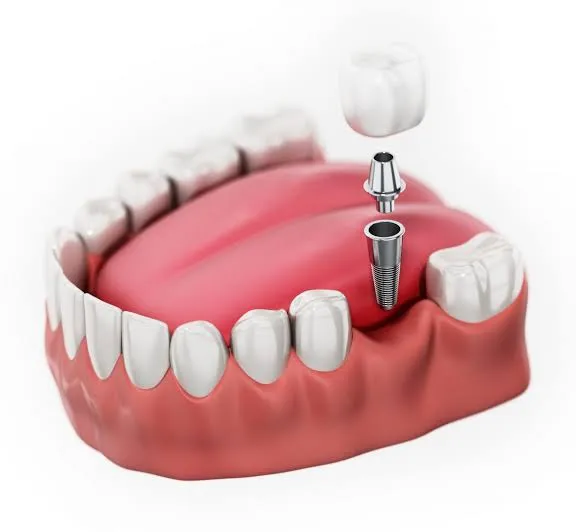
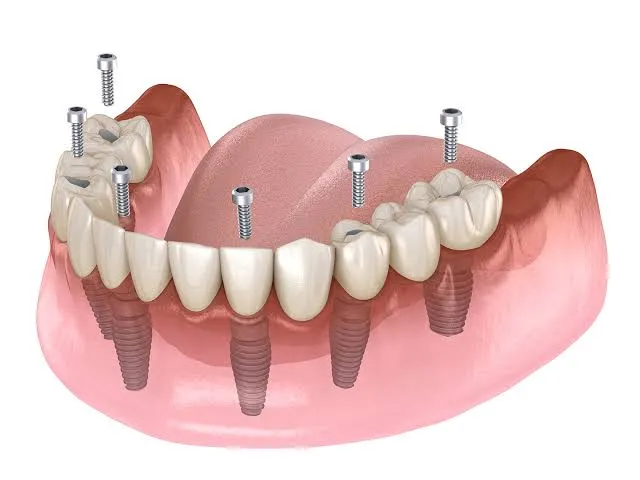
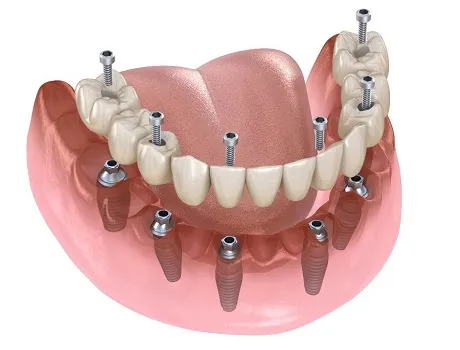
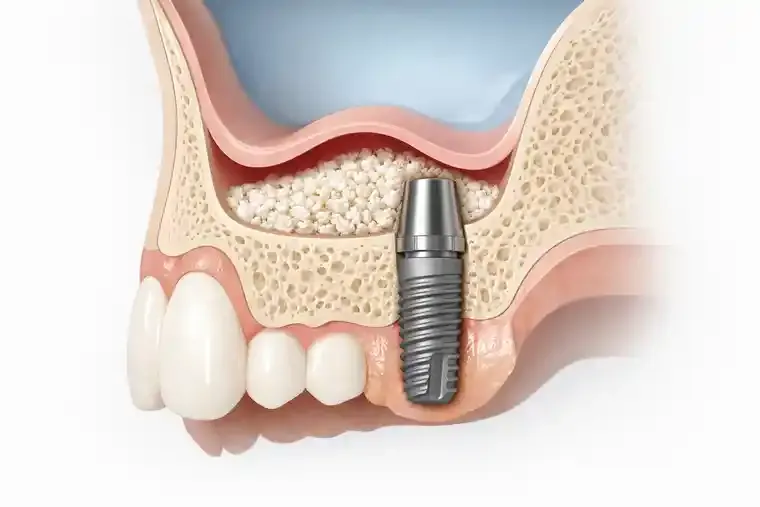
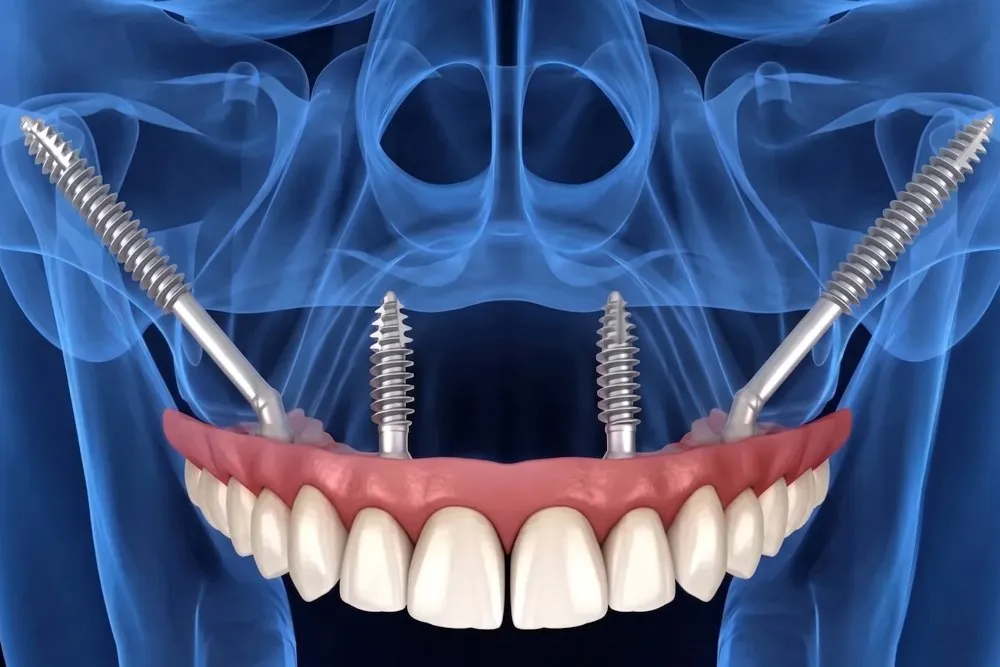
Zygomatic implants are anchored in the cheekbone instead of the upper jaw. For carefully selected patients with severe bone loss they can make a fixed bridge possible without months of grafting.
Anchored in dense cheekbone when the upper jaw has little bone left
Can avoid major grafting and months of waiting in suitable cases
A fixed temporary bridge is usually fitted within days
“I was really nervous at first, but the dentists were honestly lovely.”Serra · Trustpilot
Zygomatic implants in Turkey: what you need to know
Zygomatic implants are long dental implants, typically 30-52.5 mm compared with about 8-13 mm for a standard implant, that are anchored in the zygomatic bone (cheekbone) rather than in the upper jaw. The cheekbone keeps its density even when the jaw beneath it has shrunk away after years of missing teeth, a denture or gum disease.
They are used for one group of patients: people whose upper jaw has too little bone for conventional implants or even for tilted All-on-4 implants. The traditional answer is extensive grafting, often a block graft or large sinus lift followed by months of healing before implants can go in. Zygomatic implants can shorten that path to one operation and fixed temporary teeth within days.
This is an advanced procedure with higher surgical complexity than any standard implant treatment, and it should be offered only after a full 3D assessment. Many patients who believe they need zygomatic implants turn out to be suitable for All-on-4, All-on-6 or a smaller graft.
Patients from the UK, Ireland, Germany, Austria and Switzerland look into zygomatic implants in Turkey because fees are a fraction of those at home. At Doctor Turka in Istanbul, you leave your contact details, our coordinator calls you, a dentist assesses your case and you receive a written plan. Expect two trips, the first lasting 7-10 days.
In the press
As featured on AP News, Google News and 36 TV news websites
“I had my implants and zirconia crowns done here and I’m sooo happy with my new teeth!! 🥹 I was really nervous at first, but the dentists were honestly lovely. They explained everything and made me feel so comfortable. Everyone looked after me from start to finish, and my teeth look so natural. I can’t stop smiling now haha. Thank you all so much!! 🤍🦷”
SSerra Akaoglu Dental Implants · Trustpilot
★★★★★
Verified review
“I had my zirconium crowns done a couple of weeks ago and thought I'd share my experience because I know how difficult it can be to decide where to go. I spent ages looking at different clinics and reading reviews before finally booking.
I was a bit nervous when I arrived, mainly because I wasn't sure how my teeth would look afterwards. I really didn't want them to be too white or have that obvious fake look. The dentist was lovely and we talked about the colour and shape before starting, which made me feel a lot better.
The first few days were a little uncomfortable, especially with the temporary teeth, but nothing I couldn't manage. I actually asked to change the shape of my front teeth slightly during the fitting and they were completely fine with it. I'm so glad I did because the final result is exactly what I had in mind.
I've been home for a little while now and everything feels good. My friends keep saying I look different but they can't quite figure out why 😂 I think that's probably the nicest compliment I could get because I wanted them to look natural.
Also have to mention how helpful everyone was during my stay. I had a few questions along the way and always felt comfortable asking. Really happy with how everything turned out and glad I finally went ahead with it ❤️”
DDough Zirconia crowns · Trustpilot
★★★★★
Verified review
“I had zirconia crowns fitted at Doctor Turka and I am very happy with my new smile. I wanted a result that suited me, so it mattered that the team listened to what I liked and what I was unsure about. They took my questions seriously and explained the treatment without making me feel rushed. The staff were friendly throughout my appointments, which made the whole experience easier. What I appreciate most is feeling comfortable smiling again. Thank you to everyone involved in my care.”
JJnae Ford Zirconia crowns · Trustpilot
Patient videos
Our patients tell their story
Real treatments at our clinic in Istanbul, filmed with the patients' consent. Ask us for cases similar to your Zygomatic implants case.
Questions about Zygomatic implants? Talk to our team.
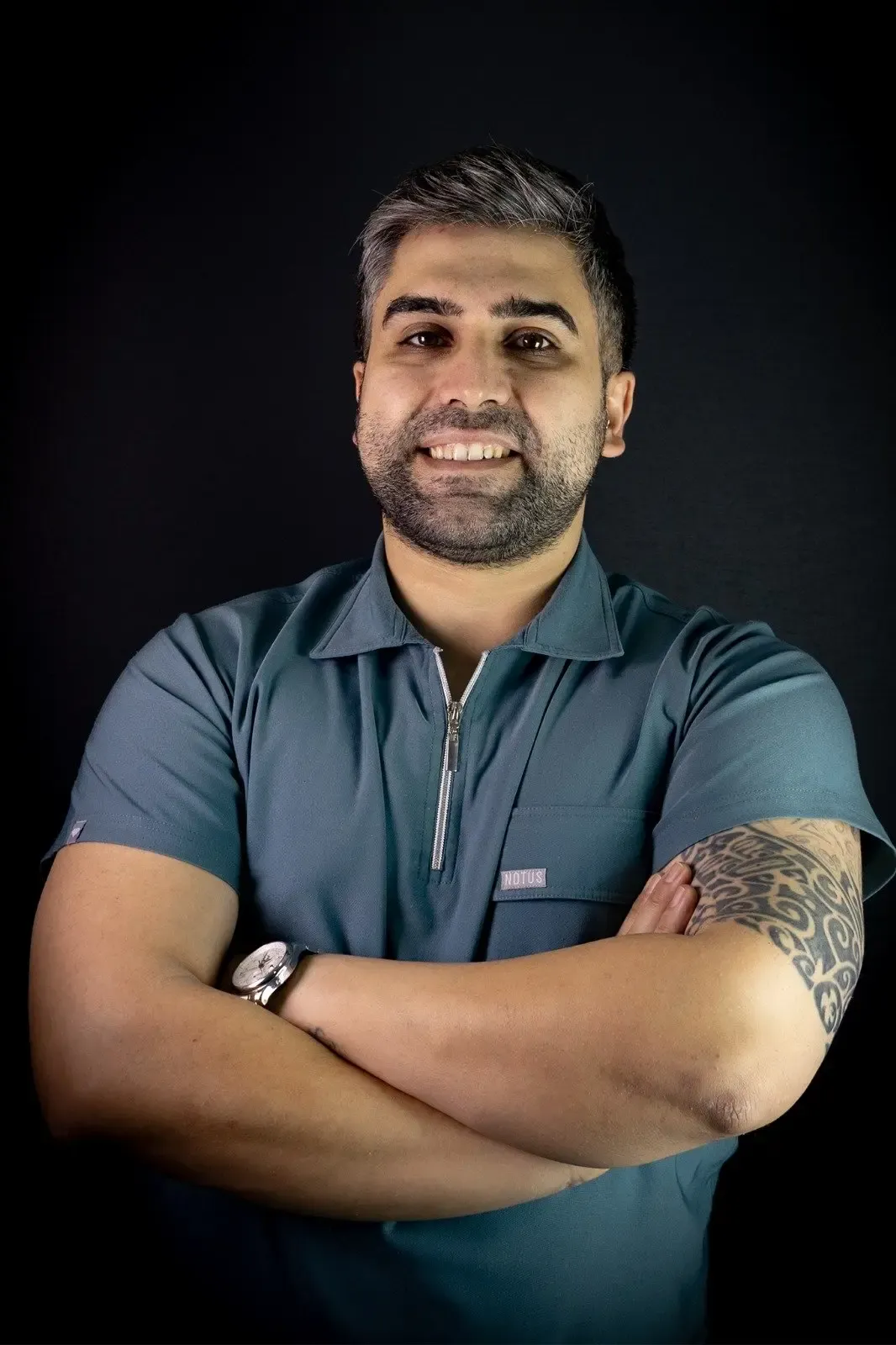
Our patient coordinator takes your questions; medical questions are answered by Dr. Taha G and the team: whether Zygomatic implants suits you, how long it takes and what the alternatives are.
Which option suits you is decided together with your dentist, based on your examination, not a catalogue.
A
Two zygomatic + standard implants
The most common plan: one zygomatic implant on each side at the back, plus two to four standard implants in the front where bone remains.
B
Quad zygoma
Two zygomatic implants on each side when there is almost no usable bone even at the front of the upper jaw.
C
One-sided (unilateral) zygoma
A single zygomatic implant on one side, combined with standard implants, when bone loss is uneven.
D
Extra-sinus (anatomy-guided) path
The implant follows the outer curve of the jaw rather than passing through the sinus, often allowing a slimmer bridge; the path is chosen from the CBCT scan.
Choose your implant system
Straumann. Nobel. Osstem. You choose.
We work with documented manufacturers. Which system suits your bone and your budget is recommended by your dentist after the examination.
Internationally established systems with parts available worldwide
The system is named in your written plan
Implant passport with system and batch numbers
AggressorImplant + Abutment
Swiss ImplantImplant + Abutment
OsstemImplant + Abutment
HiossenImplant + Abutment
Straumann Group MedentikaImplant + Abutment
Nobel BiocareImplant + Abutment
Straumann SL ActiveImplant + Abutment
Not sure which?Your dentist recommends one after your examination and 3D scan.Ask a dentistWhatsApp
Zygomatic implants
Explained step by step
Your dentist explains how the tooth and the treatment work, so you know what to expect at every appointment.
Before you travel, you know what happens on which day.
You leave your contact details, our coordinator calls you, a dentist reviews your case and medical history, and you receive a written plan.
A CBCT scan of the whole midface, including sinuses and eye sockets, plus a medical and anaesthetic assessment. The final decision between zygomatic implants, All-on-4 or grafting is made here.
Zygomatic and, where planned, standard implants are placed under deep sedation or general anaesthesia in an appropriate surgical setting.
A rigid screw-retained temporary bridge links the implants together. Swelling and bruising around the cheeks are at their peak.
Checks of the sinuses, soft tissue, bite and speech. You fly home once your dentist is satisfied with healing.
Second trip of 5-7 days: scans, try-in and the final bridge, designed to be as slim and cleanable as possible on the palate side.
1/6
What shapes your personal plan
Number of zygomatic implants (two or four) and of standard implants
Anaesthesia type and the surgical setting required
Final bridge material and design
Extractions or removal of failed implants beforehand
Treatment of sinus problems before surgery
Length of the first stay, extra hotel nights and a companion
Starting prices from our price list, next to typical private fees at home. Your exact price is in your written plan after a dentist’s assessment.
Number of implants1
USA€1,880 to €3,8103
UK€2,7901
Germany€1,500 to €3,5002
Istanbulfrom €235
UK, Germany, USA: published private fees, source numbers on the price list. Saving is calculated against the lower end of each range. Istanbul: our starting price. Your exact price is in your written plan after a dentist’s assessment. Sources
You save
up to 92%
compared with a private clinic at home, with the same implant systems and ceramics.
What to expect in the days and weeks after treatment, and what you can do yourself.
01Days 1-5
Swelling and bruising around the cheeks and sometimes the eyes; a little nasal bleeding is possible. Rest, cold compresses, prescribed antibiotics and painkillers, liquid diet.
02Weeks 1-2
No nose blowing; sneeze with your mouth open. Avoid heavy exertion. Very soft food and gentle cleaning around the bridge.
03Weeks 2-12
Soft diet; no biting into hard food. Report sinus pressure, nasal discharge or a bad taste promptly.
04Months 4-6
The implants integrate. Final bridge on the second trip.
05Long term
Water flosser and interdental brushes daily, professional cleaning every 3-6 months, bridge removal and checks as advised.
Benefits
Benefits of Zygomatic implants
Avoids major grafting
In suitable cases, one operation replaces a block graft or large sinus lift and the months of healing that follow.
Fixed teeth within days
Zygomatic implants are usually loaded immediately with a rigid bridge that splints them to the other implants.
An option after failures
When earlier grafts or upper-jaw implants have failed, the cheekbone offers fresh, dense anchorage.
No donor site
No bone needs to be harvested from the hip or elsewhere in the mouth.
Good to know: limits & risks
A complex operation that belongs in experienced hands and an appropriate surgical setting.
Usually done under deep sedation or general anaesthesia, which needs a medical assessment.
More swelling and bruising than standard implant surgery; plan a longer first stay.
Sinusitis is the most frequently reported complication; existing sinus disease must be treated first.
The bridge may be bulkier on the palate side, which can affect speech and cleaning at first.
If a zygomatic implant fails, replacing it is more involved than replacing a standard implant.
Your dentist goes through these points with you before treatment, openly and without sales pressure.
The clinic
See where your new smile begins
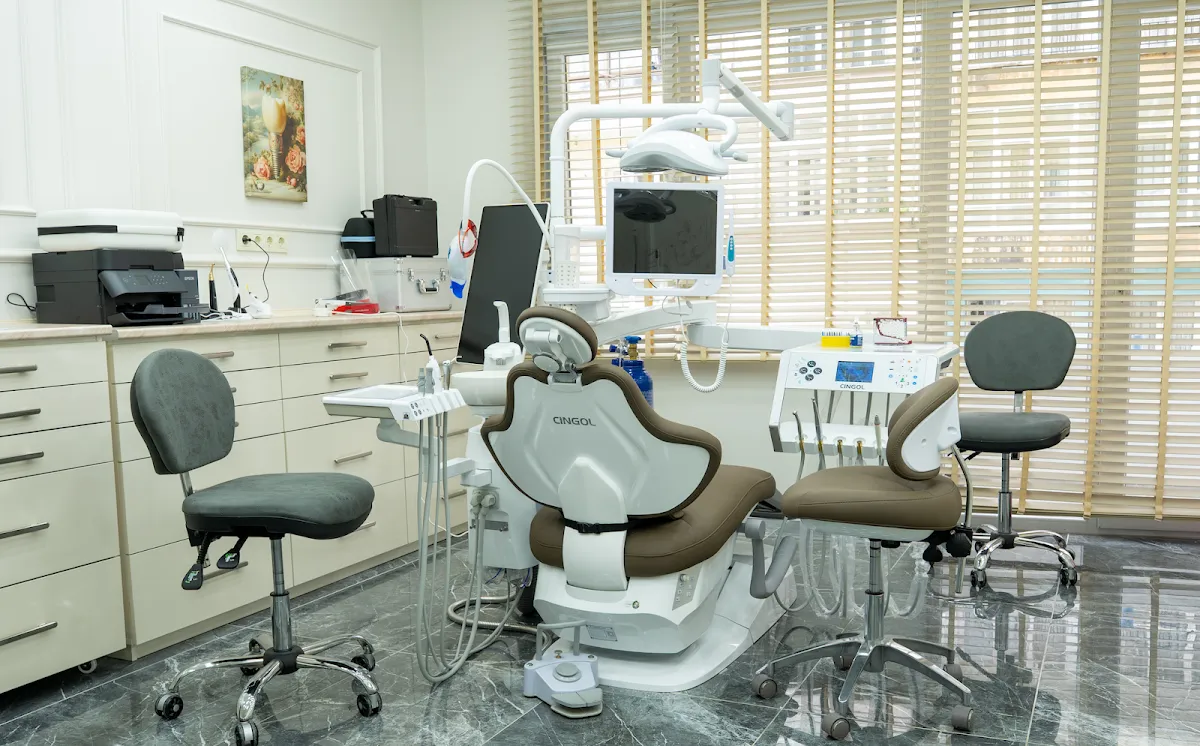
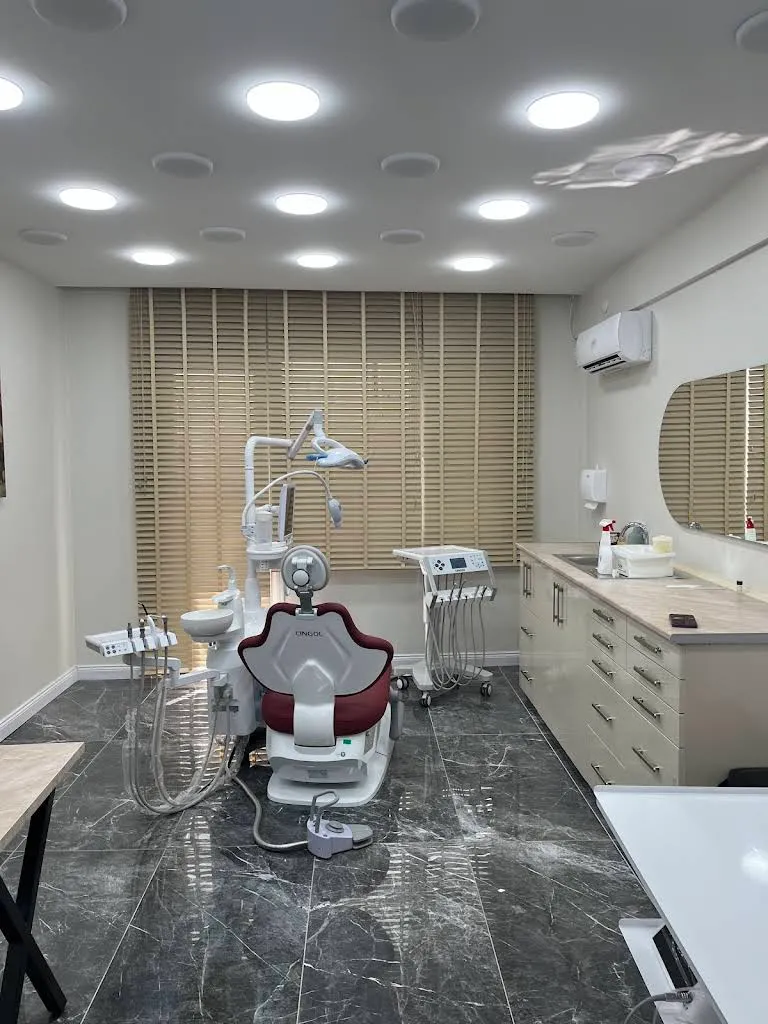
Your treatment takes place at our own clinic in Istanbul, with the same dentists who write your plan.
Digital diagnostics3D CT scan and intraoral scanning
Hygiene standardsProtocol-based sterilisation
Named dentistsYou know who treats you
English & GermanCoordinator at every appointment
In-depth guide
What zygomatic implants are and how they work
Zygomatic implants were developed in Sweden in the late 1980s, originally for patients who had lost part of the upper jaw to tumour surgery, and were later adapted for severe bone loss after tooth loss. They are among the most extensively studied solutions for the atrophic upper jaw, but they remain a specialist procedure.
Length and anchorage
A zygomatic implant starts in the upper jaw, roughly where a premolar or first molar would be, and runs upwards and outwards until its tip engages the dense bone of the cheekbone. Lengths of 30-52.5 mm are typical. Most of the stability comes from that anchorage in the cheekbone, not from the thin jaw bone at the entry point. From the outside, nothing is visible or palpable.
Through the sinus or around it
The original technique passed the implant through the maxillary sinus. Many surgeons now choose the implant path from the individual anatomy, often running it along the outer wall of the jaw (an extra-sinus or anatomy-guided path). This can place the implant head closer to where the tooth should be, which allows a slimmer bridge on the palate side and may reduce sinus complications. Which path suits you is decided from the CBCT scan.
Why they are loaded immediately
Zygomatic implants are almost always connected to the other implants within days by a rigid, screw-retained bridge. Splinting the implants together is part of the concept: it controls the forces on the long implants while they integrate. As with any immediate loading, the decision depends on stability measured during surgery.
When zygomatic implants are used: severe maxillary atrophy
After teeth are lost, the upper jaw shrinks in height and width, and the sinus expands downwards. After many years, a few millimetres of bone may remain. Dentists classify this atrophy on scales such as the Cawood and Howell classification; zygomatic implants are usually discussed for the most advanced stages.
Typical situations:
A long-term upper denture wearer whose ridge has almost disappeared and whose denture no longer holds
Previous upper-jaw implants or bone grafts that have failed
Bone so thin at the back and front that even tilted All-on-4 implants cannot find secure anchorage
Selected cases after surgery to the upper jaw, which are planned in a hospital-based specialist setting
Zygomatic implants are only used in the upper jaw. The lower jaw has no comparable bone to anchor into, and lower-jaw bone loss is managed with short implants, grafting or other techniques.
Examination and checks
Each step starts with a clinical check, and the result is checked again before you travel home.
Zygomatic implants vs bone grafting vs All-on-4
Zygomatic implants
Major grafting, then implants
All-on-4 / All-on-6
Bone needed in the upper jaw
Very little
Little (bone is added)
Moderate, at least at the front
Number of operations
Usually one
Two or more
Usually one
Time to fixed teeth
Usually days
Often 6-12 months
Usually days
Donor site
Not needed
Sometimes (hip or jaw)
Not needed
Surgical complexity
High, specialist setting
High, staged
Moderate
Typical anaesthesia
Deep sedation or general
Varies
Local, with optional sedation
Main specific risk
Sinusitis, soft-tissue problems
Graft failure, donor-site pain
Implant loss
Grafting still has advantages: it rebuilds bone rather than bypassing it, and it allows conventional implants in ideal positions. Younger patients and people with sinus disease may be better served by bone grafting and a sinus lift, even if it takes longer.
Configurations: two zygoma, quad zygoma and hybrid plans
Plan
Implants
When it is used
Two zygomatic + standard
1 zygomatic each side, 2-4 standard at the front
Severe bone loss at the back, usable bone at the front
Quad zygoma
2 zygomatic each side
Almost no usable bone anywhere in the upper jaw
One-sided
1 zygomatic on one side + standard implants
Uneven bone loss
In every configuration, the implants carry one fixed full-arch bridge, as with All-on-6.
Who is not a candidate, and the alternatives
Untreated sinus disease such as chronic sinusitis or polyps. This must be assessed and treated first, sometimes by an ear, nose and throat specialist.
Heavy smokers who cannot stop around surgery.
Uncontrolled diabetes or other conditions that make longer anaesthesia unsafe.
Intravenous bisphosphonates, denosumab or radiotherapy to the area, without specialist clearance.
Patients with enough bone for All-on-4, All-on-6 or a smaller graft. A less complex option should always come first.
People who cannot clean around a fixed bridge. An implant-supported denture, where bone allows, or a well-made conventional denture may be kinder.
Care explained to you
Before you fly home, the team shows you how to clean and look after your new teeth.
Surgical setting, anaesthesia and specialist experience
Zygomatic implants are not an everyday procedure in any dental clinic. The drill path runs close to the eye socket, the sinus and nerves in the cheek, and accuracy depends on detailed 3D planning and the surgeon's specific experience with the technique. The operation usually takes several hours and is carried out under deep intravenous sedation or general anaesthesia, with monitoring by an anaesthesia team.
At Doctor Turka we will not treat a case as zygomatic by default. If your CBCT scan shows that zygomatic implants are the realistic option, your written plan states who performs the surgery, in which setting and under which type of anaesthesia, before you decide anything. If a simpler solution is possible, we will tell you.
Zygomatic implants in Turkey: the timeline, trip by trip
Before travel, our coordinator calls you, a dentist assesses your case and you receive a written plan. Any existing scan can be useful if you have one; the full-midface CBCT is taken in the clinic. The general steps are on our how it works page.
Stage
What happens
Days 1-2
Arrival, CBCT of the whole midface, medical and anaesthetic assessment, final decision
Day 3
Surgery under deep sedation or general anaesthesia
Days 4-6
Rest; fixed temporary bridge fitted and adjusted
Days 7-10
Controls of sinuses, soft tissue and bite, then flight home when cleared
Months 4-6
Second trip of 5-7 days for scans, try-in and the final bridge
Risks and complications, and how they are reduced
Systematic reviews commonly report zygomatic implant survival above 95 % over follow-up periods of up to about ten years, similar to conventional implants. Complications are more varied, though:
Sinusitis, the most frequently reported problem, sometimes months after surgery. It is usually treated with medication, occasionally with sinus surgery.
Soft-tissue problems around the implant head in the mouth, such as gum recession or infection.
Numbness or tingling in the cheek or upper lip, usually temporary.
Oro-antral communication, an opening between mouth and sinus, which needs repair.
Injury to the eye socket, rare but serious, which is why the path is planned in 3D.
Implant failure, which is more involved to manage than with a standard implant.
Risks are reduced by treating sinus disease first, 3D planning, choosing the implant path from the anatomy, sterile surgery and close follow-up.
Recovery, hygiene and long-term care
Swelling and bruising are more pronounced than after standard implants and can spread under the eyes for several days. You should not blow your nose for about two weeks. The bridge may feel bulkier on the palate side at first, which affects speech for a few weeks.
Daily care is the same as for any full-arch bridge: brushing, a water flosser, interdental brushes around each implant head and professional cleaning every three to six months. Tell any doctor who treats your sinuses that you have zygomatic implants.
Questions to ask a clinic about zygomatic implants in Turkey
Why zygomatic implants in my case, rather than All-on-4, All-on-6 or grafting?
Who performs the surgery, and how regularly do they place zygomatic implants?
In what setting, and under what anaesthesia? Who monitors it?
Which implant system and which path (through or around the sinus)?
What is the plan if a zygomatic implant fails or sinusitis develops after I return home?
Red flags: no full-midface CBCT; zygomatic implants offered before a scan; no named surgeon, setting or anaesthesia; a first stay of only a few days; no plan for complications. Our guide is it safe to get dental implants in Turkey covers wider safety questions.
What shapes your zygomatic treatment plan and quote
The main factors are the number of zygomatic and standard implants, the type of anaesthesia and setting, the bridge material, extractions or removal of failed implants, sinus treatment and the length of your stay. Starting prices for implant treatments are on our dental costs in Turkey page; zygomatic cases are always quoted individually after the scan.
Included in your package
Everything arranged, one point of contact
Treatment planTooth by tooth, agreed with you in writing
Clinical checksThe examinations your dentist considers necessary
AccommodationArranged for you when it is part of your written plan
TransfersAirport · hotel · clinic, as set out in your plan
Personal coordinatorEnglish and German, 7 days a week
Follow-upWritten guarantee terms and support after you return home
What exactly is included is set out in your personal, written plan.
Answers about Zygomatic implants. Not listed? Ask us directly.
Are zygomatic implants safe?
They are an established technique, and systematic reviews commonly report implant survival above 95 % over follow-up of up to about ten years. They are also more complex than standard implants, with specific risks such as sinusitis, soft-tissue problems and, rarely, injury near the eye socket. Safety depends on careful case selection, full-midface 3D planning, an experienced surgeon, an appropriate surgical setting and close follow-up.
How much do zygomatic implants cost in Turkey?
Zygomatic cases are always quoted individually after the scan. The main factors are the number of zygomatic and standard implants, the anaesthesia and surgical setting, the bridge material, extractions or removal of failed implants, sinus treatment and the length of your stay. Starting prices for implant treatments are on our dental costs in Turkey page. For a full breakdown, read our guide to full mouth dental implants in Turkey: cost guide.
Are zygomatic implants visible from the outside?
No. They run inside and along the bone from the upper jaw to the cheekbone and are not visible or palpable through the skin. In the mouth you see only the fixed bridge. The implant heads sit slightly towards the palate, so the bridge may be a little fuller on that side.
How long do I need to stay in Istanbul?
Plan 7-10 days for the first trip. This allows a full assessment, the surgery, rest while swelling settles, the fixed temporary bridge and controls of the sinuses and soft tissue before you fly. The second trip, four to six months later, usually takes 5-7 days for the final bridge.
How swollen will I be, and can I fly afterwards?
Swelling and bruising around the cheeks, sometimes under the eyes, are common for several days and more pronounced than after standard implants. You should not blow your nose for about two weeks. Flying is usually fine once your dentist has checked the sinuses and soft tissue, which is why the first stay is longer.
Do zygomatic implants affect the sinuses?
They can. Sinusitis is the most frequently reported complication, sometimes appearing months later. Treating existing sinus disease beforehand, choosing an implant path that suits your anatomy and careful aftercare reduce the risk. Report pressure, discharge or a bad taste promptly, and tell any doctor treating your sinuses that you have zygomatic implants.
How do I know if I need zygomatic implants?
Only a CBCT scan of the upper jaw and sinuses can tell. Many people who were told they have no bone left turn out to be suitable for All-on-4 with tilted implants or a smaller graft. Leave your contact details and our coordinator will call you; a dentist then reviews your history, and the scan is taken in the clinic before any final decision.
How long do zygomatic implants last?
Studies with follow-up of up to about ten years report survival similar to conventional implants, and the implants are intended to be permanent. The bridge on top wears and may need renewal over time, as with any full-arch bridge. Long-term success depends on healthy sinuses, daily cleaning around the implant heads and regular professional check-ups.
Can zygomatic implants be used in the lower jaw?
No. The technique depends on the cheekbone, which only relates to the upper jaw. Severe bone loss in the lower jaw is managed with short or narrow implants, grafting or an implant-supported denture, depending on how much bone remains. In practice, the lower jaw rarely shrinks as far as the upper jaw, because its bone is denser.
Will I be asleep during the surgery?
Zygomatic surgery is usually done under deep intravenous sedation or general anaesthesia, monitored by an anaesthesia team, because it takes several hours and involves the cheekbone. Which option applies is stated in your written plan after a medical and anaesthetic assessment. You will need someone to accompany you back to the hotel after surgery.
My previous upper implants failed. Can zygomatic implants help?
Often they are one of the options, because the cheekbone offers fresh, dense anchorage away from the failed sites. The failed implants may need to be removed and any infection treated first. A CBCT scan shows whether zygomatic implants, grafting or a different implant layout is the most sensible next step.
Question not answered here?
Ask us, a coordinator replies personally, and a dentist answers medical questions.
 and
 Read reviews
































 AggressorImplant + Abutment
 Swiss ImplantImplant + Abutment
 OsstemImplant + Abutment
 HiossenImplant + Abutment
 Straumann Group MedentikaImplant + Abutment
 UK