 Dr. Hatice G
Watch Mallrats or Good Will Hunting and then Batman v Superman, and Ben Affleck’s smile looks like it belongs to two different people. In the mid-1990s his front teeth look slightly uneven, with edges that appear chipped or worn in some shots and a natural, slightly muted shade. Twenty years later the teeth are even, bright and consistent from every angle.
His case is interesting because it involves the most common reason adults change their front teeth: small chips and uneven edges that bother them for years. This article looks at what was reported about his smile, then explains in depth how chipped front teeth are repaired today, what each option costs you in tooth structure, how long each lasts, and how you would plan it sensibly in Istanbul.
What changed in Ben Affleck’s teeth
Everything in this section is based on public photos and long-running media reports. We did not treat him, and he has not published details of his dental work.
- *Mid-1990s (Mallrats, Chasing Amy, Good Will Hunting):* photos suggest natural teeth with small irregularities along the biting edges, some unevenness between the two front teeth and a shade typical of untreated enamel.
- *Around Armageddon (1998):* entertainment media have repeatedly reported that he had cosmetic dental work around this time, often described as caps or veneers on the upper front teeth. A story frequently repeated in the press is that the production encouraged the work before filming. It has been retold many times, but the details come from reports rather than a treatment record.
- *2010s (Argo, Gone Girl, the Batman films):* the upper front teeth look uniform in length and shade, slightly brighter than natural, with smooth, even edges.
The key point for readers: a change like this could be achieved with composite bonding, porcelain veneers or crowns, and the right choice depends on the tooth underneath, not on what a film star had.
Why front teeth chip, and why it matters
Upper incisors take a lot of load at their thin edges. Chips usually come from one of these:
- Trauma: sport, falls, a blow to the face. Often the first chip happens in childhood or the teens.
- Grinding and clenching (bruxism): edges wear flat, then small pieces break off.
- Bite problems: an edge-to-edge bite or crowding puts force on the incisal edges.
- Habits: biting nails, pens, bottle tops or thread.
- Old fillings: large composite corners weaken with age and break away.
If the cause is not addressed, any repair, however beautiful, will chip again. That is why a good assessment looks at the bite and at signs of grinding before choosing a material.
Three ways to fix a chipped front tooth
Composite bonding
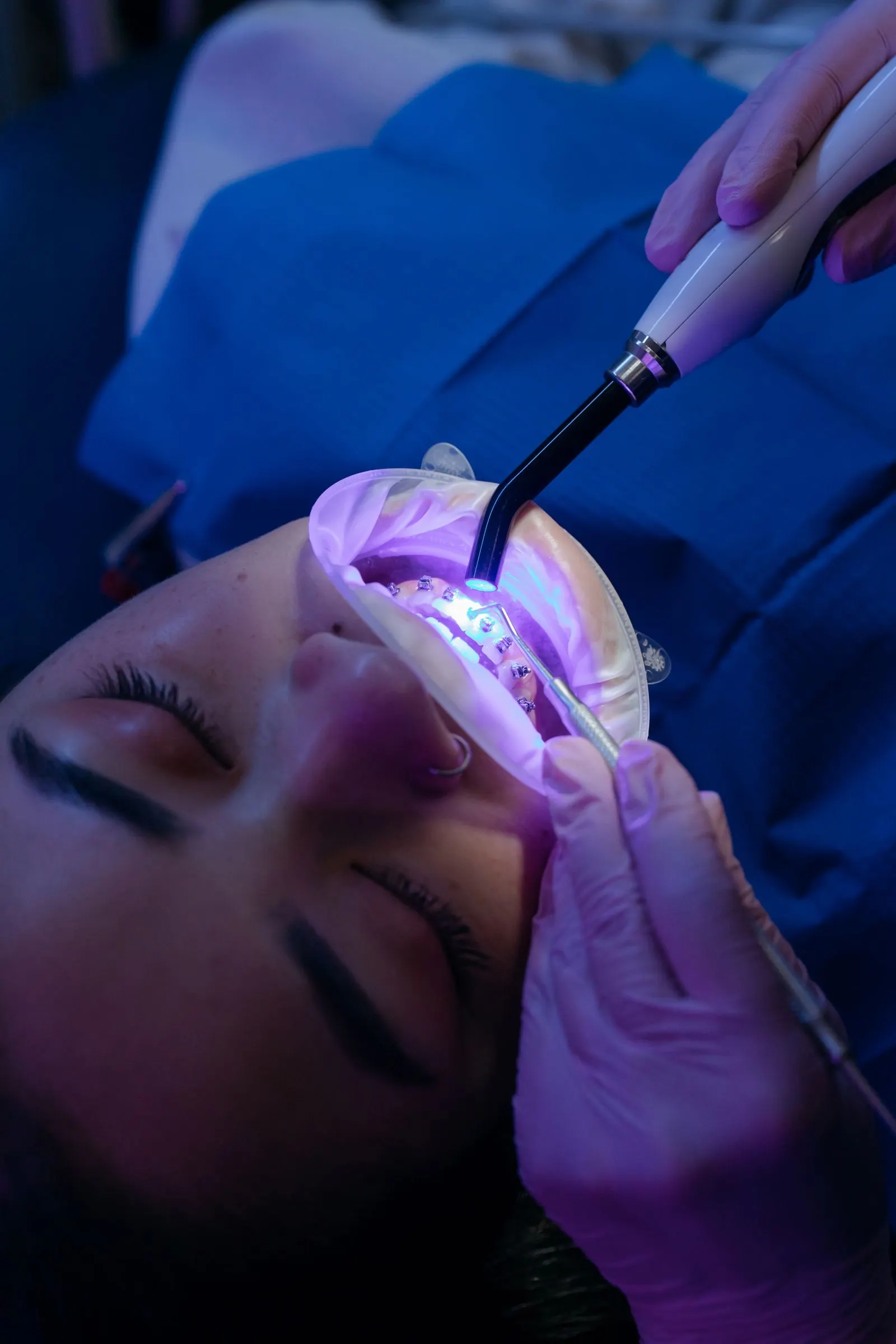
Tooth-coloured resin is layered directly onto the tooth, shaped and polished in one visit. Little or no enamel is removed. It suits small chips and edge repairs, and it is reversible. The downsides: composite absorbs stains from coffee, tea, red wine and smoking, loses its polish over time and chips more easily than ceramic. Typical lifespan is about 4 to 8 years before repair or replacement. Details on our composite veneers page.
Porcelain veneers
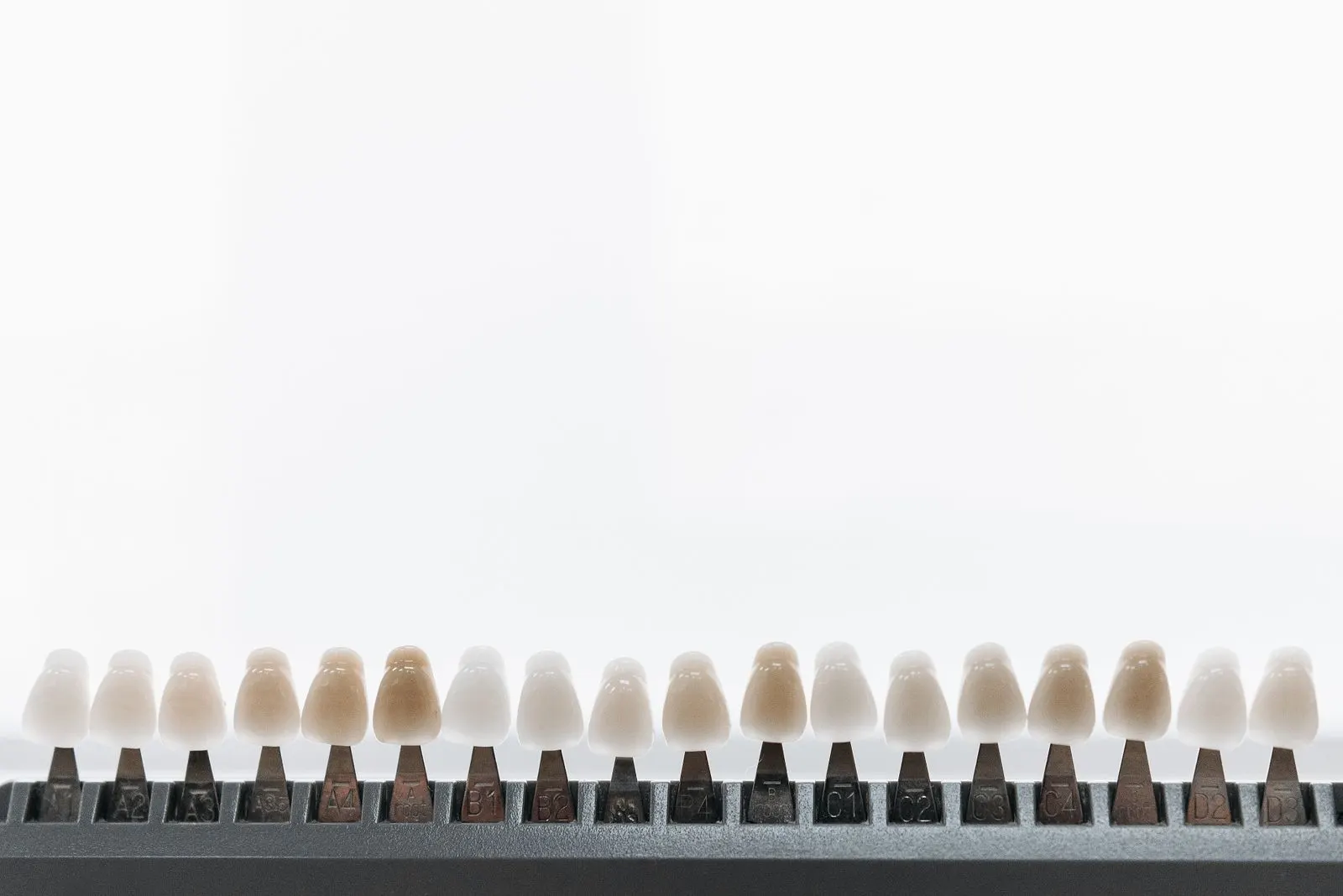
A thin ceramic shell, usually lithium disilicate (E.max) 0.3 to 0.8 mm thick, bonded to the front of the tooth. Preparation removes roughly 0.3 to 0.7 mm of enamel from the front, and about 1 to 1.5 mm at the edge if the veneer wraps over it. Ceramic does not stain, keeps its gloss and, when bonded to enamel, often lasts 10 to 20 years. Veneers suit several teeth that need a consistent shape and colour. More on porcelain veneers.
Crowns (the “caps” of the 1990s)
A crown covers the whole tooth. For an all-ceramic crown the tooth is reduced by about 1 to 1.5 mm on the sides and 1.5 to 2 mm at the edge. That is far more tooth removed than for a veneer, so crowns should be reserved for teeth that are already heavily filled, broken or root-treated. Modern crowns are zirconia or E.max; see our dental crowns page and our comparison of zirconia, E.max and metal-ceramic crowns.
Bonding, veneers and crowns compared
| Composite bonding | Porcelain veneer (E.max) | All-ceramic crown | |
|---|---|---|---|
| Tooth removed | None to minimal | About 0.3 to 0.7 mm front, 1 to 1.5 mm edge | About 1 to 2 mm all round |
| Appointments | Usually 1 | 2 to 3 over 5 to 7 days | 2 to 3 over 5 to 7 days |
| Stain resistance | Moderate, stains over years | Excellent | Excellent |
| Typical lifespan | About 4 to 8 years | Often 10 to 20 years | 10 to 15 years or more |
| Repairable | Easily, in the chair | Small chips polished; larger ones need a new veneer | Usually replaced |
| Reversible | Largely | No | No |
| Best for | Small chips, young patients, trial of shape | Several teeth, colour and shape change | Broken, heavily filled or root-treated teeth |
Which option fits which chip
| Situation | Usually sensible first choice |
|---|---|
| Small chip on one edge, healthy tooth | Composite bonding |
| Several worn or chipped edges, colour otherwise good | Bonding on the edges, or veneers if you want a lasting uniform result |
| Chips plus discolouration across the front teeth | Porcelain veneers |
| Large fracture, more than about a third of the crown lost | Crown, sometimes after root canal treatment |
| Fracture reaching the nerve | Root canal treatment first, then a crown |
| Tooth split below the gum | Often extraction and an implant |
When bonding stops making sense
Bonding is often the right start. Signs it may be time to move to ceramic:
- The bonded areas have been repaired more than two or three times.
- They look darker or duller than your enamel, even after polishing.
- You want to change the shape of six to ten teeth, not repair one.
- You want a result that is likely to last 10 years or more with minimal upkeep.
Moving from bonding to porcelain in this order is not a failure. It is the normal life cycle of cosmetic dentistry: start conservative, upgrade when it pays off. Our article on composite bonding versus veneers goes into the numbers.

How it would be planned in Istanbul
You start by leaving your contact details. A patient coordinator who speaks English and German calls or writes, a dentist assesses your case, and you receive a written, itemised plan before you book anything. The full process is on how it works.
A typical veneer or crown trip looks like this:
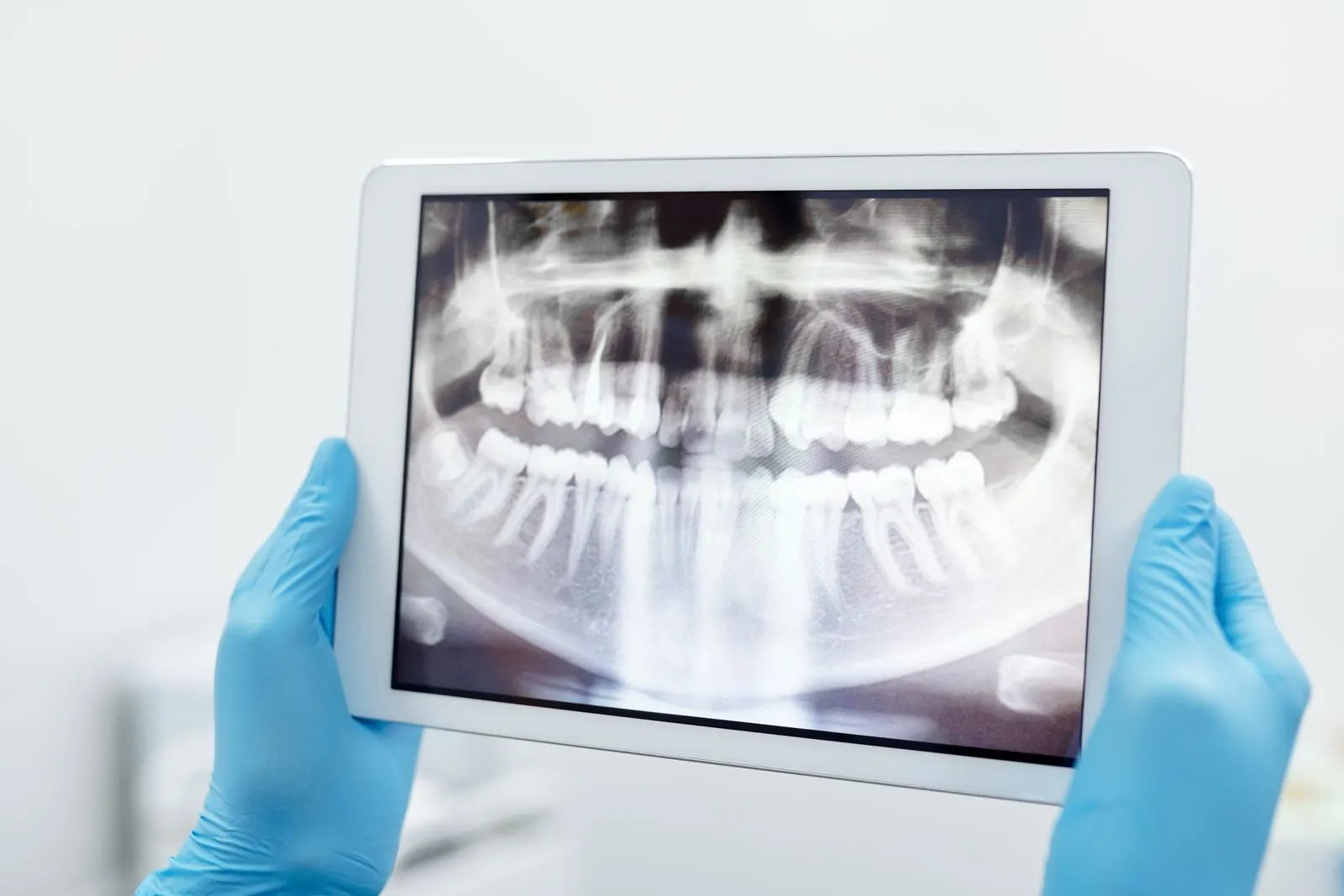
- Day 1: examination, X-rays and a 3D CBCT scan in the clinic where needed, bite and grinding check, photos and digital smile design. A mock-up lets you see the planned shape on your own teeth.
- Day 2: preparation of the teeth that need it, digital scan, temporaries.
- Days 3 to 5: the lab makes the restorations. You wear temporaries and can judge shape and length in daily life.
- Day 5 or 6: try-in of shade and fit, adjustments if needed.
- Day 6 or 7: final bonding, bite adjustment, night guard if you grind, written aftercare and guarantee terms.
Bonding alone needs only one or two days. If a tooth needs root canal treatment first, add one or two appointments within the same trip.
Lifespan, maintenance and risks
Studies of porcelain veneers typically report more than 90 % survival at 10 years; all-ceramic crowns on healthy abutments perform similarly. What shortens their life:
- Grinding without a night guard. This is the main cause of chipped veneers.
- Gum disease around the margins. Floss or use interdental brushes daily.
- Biting hard objects with the front teeth.
Honest risks: sensitivity for a few days after preparation; a veneer can debond or chip; heavily prepared teeth for crowns occasionally need root canal treatment later; and all ceramic work will eventually need replacing, removing a little more tooth each time.
Who should not choose veneers or crowns
- Young patients with one small chip: bonding is almost always the better first step.
- Heavy grinders who will not wear a night guard.
- Patients with untreated decay or gum disease.
- People with significant crowding: aligners first, then possibly a few veneers.
- Anyone being offered crowns on healthy, untreated teeth purely for colour.
What to ask a clinic, and red flags
- For each tooth: bonding, veneer or crown, and why?
- How much tooth will be removed, and will I see a mock-up first?
- Have you checked my bite and signs of grinding? Will I get a night guard?
- Which ceramic, which lab, and who is my treating dentist?
- What does the written guarantee cover after I get home?
Red flags: a fixed package for a number of teeth before an examination, crowns proposed on healthy teeth, the whitest shade as default, no temporaries or try-in, and no named dentist.
Budget: what the same work commonly costs at home
Private fees vary widely. Commonly quoted ranges are roughly £200 to £400 per tooth for composite bonding and £600 to £1,200 per porcelain veneer in the UK, and often $250 to $600 for bonding and $1,000 to $2,500 per veneer in the US. German patients typically see about €700 to €1,500 per ceramic veneer. Our starting prices are on the costs page, and your written quote lists every tooth and material.
Lessons from Ben Affleck’s smile
- Chips are common and fixable. Most adults have a small chip or worn edge somewhere.
- Match the treatment to the tooth. Bonding for small chips, veneers for colour and shape across several teeth, crowns only where the tooth is already weakened.
- Treat the cause. Grinding and bite problems break new work as surely as they broke the old.
- Bright, not blinding. His later smile is a step or two brighter than natural, not paper white, which is why it still looks like his own teeth.
Doctor Turka has not treated the person named in this article. Details about their dental work come from public interviews and media reports; we comment only on what the treatments involve in general.
Want a personal opinion?
Leave your contact details. Our patient coordinator will contact you to discuss your needs and explain the next steps, free and without obligation.
Discuss my options