Dentures in Turkey that fit, feel and look right
Complete, partial and immediate dentures made in Istanbul from careful impressions, a precisely recorded bite and teeth chosen for your face, with an honest view of when implants would serve you better.
- Five-stage denture process in one trip
- Teeth chosen and approved at a wax try-in
- Upgrade path to implants planned from day one
“I was really nervous at first, but the dentists were honestly lovely.”Serra · Trustpilot
 and
 Read reviews
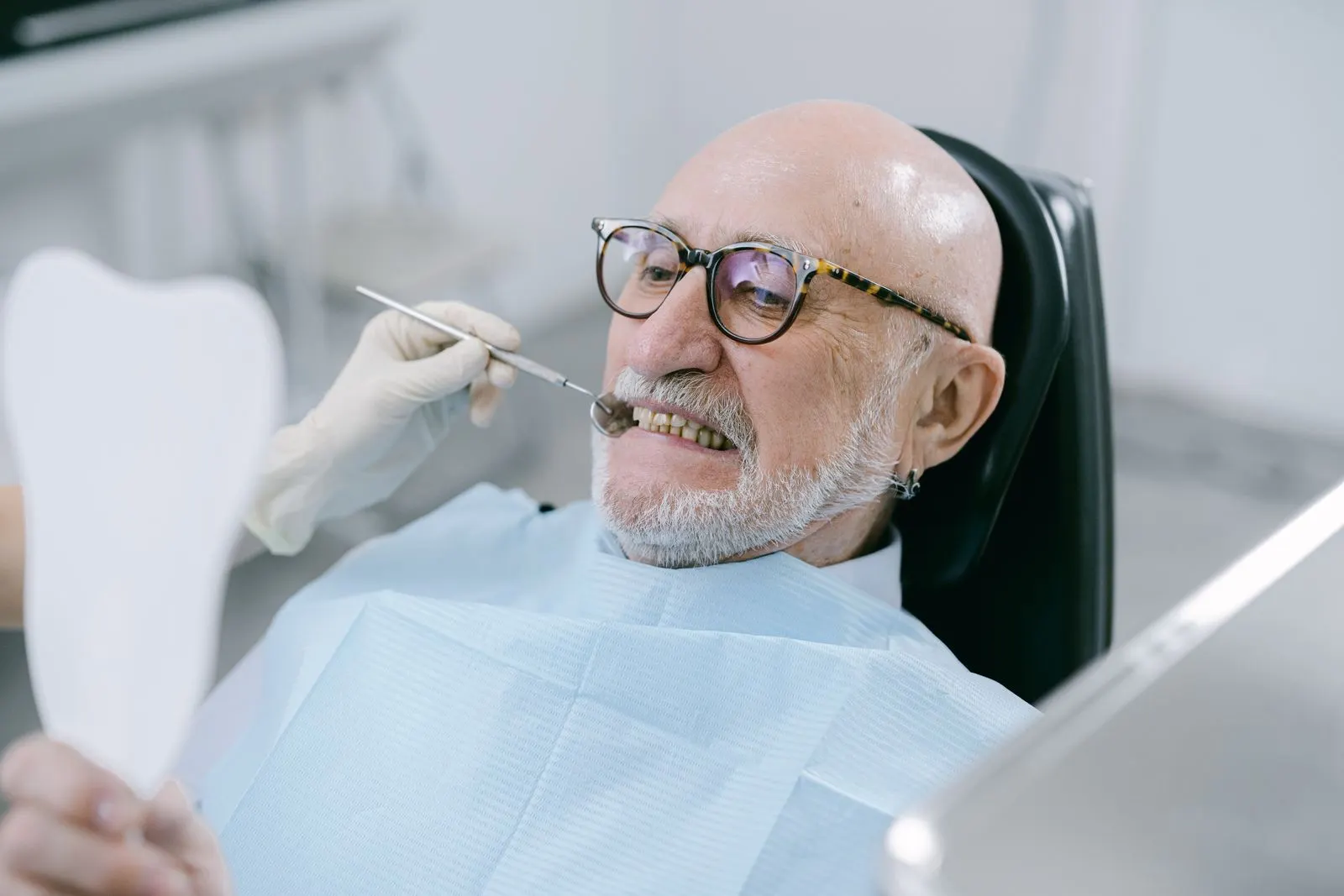
Dentures in Turkey: what you need to know
Dentures in Turkey are complete, partial or immediate, made to fit your mouth, bite and face in one trip to Istanbul.
Dentures in Turkey are one of the most practical ways to replace many or all missing teeth without surgery. A denture is a removable prosthesis: artificial teeth set in a gum-coloured base that rests on your gums and, for a partial denture, is also supported by your remaining teeth. Modern dentures are far better than their reputation, but only when the basics are done well. That means accurate impressions of the whole denture-bearing area, a correctly recorded jaw relationship, teeth set to support your lips and match your face, and a try-in before anything is finished.
Dentures are typically chosen by:
- people who have lost all the teeth in one or both jaws
- people with a few remaining teeth who need a partial denture to close several gaps
- people who are about to lose their remaining teeth and need an immediate denture
- people with an old, loose or worn denture that no longer fits
A conventional denture is made in one trip of about 7-10 days in Istanbul, with four or five appointments spaced to allow laboratory work in between. If teeth have to be removed first, an immediate denture is fitted on the day of extraction and relined or replaced once the gums have settled. At Doctor Turka, your case is assessed by Dr. Taha G or Dr. Hatice G, and you receive a written, itemised plan before treatment starts. Packages can include hotel nights and VIP airport-hotel-clinic transfers, and your coordinator speaks English and German.
A denture is not always the best answer, particularly in the lower jaw. This page explains the options, what the process involves and when an implant-supported denture or fixed teeth are the better long-term choice.
As featured on AP News, Google News and 36 TV news websites































Dentures before and after
Every smile is different. Ask us for cases similar to yours.
Real before & after photos, on request
We'll send you Dentures cases of patients with a similar starting point on WhatsApp (shared with their consent).
Dentures in Turkey: patient reviews
Verified review“I had my implants and zirconia crowns done here and I’m sooo happy with my new teeth!! 🥹 I was really nervous at first, but the dentists were honestly lovely. They explained everything and made me feel so comfortable. Everyone looked after me from start to finish, and my teeth look so natural. I can’t stop smiling now haha. Thank you all so much!! 🤍🦷”
Dental Implants · Trustpilot
Verified review“I had my zirconium crowns done a couple of weeks ago and thought I'd share my experience because I know how difficult it can be to decide where to go. I spent ages looking at different clinics and reading reviews before finally booking. I was a bit nervous when I arrived, mainly because I wasn't sure how my teeth would look afterwards. I really didn't want them to be too white or have that obvious fake look. The dentist was lovely and we talked about the colour and shape before starting, which made me feel a lot better. The first few days were a little uncomfortable, especially with the temporary teeth, but nothing I couldn't manage. I actually asked to change the shape of my front teeth slightly during the fitting and they were completely fine with it. I'm so glad I did because the final result is exactly what I had in mind. I've been home for a little while now and everything feels good. My friends keep saying I look different but they can't quite figure out why 😂 I think that's probably the nicest compliment I could get because I wanted them to look natural. Also have to mention how helpful everyone was during my stay. I had a few questions along the way and always felt comfortable asking. Really happy with how everything turned out and glad I finally went ahead with it ❤️”
Zirconia crowns · Trustpilot
Verified review“I had zirconia crowns fitted at Doctor Turka and I am very happy with my new smile. I wanted a result that suited me, so it mattered that the team listened to what I liked and what I was unsure about. They took my questions seriously and explained the treatment without making me feel rushed. The staff were friendly throughout my appointments, which made the whole experience easier. What I appreciate most is feeling comfortable smiling again. Thank you to everyone involved in my care.”
Zirconia crowns · Trustpilot
Our patients tell their story
Real treatments at our clinic in Istanbul, filmed with the patients' consent. Ask us for cases similar to your Dentures case.
Who will treat you
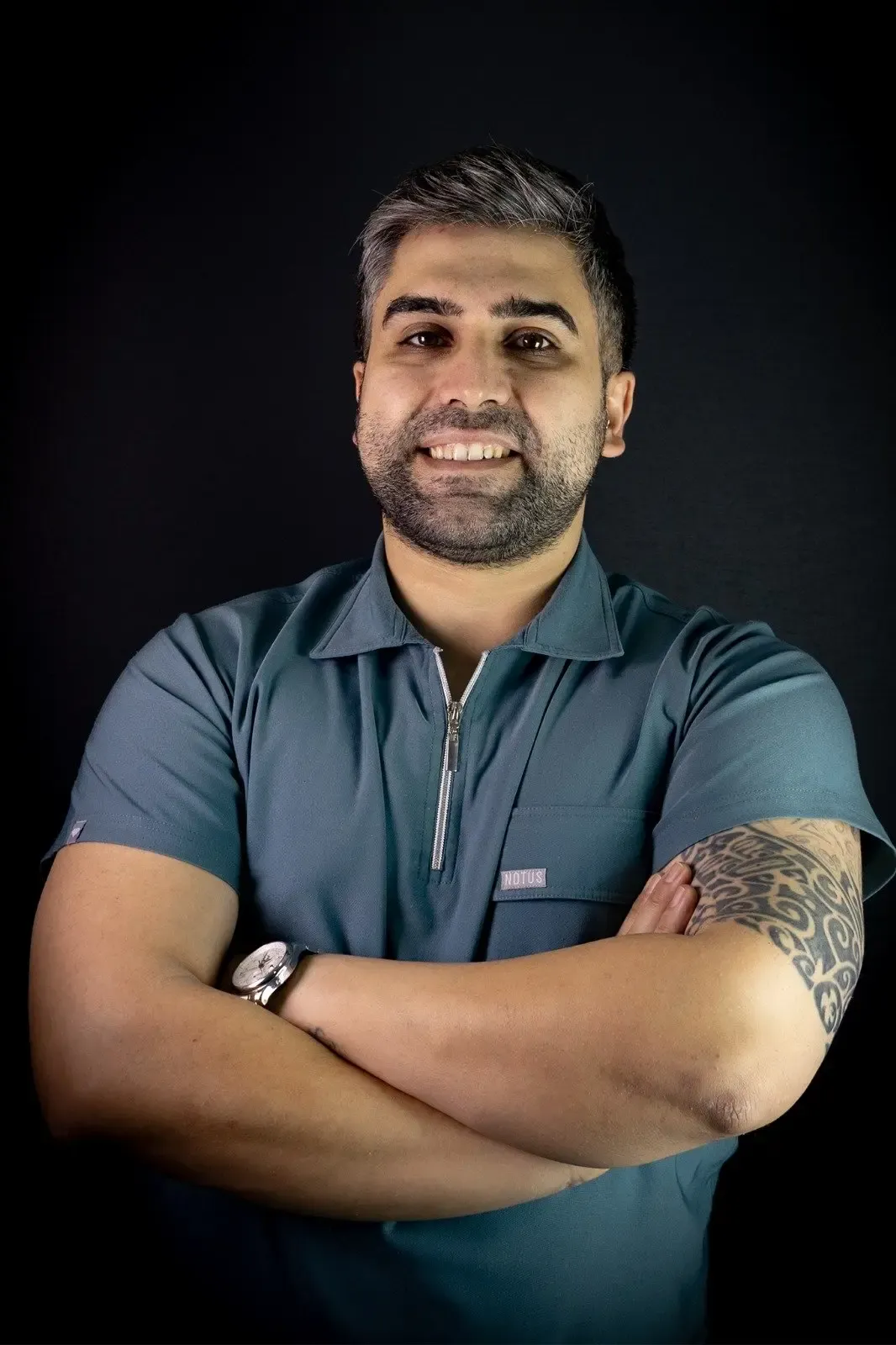
Dr. Taha G
Plans and carries out treatment for Doctor Turka patients at our clinic in Istanbul.

Dr. Hatice G
Treats Doctor Turka patients at our clinic in Istanbul, with a focus on aesthetic and restorative dentistry.
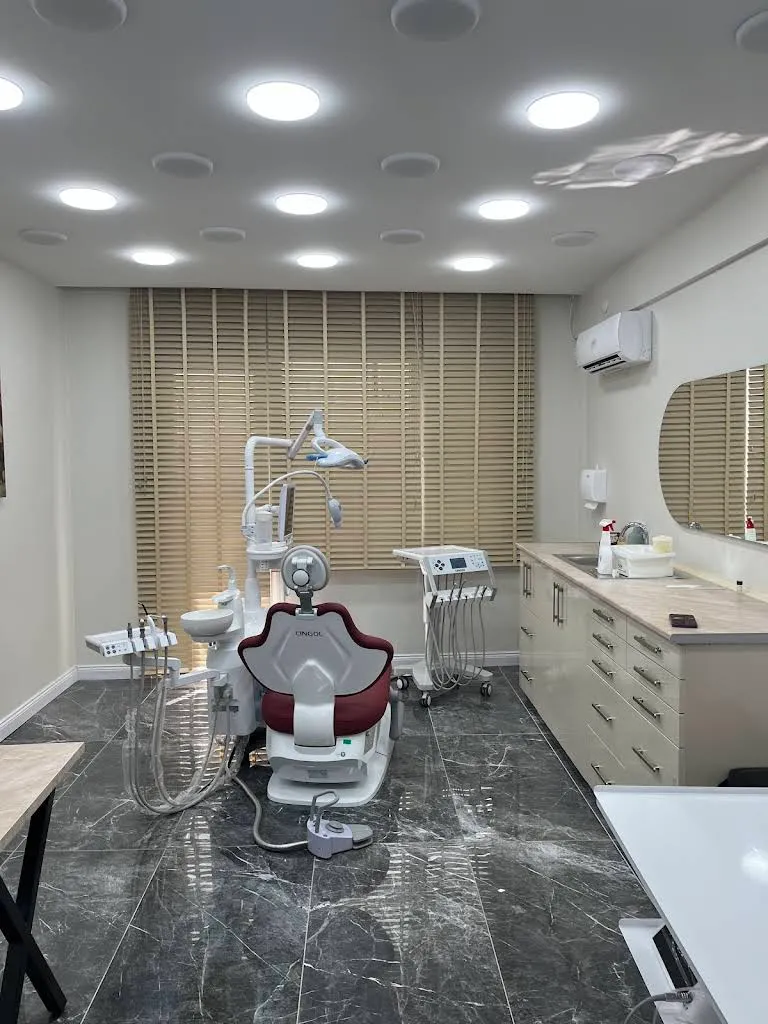
Where you are treated
Our own treatment rooms in Istanbul, the same dentists plan and treat.
Learn more Replies within 15 minutes · 7 days a weekQuestions about Dentures? Talk to our team.
Our patient coordinator takes your questions; medical questions are answered by Dr. Taha G and the team: whether Dentures suits you, how long it takes and what the alternatives are.
- Medical questions answered by a dentist
- Your contact details are enough to start
- Free and without obligation
Types of Dentures
Which option suits you is decided together with your dentist, based on your examination, not a catalogue.
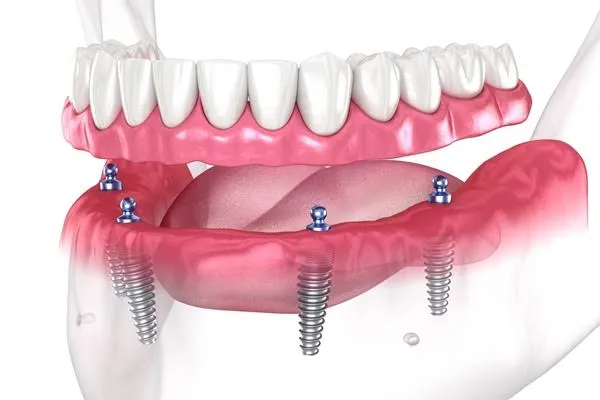
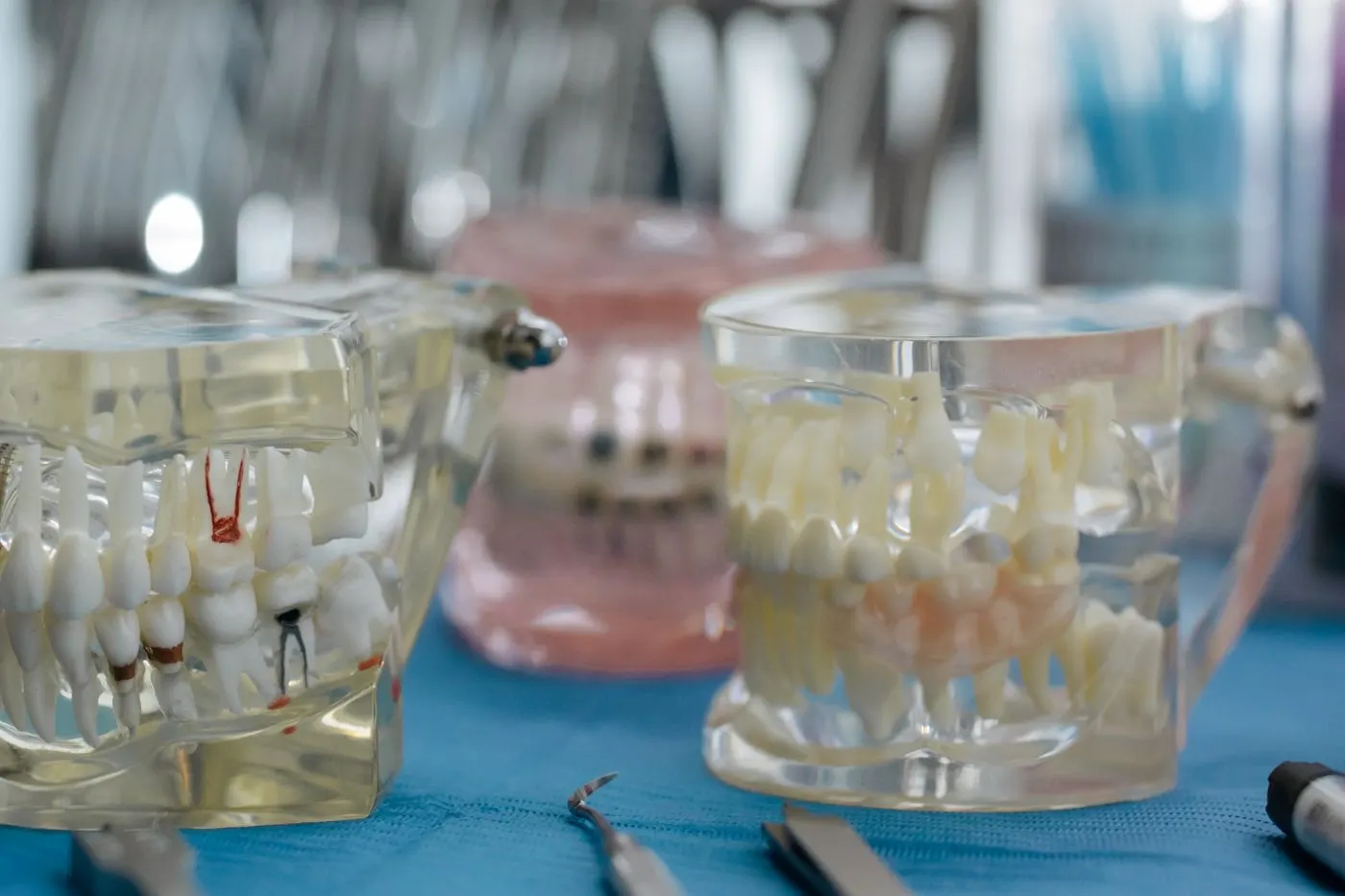
Bite and function
How your upper and lower teeth meet is planned carefully, so the new teeth feel natural when you chew and speak.
Dentures procedure step by step
Before you travel, you know what happens on which day.
Examination of gums, remaining teeth and jaw, a panoramic X-ray or 3D CBCT in the clinic if needed, and preliminary impressions. Your options are explained and the plan is confirmed in writing.
A custom tray made for your mouth is used to take a precise functional impression, including the borders that create the seal. This step matters most for how well the denture stays in.
Wax rims record your jaw relationship, the height of your bite, lip support and the midline. Tooth shape and shade are chosen with you.
The teeth are set in wax and tried in your mouth. You check appearance, speech and bite, and changes are made before the denture is processed.
The finished denture is fitted, pressure areas are checked and the bite is balanced. You receive care and cleaning instructions.
After a few days of wear, sore spots are relieved and the bite fine-tuned before you fly home.
What shapes your personal plan
- Complete, partial or immediate denture, and one jaw or both
- Base and framework: acrylic, cast cobalt-chrome or flexible material
- Quality of the artificial teeth (standard acrylic, multi-layer or composite teeth)
- Extractions, and whether an immediate denture is needed first
- Treatment of remaining teeth that will carry clasps (fillings, crowns, gum treatment)
- Whether implants are added now or planned for later
- Package elements such as hotel nights and transfers
Dentures: recovery & aftercare
What to expect in the days and weeks after treatment, and what you can do yourself.
- 01First 1-2 weeks
Expect more saliva, some sore spots and a slight lisp. Eat soft food cut into small pieces, chew on both sides at once and read aloud to train your speech. Do not trim the denture yourself.
- 02Weeks 2-8
Speech usually normalises first; confident chewing takes longer. Sore spots that persist are relieved by a dentist, and our team can advise you remotely.
- 03Every day
Take the denture out after meals to rinse, brush it with a soft brush and mild soap or denture cleaner (not toothpaste), and brush your gums and any remaining teeth. Store it in water or a cleaning solution overnight.
- 04Every 12 months
Check-up of the fit, the gums and the clasped teeth. An oral cancer check is part of this for complete denture wearers too.
- 05Every 2-5 years
Reline when the gum shape has changed and the denture feels loose; replacement is usually due after 5-8 years as the teeth wear.
Benefits of Dentures
No surgery needed
A conventional denture is made without implants, grafts or healing time, which suits people who cannot or do not want to have surgery.
One trip
Complete and partial dentures are usually finished within 7-10 days in Istanbul.
Facial support
Correctly set teeth and a well-shaped base restore lip and cheek support and the height of the lower face lost with the teeth.
Protects remaining teeth
A well-designed partial denture fills gaps without grinding down neighbouring teeth and stops teeth drifting or over-erupting.
Easy to repair and extend
Cracks, lost teeth or a newly extracted tooth can usually be fixed or added in a dental laboratory.
Upgradeable
Implants can be added later so the same type of denture clicks onto attachments.
Good to know: limits & risks
- A conventional lower full denture often moves when you eat or speak; many people never become fully comfortable with it.
- The jawbone continues to shrink under a denture, so relines are needed every few years and the denture usually needs replacing after 5-8 years.
- Chewing efficiency with complete dentures is much lower than with natural teeth or implants; hard and sticky foods remain difficult.
- An upper full denture covers the palate, which can affect taste, temperature sensation and the gag reflex.
- Partial dentures put extra load on the clasped teeth and need excellent hygiene to protect them from decay and gum disease.
- Immediate dentures loosen quickly as the gums heal and need at least one reline or a new denture within 3-6 months.
Your dentist goes through these points with you before treatment, openly and without sales pressure.
See where your new smile begins
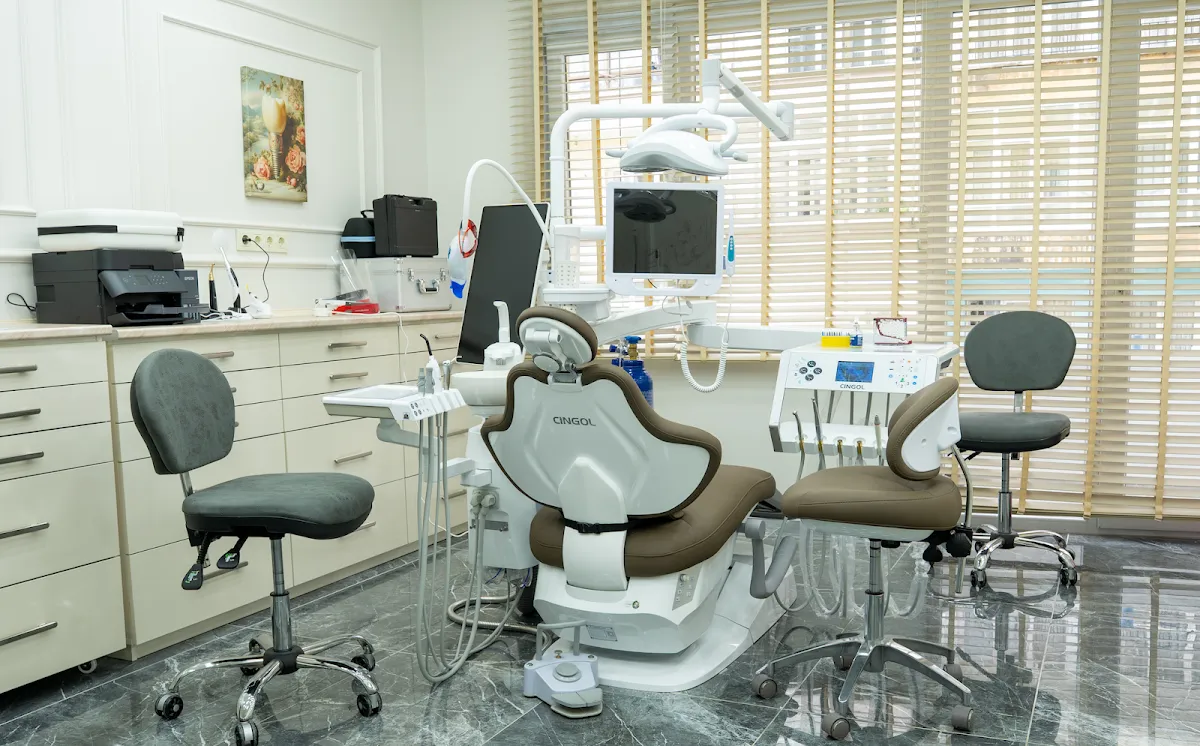
Your treatment takes place at our own clinic in Istanbul, with the same dentists who write your plan.
Dentures in Turkey: what a well-made denture involves
A denture looks simple, but its fit depends on several precise steps. A complete denture has no teeth to hold onto, so it relies on three things: a thin film of saliva between the base and the gum that creates suction, a border that seals against the soft tissues of the cheeks and floor of the mouth, and your own muscles learning to hold it in place.
That is why a good denture is not made from a single quick impression. It needs a preliminary impression, a custom tray, a functional impression that records how your cheeks and tongue move, a bite registration and a try-in. Skipping any of these is the most common reason for dentures that rock, rub or drop.
The teeth themselves are set according to your face. Their length, width and position determine how much of the teeth show when you smile, how full your lips look, and whether your lower face regains its natural height. A denture that is set too "short" makes the chin come forward and the lips fold in; one set too "tall" feels crowded and tiring.
Complete dentures vs partial dentures
A complete denture replaces every tooth in one jaw. A partial denture fills gaps between your remaining teeth and uses some of them for support and retention. The choice depends mainly on how many teeth you have left and whether they are healthy enough to keep.
Keeping even a few strong teeth is often worthwhile. They give a partial denture far better stability than a full denture, preserve the bone around them and keep some natural feeling when you bite. Teeth that are loose, badly decayed or affected by advanced gum disease are a different matter: building a partial denture around them usually means repeated repairs and a second treatment soon after.
Partial denture materials compared
| Acrylic partial | Cast-metal (chrome) partial | Flexible partial | |
|---|---|---|---|
| Base | Acrylic plate | Thin cobalt-chrome framework | Flexible nylon-type resin |
| Clasps | Bent wire | Cast metal clasps and rests | Gum-coloured, part of the base |
| Bulk and comfort | Thickest | Thinnest, covers least of the palate | Thin and flexible |
| Support | Mainly on the gum | Shared with teeth via rests | Mainly on the gum |
| Adding teeth later | Easy | Usually possible | Difficult or impossible |
| Relining | Easy | Possible on the acrylic parts | Difficult |
| Typical use | Transitional or budget | Long-term partial denture | Front gaps where metal would show |
For most people who need a long-term partial denture, a cast-metal (chrome) denture is the most durable and hygienic option because its rests transfer chewing forces onto the teeth rather than pressing the plate into the gum. Flexible dentures are popular for their appearance, but they rest mainly on the gum and are hard to modify, so they are better suited to small gaps and stable situations.
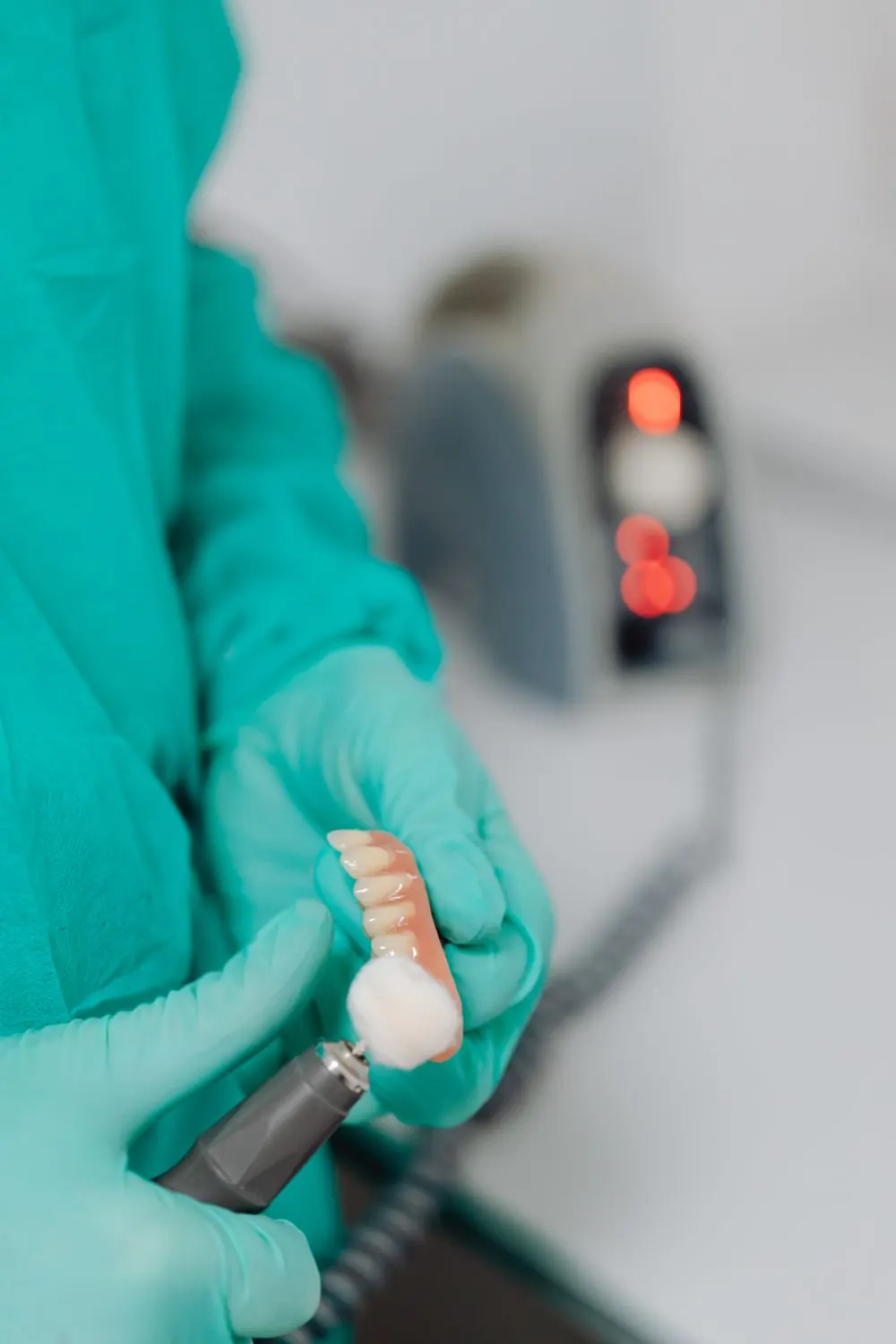
Restorations are made individually for your mouth, with try-ins and adjustments before final placement.
Immediate dentures: teeth on the day of extraction
If your remaining teeth have to be removed, an immediate denture is made from impressions taken before the extractions and fitted straight afterwards. It acts as a bandage over the sockets, reduces bleeding and means you leave the clinic with teeth.
The trade-off is fit. In the first three to six months after extractions, the gums and bone shrink noticeably as the sockets heal, and the immediate denture gradually becomes loose. It needs a temporary soft reline during healing and then either a permanent reline or a new definitive denture. We plan this with you before you travel: it can be done on a short second visit to Istanbul or by a dentist at home. Some patients use this healing period to have implants placed and move to an implant-retained denture.
Why lower dentures are harder
Most complaints about dentures concern the lower jaw, and there are anatomical reasons for it:
- Smaller surface. A lower denture has roughly half the bearing area of an upper denture and no palate to create suction.
- The tongue. The tongue and the floor of the mouth move constantly and lift the edges of the denture.
- Faster bone loss. Studies have found that the lower ridge can shrink up to about four times faster than the upper, so the base it rests on keeps getting flatter.
- Sensitive nerve. In advanced resorption, the nerve that runs through the lower jaw can end up close to the surface and make pressure painful.
A carefully made denture can make a lower full denture as stable as the anatomy allows, but it cannot change that anatomy. This is why an international consensus statement from 2002 (the McGill statement) suggested that a lower denture retained by two implants should be considered the minimum standard of care for people without lower teeth.
Bone resorption and relines
After a tooth is lost, the bone that held it is no longer stimulated and begins to shrink. Most of the change happens in the first year, but it continues for life under a denture. The denture does not cause the loss, but the pressure of a poorly fitting denture can accelerate it.
A reline adds new material to the fitting surface so it matches the current shape of your gums. A hard reline is done in a laboratory, usually within a day. A soft reline uses a cushioning material that is kinder to sore or thin gums but wears faster. When the teeth are worn or the bite has collapsed, a reline is not enough and a new denture is the better choice.
How many trips and days in Turkey
| Situation | Trips | Time in Istanbul |
|---|---|---|
| New complete or partial denture, no extractions | 1 | 7-10 days |
| Extractions and immediate denture | 1, plus a reline or new denture after 3-6 months | 5-7 days |
| Denture now, implants added later | 2 or 3 | 5-7 days per trip |
| Reline or repair of an existing denture | 1 | 1-3 days |
Your coordinator schedules appointments so the laboratory has time between them. See how it works for the full journey from first contact to flight home.
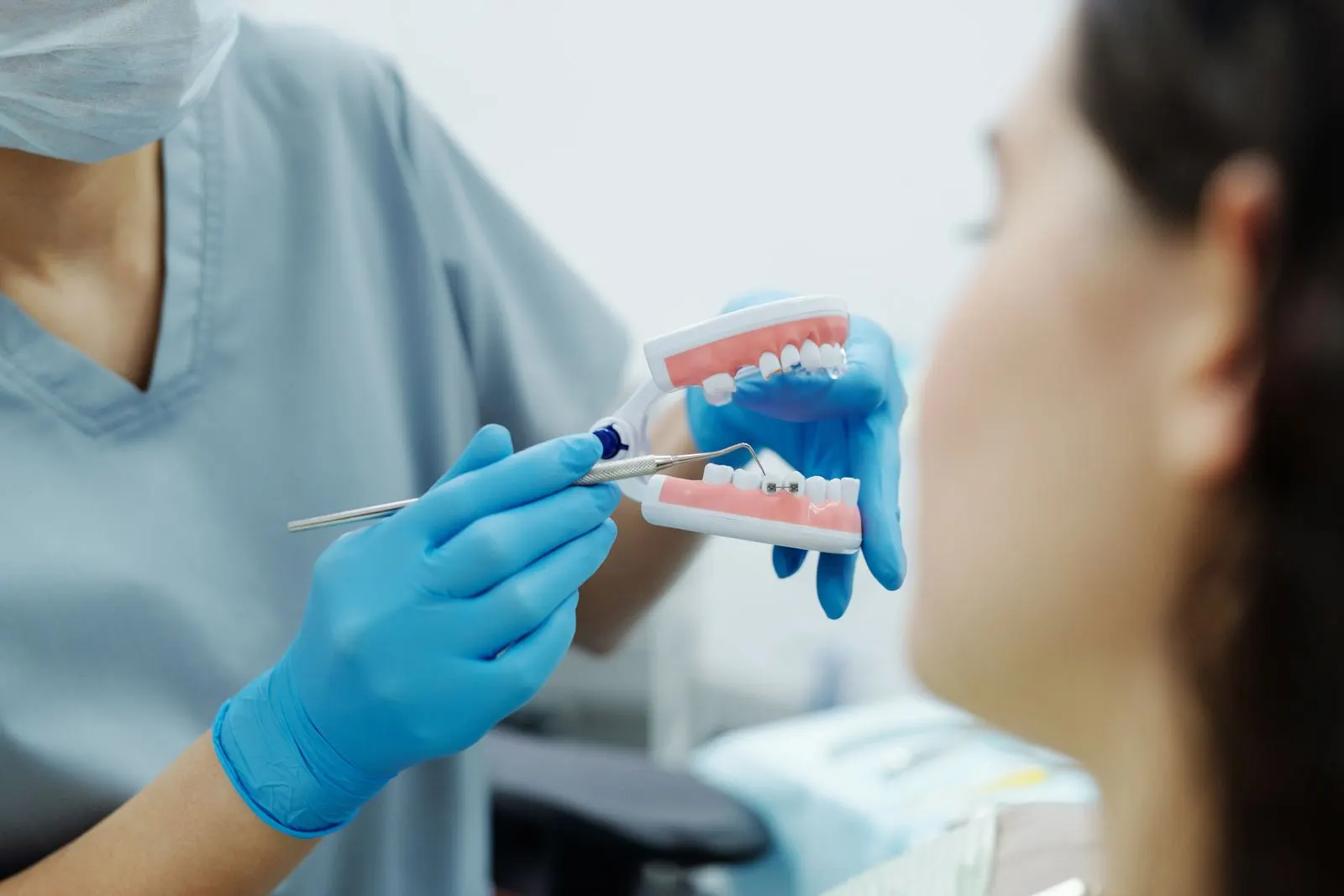
Before you fly home, the team shows you how to clean and look after your new teeth.
Adapting to your new denture
Almost everyone needs time to adapt, and the first days rarely reflect how the denture will feel after a month.
- Speaking. A new denture changes the space your tongue works in. Reading aloud for a few minutes a day helps; most people speak normally within one to two weeks.
- Eating. Start with soft food in small pieces, chew on both sides at once and avoid biting with the front teeth at first. Confident chewing often takes four to eight weeks.
- Sore spots. Small pressure areas are common in the first week. They are relieved at the review appointment in Istanbul and, if needed later, by a dentist at home.
- Saliva. Increased saliva in the first days is normal and settles.
- Adhesive. A small amount can help confidence, but a denture that needs adhesive every day to stay in usually needs a reline or implants.
When implants are the better choice
A conventional denture remains a sensible and proven option. Implants are worth considering if:
- your lower denture never feels stable despite a good fit
- you avoid foods, social situations or speaking in public because of it
- you rely on adhesive every day
- the bone is resorbing quickly and you want to slow further loss
- you cannot tolerate a palate plate in the upper jaw
With two implants in the lower jaw, the denture clicks onto small attachments; this is explained on our page on implant-supported dentures. If you would prefer teeth that do not come out at all, a fixed bridge on four or six implants such as All-on-4 is the next step. Where bone is very thin, bone grafting may be needed first.
| Conventional denture | Implant-retained denture | Fixed All-on-4 | |
|---|---|---|---|
| Surgery | None | Minor, 2-4 implants | 4 implants, full arch |
| Hold | Suction and muscles | Clicks onto attachments | Screwed in place |
| Removed by | You | You | Dentist only |
| Chewing | Limited | Much better | Close to natural teeth |
| Bone under the prosthesis | Keeps shrinking | Better preserved around implants | Better preserved around implants |
| Trips to Istanbul | 1 | 2 | 2 |
Who dentures are not ideal for
A conventional denture can be difficult for people with a strong gag reflex, very dry mouth (for example after radiotherapy or with certain medications), severe bone loss in the lower jaw, or conditions that affect muscle control such as some neurological illnesses. In these situations, the plan may include implants, a denture design with less palate coverage, or medical coordination with your doctor at home.
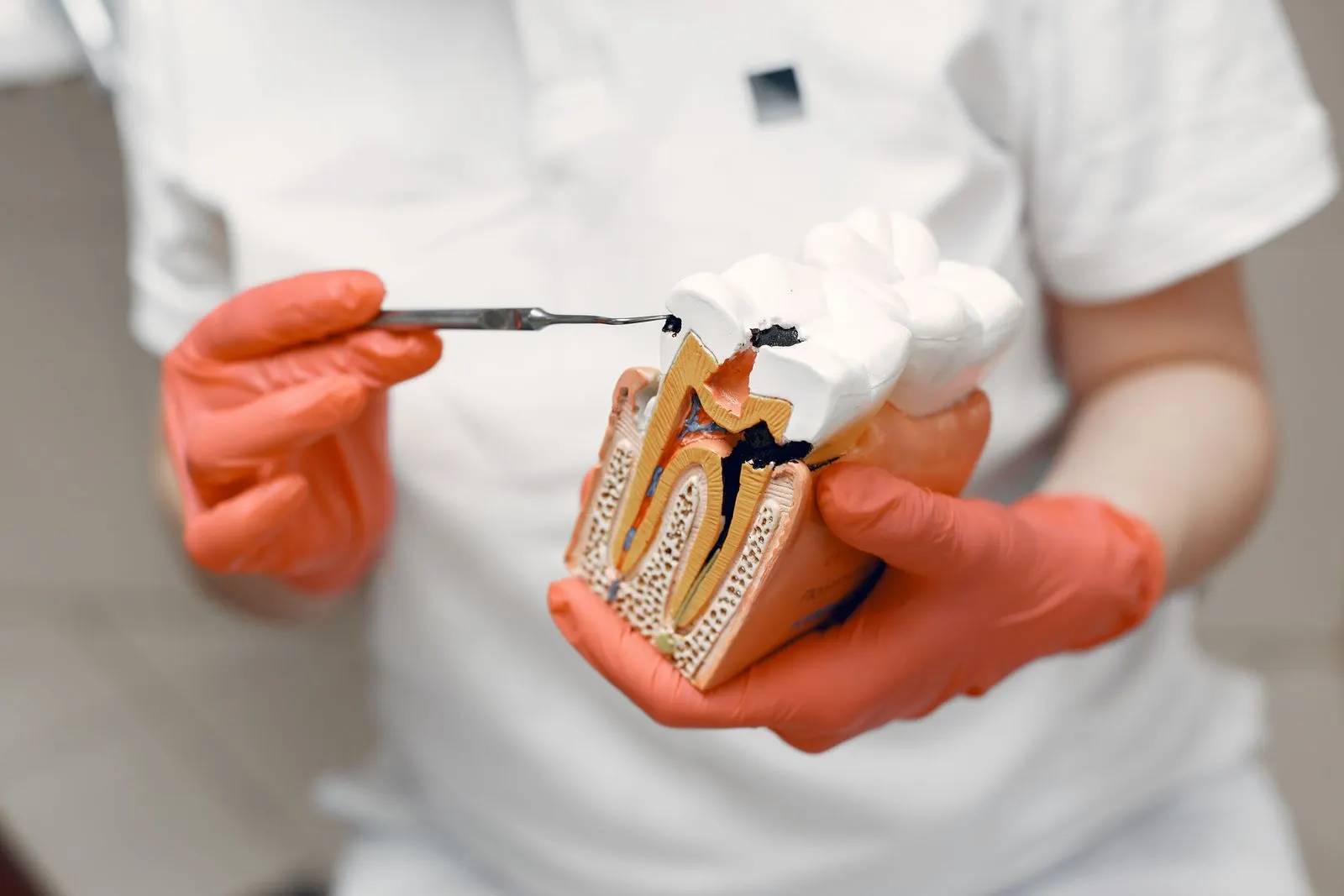
Your dentist explains how the tooth and the treatment work, so you know what to expect at every appointment.
Choosing a clinic for dentures in Turkey
Ask any clinic how many appointments the process includes, whether a custom tray and wax try-in are part of it, how many days are planned between steps, and how relines and adjustments are handled after you go home. Be cautious of offers that make a complete denture in one or two days without a try-in, or that promise the result without examining your mouth.
What shapes your treatment plan and quote
The main factors are the type of denture, the materials, the number of extractions, any treatment of remaining teeth and whether implants are included. Your plan lists each item separately. For current starting prices, see our dental costs in Turkey page.
Guarantee and follow-up from home
Your written guarantee and its terms are explained in your treatment plan. After you return home, your coordinator stays in contact for questions, and routine adjustments or relines can be carried out by a dentist near you.
Modern dentures have come a long way. Read how even Kanye West's titanium dentures were done and what is realistic for you.
Dentures are one way to replace missing teeth; see all the options to replace missing teeth side by side.
Everything arranged, one point of contact
What exactly is included is set out in your personal, written plan.
Dentures: how to get started
- Leave your contact details
- Talk to our patient coordinator
- A dentist assesses your case, then you receive your written plan
Dentures in Turkey: FAQ
Answers about Dentures. Not listed? Ask us directly.
How long does it take to get dentures in Turkey?
A new complete or partial denture usually takes 7-10 days in Istanbul, with four to six appointments: examination, final impressions, bite registration, wax try-in, fitting and a review. If teeth need removing, an immediate denture is fitted on the day of extraction and relined or replaced after three to six months of healing, either on a short return visit or with a dentist at home.
Will my new denture look natural?
The teeth are chosen for your face shape, age, lip line and skin tone, and set to support your lips and restore the height of your lower face. You see and approve them at the wax try-in before the denture is finished, so changes to tooth shape, shade or position can still be made at that stage.
What is the difference between chrome, acrylic and flexible partial dentures?
An acrylic partial is a thicker plate with wire clasps, easy to extend and often used short-term. A chrome (cobalt-chrome) partial has a thin metal framework with rests on the teeth, making it the most durable and hygienic long-term option. A flexible partial has gum-coloured clasps and no visible metal, but it is hard to adjust, reline or extend.
How long does a denture last?
Most dentures last around 5-8 years before the teeth are noticeably worn and the fit has changed too much for a reline to solve. Relines are typically needed every two to five years. Chrome frameworks often outlast the acrylic teeth, which can sometimes be replaced on the same framework.
Can my existing denture be fixed onto implants later?
Sometimes. If your denture fits well, is fairly new and has enough thickness over the implant positions, attachments can be built into it. Often a new denture with a metal reinforcement gives a stronger, longer-lasting result. If you think you may want implants later, tell us at the start so tooth positions and the base can be planned accordingly.
How much do dentures cost in Turkey?
It depends on the type of denture (complete, partial or immediate), the materials (acrylic, chrome or flexible), the quality of the teeth, any extractions and whether you need one jaw or both. Implants change the plan considerably. You receive a written, itemised quote after your case has been assessed. For current starting prices, see our dental costs in Turkey page. For a full breakdown, read our guide to dentist prices in Turkey 2026.
Why is my lower denture so loose?
The lower jaw offers a much smaller bearing area, no palate for suction and a tongue that constantly lifts the edges. The lower ridge also tends to shrink faster than the upper. A well-made denture and a reline can improve the fit, but where the bone is flat, two implants with click-in attachments are often the only way to make it stable.
Can I get a denture on the same day my teeth are removed?
Yes. An immediate denture is made from impressions taken before the extractions and fitted straight afterwards. Because the gums and bone shrink during healing, it loosens over the next months and needs a soft reline, followed by a permanent reline or a new denture after three to six months. We plan this step with you before you travel.
Can I sleep with my denture in?
It is generally recommended to take it out at night so the gums can rest and the tissue under the denture is exposed to saliva. Sleeping in dentures is linked to a higher risk of fungal infection and inflammation of the palate. Keep it in water or cleaning solution overnight so it does not dry out.
How long does it take to get used to dentures?
Speech usually settles in one to two weeks. Eating confidently with a new complete denture typically takes four to eight weeks, and lower dentures take longest. Sore spots in the first days are normal and are relieved at your review appointment. Anyone who still struggles after two to three months should have the fit checked.
Ask us, a coordinator replies personally, and a dentist answers medical questions.
Let’s plan your dental care
Leave your contact details. Our patient coordinator will contact you to discuss your needs and explain the next steps, free and without obligation.
- We reply within 15 minutes, 7 days a week
- Plan and quote in writing after the dentist’s assessment
- No obligation, no pressure
Let’s plan your dental care
Leave your contact details. Our patient coordinator will contact you to discuss your needs and explain the next steps.