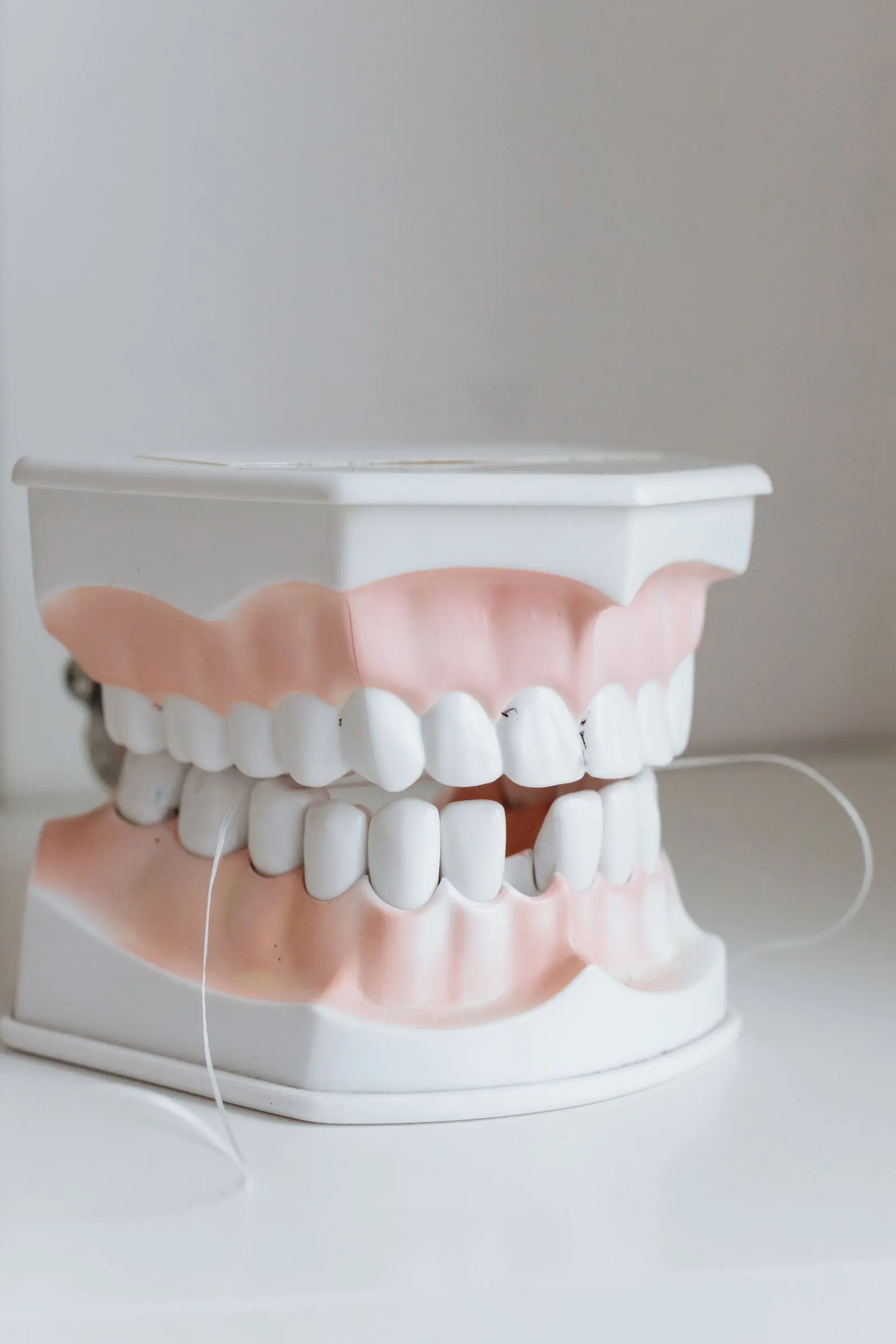
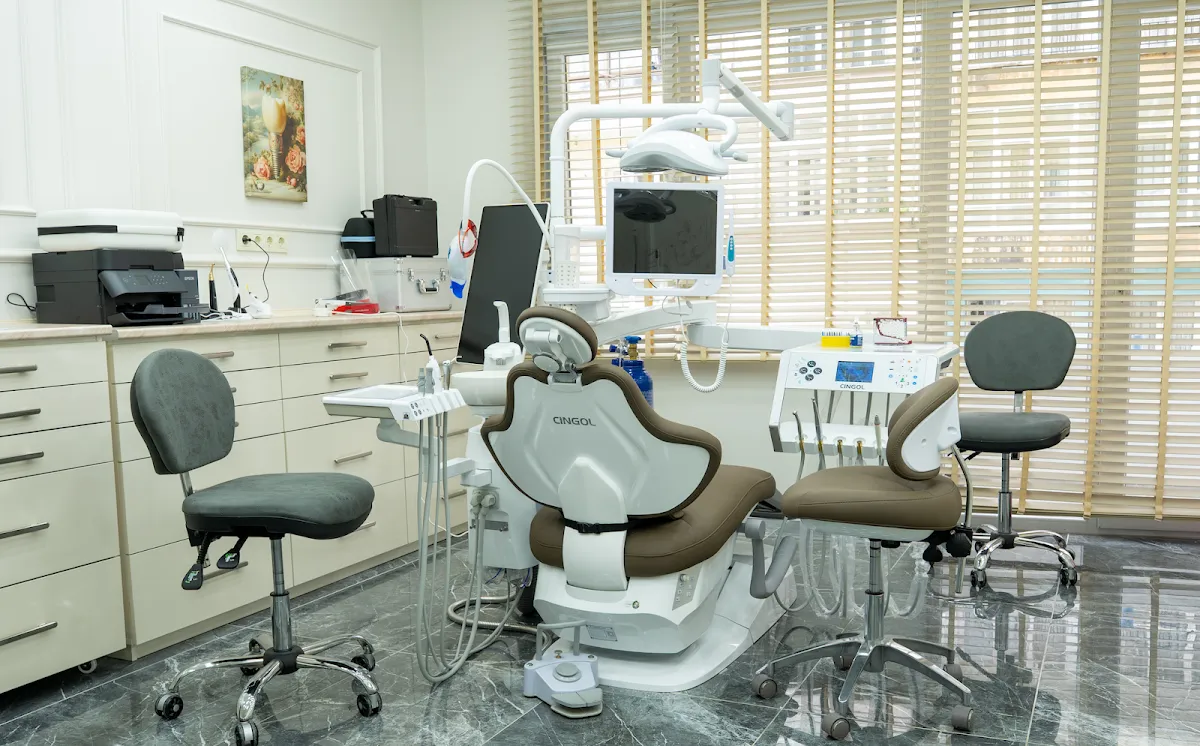
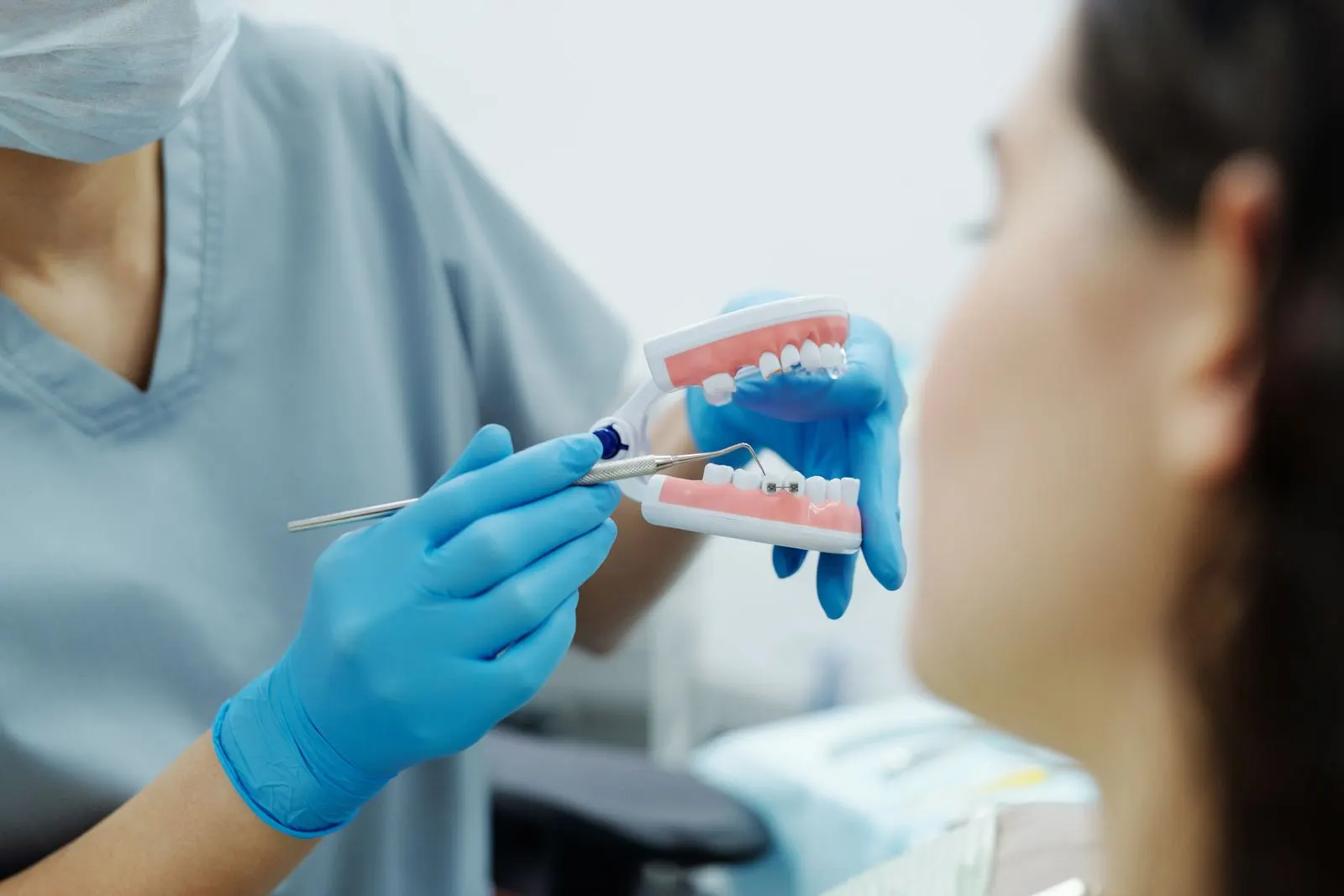
Tooth-coloured resin sculpted directly onto your teeth to close gaps, rebuild chips and refine shape, usually with no drilling. Finished in Istanbul in 2-3 days.
Little or no enamel removed, so the change is largely reversible
Finished in 2-3 days, with no laboratory wait
Chips and wear can be repaired chairside
“I was really nervous at first, but the dentists were honestly lovely.”Serra · Trustpilot
Composite bonding in Turkey: what you need to know
Composite bonding in Turkey reshapes chipped, gapped or uneven teeth with tooth-coloured resin sculpted directly onto the tooth, usually with no drilling, finished in Istanbul in 2 to 3 days.
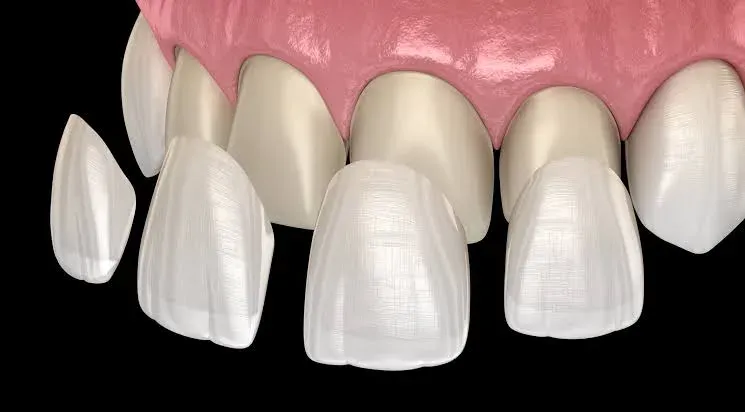
Composite veneers in Turkey are one of the most tooth-friendly ways to change a smile. Tooth-coloured composite resin is applied in thin layers directly onto your enamel, shaped by hand, hardened with light and polished. In most cases no drilling is needed, so your natural teeth stay underneath and the treatment is largely reversible.
Composite is ideal for changes of shape and proportion: closing a gap between the front teeth, lengthening worn or short edges, rebuilding a chipped corner, evening out small or peg-shaped teeth, or masking mild discolouration. When only part of a tooth is treated we call it composite bonding; when the whole visible surface is covered it is a composite veneer. The material and technique are the same.
The trade-off is durability. Resin is softer than ceramic, it slowly loses its shine and can pick up stains from coffee, tea, red wine and smoking. Expect polishing at check-ups and a refresh or replacement after roughly 4-8 years. If you want a result that keeps its colour for 15 years, or your teeth are very dark, porcelain veneers are usually the better choice, and we will say so.
At Doctor Turka in Ataköy, Istanbul, composite veneers are placed by Dr. Taha G or Dr. Hatice G and usually take one trip of 2-3 days. Packages include hotel nights and VIP airport-hotel-clinic transfers, and a coordinator who speaks English and German organises everything.
In the press
As featured on AP News, Google News and 36 TV news websites
“I had my implants and zirconia crowns done here and I’m sooo happy with my new teeth!! 🥹 I was really nervous at first, but the dentists were honestly lovely. They explained everything and made me feel so comfortable. Everyone looked after me from start to finish, and my teeth look so natural. I can’t stop smiling now haha. Thank you all so much!! 🤍🦷”
SSerra Akaoglu Dental Implants · Trustpilot
★★★★★
Verified review
“I had my zirconium crowns done a couple of weeks ago and thought I'd share my experience because I know how difficult it can be to decide where to go. I spent ages looking at different clinics and reading reviews before finally booking.
I was a bit nervous when I arrived, mainly because I wasn't sure how my teeth would look afterwards. I really didn't want them to be too white or have that obvious fake look. The dentist was lovely and we talked about the colour and shape before starting, which made me feel a lot better.
The first few days were a little uncomfortable, especially with the temporary teeth, but nothing I couldn't manage. I actually asked to change the shape of my front teeth slightly during the fitting and they were completely fine with it. I'm so glad I did because the final result is exactly what I had in mind.
I've been home for a little while now and everything feels good. My friends keep saying I look different but they can't quite figure out why 😂 I think that's probably the nicest compliment I could get because I wanted them to look natural.
Also have to mention how helpful everyone was during my stay. I had a few questions along the way and always felt comfortable asking. Really happy with how everything turned out and glad I finally went ahead with it ❤️”
DDough Zirconia crowns · Trustpilot
★★★★★
Verified review
“I had zirconia crowns fitted at Doctor Turka and I am very happy with my new smile. I wanted a result that suited me, so it mattered that the team listened to what I liked and what I was unsure about. They took my questions seriously and explained the treatment without making me feel rushed. The staff were friendly throughout my appointments, which made the whole experience easier. What I appreciate most is feeling comfortable smiling again. Thank you to everyone involved in my care.”
JJnae Ford Zirconia crowns · Trustpilot
Patient videos
Our patients tell their story
Real treatments at our clinic in Istanbul, filmed with the patients' consent. Ask us for cases similar to your Composite veneers case.
Questions about Composite bonding? Talk to our team.
Our patient coordinator takes your questions; medical questions are answered by Dr. Hatice G and the team: whether Composite veneers suits you, how long it takes and what the alternatives are.
Starting prices from our price list, next to typical private fees at home. Your exact price is in your written plan after a dentist’s assessment.
Number of teeth8
USA€6,120 to €9,6303
UK€928 to €3,7206
Germany€1,600 to €5,60012
Istanbulfrom €1,040
UK, Germany, USA: published private fees, source numbers on the price list. Saving is calculated against the lower end of each range. Istanbul: our starting price. Your exact price is in your written plan after a dentist’s assessment. Sources
You save
up to 35%
compared with a private clinic at home, with the same implant systems and ceramics.
Digital diagnostics3D CT scan and intraoral scanning
Hygiene standardsProtocol-based sterilisation
Named dentistsYou know who treats you
English & GermanCoordinator at every appointment
In-depth guide
Composite bonding vs composite veneers: what is the difference?
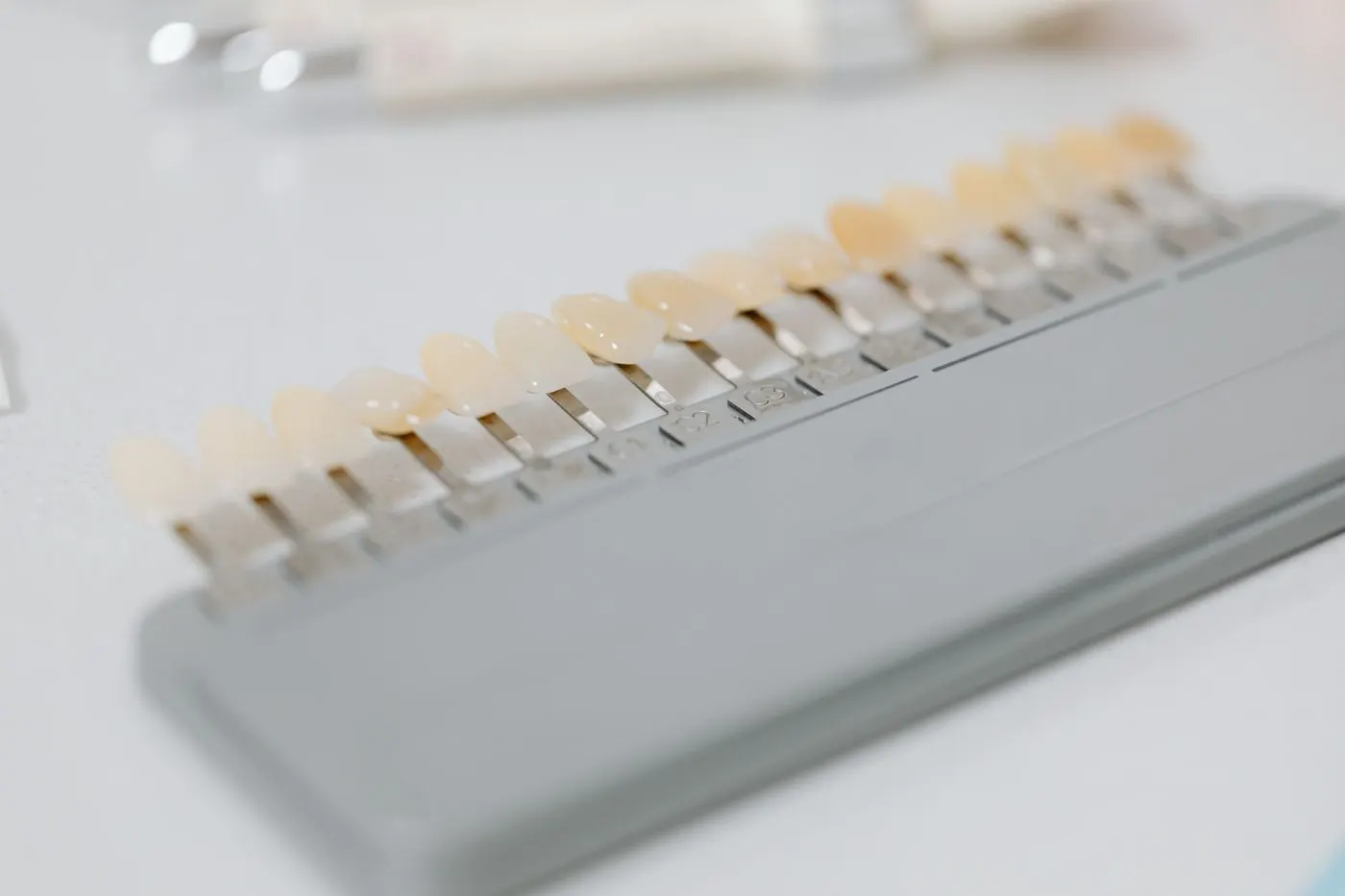
Composite is a mixture of resin and very fine glass or ceramic particles. It comes in dozens of shades and translucencies, it bonds to etched enamel, and it can be shaped freely before it is hardened with a blue curing light. That flexibility is what makes composite veneers possible without a laboratory.
Composite bonding adds resin to part of a tooth: a chipped corner, a short edge, a small gap. Composite veneers cover the whole visible front surface, so they can also change colour. On a typical smile we often combine both: veneers on the central incisors, bonding on the edges of the canines, for example.
Do composite veneers go over your teeth? Yes. In most cases they are built on top of the existing enamel, which is why they are reversible, and also why planning matters: every tenth of a millimetre added changes how thick the tooth looks and how the lip sits.
Direct vs indirect composite veneers
Direct composite
Indirect composite
Where it is made
Sculpted on your teeth in the chair
Made in a laboratory from a scan
Appointments
One long session, plus a review
Two, with temporaries in between
Preparation
Usually none
Light preparation for a path of insertion
Surface
Very good when well polished
Harder, denser, more stain-resistant
Repair
Easy, chairside
Possible, chairside
Typical use
Most bonding and composite veneer cases
Wear cases, or larger changes where porcelain is not wanted
Most composite veneers in Turkey, including ours, are direct. Indirect composite has its place, but once some preparation and a laboratory are involved, porcelain veneers usually offer better colour stability for a similar amount of time in Istanbul.
Care explained to you
Before you fly home, the team shows you how to clean and look after your new teeth.
Who composite veneers suit, who they don't, and the alternatives
Composite veneers suit you if you want to change shape more than colour, keep your enamel, and are happy to maintain the result. Typical cases: a gap between the front teeth, short or worn edges, small lateral incisors, chips, mild rotation, and uneven edges after orthodontics. They are also a good choice for younger adults whose gums are still maturing.
They are not the right choice if:
your teeth are very dark, grey or patchy, because a thin resin layer struggles to mask them
you grind heavily or bite nails, which chips resin edges
your teeth are crowded or protrude, because building on top makes them look thicker
you smoke heavily or drink a lot of coffee and want a result that stays bright for years
there is active gum disease or decay, which must be treated first
Alternatives: teeth whitening alone if only colour bothers you, clear aligners if the issue is position rather than shape, and porcelain veneers if you want long-term colour stability. Our overview of all veneers in Turkey compares every option.
How composite veneers are done, step by step
Design. Photos and a scan are taken and the new proportions are planned. For larger changes a wax-up is turned into a silicone key that guides the back wall of each tooth.
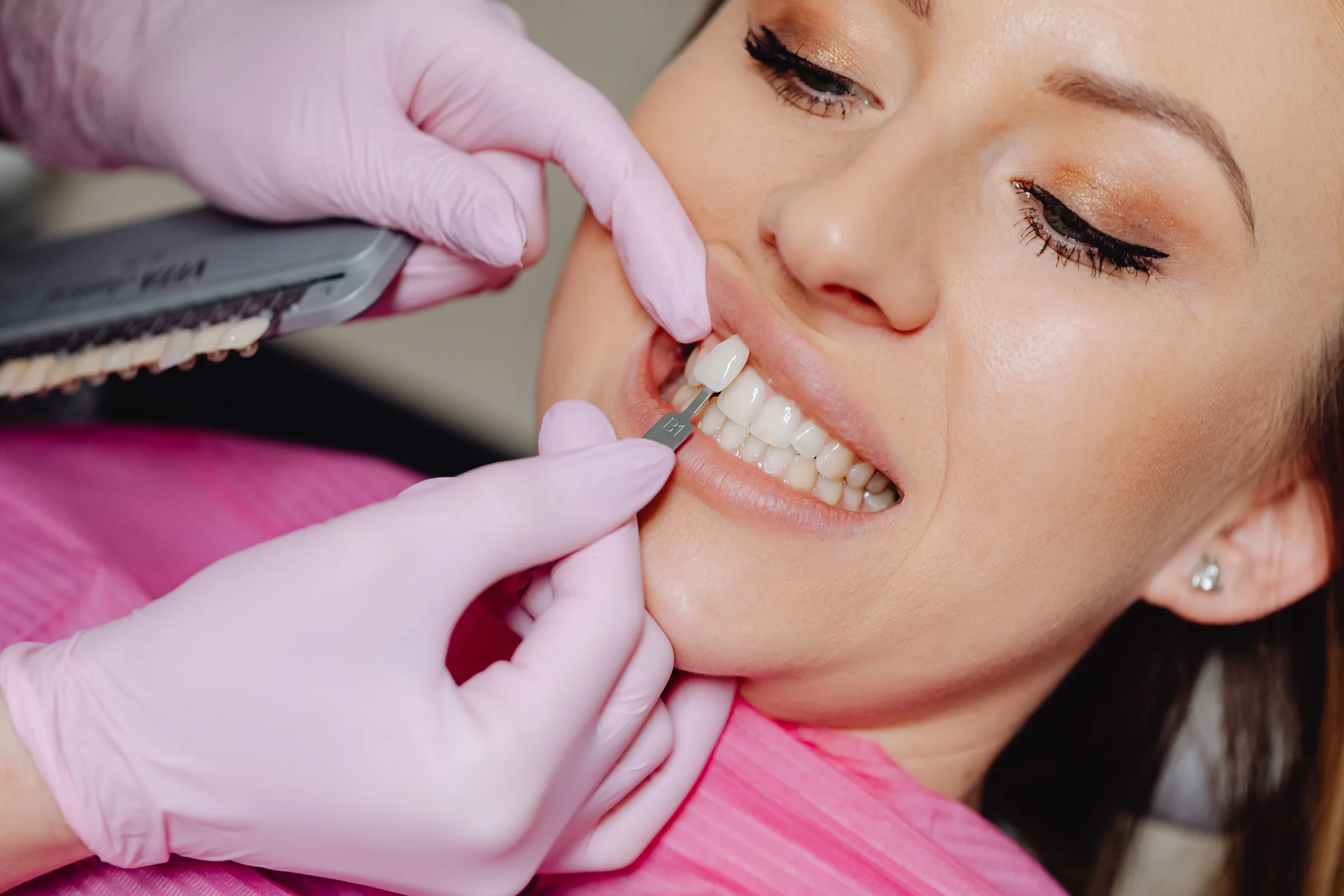
Shade. Shades are chosen at the start, while the teeth are still moist. Dry enamel looks lighter and would lead to a mismatch.
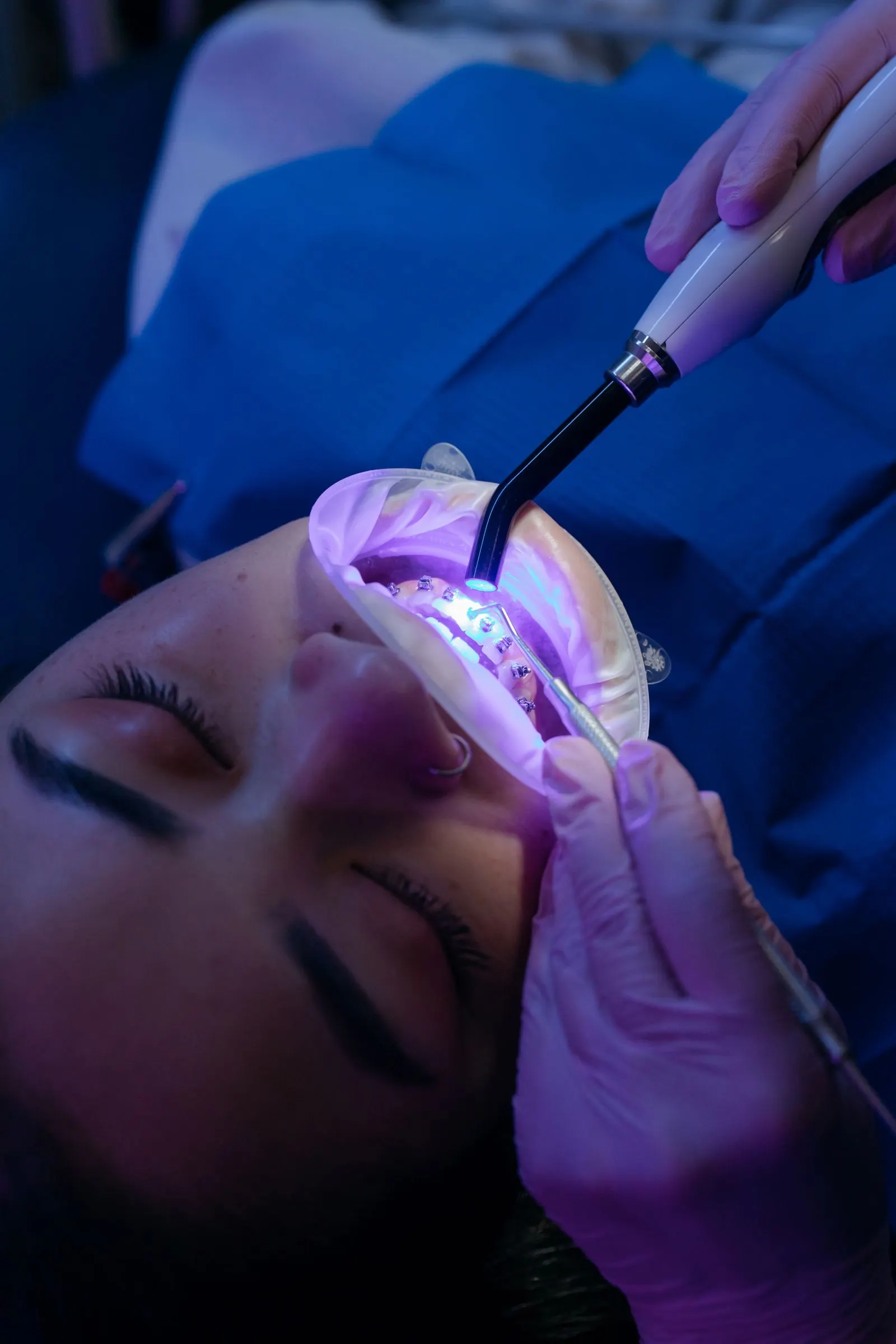
Isolation and bonding. The teeth are cleaned, isolated from saliva, the enamel is etched for a few seconds and a bonding agent is applied and cured. Usually no drilling and no anaesthetic are needed.
Layering. A more opaque dentine shade forms the body, a translucent enamel shade the surface and edge. Each thin layer is cured with light.
Contouring. Excess is removed and the shape, line angles and edges are refined so the tooth reflects light like a natural one.
Polishing. Several stages of discs, rubbers and paste give a smooth, glossy surface. This is what keeps composite from staining quickly.
Bite check. The dentist checks that the new edges do not take heavy contact when you move your jaw forwards and sideways.
Expect roughly 45-60 minutes per tooth for full composite veneers, less for bonding. Six to eight teeth are usually finished in one long session or two shorter ones.
Can composite veneers be removed? Reversibility explained
Is composite veneers permanent? Not in the way porcelain is. Because composite is usually bonded to unprepared enamel, a dentist can remove it later by carefully polishing it away under magnification, leaving the natural tooth. A tiny amount of surface enamel, often measured in hundredths of a millimetre, may be lost in the process, so it is best described as largely reversible rather than completely.
This makes composite veneers a sensible first step if you are unsure about longer teeth, if you are young, or if you want to try a new shape before committing to porcelain. When you later switch to porcelain, the composite simply becomes part of the mock-up stage.
It depends on what you want to change and how wide your smile is.
1-2 teeth: bonding a chip, a peg-shaped lateral or a single short tooth
4 composite veneers: the upper incisors, for gaps or uneven edges when the canines already look right
6 composite veneers: canine to canine, the most common plan for shape and proportion
8-10: when the premolars show in a broad smile and colour has to be consistent across the whole smile
Lower teeth are usually whitened rather than bonded. If only four or six teeth are covered, whitening the rest first keeps the colour even.
Your composite veneers in Istanbul, day by day
Day
What happens
1
Examination, gum and bite check, photos, scan, design and quick mock-up, shade selection
2
Bonding and layering session (or two sessions for 8-10 teeth), contouring and first polish
3
Review, fine adjustments, final polish, flight home
Whitening first? Bleaching temporarily reduces how well resin bonds to enamel, and the colour keeps settling for a week or two. The best route is to whiten at home before your trip, or to plan a longer stay. Your coordinator helps you plan this.
How long does composite bonding last? Staining, chips and repairs
Direct composite veneers commonly last around 4-8 years before they need resurfacing or replacement; studies report good survival at five years, with loss of gloss, marginal staining and small chips as the usual reasons for touch-ups.
Do composite veneers turn yellow?
The resin itself is quite colour-stable, but its surface slowly roughens and picks up stains, and the edges where composite meets enamel can darken. Coffee, tea, red wine, curry and smoking speed this up. Regular professional polishing removes most surface staining; deeper discolouration is fixed by resurfacing a thin outer layer.
Do composite veneers break?
They can chip, especially at thin edges, on an edge-to-edge bite or with nail biting and grinding. The good news is that chips can be repaired by adding fresh composite, often in 20-30 minutes. A night guard is recommended if you grind.
Polishing, repair and maintenance
Daily: soft brush, low-abrasion toothpaste (avoid charcoal and harsh whitening pastes), floss along the edges.
Habits: drink dark drinks in one go rather than sipping all day, rinse with water afterwards, and do not smoke if you can avoid it.
Every 6-12 months: professional polish. Any dentist can do it with standard composite polishers.
Repairs: small chips are repaired chairside; do not wait until they grow.
After several years: a thin surface layer is renewed, or the veneers are replaced with new composite or porcelain.
Risks, and how they are avoided
Bulky, over-built teeth: avoided by planning thickness with a mock-up and not adding more than the smile needs.
Visible lines at the edges: avoided by extending composite carefully onto the enamel and polishing the transition smooth.
Gum irritation: avoided by keeping edges at or just above the gum and removing any excess between teeth.
Debonding: prevented by isolating the teeth from saliva and bonding to clean, etched enamel.
Shade mismatch: avoided by choosing shades on moist teeth and testing them before bonding.
The "Turkey teeth" look: composite can also be overdone, too white and too thick. Our article on Turkey teeth explains what to avoid.
Is composite bonding in Turkey worth it?
For the right mouth, yes. They are one of the least invasive cosmetic treatments, finished quickly and can be undone or upgraded. Why do some people call composite veneers bad? Usually because they were used where they do not fit: very dark teeth covered with opaque resin, crowded teeth made bulkier, heavy grinders with no night guard, or poor polishing that stained within months. Those problems come from case selection and technique, not the material.
Is composite safe? Modern dental composites are used every day worldwide for fillings and bonding and are considered safe; the adhesive is applied to enamel and cured, and nothing needs to be removed from healthy teeth.
Choosing a clinic for composite bonding in Turkey
Composite veneers are made by hand in the chair, so the result depends on the dentist's planning and patience more than on the material. Questions worth asking any clinic:
Will I see a mock-up of the new shape before bonding starts?
How many shades and layers will be used, and are they chosen on moist teeth?
Will my teeth be drilled at all, and if so, where and why?
How is the surface polished, and what maintenance do you recommend?
What happens if a veneer chips or stains after I am home?
Be wary of plans that call composite "permanent", promise 15-year lifespans, cover very dark teeth with thick opaque resin, or build composite over crowded teeth without discussing aligners.
Composite after braces or aligners
Composite is often the finishing touch after orthodontic treatment. Once the teeth are straight, small gaps, worn edges or uneven lengths can be corrected with thin bonding instead of veneers on every tooth. If you are planning clear aligners, it is usually best to finish them first and then plan the composite, so the resin is added to teeth in their final position.
What shapes your treatment plan, guarantee and follow-up
Your plan depends on the number of teeth, bonding versus full veneers, direct or indirect composite, whitening first and any treatment needed beforehand. Composite veneers are cosmetic, so in the UK they are generally not provided on the NHS and are rarely covered by private insurance. You receive a written, itemised quote before booking, and our starting prices are on the dental costs in Turkey page.
The written guarantee terms are explained in your plan, including the maintenance needed to keep it valid. Because composite is a standard material, any dentist at home can polish and repair it, and your coordinator remains your contact after you fly home.
Composite bonding teeth: who it suits
Composite bonding is at its best for small, cosmetic changes on healthy teeth: a chipped edge, a small gap (diastema), slightly uneven lengths or a tooth that is a little out of shape. Because little or no enamel is removed, it is a conservative, reversible option and a popular first step for younger patients. It is less suited to very dark teeth that need a large colour change, or to heavy grinders, where it chips sooner. In those cases porcelain veneers, or a night guard alongside bonding, may be discussed instead.
Included in your package
Everything arranged, one point of contact
Treatment planTooth by tooth, agreed with you in writing
Clinical checksThe examinations your dentist considers necessary
AccommodationArranged for you when it is part of your written plan
TransfersAirport · hotel · clinic, as set out in your plan
Personal coordinatorEnglish and German, 7 days a week
Follow-upWritten guarantee terms and support after you return home
What exactly is included is set out in your personal, written plan.
Answers about Composite veneers. Not listed? Ask us directly.
How much are composite veneers in Turkey?
The total depends on the number of teeth, whether you need bonding on a small area or full veneers, direct or indirect composite, how complex the shaping is, whitening beforehand and any treatment needed first. A dentist assesses your case and you receive a written, itemised quote before booking. Our starting prices are on the dental costs in Turkey page.
Can composite veneers be removed?
Yes, in most cases. Composite is usually bonded to unprepared enamel, so a dentist can polish it away under magnification and leave the natural tooth. A very small amount of surface enamel may be lost, so it is best called largely reversible. Removal should always be done by a dentist; trying to pick or peel composite off yourself can damage the tooth.
How long do composite veneers last?
Typically around 4-8 years before a refresh, sometimes longer with careful habits. Studies report good survival at five years, with loss of gloss, staining at the edges and small chips as the usual reasons for touch-ups. Grinding, nail biting, smoking and lots of coffee or red wine shorten their life; a night guard and regular polishing extend it.
Do composite veneers break?
They can chip at thin edges, particularly with an edge-to-edge bite, nail biting, biting hard objects or grinding. Chips are repaired by adding fresh composite and repolishing, often in 20-30 minutes, and any dentist can do this. If you grind, a night guard protects both composite and natural teeth.
Are composite veneers worth it?
They are worth it when you mainly want to change shape, keep your enamel and accept maintenance. For gaps, short or chipped edges and small teeth they give a big change with little risk. They are less suitable for very dark teeth, heavy grinders or people who want a colour that stays unchanged for 15 years, where porcelain usually serves better.
Are composite veneers safe?
Yes. Modern dental composites are used every day for fillings and bonding and are considered safe. The procedure usually needs no drilling or anaesthetic. The main risks are cosmetic rather than medical: staining, chipping or an over-built shape, which are managed with careful planning, polishing and maintenance.
Are composite veneers covered by insurance?
Usually not. Composite veneers for cosmetic reasons are generally not provided on the NHS, and private dental insurance rarely covers them. Bonding to repair a broken tooth after an accident may be treated differently, depending on your policy. Your written, itemised plan can be shared with your insurer if you want to check.
Does composite bonding damage your teeth?
No. Composite bonding usually needs little or no drilling, so the natural tooth underneath is preserved and the bonding can be adjusted or removed later. Good cleaning around the edges keeps the tooth healthy.
Is composite bonding in Turkey worth the trip compared with the UK?
For one or two small repairs, often not, because a local dentist can do them in an hour. For six to ten composite veneers, many patients find the combined trip worthwhile, especially when it includes whitening and a proper design. Our article on composite bonding versus veneers explains how to weigh fees, maintenance and lifespan.
Are composite veneers permanent?
No, and that is part of their appeal. They are bonded firmly and are not removable at home, but they are not a lifetime restoration. Most need polishing every 6-12 months and resurfacing or replacement after about 4-8 years. Because your teeth are usually not prepared, you can later keep them, refresh them, remove them or switch to porcelain.
Do composite veneers turn yellow or stain?
The surface can dull and pick up stains over time, and the join between composite and enamel can darken, especially with coffee, tea, red wine, curry and smoking. A professional polish every 6-12 months removes most surface staining. If colour has changed more deeply, a thin outer layer is renewed. Composite does not whiten with bleaching.
Do composite veneers go over your teeth or replace them?
They go over your teeth. Composite is built up on the existing enamel, usually without drilling, so your natural tooth stays underneath. That is why planning thickness matters: teeth that already stick out can look bulky if composite is added on top, and those cases may be better with aligners first or porcelain veneers.
Why do some people say composite veneers are bad?
Mostly because of poor case selection or technique: composite used over very dark or crowded teeth, made too thick or too white, or poorly polished so it stained quickly. Composite placed on suitable teeth, in thin layers with good polishing and a realistic maintenance plan, does its job well. Seeing a mock-up first helps avoid a bulky result.
Can I switch from composite to porcelain veneers later?
Yes. Because composite usually leaves the enamel intact, you can move to porcelain veneers whenever you want a longer-lasting result. Many patients use composite to test a new length and shape; if they like it, that shape becomes the template for the porcelain design.
How long does composite bonding last?
Composite bonding commonly lasts around 4 to 8 years before it needs refreshing, depending on staining, grinding and care. It is easy to repair or re-polish. See how long composite bonding lasts.
Question not answered here?
Ask us, a coordinator replies personally, and a dentist answers medical questions.
 and
 Read reviews

































 USA
 UK
 Germany
 Istanbul