 Dr. Hatice G
Search for “Turkey teeth” and you will find two kinds of pictures: teeth filed down to small pegs, and rows of identical, very white teeth that look bigger than the face they sit in. In the UK the phrase has become shorthand for cosmetic dentistry abroad gone wrong.
We are a dental clinic in Istanbul, so you might expect us to play this down. We will not. The problems behind the phrase are real, and some patients have been harmed. But the cause is a set of clinical decisions, not a country, and once you understand those decisions you can avoid them anywhere. This guide explains what happens to the teeth, why, how to protect yourself, and what to do if you already have work you are unhappy with.
What “Turkey teeth” actually means
The term spread in the UK from around 2021, when several reality TV personalities shared their new smiles on social media, followed by a BBC documentary and wide press coverage. UK dental bodies have publicly warned about aggressive cosmetic treatment abroad. Our article on Katie Price’s teeth looks at one widely discussed case.
What most of the viral cases have in common is not the country but three decisions:
- Full crowns were placed on healthy teeth where veneers, bonding or whitening would have been enough.
- The teeth were over-prepared, often more than a crown itself requires.
- One very white, opaque shade and uniform shapes were used on every tooth, with no regard for gums, lips or face.
Many patients were told they were getting “veneers”. What they received were crowns, sometimes called “crown veneers” or “full veneers” in marketing, which is misleading.
Crowns versus veneers: the difference that matters
A veneer is a thin ceramic shell bonded to the front of a tooth. A crown is a cap that covers the whole tooth. For a healthy tooth the difference in how much tooth is removed is enormous.
| Porcelain veneer (E.max) | All-ceramic crown | |
|---|---|---|
| Preparation | About 0.3 to 0.7 mm on the front, 1 to 1.5 mm at the edge if wrapped | About 1 to 1.5 mm on all sides, 1.5 to 2 mm at the edge |
| Share of the visible tooth removed | Roughly 3 to 30 % in frequently cited studies | Roughly 60 to 75 % |
| Enamel kept | Most | Very little |
| Risk to the nerve | Low | Higher, especially with aggressive preparation |
| Best for | Healthy teeth needing colour or shape change | Broken, heavily filled or root-treated teeth |
| When it fails | Usually re-veneered | Often a new crown, sometimes a root canal |
Crowns are not bad in themselves. For a broken or root-treated tooth a well-made crown is the right treatment. The problem is using crowns on healthy teeth because it is faster or easier for the clinic.
Over-preparation: what happens to a tooth
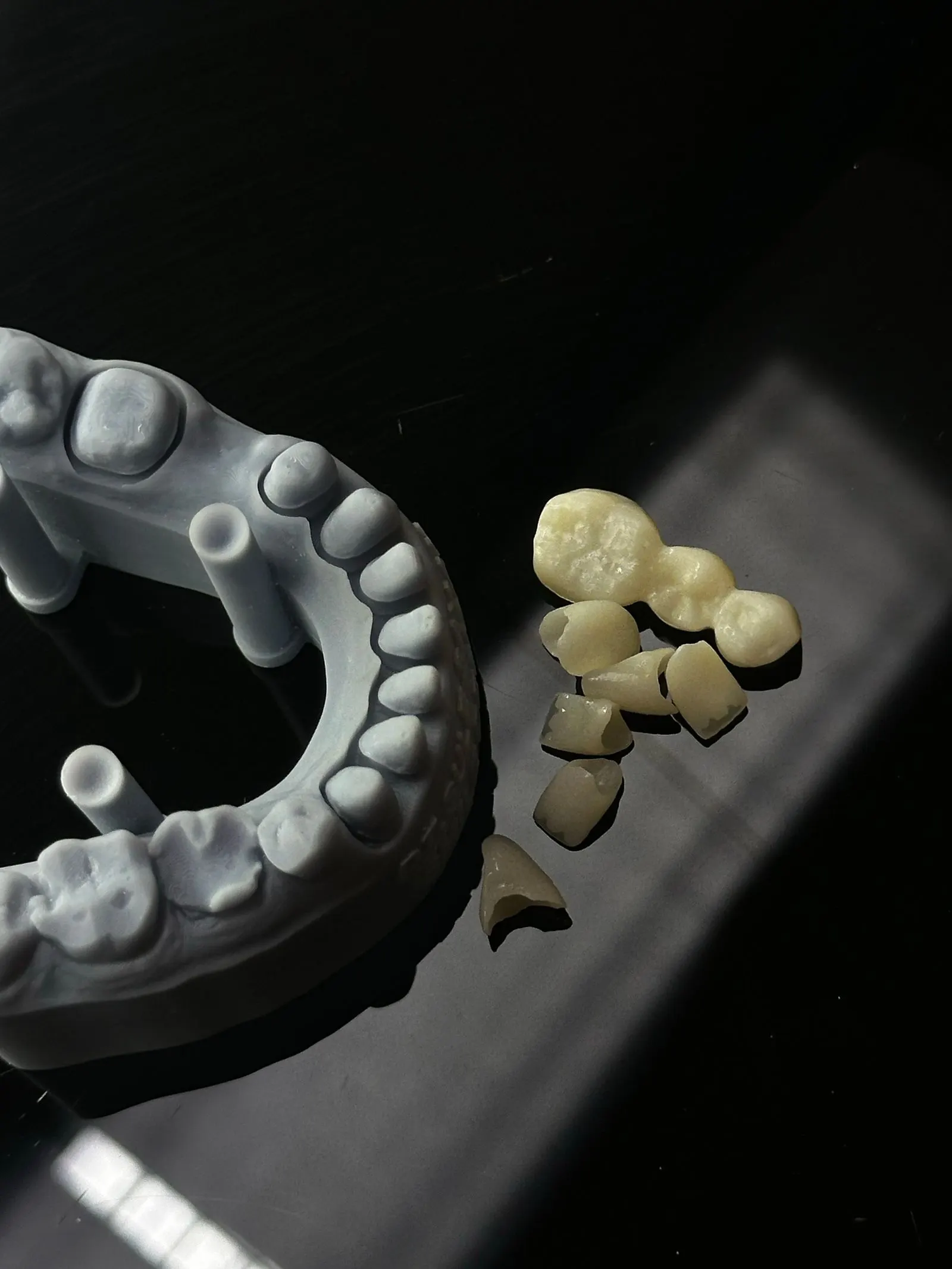
In the photos that went viral, many teeth were reduced to thin cones. That is more than a normal crown preparation, which aims to keep as much tooth as possible and leave a collar of healthy tooth (the ferrule) above the gum for strength.
What over-preparation can cause:
- Nerve damage. The pulp sits a few millimetres below the surface. Deep, fast preparation without proper water cooling can inflame it. Studies of crowned teeth report that a meaningful share, often cited around 10 to 15 % over a decade, later need root canal treatment, and the risk rises with aggressive preparation.
- Sensitivity and pain, sometimes weeks after the crowns are fitted.
- Weak teeth. A thin cone of dentine can fracture under the crown, sometimes below the gum, where the tooth may be lost.
- Gum problems. Crown edges pushed deep under the gum, or bulky margins, lead to chronic inflammation, bleeding and bad breath.
- A lifelong cycle. Every crown is eventually replaced, and each replacement removes a little more tooth. A 25-year-old with 20 crowns may face several rounds of replacement, root canals and possibly implants over their life.
Enamel does not grow back. Once removed, the decision cannot be undone.
Shade and shape: why the result looks fake
Even well-made crowns can look artificial if the design is wrong. The typical look comes from:
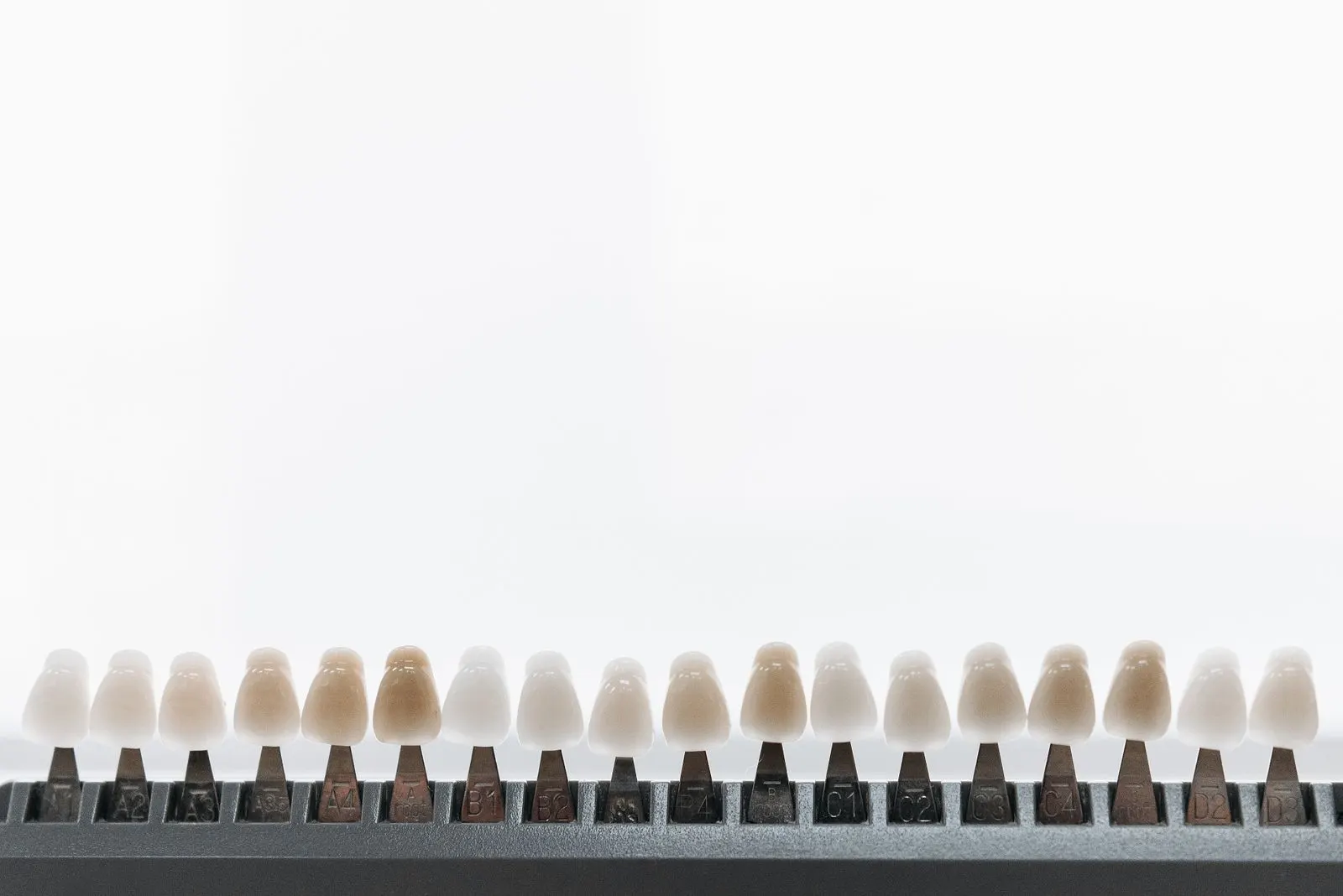
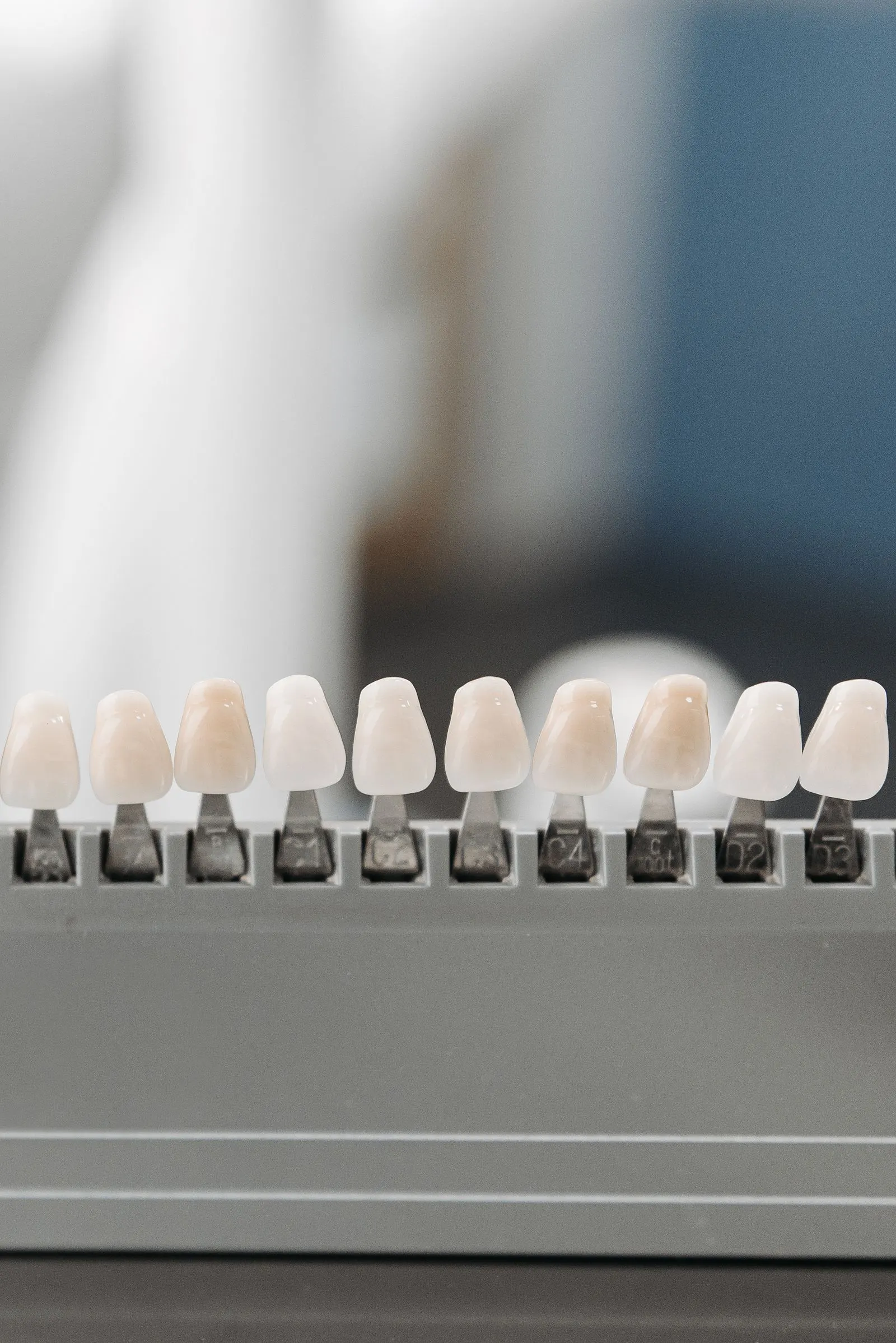
- Bleach shades on every tooth. Shade guides include extra-white shades beyond natural teeth (the BL or 0M range). One step brighter than natural can look fresh; the very brightest, opaque shade on all teeth looks like porcelain tiles.
- No gradient. Natural teeth are slightly darker near the gum and more translucent at the edges.
- Identical shapes. Natural central incisors are wider and longer than the lateral incisors; canines are pointed. Twenty identical rectangles do not look like teeth.
- Teeth too big or too far forward. Crowns built out to hide crooked teeth can push the lips forward and change the profile.
- Ignoring the gum line. Uneven gum heights under perfect-looking crowns draw the eye.
A natural result keeps these details, which is why the design stage before any preparation matters so much.
Why some clinics do it
- Speed. Twenty crowns in three or four days are easier to deliver than twenty minimal veneers, which need careful enamel bonding and precise try-ins.
- Forgiveness. Crowns hide crooked teeth without orthodontics and are more forgiving to fit.
- Package pricing. A flat price for a number of teeth rewards volume rather than judgement.
- Demand. Some patients ask for the whitest possible shade because it looks striking on social media. A responsible dentist explains the consequences and sometimes says no.
None of this is uniquely Turkish. Over-treatment happens wherever speed and price win over planning, and our article on why dental work is cheaper in Turkey explains where the price difference legitimately comes from.
What a responsible plan looks like
| Responsible practice | Warning sign |
|---|---|
| Examination, X-rays and 3D scan before any plan is final | A fixed quote for “20 teeth” before anyone has examined you |
| Tooth-by-tooth plan: veneer, crown, bonding or nothing | Everyone gets crowns |
| Whitening, orthodontics or gum treatment considered first | Crooked or gummy smiles “fixed” only with crowns |
| Digital smile design and a mock-up you approve | No trial, no temporaries |
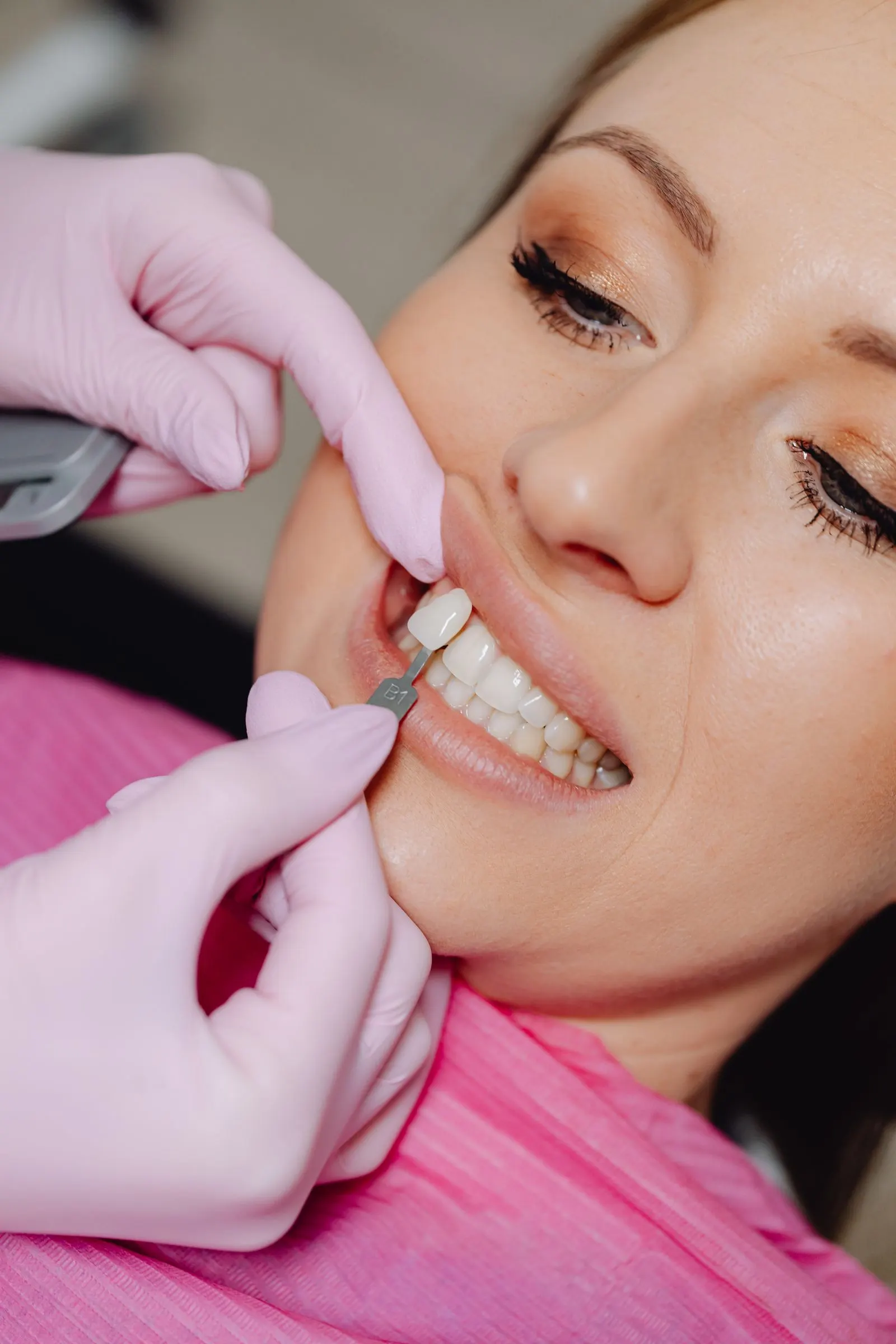
| Shade chosen for your face and skin, with gradient | Brightest bleach shade by default |
| Named treating dentist | “Our team” only |
| Written guarantee explained in the plan | Verbal promises |
| Time for try-in and adjustments | Everything done in two or three days |
For most patients who want a brighter, more even smile, the right answer is a small number of porcelain veneers on the front teeth, crowns only where a tooth is already damaged, and sometimes whitening for the rest.
How treatment should be planned in Istanbul
The first contact should never be a sales call asking for selfies. At Doctor Turka you leave your contact details, a patient coordinator who speaks English and German calls or writes, a dentist assesses your case, and you receive a written, itemised plan before you book. Details on how it works.
A typical veneer trip:
- Day 1: examination, X-rays and CBCT in the clinic, photos, digital smile design, mock-up on your own teeth.
- Day 2: minimal preparation of the teeth in the plan, scan, temporaries.
- Days 3 to 5: lab work; you live with the temporaries and can judge the shape.
- Day 5 or 6: try-in of shade and fit, adjustments.
- Day 6 or 7: final bonding, bite check, night guard if needed, written aftercare and guarantee terms.
If gum treatment, root canals or orthodontics are needed first, the plan will show a longer timeline or a second trip. That is a good sign, not a bad one. Our dentists, Dr. Taha G and Dr. Hatice G, are named on the plan.
How to avoid Turkey teeth: questions to ask any clinic
- For each tooth: veneer, crown, bonding or no treatment, and why? Ask for it in writing.
- How many millimetres will be removed? For veneers, expect fractions of a millimetre.
- Will I see and approve a mock-up before any preparation?
- Which ceramic, and which shade? Ask to see natural-looking options, not only the brightest.
- Who is my dentist, and will they do the preparation themselves?
- What happens if something goes wrong at home? Ask how the written guarantee works and what it covers.
- Would you recommend whitening, aligners or fewer teeth instead? A good clinic will sometimes suggest less.
If you already have problem work
If you already have crowns or veneers from abroad (or at home) that worry you, act early but calmly.
Signs to get checked: persistent sensitivity or throbbing pain, swelling or a bump on the gum, gums that bleed or look red around the crowns, dark lines at the gum edge, bad breath or taste, a bite that feels wrong, headaches or jaw pain, or crowns that move.
What to do:
- See a dentist promptly. In the UK, NHS urgent care can treat pain and infection; a private dentist can do a full assessment.
- Get X-rays. They show infection at the root tips, decay under crowns and how much tooth is left.
- Ask the original clinic for your records: treatment notes, materials used and X-rays. Check what your written guarantee covers.
- Treat infection and gum inflammation first. Some teeth will need root canal treatment.
- Plan the redo carefully. Poorly fitting crowns can usually be replaced with better-fitting, better-shaped ones. Teeth that have fractured below the gum may need extraction and an implant.
What you cannot do is get the enamel back. A remedial plan aims for healthy gums, sound margins, a comfortable bite and a more natural look, not a return to untreated teeth.
What this kind of work commonly costs at home
For context, commonly quoted UK private fees are roughly £600 to £1,200 per porcelain veneer and £500 to £1,200 per crown, and US fees are often $1,000 to $2,500 per tooth. Remedial work on a full set of failed crowns is often more complex than the original treatment. Our starting prices are on the costs page. A lower price is only worth having if the plan is right.
The bottom line
Turkey teeth are a warning about decisions: crowns instead of veneers, too much drilling, and one shade for everyone. Ask what each tooth is getting and why, insist on a mock-up, choose a natural shade, and choose a clinic that is willing to do less. Our Hollywood smile page shows how we approach full smile cases.
Want a personal opinion?
Leave your contact details. Our patient coordinator will contact you to discuss your needs and explain the next steps — free and without obligation.
Discuss my options