 Dr. Taha G
Zirconia crowns in Turkey, E.max crowns or porcelain-fused-to-metal: almost every treatment plan names one of these three, and most patients choose by what they have heard rather than by the tooth in question. That is a mistake. Each material solves a different problem. The best crown for a front tooth with healthy colour is rarely the best crown for a molar of someone who grinds at night, and neither may be right on an implant.
This guide compares the three materials on the properties that matter: strength, translucency, how much tooth must be removed, how they are fixed, how they wear and how long they last. It ends with a practical guide by tooth and situation.
The three materials at a glance
| Property | Zirconia (monolithic) | Zirconia (high-translucency) | E.max (lithium disilicate) | Porcelain-fused-to-metal (PFM) |
|---|---|---|---|---|
| What it is | Zirconium dioxide ceramic | Zirconia with more cubic phase | Glass-ceramic | Metal cap with layered porcelain |
| Flexural strength (typical) | About 900-1,200 MPa | About 550-800 MPa | About 400-530 MPa | Metal very strong; porcelain layer about 80-120 MPa |
| Fracture toughness | High | Moderate to high | Moderate | Porcelain low; relies on metal |
| Translucency | Low to moderate | Moderate to high | High | Low; opaque layer masks metal |
| Contains metal | No | No | No | Yes |
| Chipping risk | Very low | Very low | Low | Higher (porcelain layer) |
| Fixing | Cemented or bonded | Cemented or bonded | Ideally adhesively bonded | Cemented |
| Best known for | Strength, thin walls | Balance of looks and strength | Natural light transmission | Long track record |
Strength figures come from laboratory tests and manufacturers' data; they vary by brand and testing method, but the ranking is consistent across studies.
Zirconia crowns: advantages and disadvantages
Zirconia is zirconium dioxide, a ceramic used in hip replacements and dental implants as well as crowns. Classic dental zirconia (often called 3Y) is the strongest crown ceramic available. Newer high-translucency zirconia (4Y and 5Y) adds more of a crystal phase that lets light through, trading some strength for a more natural look. Multilayer blocks blend these grades, with a stronger, more opaque body and a more translucent edge.
Advantages
- Very high strength, so crowns can be thinner and less tooth needs to be removed.
- Monolithic zirconia almost never chips because there is no separate layer of porcelain.
- Masks dark or discoloured teeth, metal posts and implant abutments well.
- Polished zirconia is gentle on opposing teeth.
- Excellent gum tolerance and no metal.
Disadvantages
- Classic zirconia can look slightly opaque or flat on front teeth.
- Layered zirconia (a zirconia core with porcelain on top) looks better but can chip at the porcelain layer.
- Very hard, which makes adjustment and removal slower for the dentist.
- If the glaze is ground off and not re-polished, the rough surface can wear opposing teeth.
How a zirconia crown is made
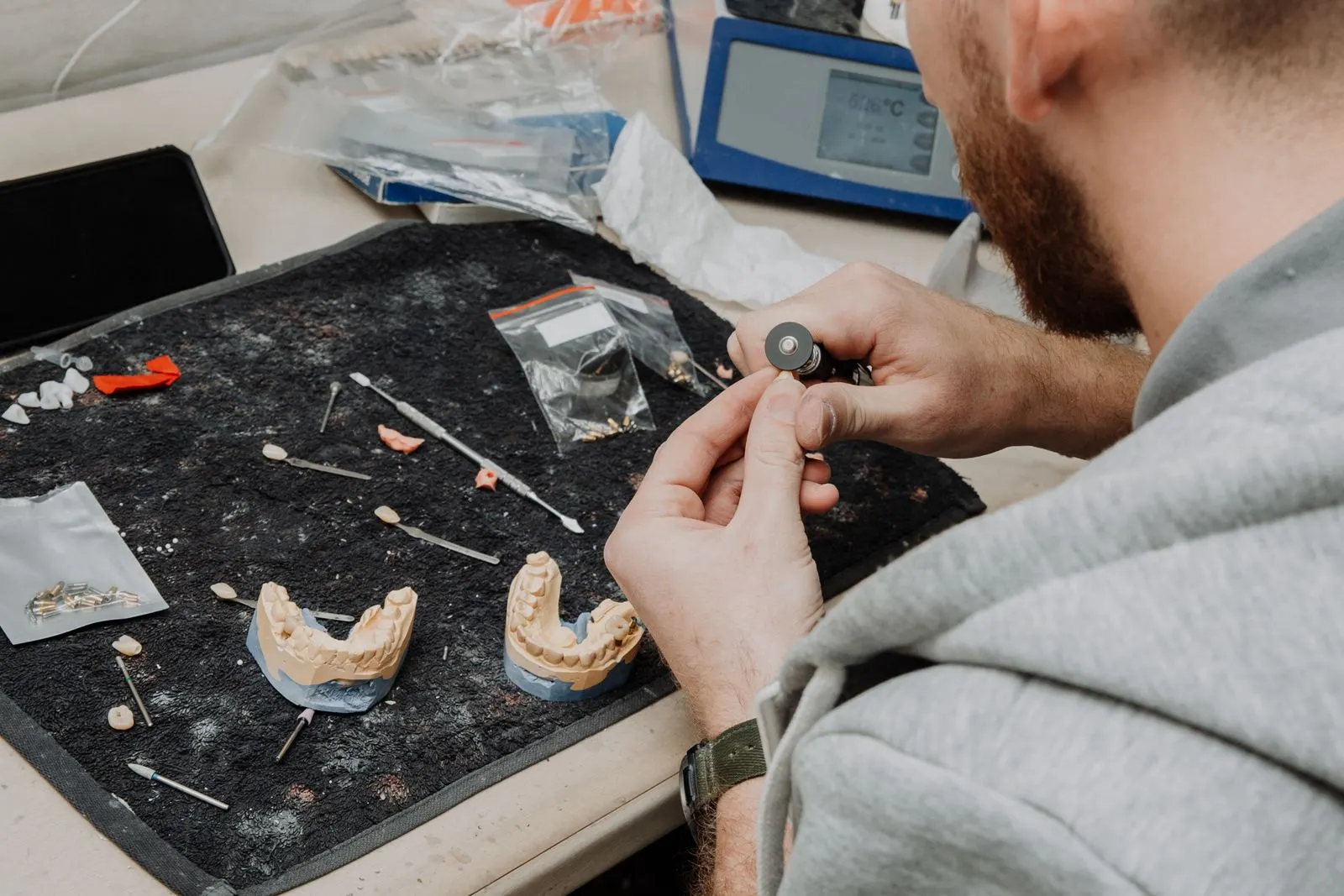
The tooth is prepared and scanned digitally, or an impression is taken. The crown is designed on a computer and milled from a pre-sintered, chalk-like zirconia block about 20-25 % larger than the final size. It is then sintered in a furnace at roughly 1,450-1,550 °C, where it shrinks to its exact dimensions and gains its strength. Finally it is stained, glazed or polished, and for layered crowns, porcelain is added by hand.
Does a zirconia crown contain metal?
No. Zirconium is a metallic element, but zirconium dioxide is a ceramic, like aluminium oxide in sapphire. Zirconia crowns contain no metal framework, show no grey margin and do not conduct heat like metal. Allergic reactions to zirconia are considered extremely rare.
More detail is on our zirconia crowns page.
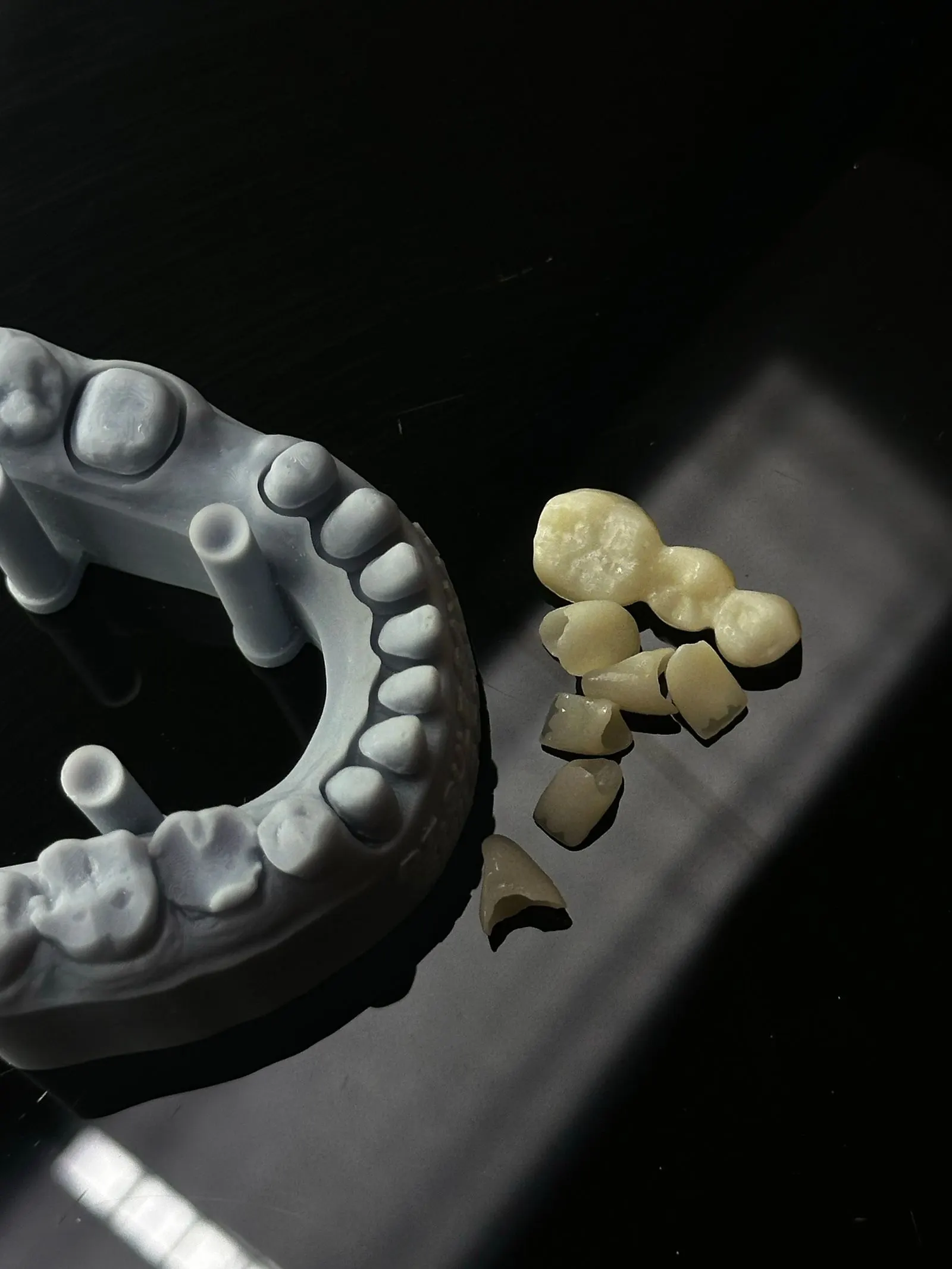
E.max crowns: lithium disilicate
E.max is the brand name of Ivoclar's lithium disilicate glass-ceramic. It is either milled from a block or pressed from an ingot, and comes in several translucency levels. Its strength is lower than zirconia but far higher than traditional porcelain, and its glass content gives it the translucency and depth of natural enamel.
Advantages
- The most lifelike light transmission of the three; excellent for front teeth with a healthy base colour.
- Can be etched and adhesively bonded to the tooth, which strengthens the whole unit and allows very thin restorations.
- The same material works for crowns, onlays and veneers, so a front-tooth row matches.
Disadvantages
- Needs more thickness than zirconia on back teeth to be safe, so more tooth may be removed for a molar crown.
- Less suited to long bridges, heavy grinders and dark underlying teeth.
- Bonding is technique-sensitive; the tooth must be kept dry and the protocol followed exactly.
See E.max crowns for when we recommend them.
Porcelain-fused-to-metal crowns
PFM crowns were the standard for decades and have the longest track record. A thin metal cap, made from a non-precious alloy (cobalt-chromium or nickel-chromium) or a precious alloy (containing gold, palladium or platinum), is covered with an opaque layer to hide the metal and then with porcelain.
Advantages
- Proven over many decades, well understood by every dentist.
- Metal core provides strength for bridges.
- Often the least expensive of the three.
Disadvantages
- The opaque layer limits translucency; front PFM crowns often look slightly dense.
- A grey line can appear at the gum, especially if the gum recedes.
- The porcelain layer can chip off the metal.
- More tooth must be removed to fit metal, opaque layer and porcelain.
- Some alloys contain nickel, which matters for people with nickel allergy.
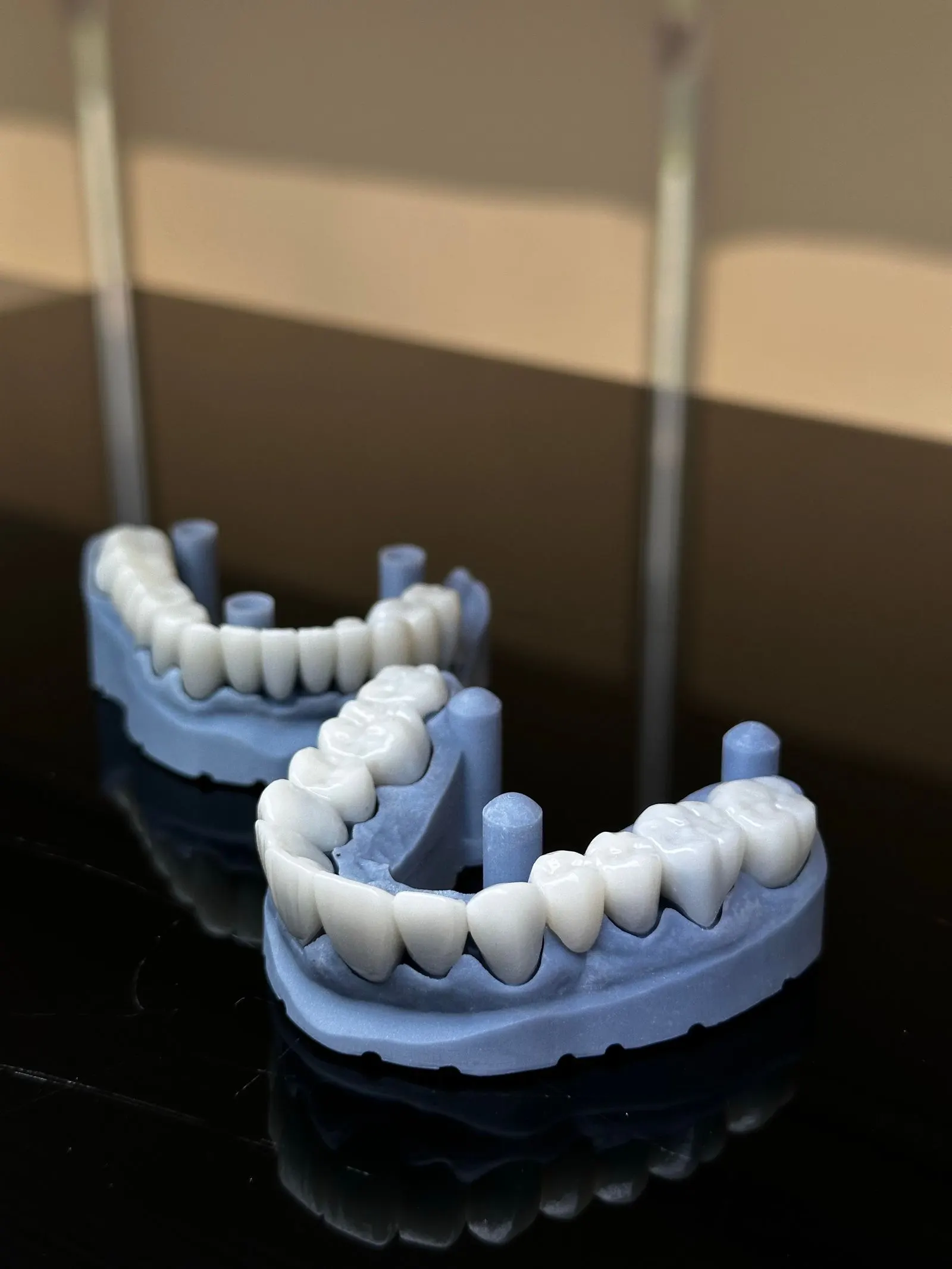
Strength versus translucency: the trade-off
Flexural strength, measured in megapascals (MPa), tells you how much bending force a material withstands before it breaks. Fracture toughness tells you how well it resists a crack spreading. Zirconia scores highest on both, which is why it is chosen for molars and long bridges.
Translucency works in the opposite direction. The more light a ceramic lets through, the more natural it looks, but the more of its crystal structure has been changed to allow that, which lowers strength. Every modern material sits somewhere on this line. The goal is to put the strongest material where forces are highest and the most translucent where the smile is most visible.
How much tooth is removed
| Restoration | Biting surface | Side walls | Notes |
|---|---|---|---|
| Monolithic zirconia crown | About 0.8-1.5 mm | About 0.5-1.0 mm | Least reduction for a full crown |
| Layered zirconia crown | About 1.5-2.0 mm | About 1.2-1.5 mm | Room needed for porcelain |
| E.max crown | About 1.5-2.0 mm | About 1.0-1.5 mm | Needs thickness for strength |
| PFM crown | About 1.5-2.0 mm | About 1.2-1.5 mm, deeper at the front | Metal, opaque layer and porcelain |
| E.max veneer | Edge only if needed | About 0.3-0.7 mm on the front | Not a crown; far more conservative |
Figures are typical ranges from manufacturer guidance and textbooks. Every millimetre matters, because the nerve of a tooth may lie only a few millimetres below the surface. If a tooth has enough healthy structure, a partial restoration such as an inlay or onlay or a porcelain veneer may be the better choice than any crown.
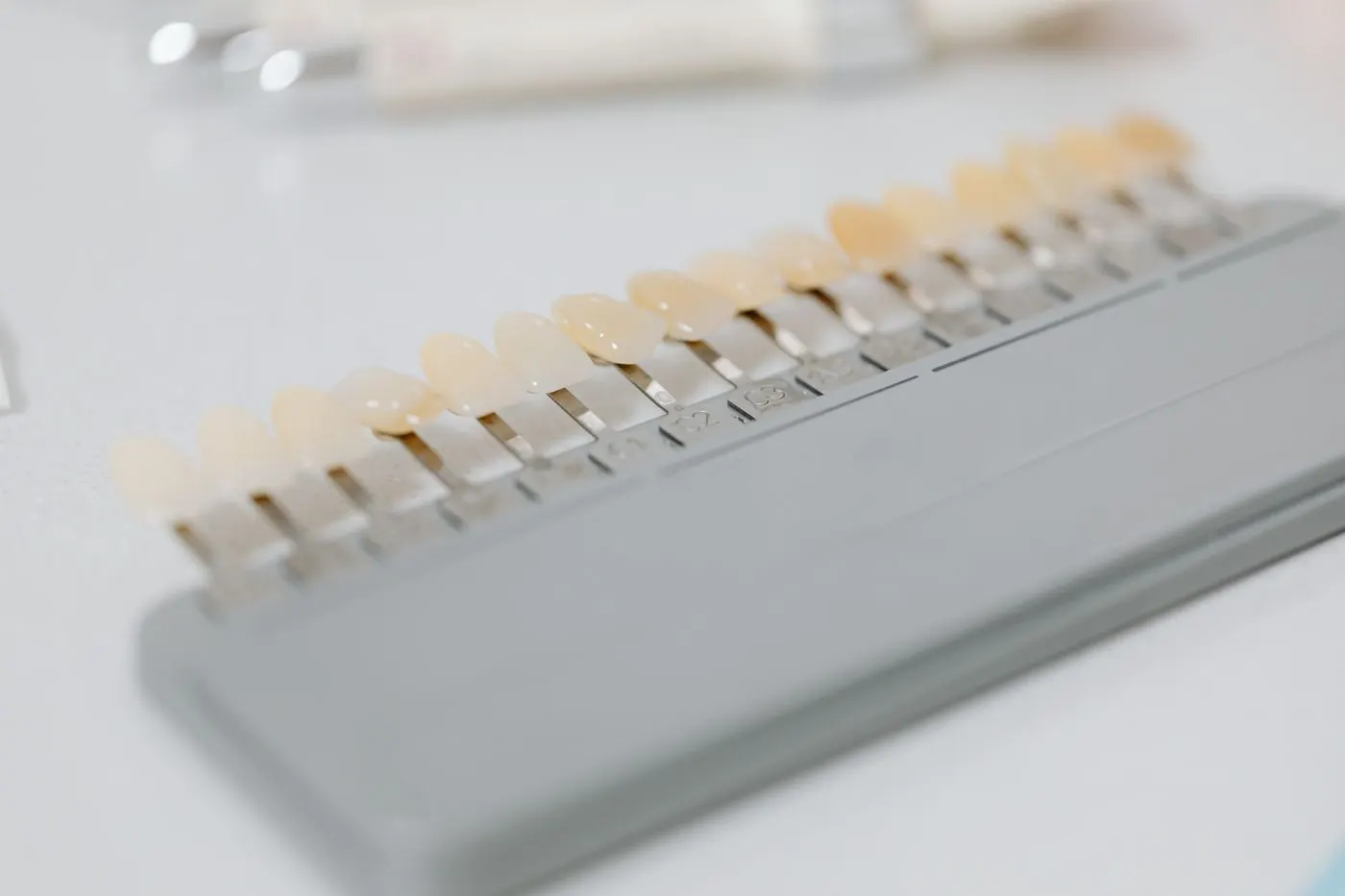
Front teeth, back teeth, bridges and implants
| Situation | Usually best | Why |
|---|---|---|
| Single front tooth, healthy colour | E.max | Most natural translucency, bonded |
| Front tooth that is dark or has a metal post | High-translucency or layered zirconia | Masks the dark base |
| Several front crowns in a smile | E.max or multilayer zirconia | Matching, lifelike colour gradient |
| Premolars | E.max or zirconia | Both work; depends on bite and colour |
| Molars | Monolithic zirconia | Highest strength, minimal chipping |
| Grinders and clenchers | Monolithic zirconia, plus night guard | Resists fracture and chipping |
| Bridge of three or more units | Zirconia | Strength across the span |
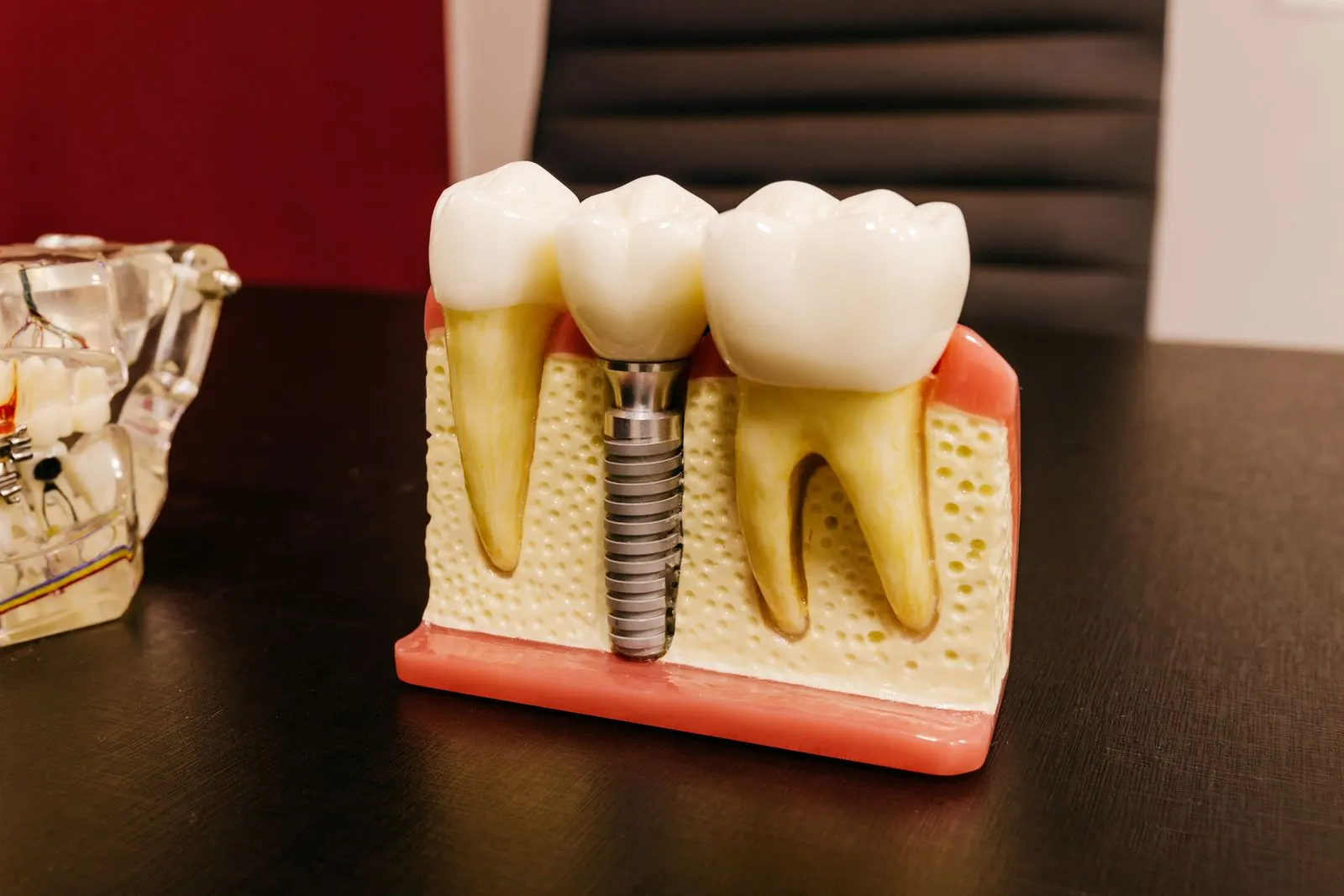
| Crown on an implant | Zirconia, sometimes layered at the front | Strength, masks the titanium abutment |
| All-on-4 or All-on-6 bridge | Zirconia | Strength and stain resistance |
| Nickel allergy | Zirconia or E.max | No metal |
For implant restorations, see dental implants in Turkey.
Lifespan, chipping and wear
Systematic reviews of single crowns commonly report five-year survival in the low to mid 90s per cent for all three material groups, with well-made crowns often lasting 10-15 years or longer. The differences show mostly in the type of problem:
- PFM: chipping of the porcelain and a visible metal margin over time.
- Layered zirconia: chipping of the porcelain layer, particularly on molars and in grinders.
- Monolithic zirconia: very low chipping; occasional debonding if not cemented correctly.
- E.max: low chipping; fractures are more likely when the crown is too thin or placed on a molar in a heavy biter.
After the first decade, the health of the gum and the tooth underneath usually decides how long a crown lasts. Decay at the margin, gum recession and grinding are more common reasons to replace a crown than the material failing.
Is zirconia the best crown?
For back teeth, implants and long bridges, zirconia is usually the best choice because of its strength and resistance to chipping. For a single front tooth with good colour, E.max often looks more natural. PFM remains acceptable where cost or specific clinical reasons lead there, but it is rarely the first choice today for visible teeth.
In short, no crown is the best for every tooth. A good plan often mixes materials: E.max or multilayer zirconia at the front and monolithic zirconia at the back.
Crowns in Turkey: what to check in your plan
- Material per tooth, not one material for the whole mouth by default.
- Brand of ceramic, for example Ivoclar E.max, and the type of zirconia (monolithic, layered, multilayer).
- Why a crown and not less, for each tooth. Crowning healthy teeth purely for colour is what led to many "Turkey teeth" stories; read Turkey teeth explained.
- Try-in before final fitting, so you approve shape and colour.
- Time: crowns usually need about 5-7 days in Istanbul, with preparation and temporaries at the start and fitting at the end.
The ceramics we work with at Doctor Turka are E.max (Ivoclar) and zirconia, monolithic or layered, and your written plan states the material for each tooth. For how crowns are planned and fitted, see dental crowns in Turkey; starting prices are on the costs page.
Want a personal opinion?
Leave your contact details. Our patient coordinator will contact you to discuss your needs and explain the next steps, free and without obligation.
Discuss my options