Clear aligners in Turkey: straighter teeth, almost invisibly
Transparent aligners move your teeth step by step according to a digital plan. You start in Istanbul with a 3D scan and simulation, then most of the treatment happens at home with remote check-ins.
- See the planned result as a 3D simulation before you start
- Removable for eating and cleaning, hard to spot when worn
- Often reduces or avoids the need for veneers
“I was really nervous at first, but the dentists were honestly lovely.”Serra · Trustpilot
 and
 Read reviews

Clear aligners in Turkey: what you need to know
Clear aligners in Turkey are planned at our Istanbul clinic and worn at home, often to straighten teeth before veneers or a smile makeover.
Clear aligners in Turkey work the same way as anywhere else: a series of thin, transparent trays, each moving your teeth by a fraction of a millimetre. You wear each set for about one to two weeks, around 22 hours a day, and take them out only to eat, drink anything other than water, and brush.
Before any aligner is made, your teeth are scanned in 3D and your dentist plans every movement digitally. You see a simulation of the final position, and of how many stages it takes, before you commit. Mild to moderate crowding, gaps, relapse after earlier braces and some bite problems can be treated this way, usually in around 6 to 18 months.
It is important to be clear about one thing: aligner treatment happens mostly at home. The work in Istanbul is at the beginning (diagnosis, scan, plan, attachments and fitting) and at the end (refinements, retainers and, if planned, veneers or whitening). In between, you change aligners yourself and your progress is followed remotely, ideally with a local dentist for routine check-ups and cleaning.
That makes aligners a good fit for patients who already plan other treatment with us, or who want to straighten their teeth before veneers so that fewer teeth need less preparation. It begins when you leave your contact details: your coordinator gets in touch, a dentist reviews your case, and you receive a written, itemised plan.
As featured on AP News, Google News and 36 TV news websites































Clear aligners before and after
Every smile is different. Ask us for cases similar to yours.
Real before & after photos, on request
We'll send you Clear Aligners cases of patients with a similar starting point on WhatsApp (shared with their consent).
Clear aligners in Turkey: patient reviews
Verified review“I had my implants and zirconia crowns done here and I’m sooo happy with my new teeth!! 🥹 I was really nervous at first, but the dentists were honestly lovely. They explained everything and made me feel so comfortable. Everyone looked after me from start to finish, and my teeth look so natural. I can’t stop smiling now haha. Thank you all so much!! 🤍🦷”
Dental Implants · Trustpilot
Verified review“I had my zirconium crowns done a couple of weeks ago and thought I'd share my experience because I know how difficult it can be to decide where to go. I spent ages looking at different clinics and reading reviews before finally booking. I was a bit nervous when I arrived, mainly because I wasn't sure how my teeth would look afterwards. I really didn't want them to be too white or have that obvious fake look. The dentist was lovely and we talked about the colour and shape before starting, which made me feel a lot better. The first few days were a little uncomfortable, especially with the temporary teeth, but nothing I couldn't manage. I actually asked to change the shape of my front teeth slightly during the fitting and they were completely fine with it. I'm so glad I did because the final result is exactly what I had in mind. I've been home for a little while now and everything feels good. My friends keep saying I look different but they can't quite figure out why 😂 I think that's probably the nicest compliment I could get because I wanted them to look natural. Also have to mention how helpful everyone was during my stay. I had a few questions along the way and always felt comfortable asking. Really happy with how everything turned out and glad I finally went ahead with it ❤️”
Zirconia crowns · Trustpilot
Verified review“I had zirconia crowns fitted at Doctor Turka and I am very happy with my new smile. I wanted a result that suited me, so it mattered that the team listened to what I liked and what I was unsure about. They took my questions seriously and explained the treatment without making me feel rushed. The staff were friendly throughout my appointments, which made the whole experience easier. What I appreciate most is feeling comfortable smiling again. Thank you to everyone involved in my care.”
Zirconia crowns · Trustpilot
Our patients tell their story
Real treatments at our clinic in Istanbul, filmed with the patients' consent. Ask us for cases similar to your Clear Aligners case.
Who will treat you
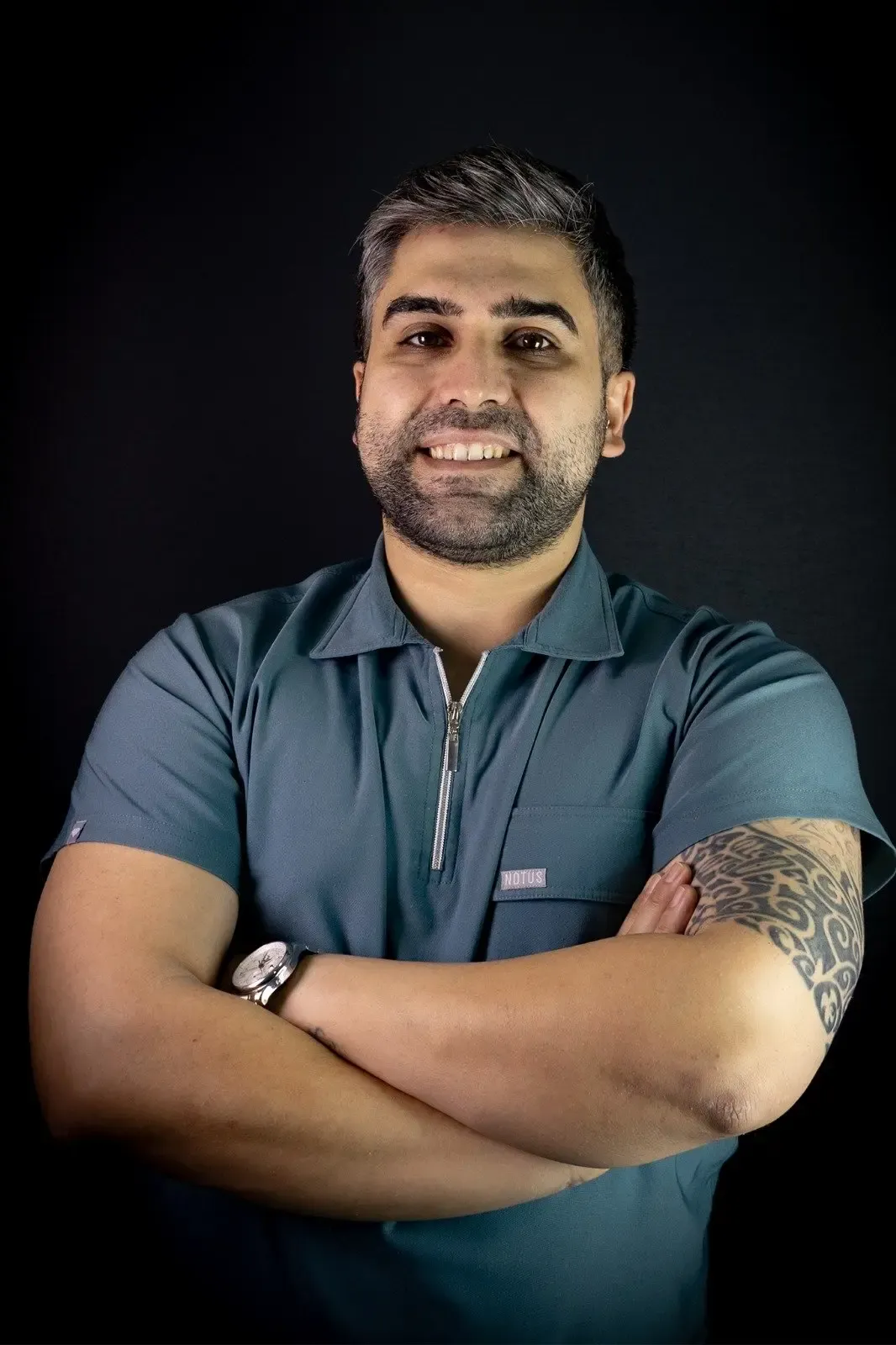
Dr. Taha G
Plans and carries out treatment for Doctor Turka patients at our clinic in Istanbul.

Dr. Hatice G
Treats Doctor Turka patients at our clinic in Istanbul, with a focus on aesthetic and restorative dentistry.
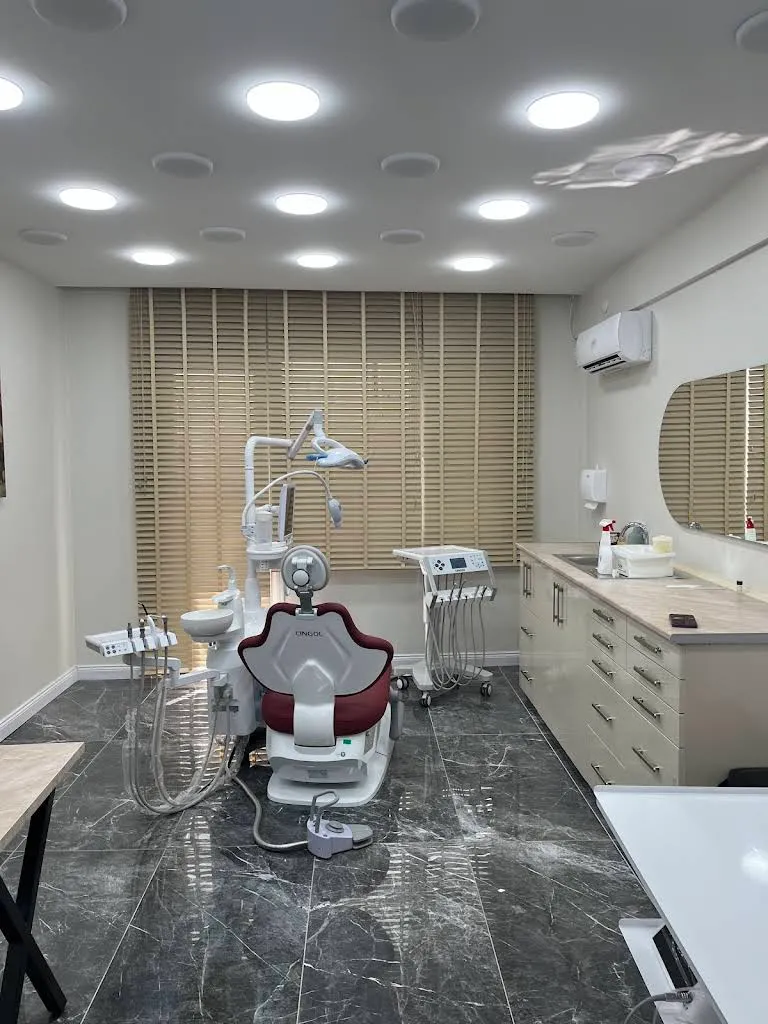
Where you are treated
Our own treatment rooms in Istanbul, the same dentists plan and treat.
Learn more Replies within 15 minutes · 7 days a weekQuestions about Clear aligners? Talk to our team.
Our patient coordinator takes your questions; medical questions are answered by Dr. Taha G and the team: whether Clear Aligners suits you, how long it takes and what the alternatives are.
- Medical questions answered by a dentist
- Your contact details are enough to start
- Free and without obligation
Types of Clear aligners
Which option suits you is decided together with your dentist, based on your examination, not a catalogue.
Minor alignment
Small corrections of a few front teeth, often relapse after braces. Typically around 3-6 months and relatively few stages.
Comprehensive aligner treatment
Crowding, gaps and mild to moderate bite issues across both arches. Usually around 9-18 months, often with one or two rounds of refinements.
Pre-restorative alignment
A focused phase before veneers, crowns or implants to put teeth in the right position and space, so the restorations need less tooth reduction.
Fixed braces (alternative)
For large rotations, significant bite problems or when wear-time is a concern. Usually better done with an orthodontist near home because of frequent adjustments.
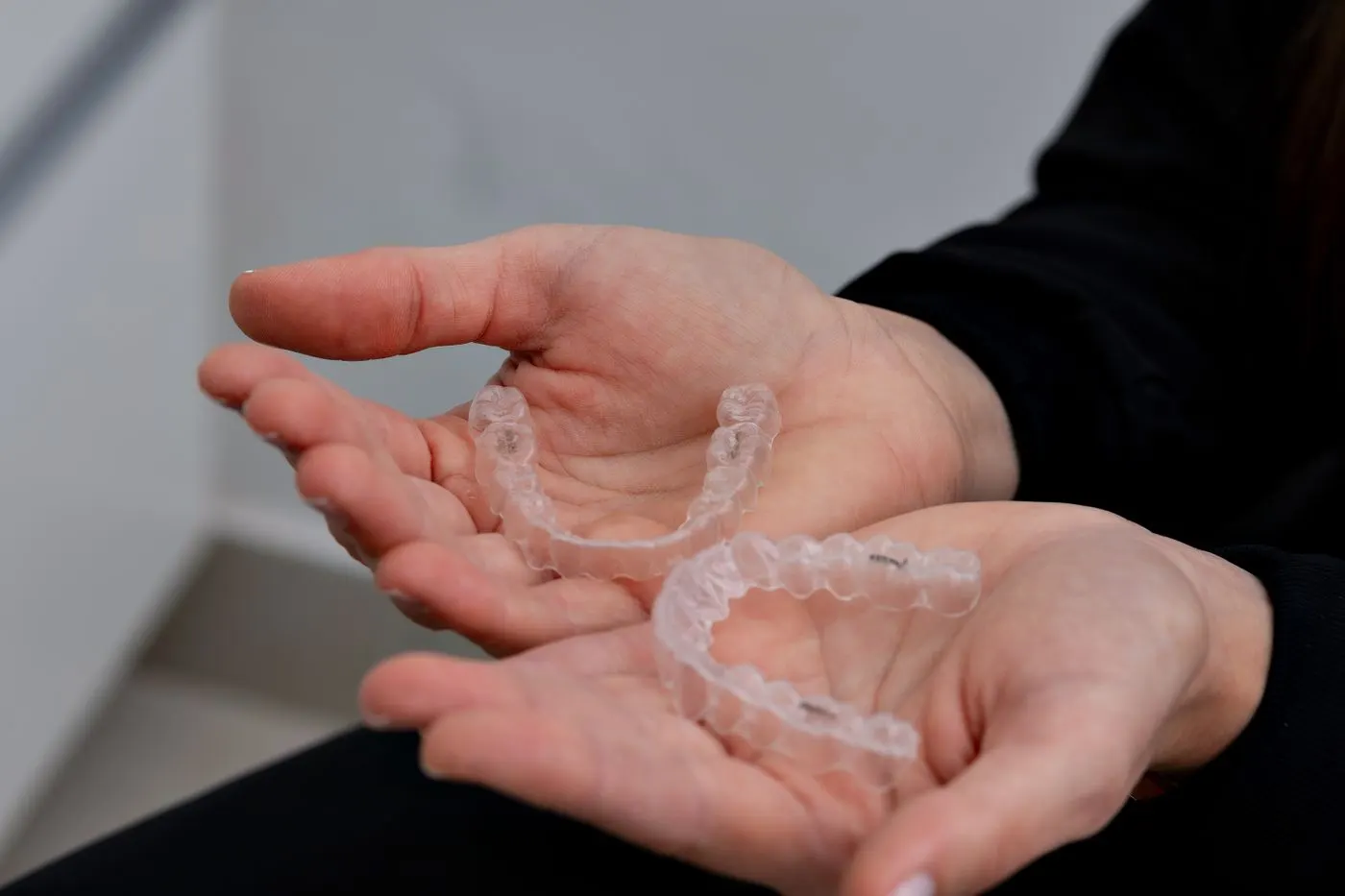
Clear, removable aligners
Thin, transparent trays move the teeth gradually; you change them as instructed by your dentist.
Clear aligners procedure step by step
Before you travel, you know what happens on which day.
Full examination, CBCT, gum check and an intraoral scan. Decay and gum problems are identified, because they must be treated before teeth are moved.
Your dentist prepares the digital movement plan and shows you the simulation: final position, number of stages, attachments and any IPR.
Once you approve the plan, the aligners are manufactured, which usually takes a few weeks. Your coordinator arranges your fitting date.
Attachments are bonded, IPR is carried out if planned, the first aligners are checked for fit, and you learn how to insert, remove and clean them.
You change aligners on schedule, record regular progress scans with your phone and see a local dentist for routine check-ups.
A new scan checks the result; refinement aligners are made if needed. Attachments are removed, retainers are fitted, and veneers or whitening can follow.
What shapes your personal plan
- Complexity of the case and number of aligner stages
- One arch or both arches
- How many refinement rounds are included
- Retainers: removable, bonded or both
- Treatment needed first, such as fillings or gum treatment
- Number of trips and whether they are combined with veneers, whitening or other work
Clear aligners: recovery & aftercare
What to expect in the days and weeks after treatment, and what you can do yourself.
- 01First 1-2 days of each set
Pressure and mild soreness are normal and show the teeth are moving. Change sets at bedtime so the first hours pass while you sleep.
- 02Every day
Take aligners out to eat and for any drink except water. Brush before putting them back, rinse and clean the aligners, and keep them in their case.
- 03Throughout treatment
Record progress scans on schedule, check that each aligner seats fully, and tell your coordinator promptly about a lost attachment or an aligner that no longer fits.
- 04Every 6 months
Check-up and cleaning with your local dentist. Attachments and aligners make plaque control a little harder, so hygiene visits matter.
- 05After treatment
Wear retainers as instructed: often full-time for a short period, then every night. Long-term night-time wear is what keeps the result.
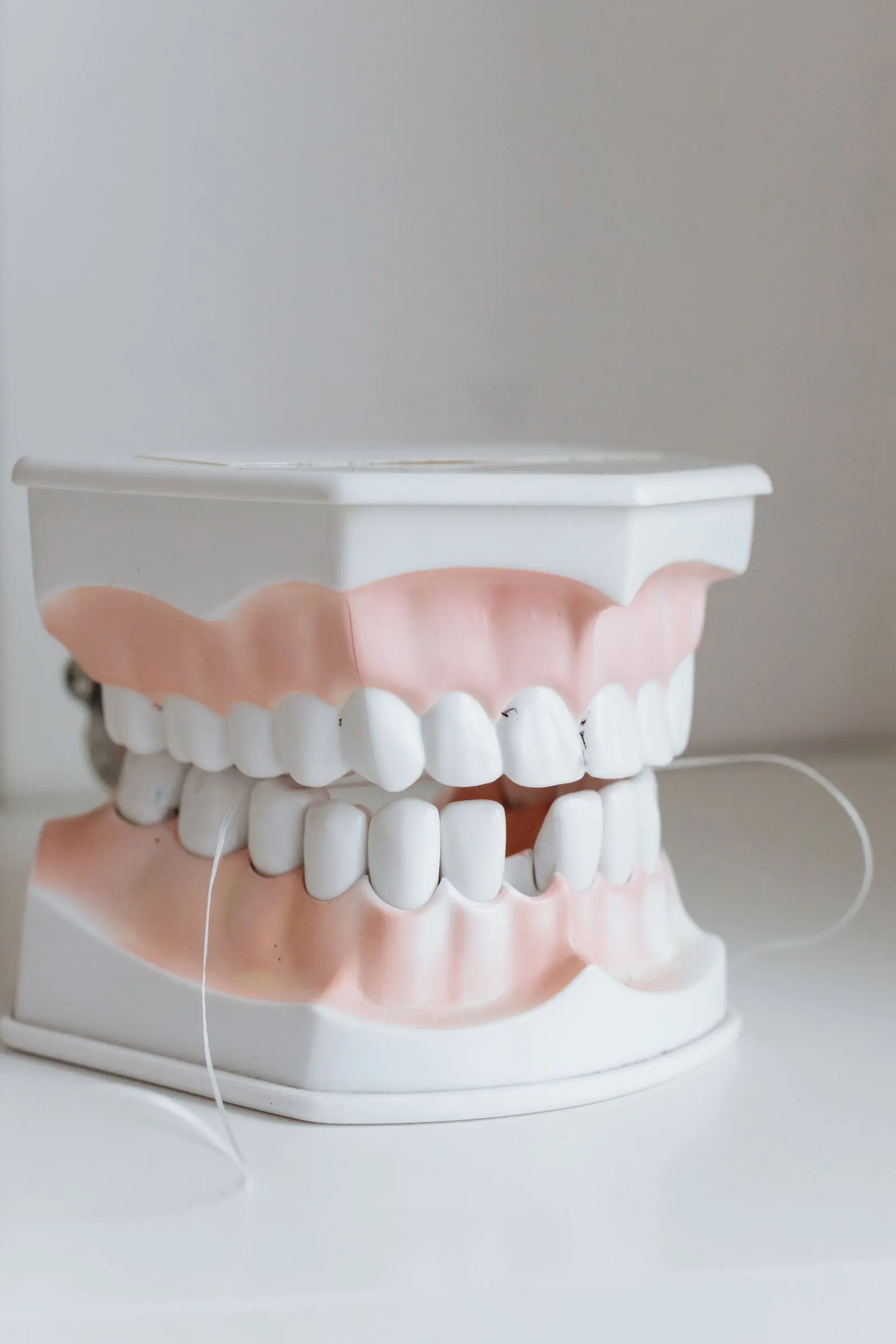
Daily care at home
Good cleaning and regular check-ups keep the result healthy for years, you receive written care instructions.
Benefits of Clear aligners
Nearly invisible
Thin transparent trays are hard to notice in conversation or photos.
Removable
You eat normally and brush and floss as usual, which keeps gums healthier than with fixed braces.
Planned before you start
The 3D simulation shows the intended result and number of stages before a single aligner is made.
Protects enamel
Aligning teeth first can reduce the number of veneers and how much tooth has to be prepared.
Few trips
After the start, most of the treatment runs at home with remote check-ins and a local dentist.
Good to know: limits & risks
- Results depend on wearing the aligners about 22 hours a day; less wear means teeth fall behind the plan.
- Large rotations of rounded teeth, significant vertical movements and skeletal jaw problems are less predictable with aligners and may need fixed braces or surgery.
- The simulation is a plan, not a promise: refinement aligners are common, and some movements finish slightly short of the screen.
- Treatment runs mostly at home; problems such as a lost attachment or an ill-fitting aligner are easiest to handle with a local dentist.
- Active gum disease, untreated decay and very short roots must be addressed first or can rule aligners out.
- Retainers are needed afterwards, ideally for the long term, or teeth tend to move back.
Your dentist goes through these points with you before treatment, openly and without sales pressure.
See where your new smile begins
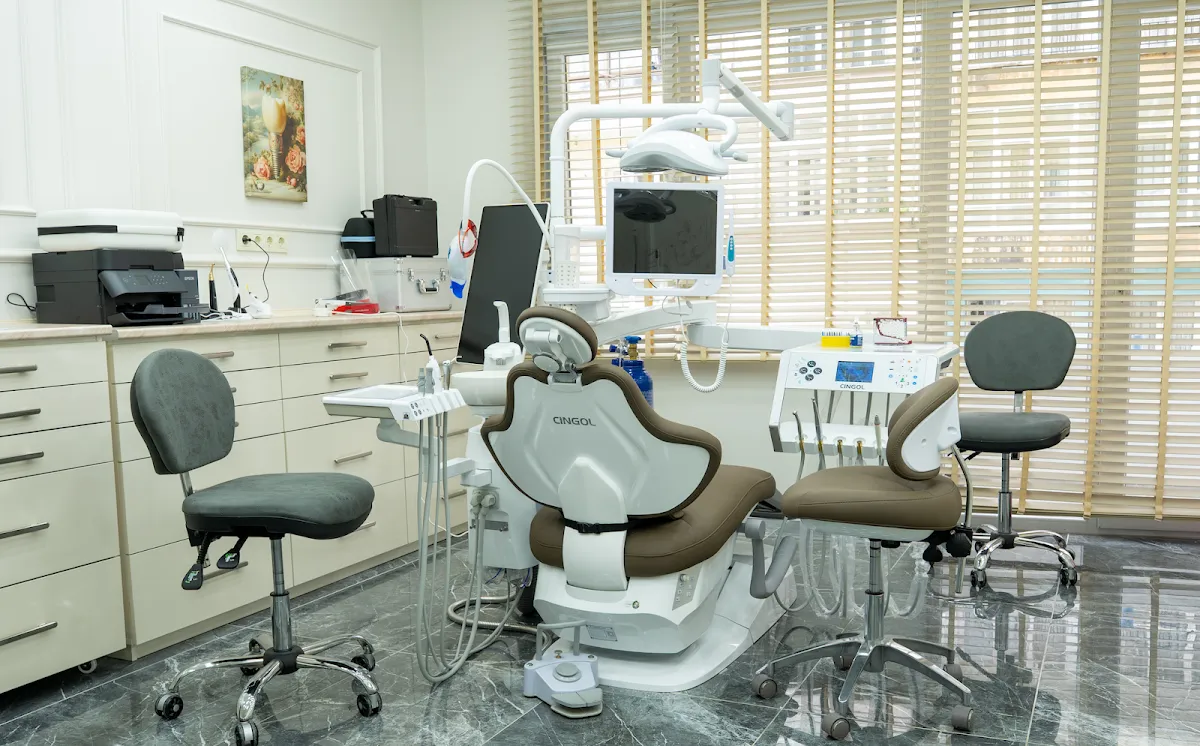
Your treatment takes place at our own clinic in Istanbul, with the same dentists who write your plan.
Clear aligners in Turkey: how they work
Each aligner is a thin, transparent plastic tray made from your 3D scan. It is shaped slightly differently from your current tooth position, so when you wear it, it applies a light, continuous force. The bone around the tooth remodels in response and the tooth moves, typically by around 0.25 mm per stage or a degree or two of rotation.
Every movement is planned in software before production. Your dentist decides the final position of each tooth, the order in which teeth move, and where extra grip or space is needed. You then wear each aligner for one to two weeks, around 22 hours a day. Consistent wear-time matters more than anything else: an aligner that is out of the mouth does not move teeth.
Attachments, IPR and elastics
Attachments
Attachments are small bumps of tooth-coloured composite bonded to some teeth. They give the aligner something to push against, which is needed for rotations, root movements and vertical movements. They are shaped by a template, take a few minutes to place, and are polished off at the end without damaging the enamel.
IPR (interproximal reduction)
To make space for crowded teeth without extractions, a small amount of enamel can be removed between some teeth, typically 0.1 to 0.5 mm per contact. It is done with fine strips or discs, needs no anaesthetic, and stays well within the thickness of the enamel. IPR also helps to reduce small dark triangles between teeth.
Elastics
For some bite corrections, small elastic bands run between hooks on the upper and lower aligners. They require extra discipline, and if they are needed your plan will say so.
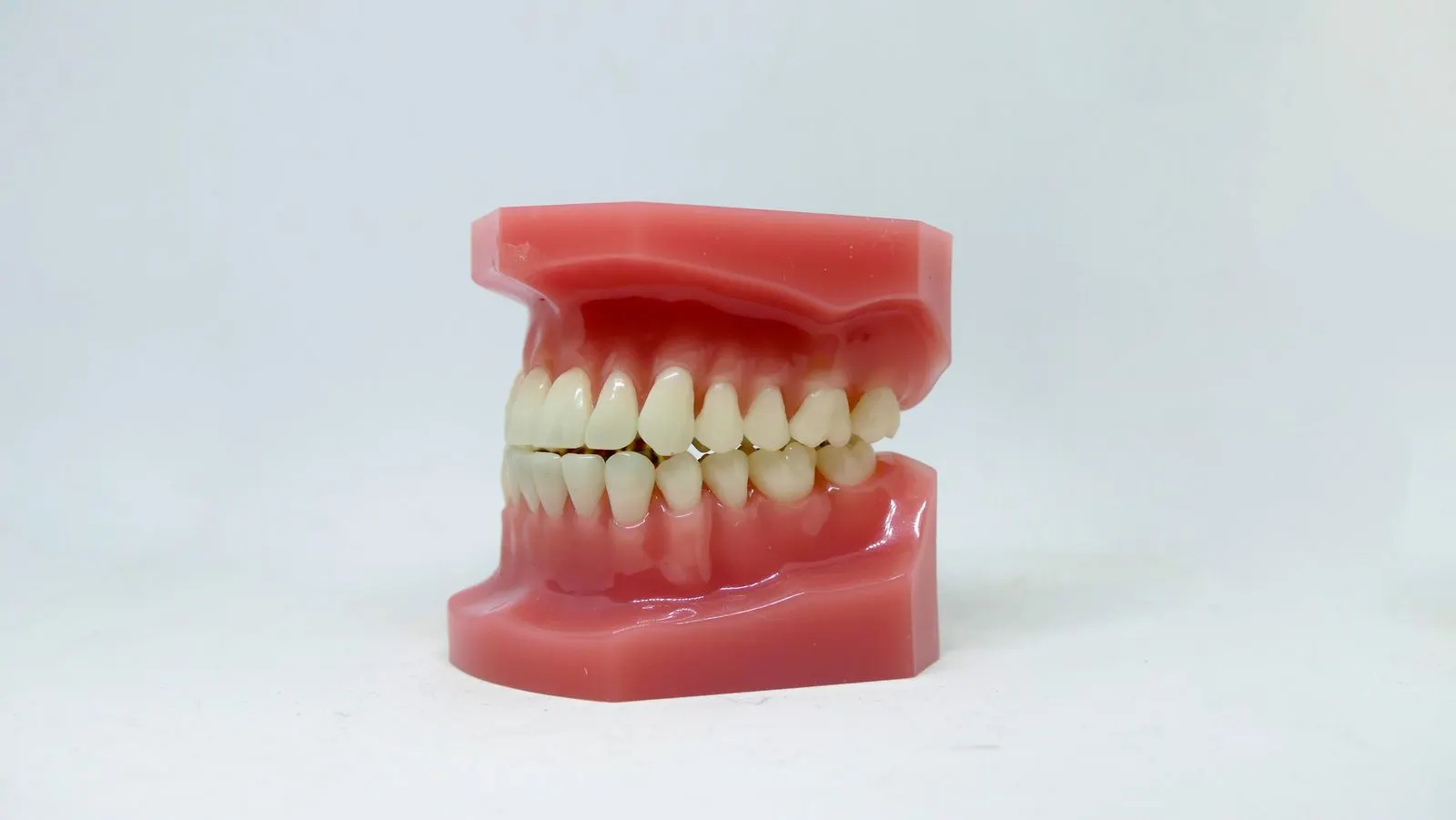
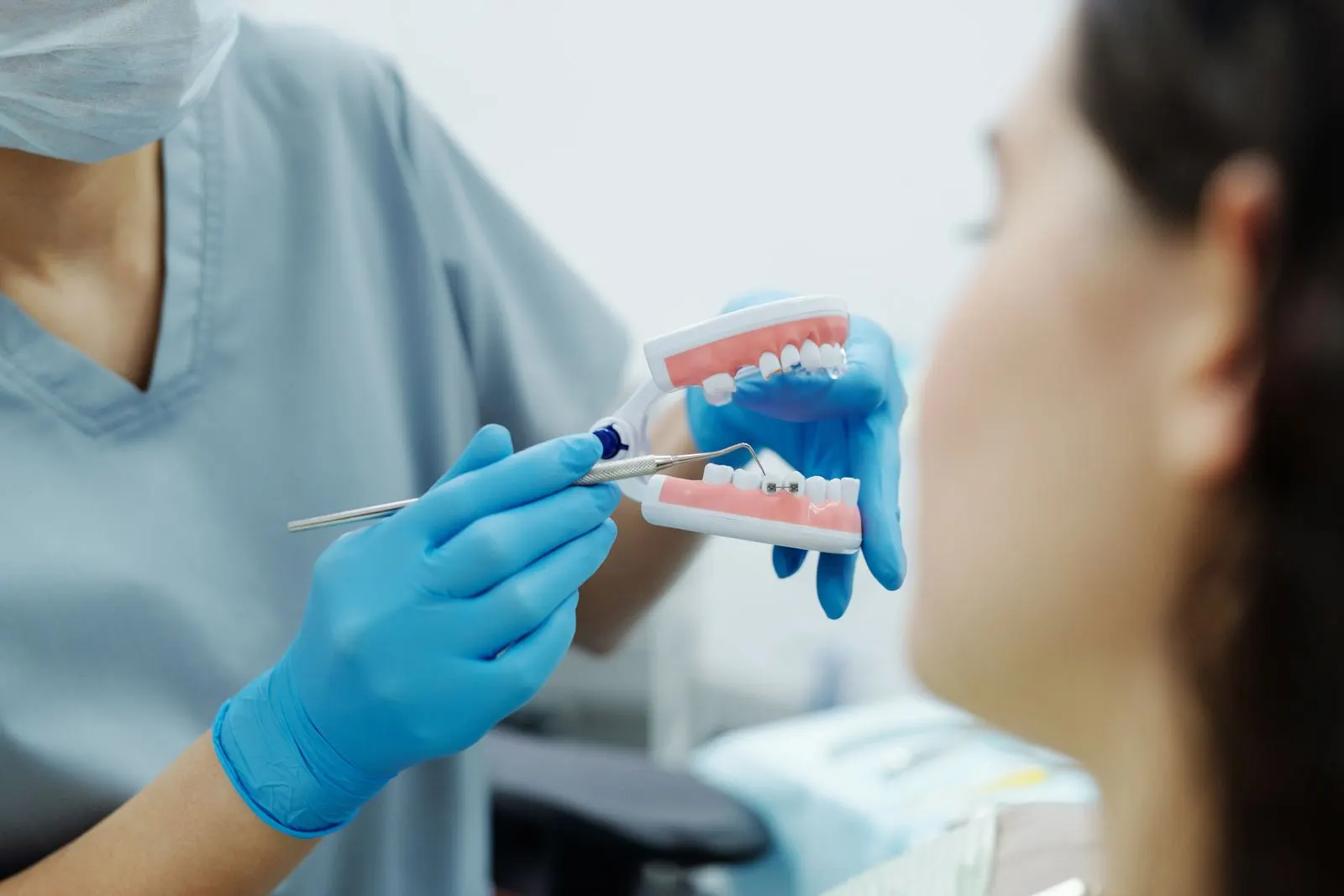
How your upper and lower teeth meet is planned carefully, so the new teeth feel natural when you chew and speak.
What aligners can and cannot treat
| Problem | Aligner suitability |
|---|---|
| Mild to moderate crowding | Good |
| Gaps between teeth | Good |
| Relapse after earlier braces | Very good |
| Mild overbite or crossbite of single teeth | Often good, sometimes with elastics |
| Large rotations of round teeth (canines, premolars) | Less predictable |
| Moving teeth significantly up or down (extrusion) | Less predictable |
| Severe crowding needing extractions | Possible, but complex; fixed braces often better |
| Skeletal jaw discrepancy | Needs orthodontics with jaw surgery |
Aligners are not suitable if you have active gum disease or untreated decay (these are treated first), if you know you will not wear them consistently, if the main problem lies in the jaw position rather than the teeth, or if most of the teeth to be moved are implants or crowns on implants, which cannot move. For children and teenagers, whose jaws are still growing, treatment with an orthodontist near home is usually the better choice.
Aligners, fixed braces or veneers?
Invisalign is the best-known brand, but it is one of several aligner systems that work on the same principle: a digital plan and a series of trays. What makes the difference is the quality of the diagnosis and the plan, not the name on the box. Your written plan states which system is used for your case.
| Clear aligners | Fixed braces | Veneers only | |
|---|---|---|---|
| What changes | Tooth position | Tooth position | Tooth shape and colour |
| Visibility | Nearly invisible | Visible brackets | Not applicable |
| Duration | Around 6-18 months | Around 12-24 months | Days |
| Tooth reduction | None or minimal IPR | None | Some enamel removed |
| Adjustments | Remote, plus few visits | Every 4-8 weeks | None |
| Best for | Mild to moderate cases | Complex movements | Shape, colour, small misalignment |
Fixed braces need regular adjustment appointments, which makes them impractical to manage from Istanbul. If your case needs them, we will tell you, and an orthodontist near home is usually the better route.
Treatment length and tracking
| Case | Typical duration | Typical stages |
|---|---|---|
| Minor alignment | Around 3-6 months | Relatively few |
| Moderate crowding or gaps | Around 6-12 months | Moderate |
| More complex cases | Around 12-18 months or longer | Many, plus refinements |
"Tracking" means that each aligner seats fully and the teeth follow the plan. Signs of poor tracking are gaps between the aligner and the edge of a tooth, or an aligner that no longer clicks into place. The main causes are insufficient wear-time and changing sets too early. Chewies, small foam cylinders you bite on for a few minutes, help aligners seat. If teeth fall behind, you may be told to stay longer on a stage or go back one.
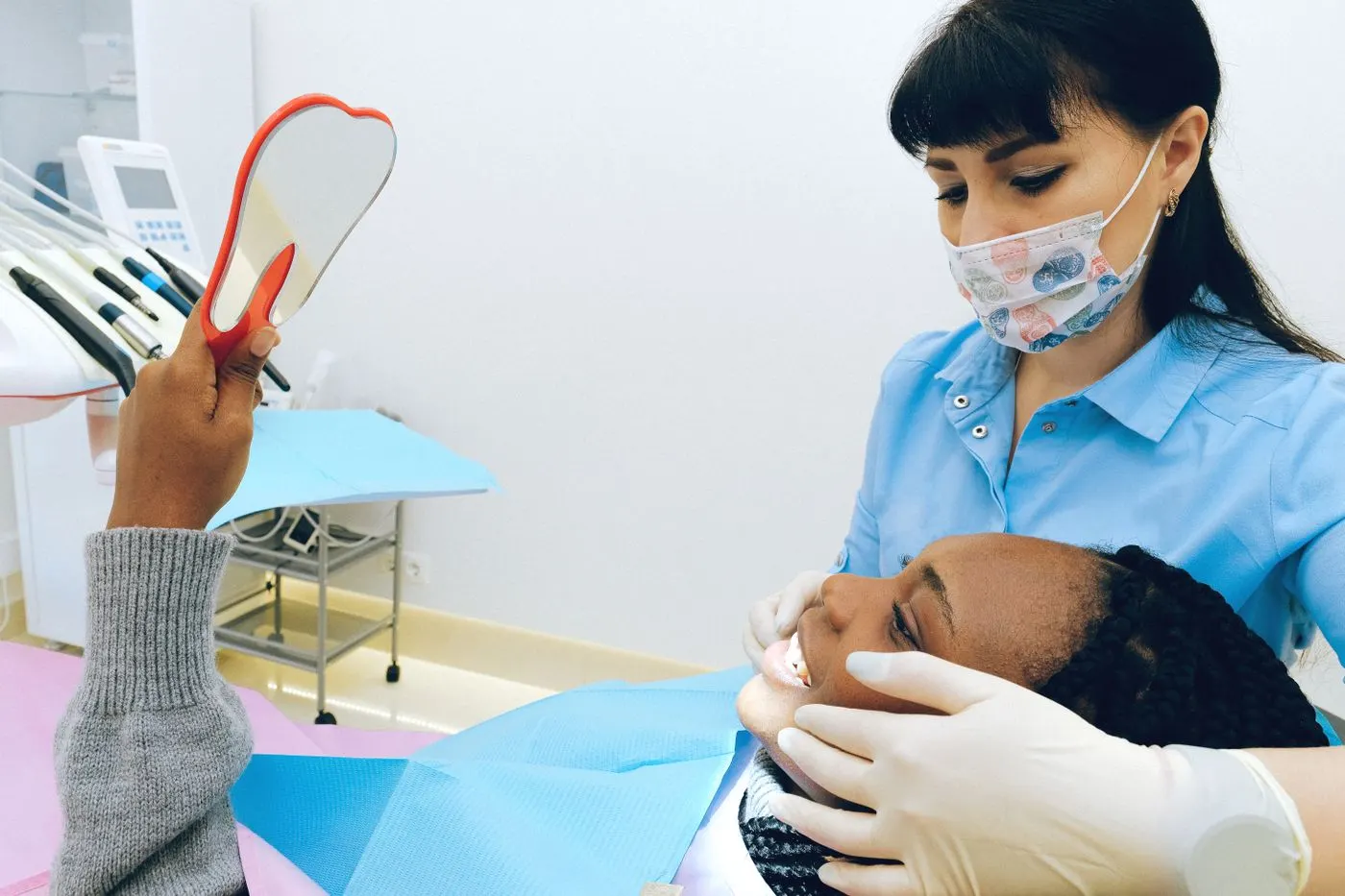
Aesthetic work is checked and tried in, so you can give feedback before anything is fixed for good.
What happens in Istanbul and what happens at home
A typical sequence looks like this:
- First trip (2-3 days): examination, CBCT, gum check, intraoral scan, and any fillings or gum treatment that must come first. You see and approve the simulation.
- Manufacturing (a few weeks): the aligners are produced after you approve the plan.
- Second trip (1-2 days): attachments, IPR, fitting of the first aligners and training. You take several sets home, with the rest following as planned.
- At home (months): changing aligners, progress scans, routine check-ups with your local dentist.
- Final trip (2-4 days, or longer with veneers): a new scan, refinement aligners if needed, attachment removal, retainers, and then any veneers or whitening.
Some patients combine the first and second trips when the plan allows a longer stay, and many combine the final trip with other treatment. Your coordinator plans the dates with you. The general process is explained on how it works.
Remote monitoring: what it can and cannot do
During treatment you record regular progress scans or photos with your phone, following a guided routine. Your dentist reviews them for fit, tracking and hygiene, and tells you when to move to the next set, stay on a set longer, or plan a refinement.
What remote monitoring does well: spotting aligners that do not seat, teeth falling behind, and gum inflammation early. What it cannot do: re-bond a lost attachment, carry out IPR, take a new 3D scan or check your bite in person. Those need a dental chair. For small issues a local dentist can help; a new scan for refinements usually means a visit to Istanbul or, by arrangement, a scan elsewhere. We recommend keeping a dentist at home for routine care throughout.
Refinements, retainers and relapse
Refinements
Teeth do not always follow the plan exactly. Near the end, a new scan shows where the teeth actually are, and a short additional series of aligners closes the gap. One or two refinement rounds are common in comprehensive cases, and your plan states how many are included.
Retainers
Teeth tend to drift back throughout life, whether they were straightened with aligners or braces. Retainers hold the result:
- Removable retainers: clear trays similar to aligners, worn every night after an initial period
- Bonded retainers: a thin wire fixed behind the front teeth, invisible from the front, needing careful cleaning
- Both: often used after larger corrections
Long-term night-time retainer wear is the most reliable way to keep the result. Removable retainers wear out and need replacing every few years.
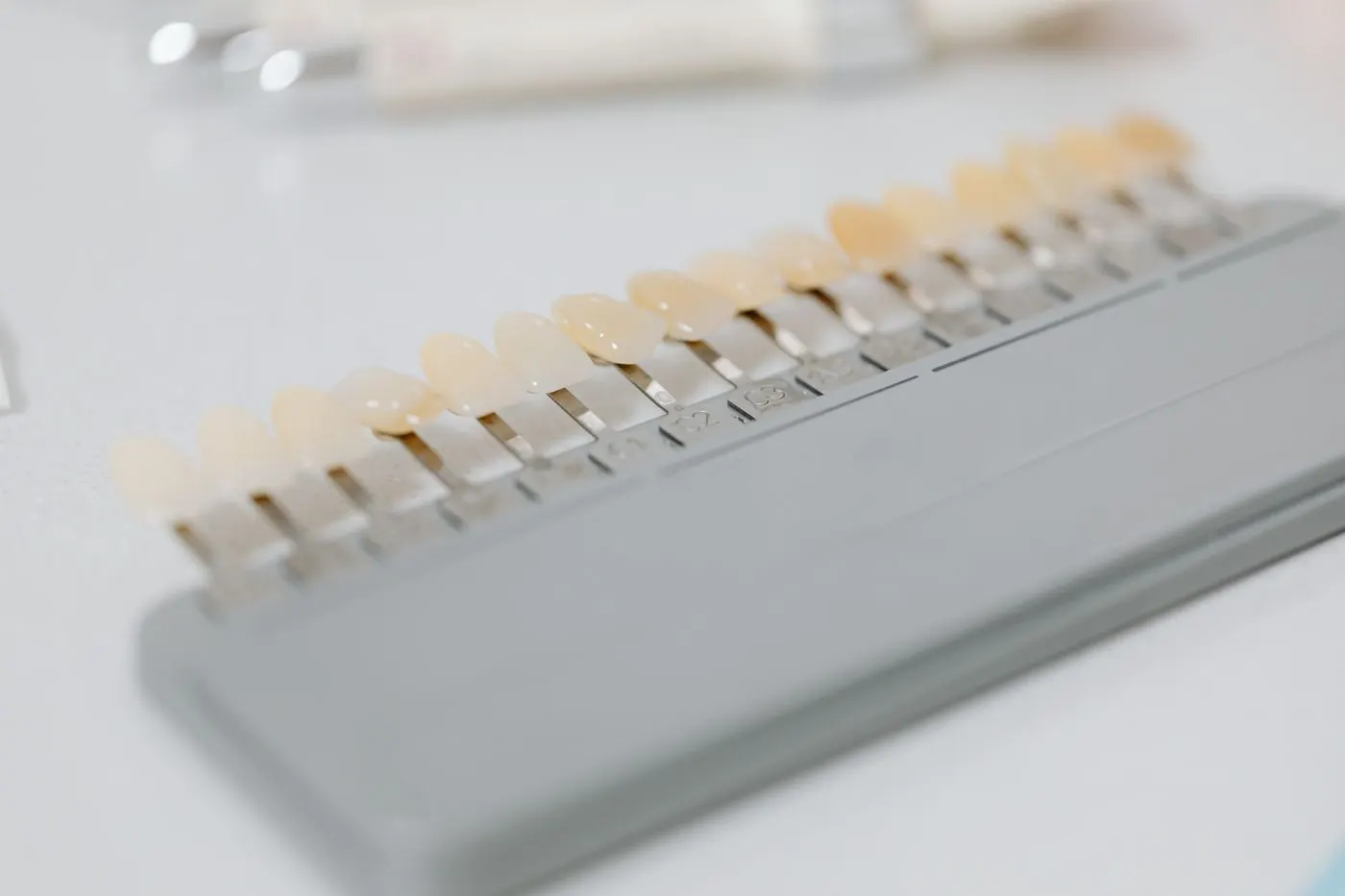
Colour is selected together, in daylight, so the result suits your face, skin tone and neighbouring teeth.
Aligners before veneers
This is one of the most useful things aligners can do. When crowded or rotated teeth are covered with veneers directly, the teeth that stick out must be reduced heavily to bring them into line, sometimes into the dentine. That is one of the causes of the problems described in our article on Turkey teeth.
Aligning first often means:
- fewer veneers are needed, sometimes only for the teeth that really need a new shape or colour
- much less enamel is removed, which is better for bonding and for the long-term health of the teeth
- composite veneers or whitening may be enough instead of porcelain
The trade-off is time: several months of aligners before the veneer trip. For many patients that is a better exchange than irreversible preparation.
Risks and how they are reduced
- Soreness: pressure for a day or two with each new set, usually mild.
- Decay and gum inflammation: trapped sugar under aligners can damage teeth. Brushing before reinserting and drinking only water with aligners in prevents this.
- Root shortening: a small degree of root resorption can occur with any orthodontic movement; light forces and pre-treatment scans help reduce risk.
- Relapse: managed with retainers.
- Unfinished result: handled with refinements; this is why realistic planning and wear-time are discussed before you start.
What shapes your treatment plan and quote
The main factors are the complexity of your case and the number of stages, whether one or both arches are treated, how many refinement rounds and which retainers are included, what treatment is needed first, and how many trips are required. Aligners are often combined with whitening or veneers, and your written quote lists each part separately. Current starting prices are on the dental costs in Turkey page.
Clear aligners are one way to straighten teeth. Compare your options across all our dental treatments.
Everything arranged, one point of contact
What exactly is included is set out in your personal, written plan.
Clear aligners: how to get started
- Leave your contact details
- Talk to our patient coordinator
- A dentist assesses your case, then you receive your written plan
Clear aligners in Turkey: FAQ
Answers about Clear Aligners. Not listed? Ask us directly.
How do clear aligners work?
Each aligner is shaped slightly differently from your current tooth position and applies a gentle, continuous force. The bone around the teeth remodels and the teeth move a fraction of a millimetre per stage. You wear each set for one to two weeks, around 22 hours a day, following a digital plan that your dentist prepares from a 3D scan before treatment starts.
Do I need to come back to Istanbul during treatment?
Usually for a fitting visit after the aligners are made and a final visit for refinements and retainers. In between, progress is followed remotely with scans you record on your phone. Things like a lost attachment or IPR need a dental chair, so we recommend a local dentist for routine care. Complex cases may need an extra visit.
What are attachments and IPR?
Attachments are small tooth-coloured composite bumps bonded to some teeth to give the aligner grip for rotations and root movements; they are polished off at the end. IPR, interproximal reduction, removes a very small amount of enamel between some teeth, typically 0.1 to 0.5 mm per contact, to create space without extractions. Neither needs anaesthetic.
Can I straighten my teeth before getting veneers?
Yes, and it is often the most conservative route. Aligning first means fewer veneers may be needed and much less enamel has to be removed, because teeth no longer have to be ground into line. Sometimes whitening or composite bonding is enough afterwards. The trade-off is several months of aligner treatment before the veneer trip.
Who is not suitable for aligners?
People with active gum disease or untreated decay until these are treated, people who cannot wear aligners about 22 hours a day, and people whose main problem is the position of the jaws rather than the teeth. Large rotations of round teeth and significant vertical movements are less predictable. Growing children are usually better treated by an orthodontist near home.
Are clear aligners from Turkey an Invisalign alternative?
Invisalign is one brand of clear aligner; several others work on the same principle of a digital plan and a series of trays. The outcome depends mainly on the diagnosis, the plan and your wear-time rather than the brand. Your written plan names the system used for your case, and you see the planned result as a simulation before you commit.
How long does aligner treatment take?
Minor corrections often take around three to six months, moderate crowding or gaps around six to twelve months, and more complex cases twelve to eighteen months or longer. Refinements at the end can add a few weeks. The simulation shows the planned number of stages, and actual time depends heavily on wearing the aligners consistently.
Do aligners hurt?
Most people feel pressure and mild soreness for a day or two with each new set, which shows the teeth are moving. Changing sets at bedtime helps. There are no wires or brackets to rub the cheeks, although an aligner edge can occasionally feel sharp and can be smoothed. Ordinary painkillers are rarely needed after the first week.
How long will I need to wear retainers?
Teeth tend to move throughout life, so long-term retainer wear is recommended. After treatment you often wear removable retainers full-time for a short period and then every night. Some patients also have a thin bonded wire behind the front teeth. Removable retainers wear out and are usually replaced every few years.
What do clear aligners cost in Turkey?
It depends on the complexity of the case and the number of stages, whether one or both arches are treated, how many refinements and which retainers are included, what treatment is needed beforehand, and how many trips are required. Your written quote itemises each part. Current starting prices are on the costs page. For a full breakdown, read our guide to dentist prices in Turkey 2026.
Ask us, a coordinator replies personally, and a dentist answers medical questions.
Let’s plan your dental care
Leave your contact details. Our patient coordinator will contact you to discuss your needs and explain the next steps, free and without obligation.
- We reply within 15 minutes, 7 days a week
- Plan and quote in writing after the dentist’s assessment
- No obligation, no pressure
Let’s plan your dental care
Leave your contact details. Our patient coordinator will contact you to discuss your needs and explain the next steps.