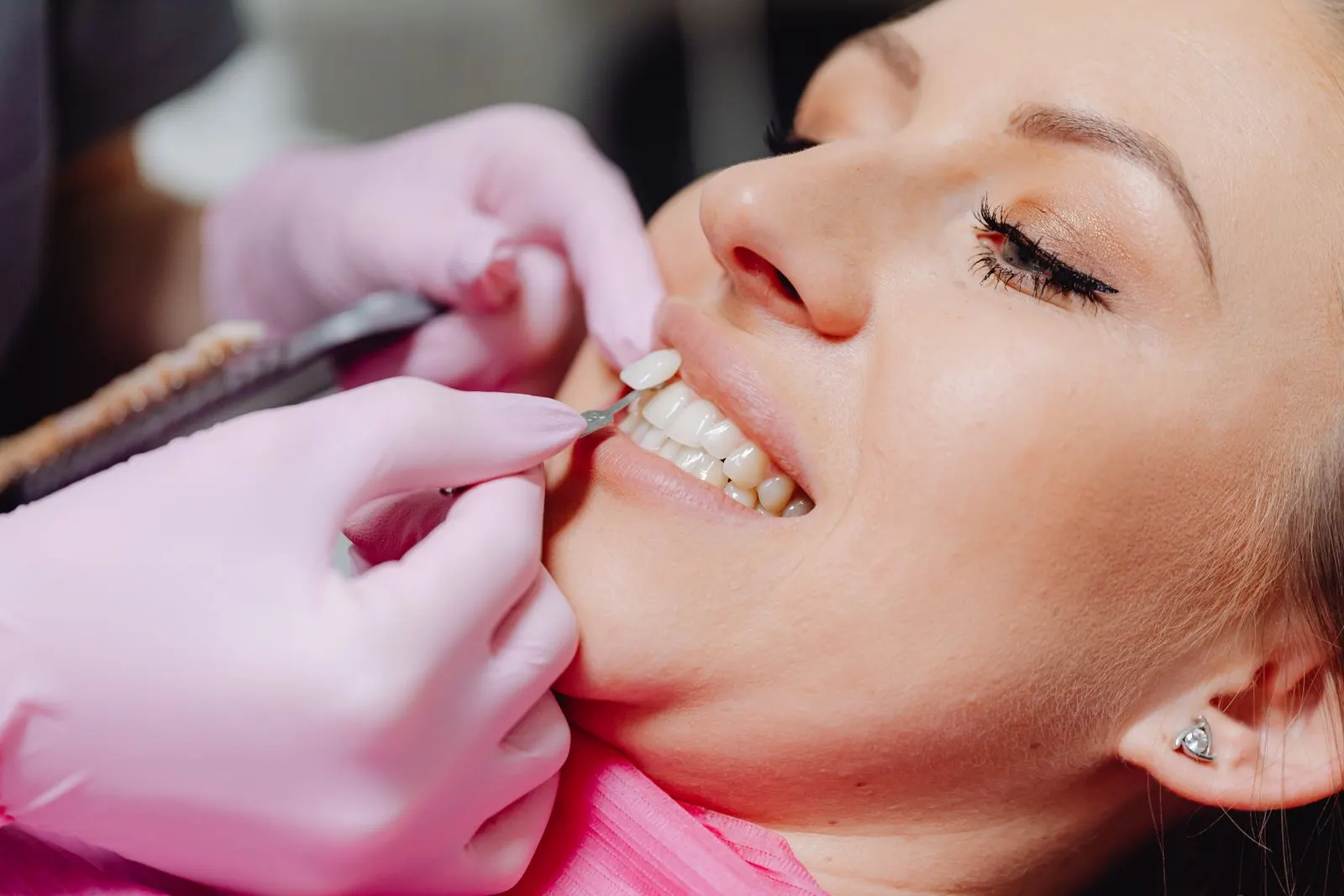
Monolithic and layered zirconia crowns for molars, bridges, implants and people who grind: metal-free, digitally made and fitted in Istanbul in one trip of about 5-7 days.
Monolithic zirconia: no porcelain layer to chip
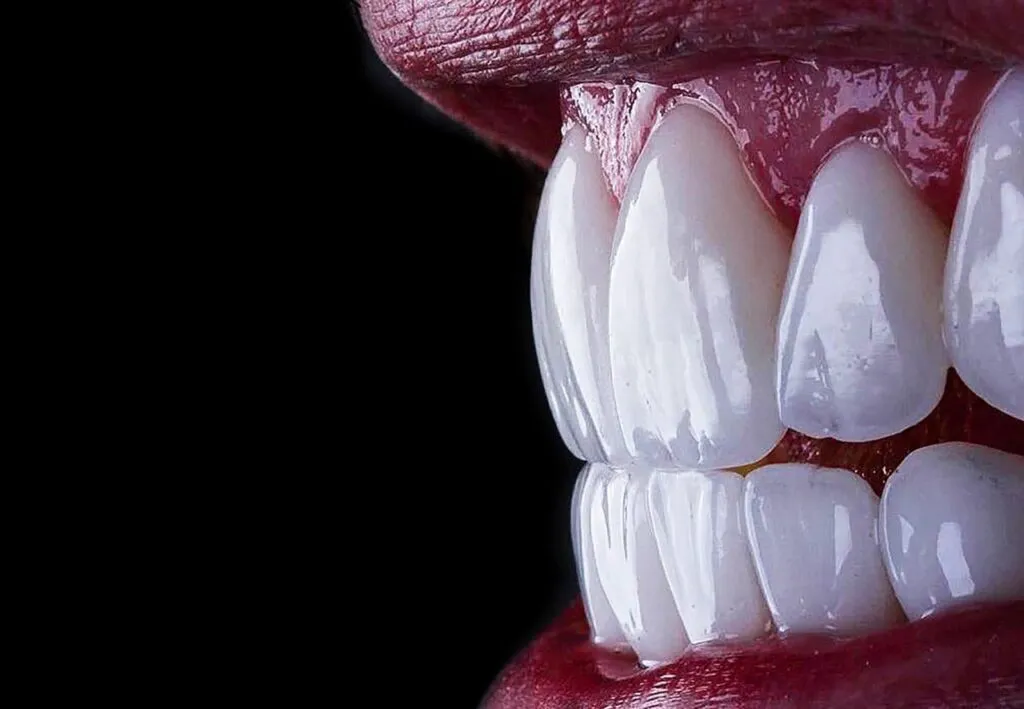
Metal-free and well tolerated by the gums
Suitable for bridges, implants and grinders
“I really didn't want them to be too white or have that obvious fake look.”Dough · Trustpilot
Zirconia crowns in Turkey are metal-free, very strong crowns used mainly for back teeth and implants, milled from a digital scan at our Istanbul clinic.
Zirconia crowns in Turkey are the most common choice for back teeth, bridges and implant crowns, and for good reason. Zirconia (zirconium dioxide) is a high-performance ceramic, not a metal, and it is several times stronger than the glass-ceramics and porcelains used in dentistry. A monolithic zirconia crown is milled from one solid block, so there is no porcelain layer that can chip off, and it can be made thinner than most other ceramic crowns.
Zirconia is not automatically the best crown for every tooth. It is less translucent than E.max, so a single upper front tooth can look slightly flatter next to natural teeth. It is very hard, so the bite has to be adjusted and polished carefully to protect the opposing teeth. And like every crown, it requires reshaping the tooth, which is only justified when the tooth needs it.
Patients from the UK, Ireland, Germany, Austria and Switzerland choose our clinic in Ataköy, Istanbul, for zirconia crowns because they receive the same materials used at home, a digital scan-to-mill workflow, a try-in before fitting and a written, itemised plan. Most cases take one trip of five to seven days. Dr. Taha G or Dr. Hatice G examine each tooth with X-rays and a 3D CBCT, recommend monolithic, multilayer or layered zirconia depending on where the tooth sits and how you bite, and explain when E.max or a smaller restoration would be the better choice. Packages can include hotel nights and VIP transfers, and your English- and German-speaking coordinator stays in touch after you fly home.
In the press
As featured on AP News, Google News and 36 TV news websites
“I had my zirconium crowns done a couple of weeks ago and thought I'd share my experience because I know how difficult it can be to decide where to go. I spent ages looking at different clinics and reading reviews before finally booking.
I was a bit nervous when I arrived, mainly because I wasn't sure how my teeth would look afterwards. I really didn't want them to be too white or have that obvious fake look. The dentist was lovely and we talked about the colour and shape before starting, which made me feel a lot better.
The first few days were a little uncomfortable, especially with the temporary teeth, but nothing I couldn't manage. I actually asked to change the shape of my front teeth slightly during the fitting and they were completely fine with it. I'm so glad I did because the final result is exactly what I had in mind.
I've been home for a little while now and everything feels good. My friends keep saying I look different but they can't quite figure out why 😂 I think that's probably the nicest compliment I could get because I wanted them to look natural.
Also have to mention how helpful everyone was during my stay. I had a few questions along the way and always felt comfortable asking. Really happy with how everything turned out and glad I finally went ahead with it ❤️”
DDough Zirconia crowns · Trustpilot
★★★★★
Verified review
“I had zirconia crowns fitted at Doctor Turka and I am very happy with my new smile. I wanted a result that suited me, so it mattered that the team listened to what I liked and what I was unsure about. They took my questions seriously and explained the treatment without making me feel rushed. The staff were friendly throughout my appointments, which made the whole experience easier. What I appreciate most is feeling comfortable smiling again. Thank you to everyone involved in my care.”
JJnae Ford Zirconia crowns · Trustpilot
★★★★★
Verified review
“I had my implants and zirconia crowns done here and I’m sooo happy with my new teeth!! 🥹 I was really nervous at first, but the dentists were honestly lovely. They explained everything and made me feel so comfortable. Everyone looked after me from start to finish, and my teeth look so natural. I can’t stop smiling now haha. Thank you all so much!! 🤍🦷”
SSerra Akaoglu Dental Implants · Trustpilot
Patient videos
Our patients tell their story
Real treatments at our clinic in Istanbul, filmed with the patients' consent. Ask us for cases similar to your Zirconia crowns case.
Questions about Zirconia crowns? Talk to our team.
Our patient coordinator takes your questions; medical questions are answered by Dr. Taha G and the team: whether Zirconia crowns suits you, how long it takes and what the alternatives are.
Starting prices from our price list, next to typical private fees at home. Your exact price is in your written plan after a dentist’s assessment.
Number of teeth1
USA€1,2253
UKfrom €1,4008
Germany€700 to €1,0009
Istanbulfrom €120
UK, Germany, USA: published private fees, source numbers on the price list. Saving is calculated against the lower end of each range. Istanbul: our starting price. Your exact price is in your written plan after a dentist’s assessment. Sources
You save
up to 91%
compared with a private clinic at home, with the same implant systems and ceramics.
Digital diagnostics3D CT scan and intraoral scanning
Hygiene standardsProtocol-based sterilisation
Named dentistsYou know who treats you
English & GermanCoordinator at every appointment
In-depth guide
What zirconia crowns are made of
Zirconia crowns are made of zirconium dioxide (ZrO2), a white ceramic oxide. The name causes confusion: zirconium is a metal element, but zirconia is its oxide and behaves like a ceramic, not a metal. It does not conduct heat like metal, it does not corrode, and it contains no metal framework. So the answer to "does a zirconia crown have metal in it?" is no, and to "is zirconia a ceramic?" yes.
Pure zirconia changes its crystal structure as it cools, which would make it crack. Dental zirconia is therefore stabilised with a small amount of yttrium oxide. The amount matters:
3Y zirconia (about 3 mol % yttria) is the strongest and toughest, with flexural strength around 900-1,200 MPa, but it is more opaque.
4Y and 5Y zirconia contain more yttria, let more light through and look more natural, but their strength drops to roughly 600-900 MPa.
Multilayer blanks combine these: a stronger body near the gum and a more translucent layer at the biting edge.
A property called transformation toughening helps zirconia stop small cracks from spreading, which is why a monolithic zirconia crown is so resistant to fracture.
How a zirconia crown is made
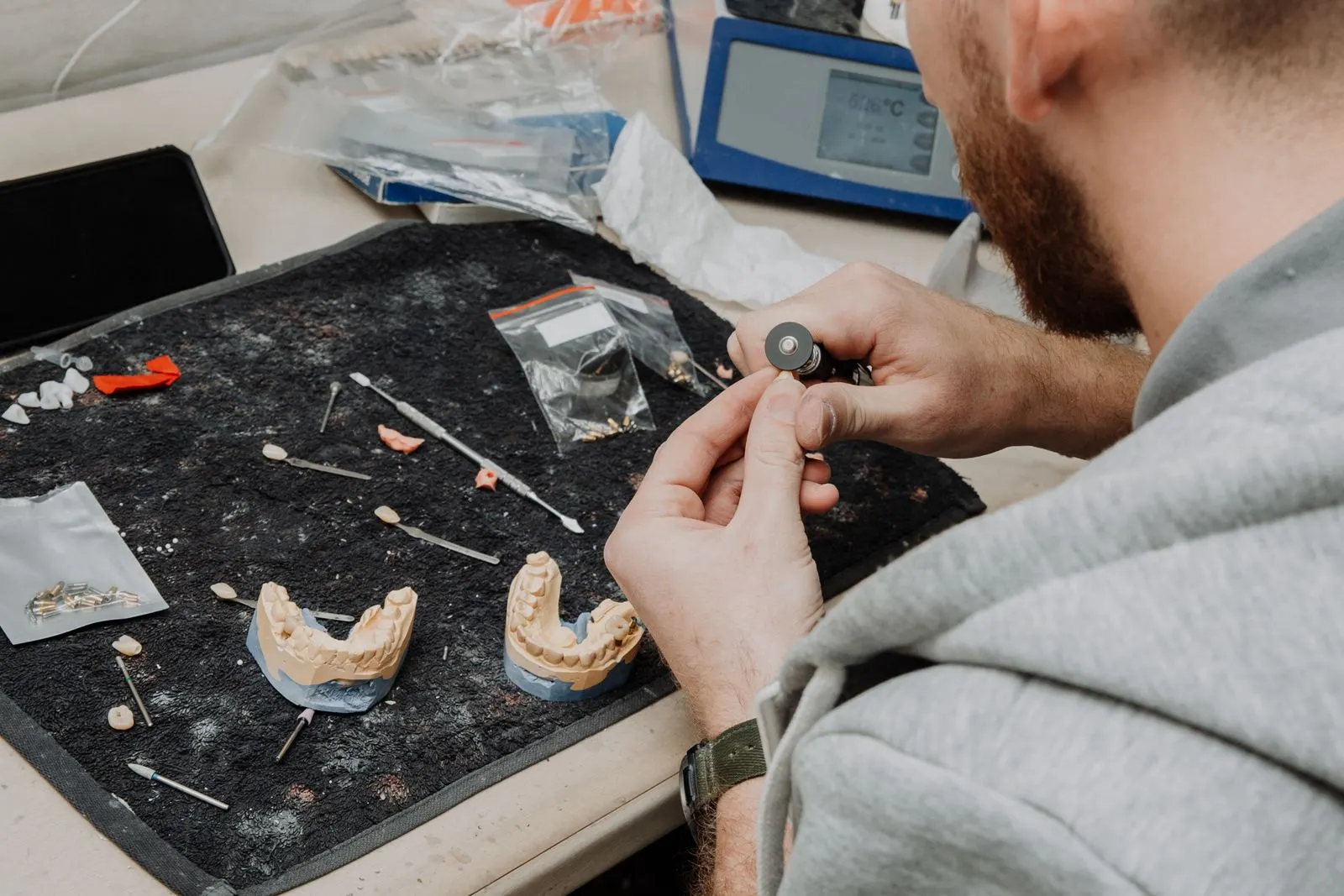
Modern zirconia crowns are produced digitally, from scan to finished crown.
Scan. After the tooth is prepared, an intraoral scanner records it and the opposing teeth in 3D.
Design. The technician designs the crown in CAD software, setting margin, contacts, bite and minimum thickness.
Milling. A milling machine cuts the crown from a chalk-soft, pre-sintered zirconia disc. It is milled about 20-25 % oversized.
Sintering. The crown is fired at roughly 1,450-1,550 °C for several hours. It shrinks to its final size and reaches full strength.
Finishing. Colour is added by staining, then the crown is glazed or polished. For layered zirconia, porcelain is built up and fired in layers.
This workflow is what makes a single trip possible: design, milling and sintering take one to three working days.
Examination and checks
Each step starts with a clinical check, and the result is checked again before you travel home.
Monolithic, multilayer or layered zirconia
Monolithic (3Y)
High-translucency (4Y/5Y)
Multilayer
Layered (core + porcelain)
Strength
highest, about 900-1,200 MPa
about 600-900 MPa
graded
core high, porcelain about 80-120 MPa
Chipping risk
very low
very low
very low
higher
Translucency
low to moderate
good
good, with gradient
very good
Tooth reduction at the sides
about 0.8-1.0 mm
about 1.0-1.2 mm
about 1.0-1.2 mm
about 1.2-1.5 mm
Best for
molars, bridges, grinders
premolars, some front teeth
premolars, visible back teeth
front and visible teeth with low load
For most molars our dentists recommend monolithic or multilayer zirconia. Layered zirconia is used where appearance is the priority and the bite is gentle.
How much tooth is removed for a zirconia crown
Because monolithic zirconia is so strong, it can be milled thinner than other ceramics. A typical preparation for a monolithic zirconia molar crown removes about 0.8-1.0 mm on the sides and 1.0-1.5 mm on the biting surface, with a rounded chamfer or shoulder margin that the scanner and milling machine can reproduce precisely. A PFM crown usually needs 1.2-1.5 mm on the sides and more on the biting surface to hide the metal and leave room for porcelain.
That difference matters on teeth that are already heavily filled or root-treated, where every millimetre of sound wall helps. The dentist also aims for a ferrule of about 1.5-2 mm of healthy tooth above the margin and a taper of around 6-10 degrees, so the crown has mechanical retention rather than relying on cement alone. Depth-guide burs and a check of the scan on screen help keep the reduction even.
Replacing old metal-ceramic crowns with zirconia
Many patients come to replace PFM crowns placed ten or twenty years ago. Typical reasons are a grey line at the gum after recession, chipped porcelain, decay at the margin or simply a colour that no longer matches. Removing an old crown lets the dentist inspect the tooth underneath: decay is removed, a new build-up placed and the margin refreshed. Sometimes an X-ray or CBCT shows an old root filling that needs to be redone first, which is why the final plan is confirmed only after the examination. In most cases the existing preparation can be refined for monolithic or multilayer zirconia without removing much more tooth.
Explained step by step
Your dentist explains how the tooth and the treatment work, so you know what to expect at every appointment.
Zirconia crowns: advantages and disadvantages
Advantages
Strength. The most fracture-resistant tooth-coloured crown, suitable for molars and bridges.
No chipping in monolithic form. Chipped porcelain is one of the most common problems with older crowns.
Metal-free. No grey edge at the gum and no metal for people who prefer to avoid it.
Gum-friendly. Polished zirconia attracts little plaque, and gums tend to respond well.
Thinner walls possible. Less tooth removal than PFM in many cases.
Disadvantages
Less translucent than E.max, which can matter on a single front tooth.
Very hard. If left rough after adjustment, it can wear the opposing teeth.
Radiopaque. Decay under the crown is harder to see on X-rays, so margins must be kept clean.
Hard to adjust or remove. Larger changes usually mean a new crown.
Adhesive bonding is less effective than with glass-ceramics, so the tooth shape must provide good retention.
Is zirconia the best crown? Zirconia vs E.max vs PFM
There is no single best crown, only the best crown for a particular tooth. Zirconia wins on strength, E.max on light and natural depth, and PFM on long-term track record.
Zirconium crowns in Turkey: the procedure day by day
Before you travel, you leave your contact details, your coordinator calls or writes, a dentist assesses your case and you receive a written, itemised plan. The steps are set out on how it works.
Day
What happens
Day 1
Examination, X-rays, 3D CBCT, vitality tests, bite analysis, final plan and material per tooth
Day 2
Old restorations removed, build-ups, preparation with a chamfer or rounded shoulder margin, digital scan, shade, temporaries
Days 3-4
CAD design, milling, sintering, staining and glazing; free time in Istanbul
Day 5
Try-in of fit, margins, contacts, bite and shade
Day 6
Final fitting: crowns sandblasted internally, primed and cemented or bonded; bite refined and re-polished
Day 7
Check and flight home
Cementing a zirconia crown
Zirconia cannot be etched like glass-ceramic. The inside of the crown is lightly sandblasted and treated with a special primer, then fixed with resin-modified glass-ionomer or resin cement. Where the tooth is short, adhesive resin cement adds retention. Excess cement is removed meticulously, because cement left under the gum can inflame it.
Care explained to you
Before you fly home, the team shows you how to clean and look after your new teeth.
Zirconia on implants and bridges
On implants, zirconia crowns are usually bonded in the laboratory to a titanium base and screwed onto the implant. A screw-retained crown can be removed for maintenance and leaves no cement under the gum. Because implants lack the natural shock absorber of a tooth, the strength of monolithic zirconia is particularly useful. Implant crowns are fitted once the implant has healed, usually on a second trip; see dental implants.
For bridges, zirconia's strength allows connectors between the crowns to be thin enough to clean under yet strong enough for back teeth. For missing teeth, compare the options on dental bridges.
Who zirconia crowns suit, and who they do not
Zirconia crowns suit adults with a structurally compromised back tooth, a bridge or an implant, particularly if they clench or grind.
They are not the right choice when:
The tooth is healthy. Colour or shape issues on intact teeth are better treated with whitening, bonding or veneers.
A single upper front tooth must match natural neighbours exactly. E.max usually blends in better.
Only part of the tooth is damaged. An inlay or onlay keeps more tooth.
Gum disease is active. It must be treated before any crown.
There is too little tooth for retention and no option for a build-up or crown lengthening. An implant may be better.
Grinding, wear and the opposing teeth
People who grind often break layered porcelain, which is why monolithic zirconia is recommended for them. A common worry is that zirconia will wear down the opposing teeth. Laboratory studies suggest that highly polished zirconia causes wear similar to, or lower than, glazed porcelain. The problem is rough zirconia: after any adjustment, the surface must be polished again to a high gloss. A night guard is still advised for grinders, because it protects the natural teeth, the crowns and the jaw joints.
Lifespan and failure modes
Reviews of monolithic zirconia single crowns report five-year survival typically above 95 %, and zirconia bridges also perform well in the medium term. Long-term data beyond ten years is still more limited than for PFM. When zirconia crowns fail, it is usually not the zirconia:
Decay at the margin because plaque was left at the gum line.
Gum recession exposing the root surface above the crown edge.
Debonding of a crown on a short, tapered tooth.
Porcelain chipping on layered zirconia.
Nerve problems in teeth that were deeply filled before crowning.
Old concerns about zirconia ageing in the mouth relate mainly to earlier materials and hip implants; modern dental zirconia is considered stable, though research continues.
Recovery and aftercare at home
Recovery is short. Most people return to normal the same day, with some cold sensitivity or tender gums for a few days. Clean the crown margins every day with floss or interdental brushes, keep regular check-ups with X-rays at home, and wear a night guard if you grind. If one tooth hits first or aches on biting, contact your coordinator; an adjustment is quick but must be followed by polishing.
Are zirconia crowns worth it, and how to choose a clinic
For a molar that needs a crown, monolithic zirconia is in most cases worth it: strong, metal-free and with little risk of chipping. It is not worth crowning a healthy tooth for appearance alone; that is the root of the "Turkey teeth" problem described in Turkey teeth: what it means and how to avoid it.
When you compare clinics, reviews and forum threads are useful for how a clinic communicates and handles problems, but also ask:
Why does each tooth need a crown rather than an onlay or veneer?
Which type of zirconia will be used for each tooth, and from which manufacturer?
Is there a CBCT, a try-in and a bite check before final fitting?
How will the crowns be cemented, and will adjusted zirconia be re-polished?
Is the plan written and itemised, with guarantee terms in writing?
What shapes your treatment plan and quote
Your plan is shaped by the number of crowns, the zirconia type chosen for each tooth, whether crowns go on teeth or implants, bridge units, any build-ups, posts or root canals, removal of old work, gum treatment, a night guard and package elements such as hotel and transfers. Current starting prices are on dental costs in Turkey. Your own quote is written and itemised before you travel, and your crowns come with a written guarantee whose terms are explained in the plan.
Included in your package
Everything arranged, one point of contact
Treatment planTooth by tooth, agreed with you in writing
Clinical checksThe examinations your dentist considers necessary
AccommodationArranged for you when it is part of your written plan
TransfersAirport · hotel · clinic, as set out in your plan
Personal coordinatorEnglish and German, 7 days a week
Follow-upWritten guarantee terms and support after you return home
What exactly is included is set out in your personal, written plan.
Answers about Zirconia crowns. Not listed? Ask us directly.
How much is a zirconia crown in Turkey?
The fee depends on the zirconia type (monolithic, multilayer or layered), whether the crown sits on a natural tooth or an implant, bridge units, and any preparatory work such as build-ups, root canals or removal of old crowns. Hotel and transfers are listed separately in packages. Current starting prices are on our dental costs in Turkey page, and you receive a written, itemised quote before travelling. For a full breakdown, read our guide to dentist prices in Turkey 2026.
Are zirconia crowns worth it?
For a molar or premolar that needs full coverage, usually yes: they are strong, metal-free and have low chipping risk, with five-year survival in studies typically above 95 %. They are not worth it on healthy teeth that could be treated with whitening, bonding, veneers or an onlay, because crowning removes tooth structure permanently.
Are zirconia crowns safe?
Zirconia is one of the most biocompatible dental materials, with low plaque attraction and very rare allergic reactions. It has been used in dentistry for more than two decades. Safety depends more on the treatment than the material: correct diagnosis, conservative preparation, precise margins, careful cement removal and a polished biting surface.
How is a zirconia crown made?
After preparation, the tooth is scanned digitally and the crown designed on a computer. It is milled oversized from a soft, pre-sintered zirconia disc, then fired at about 1,450-1,550 °C, when it shrinks to its final size and hardens. Finally it is stained and glazed or polished, or layered with porcelain for layered zirconia.
Can zirconia crowns chip or break?
Monolithic zirconia very rarely chips or fractures. Layered zirconia has a porcelain surface that can chip, particularly in people who grind, which is why monolithic zirconia is recommended for molars. The tooth underneath can still fracture if too little sound tooth remains, so a good ferrule matters.
Do zirconia crowns look natural?
Multilayer and layered zirconia can look very natural on premolars and visible back teeth, and often on front teeth when several are crowned together. Next to untouched natural front teeth, a single zirconia crown can look slightly more opaque than E.max. Shade is matched at the try-in in daylight before fitting.
Zirconia or E.max for front teeth?
For a single upper front tooth next to natural teeth, E.max usually gives the most lifelike result. For a dark tooth underneath, several front crowns together, or a patient who grinds, multilayer or layered zirconia can be the better choice. Many patients have E.max at the front and zirconia at the back with matched shades.
Is zirconia the best crown?
For back teeth, bridges, implants and people who grind, monolithic zirconia is often the best choice because it is the strongest tooth-coloured material and does not chip. For a single upper front tooth that must blend with natural teeth, E.max usually looks more lifelike. The best crown is the one matched to the tooth, the bite and the colour of the tooth underneath.
Do zirconia crowns contain metal?
No. Zirconia is zirconium dioxide, a ceramic oxide. Although zirconium itself is a metal element, the oxide used for crowns behaves like a ceramic: it does not corrode, conduct heat like metal or show a grey edge at the gum. Zirconia crowns have no metal framework.
What are zirconia crowns made of?
Zirconium dioxide stabilised with a small amount of yttrium oxide. Around 3 mol % yttria gives the strongest, more opaque zirconia; 4-5 mol % gives more translucent zirconia with lower strength. Multilayer blanks combine both in one crown. Colour comes from pigments added to the blank or stains applied before firing.
What does the zirconium crowns procedure in Turkey involve?
Day one: examination, X-rays, 3D CBCT and a plan per tooth. Day two: preparation under local anaesthetic, digital scan and temporaries. Days three and four: milling and sintering. Day five: try-in. Day six: final fitting and bite adjustment. Day seven: check and flight home. Larger cases or root canals can add a few days.
Will zirconia damage my other teeth?
Rough zirconia can wear opposing teeth, but lab studies suggest highly polished zirconia causes wear similar to or lower than glazed porcelain. That is why any adjustment must be followed by careful polishing. If you grind, a night guard protects both the crowns and your natural teeth.
How long do zirconia crowns last?
Studies of monolithic zirconia single crowns report five-year survival typically above 95 %, and many are expected to last well over ten years. Longevity depends more on the tooth and gum than the material: daily cleaning at the margin, regular check-ups and a night guard for grinders make the biggest difference.
What do reviews and Reddit threads about zirconium crowns in Turkey tell you?
They are useful for communication, whether the final bill matched the plan and how problems were handled after patients went home. They rarely show margin fit or whether each tooth needed a crown. Look for accounts that mention an examination, a try-in and follow-up, and be wary of clinics offering a full set of crowns before examining you.
Question not answered here?
Ask us, a coordinator replies personally, and a dentist answers medical questions.
 and
 Read reviews

































 USA
 UK
 Germany
 Istanbul