 Dr. Hatice G
If one person made Turkey teeth a household phrase in Britain, it is Katie Price. Over roughly a decade she has, by her own public account, travelled to Turkey several times to have her teeth redone. Media reports have put the number of sets as high as six. She has posted videos of her natural teeth filed down to small pegs before a new set was fitted, and she has spoken about crowns coming loose afterwards.
Because she has shared so much, her story is one of the clearest public case studies of what happens when a smile is rebuilt again and again. This article explains what her photos show, why crowns fail, what repeated treatment does to the teeth underneath and how a careful clinic plans a smile makeover so that it only needs doing once.
Katie Price's teeth: what she has shared publicly
Based on her own social media posts, interviews and widely reported coverage in the British press:
- She has had her teeth redone in Turkey on several occasions since the mid-2010s, often filming or posting from the clinic.
- She has shared images of her teeth reduced to small stumps in preparation for a new set, which went viral and were widely discussed by UK dentists.
- She has reportedly had crowns or veneers come loose, including at least one incident reported while she was away from home.
- She has said in interviews that she is happy with her smile and would go back, while also acknowledging the problems.
What is not public is her full dental history: the condition of her teeth before the first trip, which teeth are root-treated, and exactly which materials were used each time. Anything more specific would be speculation, so we focus on what the images show and what they mean.
Veneers or crowns? What the shaved-teeth photos show
The viral images of short, tapered stumps are what teeth look like after full-crown preparation. They are not what veneer preparation looks like. The difference is the single most important thing to understand before booking a smile makeover.
| Porcelain veneer | Full crown | |
|---|---|---|
| What it covers | Front surface and biting edge | The whole tooth, all around |
| Tooth removed | About 0.3-0.7 mm, front only | About 1-2 mm on every surface |
| What remains | Most of the enamel | A tapered core, often mostly dentine |
| Best for | Healthy teeth needing colour or shape change | Broken, heavily filled or root-treated teeth |
| Reversible | No, but conservative | No, and each remake removes more |
Many clinics marketing cheap full-mouth packages use crowns rather than veneers even on healthy teeth, because crowns are more forgiving to place quickly and hide crooked teeth without orthodontics. The trade-off is that a large amount of healthy tooth is removed permanently. For the full explanation of the options, see our veneers and dental crowns guides.
Why crowns come off
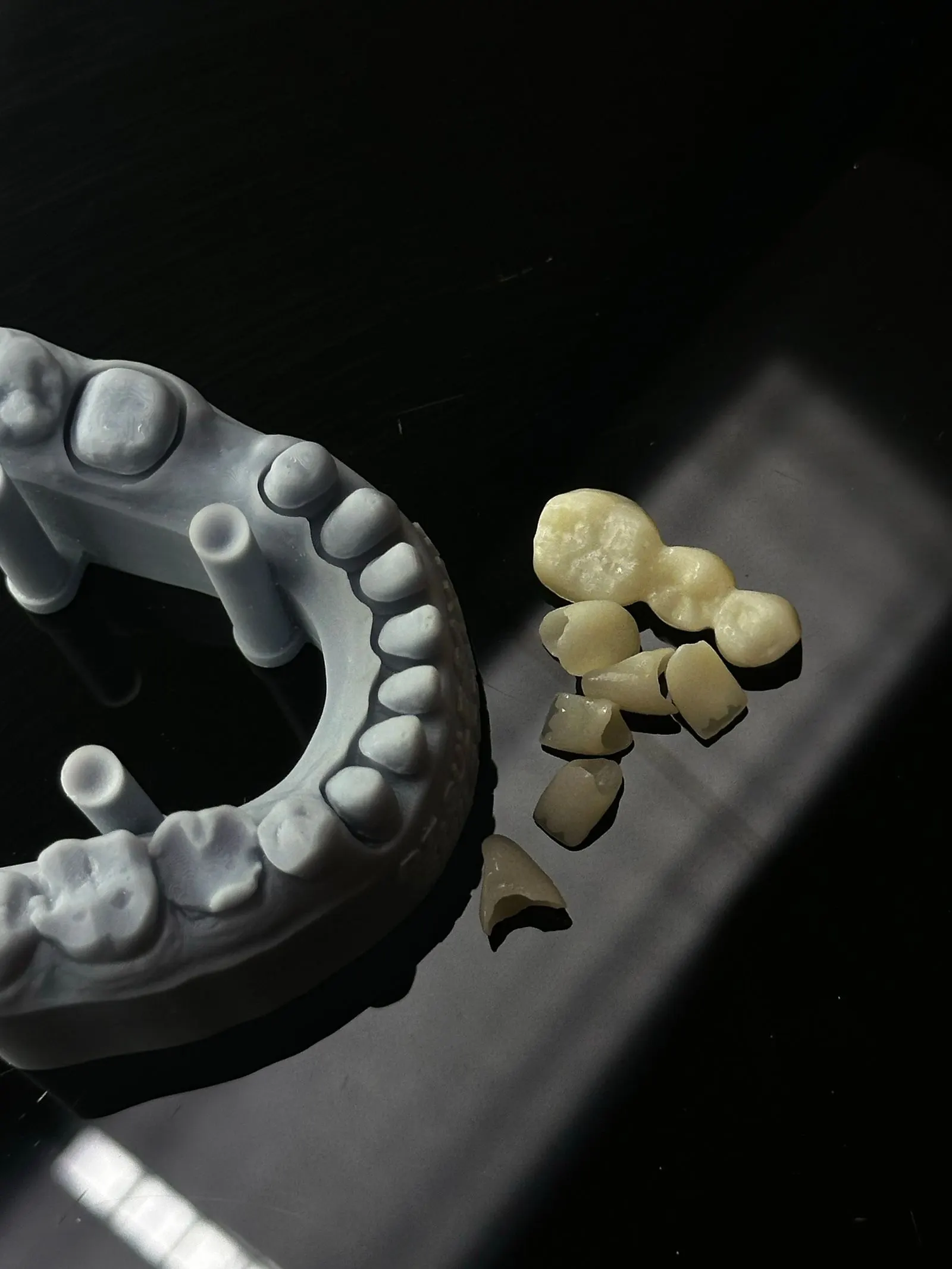
A properly made crown should not fall off in normal use. When it does, there is usually a technical reason:
- Short or over-tapered preparation. A crown holds on by friction as much as by cement. If the tooth is cut too short or too cone-shaped, the crown has little to grip.
- Poor fit at the margin. If the edge of the crown does not seal tightly against the tooth, cement washes out and bacteria get in.
- Wrong cement or bonding technique. Ceramics such as zirconia and E.max need specific cementation protocols, and moisture during bonding weakens the bond.
- Decay underneath. Plaque trapped at an open margin causes decay that undermines the crown from inside.
- Bite overload. Long, very straight new teeth with no bite adjustment, or untreated grinding, put leverage on each crown.
Almost all of these are workmanship or planning issues, not bad luck. They are also why the first set should not be rushed.
The compounding effect of repeat sets
Enamel and dentine do not regenerate. Every time a crown is removed and replaced, the dentist has to clean off old cement, remove any decay and refine the preparation. Each round costs a little more tooth.
- First set: healthy teeth are cut to crown shape. Some nerves may become inflamed.
- Second set: the cores are shorter and thinner; more teeth may need root canal treatment.
- Third set and beyond: some cores may be too short to hold a crown without a post; weak roots may fracture.
At the end of that path are extractions and dental implants. That is the long-term cost of choosing speed and brightness over conservation, and it is why a dentist who sees the second or third round of work will usually plan very differently from the first.
Over-treatment: the real lesson
Over-treatment means doing more to a tooth than its condition requires. In smile makeovers it usually takes these forms:
- crowns placed on healthy teeth where veneers, bonding or whitening would do
- 20 or more units when 8-10 would give the visible result
- teeth cut to hide crowding instead of straightening them first with clear aligners
- a very white, opaque shade chosen for all teeth regardless of skin tone and age
None of these is necessary to get an attractive smile. They are shortcuts that make the treatment faster or more uniform in a photo, at the expense of the teeth.
What a well-planned smile makeover involves
The alternative is not complicated, but it takes a little more time:
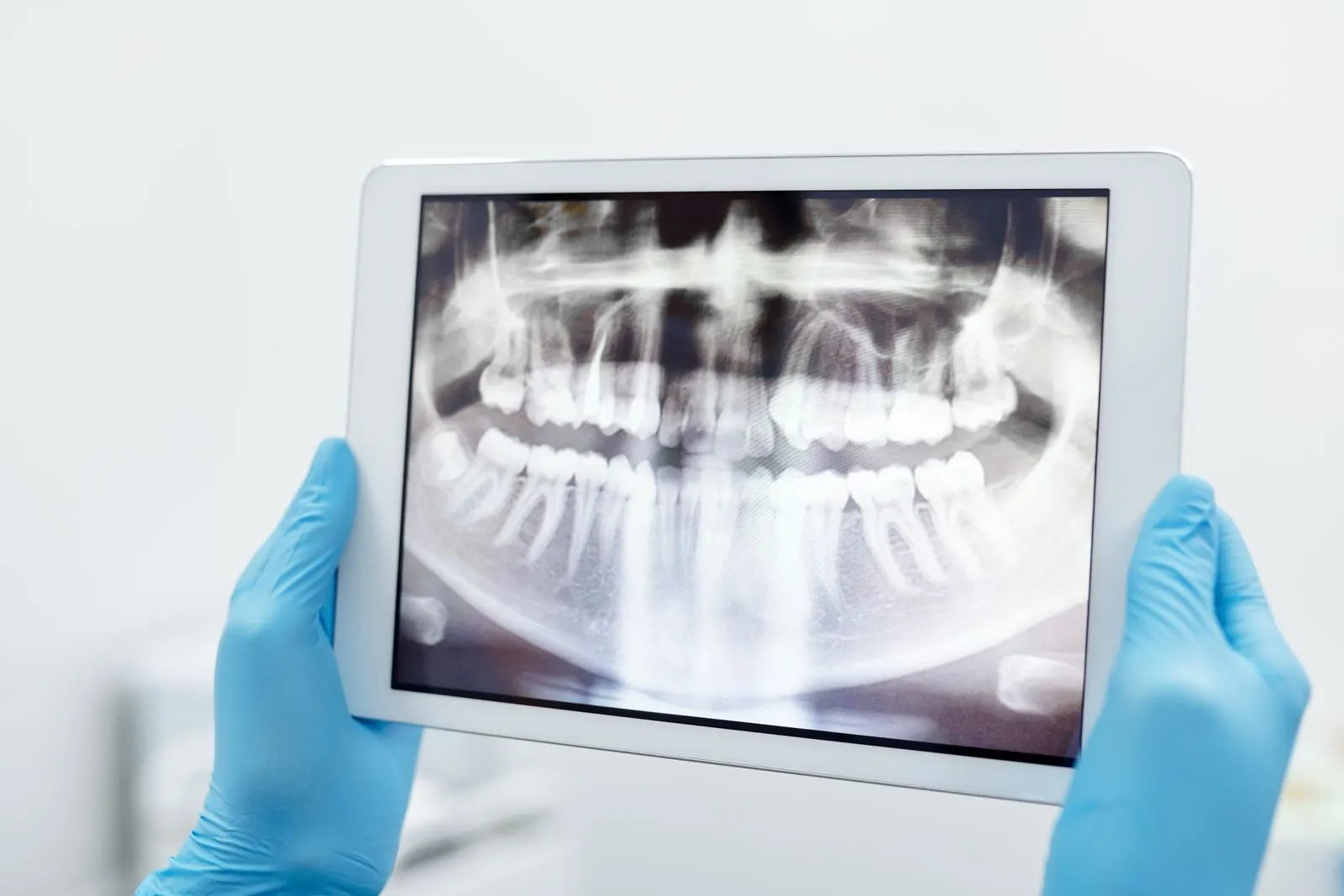
- Tooth-by-tooth assessment. Each tooth is examined and scanned with a 3D CBCT. Healthy teeth are candidates for veneers or no treatment; heavily filled, cracked or root-treated teeth are candidates for crowns; a few may need implants.
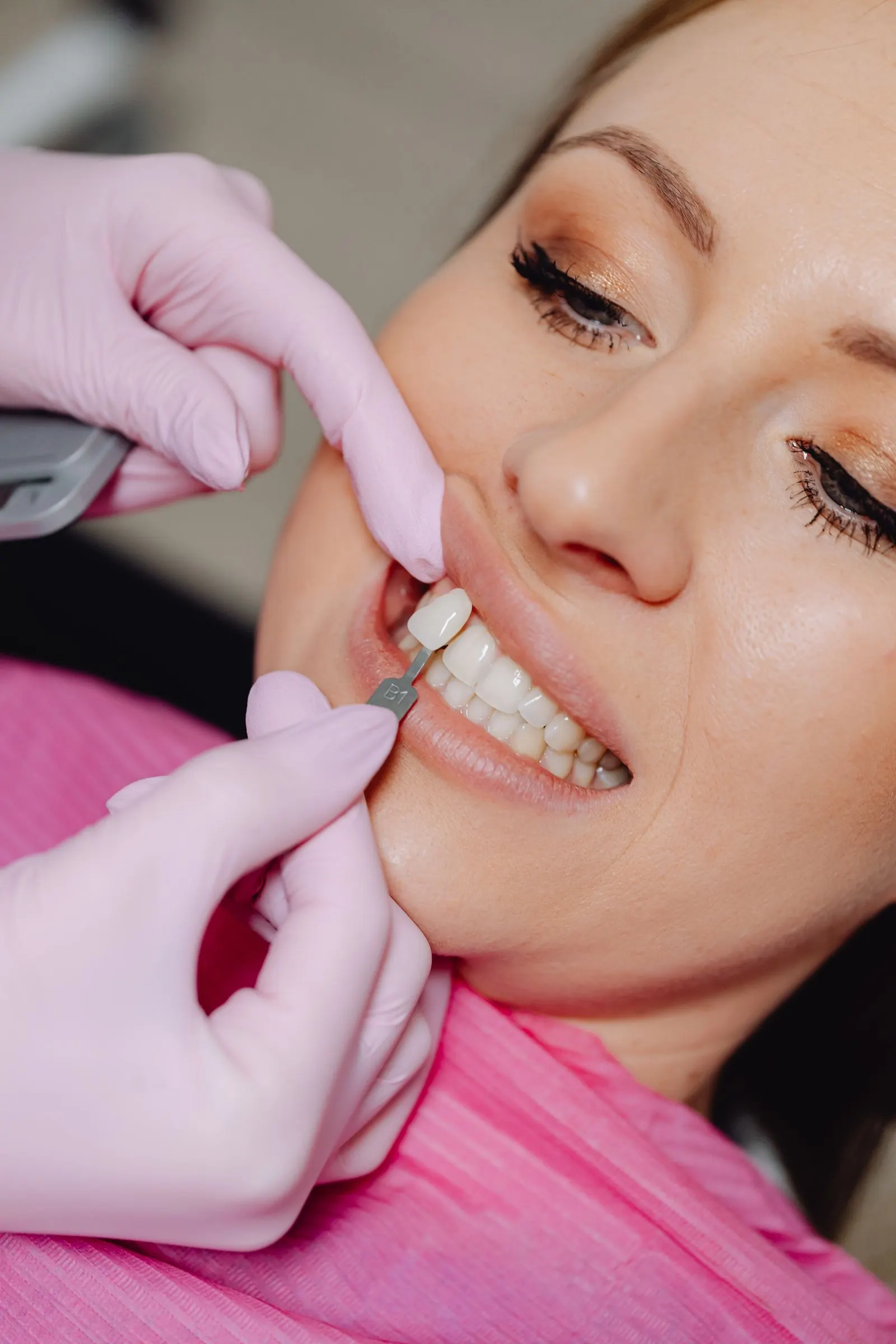
- Digital smile design. The length, width and shape are planned from photos and scans relative to the face.
- Mock-up and temporaries. The design is tried in the mouth before anything is fixed, and changed if needed.
- Material choice by position. E.max for veneers and front crowns where translucency matters; monolithic zirconia for back teeth and grinders.
- Careful bonding and bite check. Isolated, clean bonding and a balanced bite, with a night guard for grinders.
For many patients the result is a mix: veneers on six to ten healthy upper teeth, whitening on the lower teeth and crowns only where a tooth needs one. That combination looks natural and leaves options for the future.
| Rushed package | Careful plan | |
|---|---|---|
| Number of units | Fixed in advance, often 20-28 | Decided per tooth after the exam |
| Veneer or crown | Crowns on almost everything | Veneers on healthy teeth, crowns only where needed |
| Crooked teeth | Cut down and hidden under crowns | Aligned first where it makes sense |
| Shade | Brightest available | Chosen with you for your face and age |
| Trial phase | None | Mock-up and temporaries |
| After you go home | Unclear | Written guarantee terms and a named contact |

Lifespan, maintenance and what to do if a crown comes loose
Studies of well-made ceramic crowns and veneers typically report survival of around 90 % or more at ten years. Keeping them that long depends on daily cleaning at the gum line, hygiene visits every six months, a night guard if you grind and avoiding using your teeth as tools.
If a crown does come loose:
- keep it and store it safely; do not throw it away
- do not glue it back with household adhesive
- contact the treating clinic and see a local dentist, who can often re-cement a well-fitting crown temporarily
- ask why it came off; repeated loosening is a sign the underlying problem needs fixing
How a careful makeover is planned in Istanbul
At Doctor Turka the process is designed to get it right the first time:
- You leave your contact details and a personal coordinator, who speaks English and German, calls or writes to talk through what you want and your dental history.
- On the first day in Istanbul a dentist examines you and takes a 3D CBCT scan in the clinic.
- You receive a written, itemised plan that says, tooth by tooth, what is proposed and why, with the quote.
- You see a mock-up of the design before any preparation.
- Veneers and crowns are usually completed in one trip of about 5-7 days; hotel nights and airport-hotel-clinic transfers are part of the packages.
- The written guarantee terms are explained in your plan, and your coordinator stays your contact after you go home.
If you already have crowns from another clinic that are failing, the plan starts with what can be saved. See how it works for the full process.
Questions to ask and red flags
Ask every clinic:
- Is this a veneer or a crown on each tooth, and why?
- How much tooth will be removed?
- Will I see a mock-up and wear temporaries?
- Which ceramic brand and type will be used?
- What happens if a crown comes loose after I am home?
Red flags: a fixed price for 20 crowns before anyone has examined you, no 3D scan, no mock-up, a shade chart that only offers the whitest options, and pressure to decide on the day of the consultation.
What it costs over a lifetime
Commonly quoted UK private fees are around £600-1,200 per porcelain veneer and £700-1,300 per ceramic crown, so a 20-unit makeover at home often lands between £12,000 and £25,000. Katie Price has reportedly spent tens of thousands of pounds across her trips.
The lesson is not that treatment in Turkey is expensive or cheap. It is that the cheapest set is rarely the cheapest over a lifetime. One well-planned makeover that keeps as much tooth as possible costs far less over 20 years than three sets that each remove more. Our current starting prices for veneers and crowns are on the costs page, and Turkey teeth: what it means and how to avoid it covers the warning signs in more detail.
The takeaway
Katie Price has been open about her dental journey, and that openness is useful. Her story shows three things clearly: crowns are not veneers, repeat treatment consumes teeth, and failures are usually about planning and workmanship. Choose a clinic that assesses every tooth, shows you the design first and treats as little as needed.
Doctor Turka has not treated the person named in this article. Details about their dental work come from public interviews and media reports; we comment only on what the treatments involve in general.
Want a personal opinion?
Leave your contact details. Our patient coordinator will contact you to discuss your needs and explain the next steps, free and without obligation.
Discuss my options