 Dr. Hatice G
Veneers and crowns are two of the most common ways to improve a tooth, and they are easily confused. Both are made in a laboratory, both are fixed onto your natural tooth, and both can look completely natural when the work is done carefully. The real difference is how much of the tooth they cover, and that single point decides almost everything else: how much enamel is removed, when each is appropriate, and how long the result lasts. At Doctor Turka in Istanbul we fit both, and this guide explains honestly which one suits which situation.
If you are weighing up your choices, it helps to read a little about veneers in Turkey and dental crowns in Turkey alongside this article, because the right answer usually depends on the condition of the specific tooth rather than on a general preference.
In short, a veneer is a thin shell that covers only the front surface of a tooth. It needs very little preparation, usually around 0.3 to 0.7 mm of enamel removed from the front, and it is used on healthy teeth mainly to change how they look. A crown is a cap that covers the whole tooth. It needs far more reduction, roughly 1 to 2 mm all the way around, and it is used when a tooth is already damaged, heavily filled or root-treated. One is largely a cosmetic solution for a sound tooth; the other is a rebuild for a compromised one.
The core difference in one sentence
A veneer resurfaces the visible front of a tooth, while a crown rebuilds the entire tooth above the gum. That is why veneers are considered a conservative, appearance-led treatment and crowns are considered a restorative, strength-led one. Neither is better in the abstract. The better choice is simply the one that matches what the tooth actually needs.
When a veneer is the right choice
Veneers work best on teeth that are structurally sound but cosmetically disappointing. If the underlying tooth is healthy, with plenty of enamel and no large old fillings, a veneer can correct a lot without removing much.
Good candidates for veneers include:
- Teeth that are permanently discoloured and do not respond to whitening
- Small chips or worn edges on otherwise healthy front teeth
- Narrow gaps between teeth that you would like closed
- Teeth that are slightly rotated or uneven, where alignment is close enough that a shell can mask it
- A smile where the shape or proportions bother you but the teeth themselves are strong
Because so little tooth is removed, veneers keep most of your natural structure. That matters, as healthy enamel is something you never get back.
When a crown is the right choice
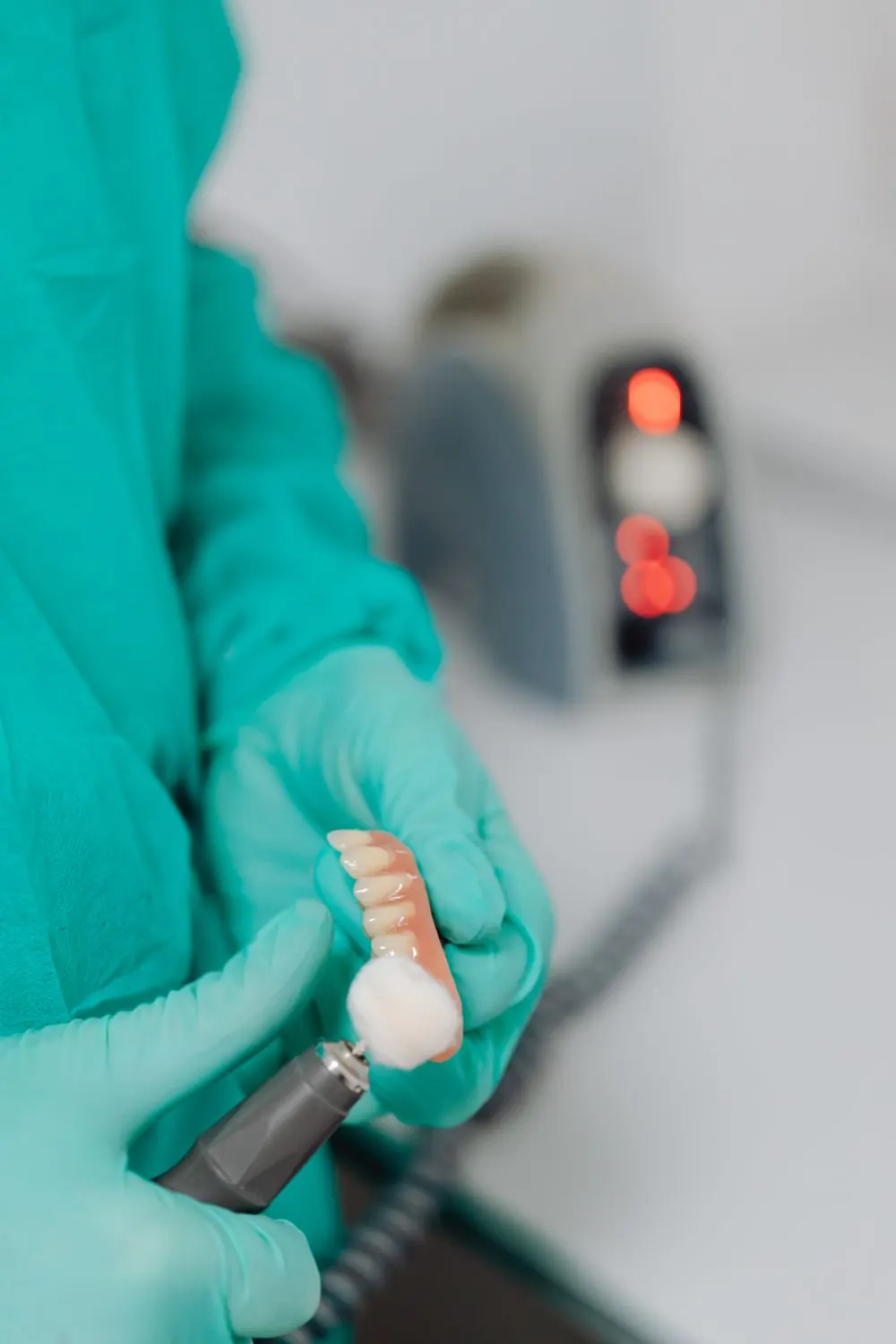
Crowns exist to protect and rebuild teeth that have lost strength. Once a tooth has a large cavity, a big old filling, a crack, or a root canal, its remaining walls become fragile and can fracture under normal biting. A veneer cannot solve that, because it only covers the front. A crown wraps the whole tooth and holds it together.
A crown is usually the honest recommendation when:
- A tooth is broken down or has a very large existing filling
- A tooth has had root canal treatment, especially a back tooth that takes heavy chewing force
- A tooth is cracked and needs to be held together
- A tooth has so little healthy surface left that a veneer would have nothing reliable to bond to
In these cases a crown is not the cosmetic option. It is the structural one, and choosing a veneer instead would simply fail.
How much tooth is removed
This is the point patients most often underestimate, and it is the most important part of the decision. Dentistry should always try to keep as much natural tooth as possible, because preparation is permanent.
| Factor | Veneer | Crown |
|---|---|---|
| Tooth removal | About 0.3 to 0.7 mm from the front surface | Roughly 1 to 2 mm all the way around |
| Best for | Healthy teeth, mainly appearance | Broken, heavily filled or root-treated teeth |
| Materials | E.max, composite, sometimes zirconia | Zirconia, E.max, metal-ceramic |
| Reversibility | Limited, some enamel is removed | None, the tooth is reshaped significantly |
| Coverage | Front surface only | The entire visible tooth |
The table makes the trade-off clear. A veneer removes a thin layer; a crown reshapes the whole tooth into a smaller core so the cap can fit over it. More coverage means more strength for a damaged tooth, but it also means more of your own tooth is gone forever. That is why we do not reach for a crown when a veneer, or even no treatment at all, would do the job.
Materials: E.max, zirconia and composite
The material affects both appearance and durability, and the best choice depends on where the tooth sits in your mouth.
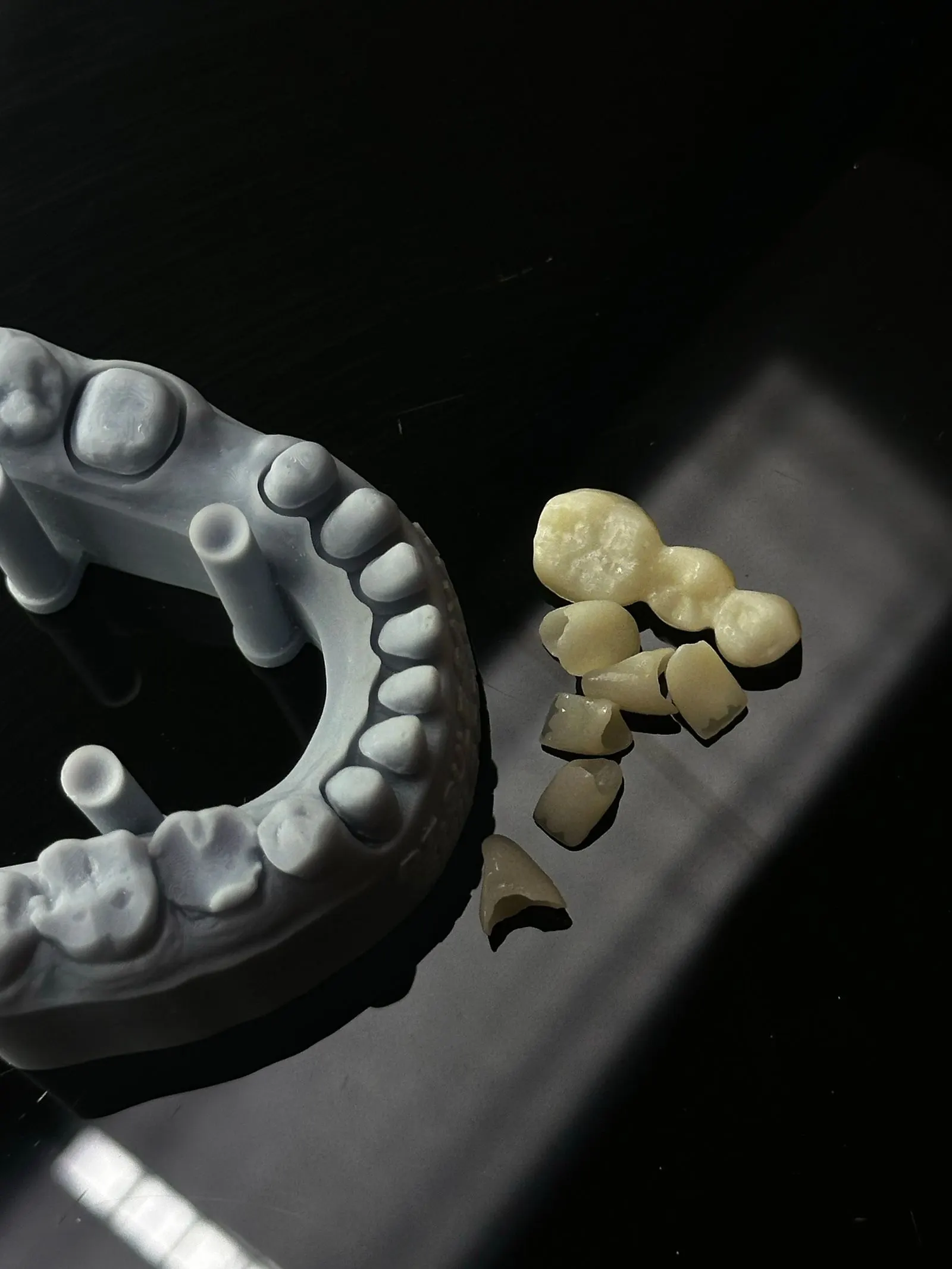
- E.max is a glass ceramic prized for how it handles light. It looks lifelike and translucent, which makes it a favourite for veneers and for crowns on front teeth where appearance matters most.
- Zirconia is far stronger and is the usual choice for crowns on back teeth and for anyone who grinds or clenches. Modern layered zirconia also looks very natural, so it is no longer a trade-off between strength and beauty.
- Composite is a tooth-coloured resin applied directly. Composite veneers are gentler on the tooth and more affordable, though they do not last as long as ceramic and tend to stain more over time.
At Doctor Turka, Dr. Taha G and Dr. Hatice G choose the material tooth by tooth rather than applying one formula to the whole mouth.
Durability and daily life
Well-made ceramic veneers and crowns can both last many years, and in both cases longevity depends far more on your habits than on the label. The gum staying healthy, avoiding using your teeth as tools, wearing a night guard if you grind, and keeping up regular hygiene all protect the work. Composite restorations generally have a shorter life than ceramic and may need refreshing sooner. What a veneer cannot do is add strength to a weak tooth, and what a crown cannot do is undo the tooth reduction it required. Choosing correctly at the start is what makes either one last.
What about cost?
Cost is a fair question, but it should never be the first one. A crown generally involves more laboratory work and more chair time than a veneer, and materials differ in price too. The more useful comparison is value over years rather than the figure on the day. Putting a crown on a tooth that only needed a veneer wastes healthy structure, and putting a veneer on a tooth that needed a crown leads to a failure you then pay to fix. You can read how pricing is structured on our dental costs page, but the clinical decision should always come first.
The Turkey teeth warning
You may have seen very bright, very uniform smiles promoted online where every tooth has been crowned in a single visit. This is where we want to be direct. A crown should not be placed on a healthy tooth purely to change its colour or shape. Crowning sound teeth means grinding them down by 1 to 2 mm all around and removing healthy enamel that can never be restored. If those teeth later develop problems under the crowns, the options narrow and the cost rises.
If your teeth are healthy and your goal is cosmetic, veneers, or in some cases whitening and small composite work, are almost always the more conservative and more honest route. Crowns belong on teeth that genuinely need rebuilding. A clinic that reaches for crowns on every healthy tooth is prioritising a quick uniform look over the long-term health of your mouth, and that is not a trade we think you should make.
How we decide at Doctor Turka
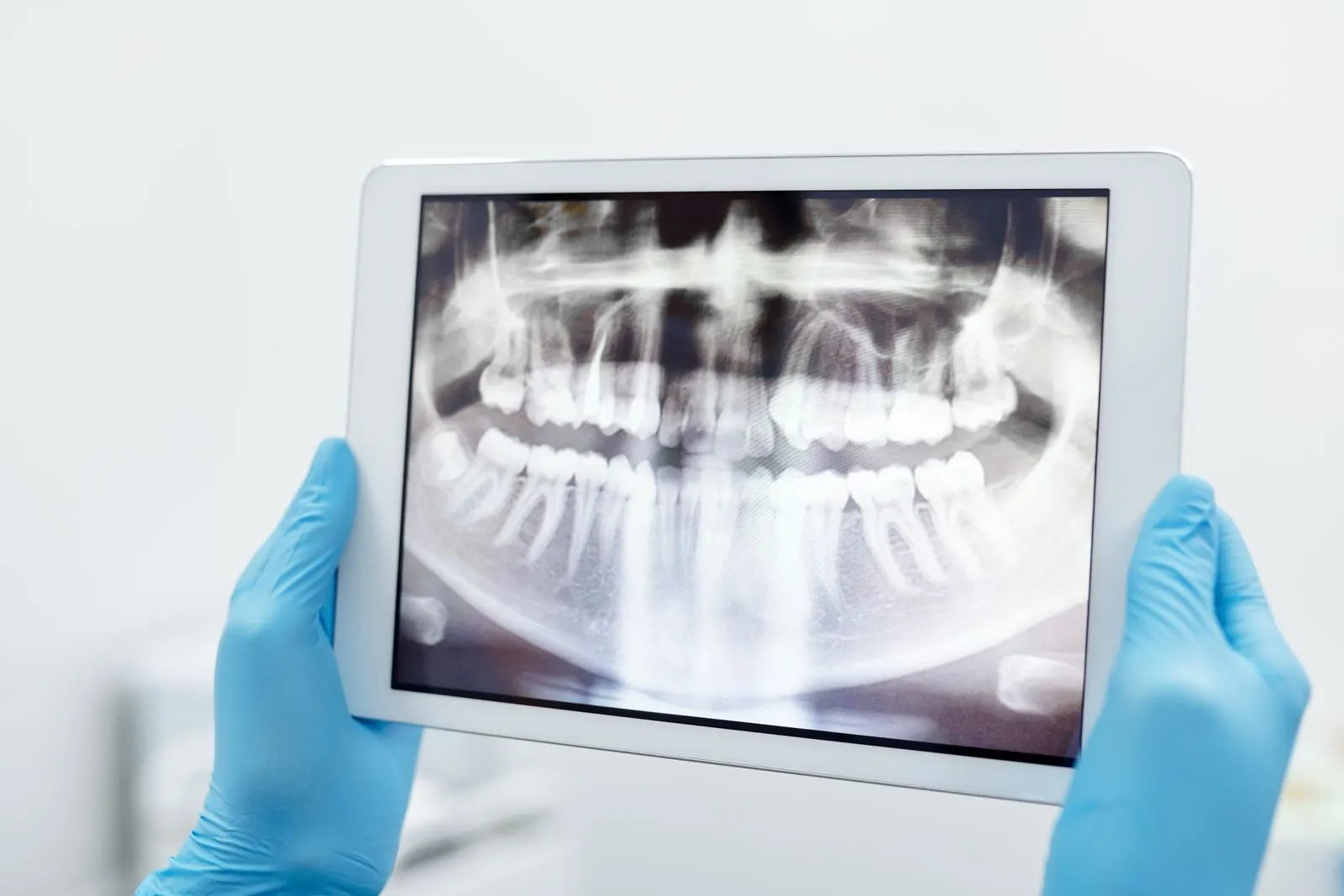
Every mouth is different, so we examine each tooth on its own merits, usually with photographs and an x-ray, before suggesting anything. Some patients leave with veneers, some with crowns, and many with a mix, because the front teeth and the back teeth often need different things. For a well-known example, see how Ben Affleck's teeth changed with veneers and crowns. The aim is simple: keep as much of your natural tooth as we safely can, rebuild only what truly needs rebuilding, and give you a result that looks natural and lasts. If you are unsure which applies to you, that uncertainty is exactly what a proper assessment is for.
Sources
- Dental Crowns: Types, Procedure & Care (Cleveland Clinic)
- Long-Term Survival and Complication Rates of Porcelain Laminate Veneers in Clinical Studies: A Systematic Review (Alenezi et al., J Clin Med 2021)
- Does Selection of Different Restorative Materials Affect the Amount of Tooth Structure Saved for Crown Preparations? (Oral Health Group, 2018)
- BBC Dental Tourism Documentary Highlights 'Hidden' Dangers (GDPUK)
Want a personal opinion?
Leave your contact details. Our patient coordinator will contact you to discuss your needs and explain the next steps, free and without obligation.
Discuss my options