
 Dr. Hatice G
The dental crown cost in the UK is £332.10 on the NHS in England, because crowns fall into Band 3 from April 2026. Privately there is no fixed price: each practice sets its own fees, and the material (metal, porcelain fused to metal, E.max or zirconia), the laboratory and the time involved all change what you pay.
This guide explains exactly what the NHS charge covers, what an NHS crown is usually made of, how private materials compare and why a crown should not be used to make healthy teeth look different. For the treatment itself, our page on dental crowns explains how a crown is planned, prepared and fitted.
Whether you need a crown at all is a clinical decision. A dentist has to examine the tooth, check the gum and often take an X-ray before recommending one.
How much does a crown cost on the NHS?
NHS dental treatment in England is charged per course of treatment, not per tooth. According to the NHS guide to dental charges, crowns, bridges, dentures, inlays and onlays are in Band 3, and Which? confirms the April 2026 figures.
| NHS band (England) | Charge | Relevant for crowns |
|---|---|---|
| Band 1 | £27.90 | Examination, X-rays and diagnosis |
| Band 2 | £76.60 | Fillings, extractions, root canal treatment |
| Band 3 | £332.10 | Crowns, bridges, dentures, inlays and onlays, plus everything in Bands 1 and 2 |
Two rules make the NHS charge good value when several teeth need work. If a course of treatment contains items from different bands, you pay only the highest band. And if you need more treatment within 2 months that is in the same or a lower band, you pay nothing extra. So a root canal followed by a crown in one course costs £332.10, not both charges added together. Charges differ in Scotland, Wales and Northern Ireland.
What is an NHS crown made of?
Which? explains that NHS crowns are usually made of a metal core covered with porcelain, and that dentists can choose from a limited number of colour shades. The NHS itself notes that a metal-coloured crown may be offered on a back tooth, and that crowns may need replacing in future.
The NHS provides what is clinically necessary. Its guidance on dental services available on the NHS says cosmetic treatments usually have to be paid for privately and that your dentist must make clear which treatments are available on the NHS and which only privately. According to Which?, the differences between NHS and private crowns are mainly cosmetic, such as shade matching and finish, rather than basic quality.
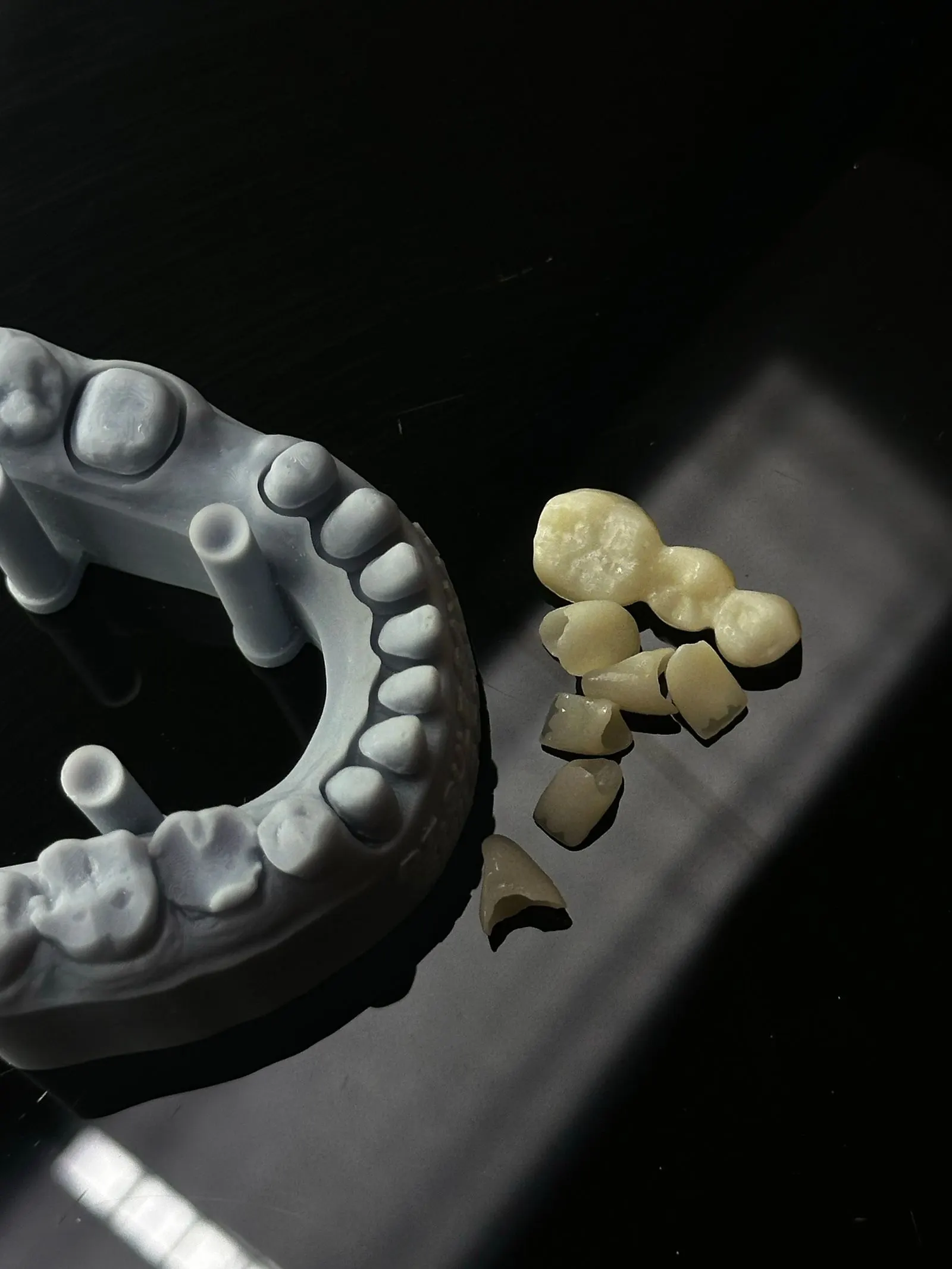
How much does a private crown cost in the UK?
Private dentistry has no national price list. Which? says crown prices depend on the materials used and the time taken, and its detailed private price comparison is available only to members. For that reason we do not quote a private price range here; ask your practice for its published price list and a written, itemised quote.
When you compare quotes, check what each one includes:
- the consultation, X-rays and any scan or impressions,
- a core build-up if the tooth is heavily broken down,
- a temporary crown between appointments,
- the laboratory fee and the material,
- the fitting appointment and any adjustments.
A quote that looks cheaper may simply leave out one of these steps.
Zirconia, E.max, PFM or gold: how does the material change the price?
The material is the biggest single driver of a private crown fee. Which? lists porcelain crowns as the most natural-looking and the most expensive, all-metal crowns as cheaper and usually used on back teeth, and notes that E.max and zirconia look more like natural teeth and are more durable but are likely to cost more. Precious metals such as gold, platinum or palladium may also be used.
| Material | Appearance | Typical use | Relative private cost |
|---|---|---|---|
| All-metal (non-precious) | Metal coloured | Back teeth where looks matter less | Lower |
| Gold or other precious alloy | Gold or metal coloured | Back teeth, heavy bite | Higher, varies with metal |
| Porcelain fused to metal (PFM) | Tooth coloured, may show a dark line at the gum over time | Front or back teeth | Middle |
| E.max (lithium disilicate) | Very natural, translucent | Front teeth and premolars | Higher |
| Zirconia | Tooth coloured, very strong | Back teeth, bridges, people who grind | Higher |
The right material depends on where the tooth is, how much tooth is left, your bite and how visible the crown will be. Our comparison of zirconia, E.max and porcelain fused to metal crowns goes through the strengths and weaknesses of each in more detail.
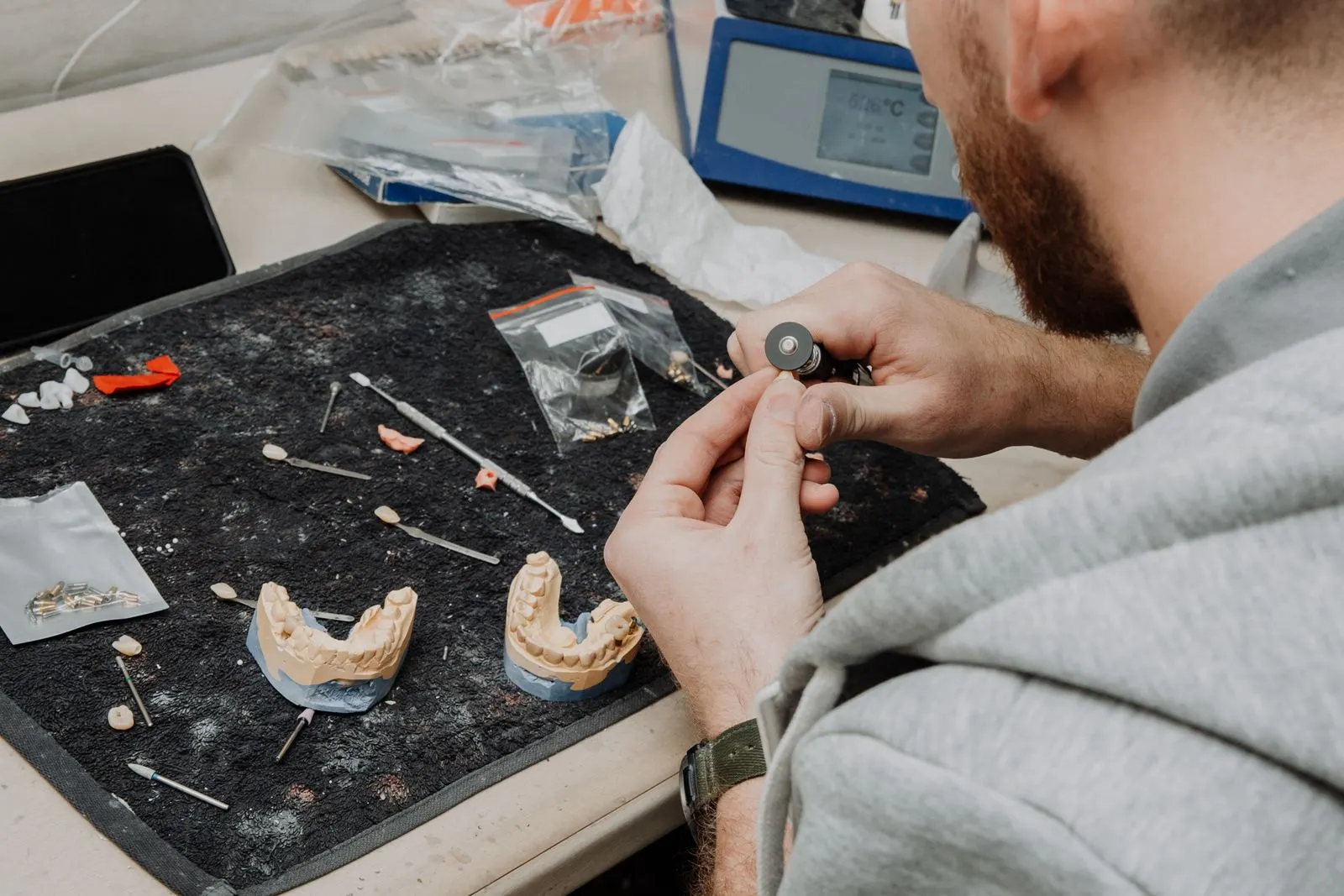
Is a private crown worth paying for?
For many people the NHS crown is a sound clinical choice, particularly on a back tooth that is not visible when you smile. The NHS charge covers the whole course, so if you need a root canal and a crown, or several crowns at once, the NHS route is very good value where you can access it.
Paying privately mainly buys choice: the material, the shade matching, the laboratory and often more appointment time. That can matter on a front tooth next to natural teeth, or when you want a metal-free crown. It is less likely to matter on a molar at the back of the mouth.
Private costs also scale with the number of teeth. On the NHS, several crowns in one course cost the same single Band 3 charge as one crown. Privately, each crown is usually charged separately, so a plan with several crowns quickly becomes a large bill. That is one reason why people needing multiple crowns compare options carefully, and why it is worth asking whether every tooth in a plan really needs one.
When is a crown the right treatment?
A crown covers the whole visible part of a tooth. It is usually recommended when a tooth is too damaged to hold a filling reliably, when a large old filling has failed, when a tooth has cracked, or after root canal treatment on a back tooth. Our guide to what a dental crown is explains the steps from preparation to fitting.
After root canal treatment the case for a crown is well supported. A summary review in Evidence-Based Dentistry found that a crown placed after root canal treatment was the factor most strongly linked with tooth survival. If you are facing both treatments, our article on root canal costs in the UK explains how the two fees fit together.

Why healthy teeth should not be crowned for cosmetic reasons
Preparing a tooth for a crown means removing enamel and dentine all the way around it so the crown can fit over it. That tooth structure does not grow back. Once a tooth has been prepared, it will need a crown for the rest of its life, and each replacement takes the tooth through the process again.
This matters most in smile makeover plans that include many crowns at once. In some cases the preparation can also irritate the nerve, and a tooth that was healthy may later need root canal treatment. For teeth that are healthy but discoloured, chipped or slightly uneven, less invasive options usually come first:
- teeth whitening for colour,
- composite bonding for small chips, gaps and edges,
- veneers, which cover only the front surface, when bonding is not enough.
A good dentist should explain why a crown is needed for each tooth in your plan. If the answer is only "to make the smile look better", ask about the alternatives.
How much does a crown cost in Turkey?
At Doctor Turka, crowns start from €120 per tooth, and zirconia crowns start from €150 per tooth. Other materials are priced individually in your treatment plan. Our full price list for dental treatment in Turkey shows all starting prices.
These are starting prices, not a quote. The final price depends on how many teeth need crowns, whether any need root canal treatment or a build-up first, and the material chosen, and it appears in your written treatment plan after assessment. Crowns usually need more than one appointment, so plan enough time in Istanbul, and keep up regular check-ups with a dentist at home afterwards.
Having crowns in Istanbul with Doctor Turka
Our clinic is in Ataköy, Bakırköy, in Istanbul. Before you travel, our dentists give you a free treatment plan in writing that explains which teeth need crowns and why, and what the treatment will cost. You can read how treatment with us works or contact us via WhatsApp or our contact page.
Want a personal opinion?
Leave your contact details. Our patient coordinator will contact you to discuss your needs and explain the next steps, free and without obligation.
Discuss my options