 Dr. Hatice G
A smile makeover is a personalised plan that combines treatments such as whitening, aligners, composite bonding, gum contouring, veneers, crowns or implants to change how your smile looks. The best plans start with the least invasive option that can achieve your goal and use smile design, often digital, to preview the result before anything permanent is done.
This guide walks through each building block in order, from gentle to more invasive, explains how digital smile design and mock-ups work, and offers practical tips for keeping the result natural. If you are considering a full transformation of the upper and lower teeth, our Hollywood smile treatment page explains how that type of plan is put together.
A smile makeover is not a single procedure. Two people asking for the same "new smile" may need completely different treatments, depending on the colour, position, shape and health of their teeth and gums.
What can a smile makeover include?
The table below lists the common building blocks, roughly from least to most invasive. Most plans use two or three of them, not all.
| Treatment | What it changes | Tooth structure removed | Reversible? |
|---|---|---|---|
| Professional whitening | Colour of natural teeth | None | Fades over time |
| Clear aligners | Position and alignment | None (small attachments may be bonded) | Teeth can relapse without retainers |
| Composite bonding | Small chips, gaps, edges, shape | None or very little | Largely, it can be removed or adjusted |
| Gum contouring | Height and symmetry of the gum line | Gum tissue, sometimes bone | No |
| Veneers | Colour, shape and minor position of front teeth | Little to moderate on the front surface | Usually no, once enamel is removed |
| Crowns | Colour and shape of damaged or heavily restored teeth | Significant, all around the tooth | No |
| Implants | Replace missing teeth | None from other teeth, surgery in the bone | No |
This ordering matters. Every time enamel is removed, the tooth depends on a restoration for the rest of its life, and that restoration will eventually need replacing.
Whitening and aligners: the least invasive start
Whitening lightens the colour of natural teeth. In the UK it can legally be provided only by a registered dentist, or by a dental hygienist or therapist working to a dentist's prescription, and products used by dental professionals may contain up to 6% hydrogen peroxide (Oral Health Foundation). Over-the-counter kits are limited to 0.1%.
The NHS explains that a dentist-supervised home kit is worn for around 2 to 6 weeks, that in-surgery whitening usually takes around 1 to 2 hours, and that results may last around 3 years (NHS). Whitening does not change the colour of crowns, dentures or implants, which is why it is usually done before any new restorations are colour-matched. Our teeth whitening page goes into more detail.
Clear aligners move teeth gradually with a series of removable trays. Straightening crowded or rotated teeth first can mean that fewer teeth need veneers later, or that veneers can be thinner. Retainers are needed afterwards to stop teeth drifting back. See our clear aligners page for how this works.
Bonding and gum contouring: shaping without heavy drilling
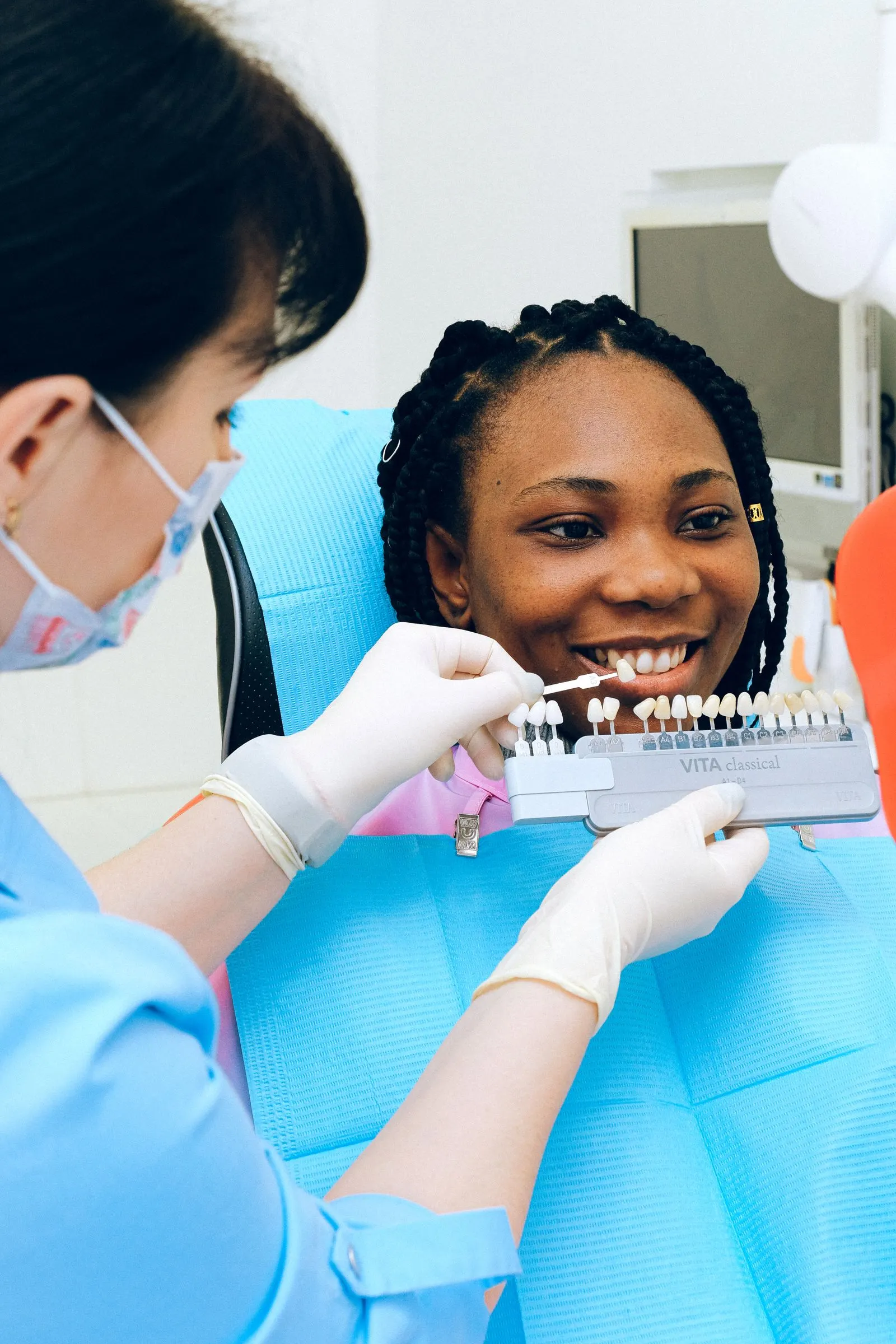
Composite bonding adds tooth-coloured resin to the surface of a tooth to close small gaps, repair chips or lengthen short edges. It usually needs little or no drilling, can be repaired in the chair, and is a common choice for younger patients or for testing a new shape. The trade-off is that resin can stain and chip more easily than porcelain, so it needs polishing and occasional touch-ups.
Gum contouring reshapes an uneven or "gummy" gum line so that teeth look better proportioned. It is a small surgical procedure, so the gums must be healthy first, and in some cases bone also needs reshaping. It is not reversible, which is why it should be planned together with any veneers or crowns.
Veneers, crowns and implants: when more is needed
Veneers are thin facings bonded to the front of teeth to change colour, shape or minor misalignment. The NHS notes that some veneers require the front of the tooth to be drilled slightly, and that veneers are generally only available privately unless there is a clinical need (NHS dental treatments).
Crowns cover the whole tooth and are better suited to teeth that are broken, heavily filled or root-treated. They remove much more tooth structure than veneers, so they should not be used purely to change the colour of healthy teeth. Our guide to veneers vs crowns compares the two in detail.
Implants replace missing teeth. A gap or a failing tooth can spoil an otherwise good result, so replacing missing teeth is often part of a larger makeover rather than a separate project.
How does digital smile design work?
Smile design is the planning stage of a smile makeover. Digital smile design uses facial and dental photographs, intraoral scans and software to map the proposed shape, length and position of each tooth in relation to your face, lips and gum line.
A typical workflow looks like this:
- Records: photographs of the face and smile, a 3D scan or impressions, and an examination of teeth, gums and bite.
- Digital design: the dentist and technician propose tooth shapes and proportions on screen.
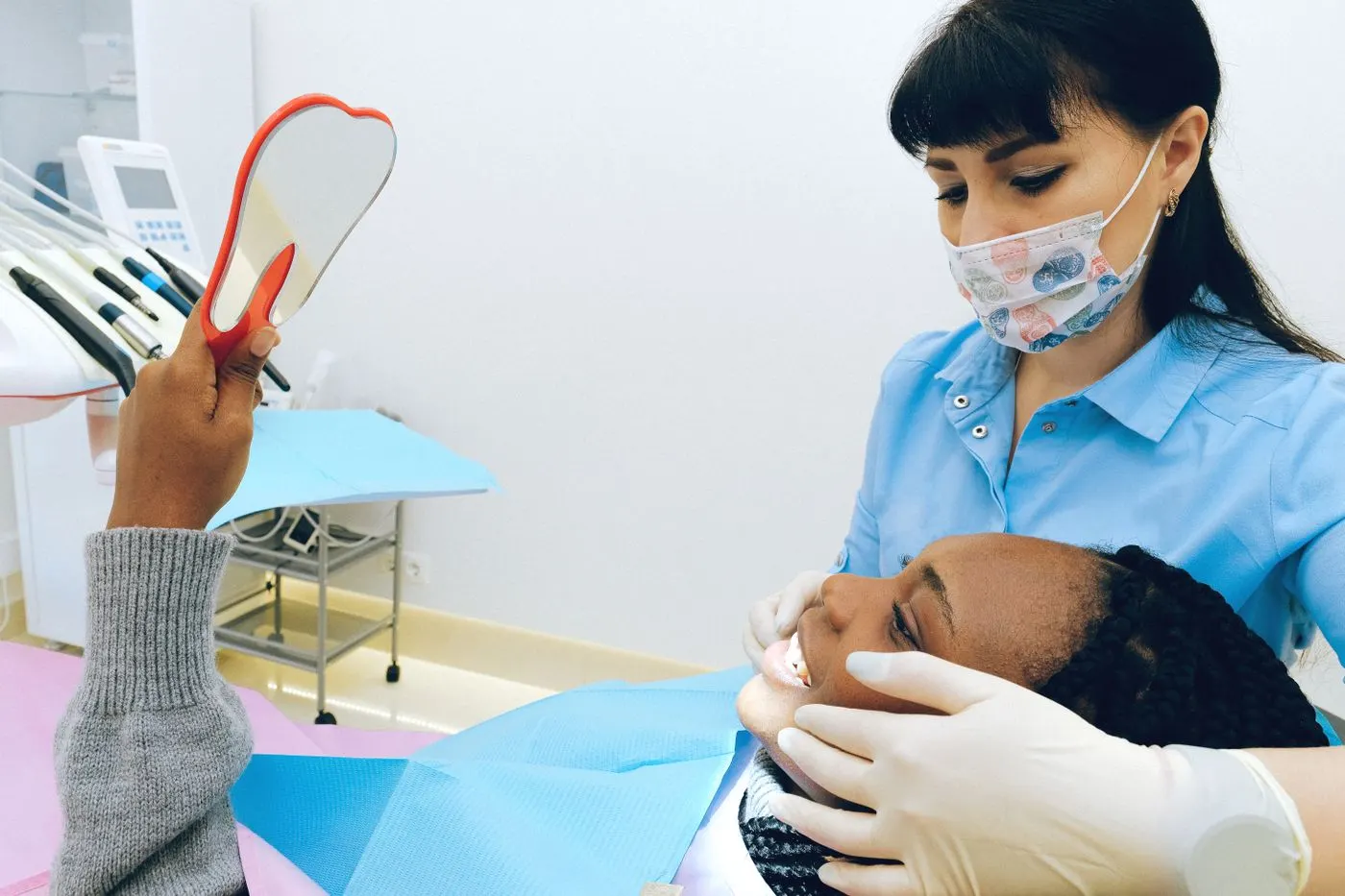
- Mock-up: the design is transferred to your mouth as a temporary resin overlay, so you can see and feel the shape before anything is changed.
- Adjustment: length, width and shade are refined until you and the dentist agree.
A 2024 systematic review in Cureus looked at 10 studies with 344 participants and concluded that digital smile design can improve communication and patient satisfaction. However, most of the included studies were small observational studies with varied methods, so the evidence is still limited (Cureus review). In other words, digital planning is a useful tool, but it does not replace clinical judgement or a physical mock-up.
How do you decide which smile makeover options are right for you?
Start with what bothers you, not with a treatment name. Colour, crowding, chips, gaps, worn edges and missing teeth each have different solutions.
Useful questions to ask your dentist:
- Which problems are cosmetic, and which are health issues that need treating first, such as decay or gum disease?
- What is the least invasive way to reach my goal, and what would I lose by choosing it?
- How much enamel will be removed, if any, and on which teeth?
- Can I see a mock-up before treatment?
- What maintenance will the result need, and what happens when restorations wear out?
A good plan usually treats health first (gums, decay, failing fillings), then position (aligners), then colour (whitening), and only then shape (bonding, veneers or crowns). Healthy teeth that only need whitening or minor bonding should not be reduced for veneers just to complete a set.
It also helps to think about the long term. Whitening needs topping up, composite needs polishing and occasional repairs, and ceramic restorations are eventually replaced. A plan that removes little tooth structure today leaves you more options later. Ask not only how your smile will look at the end of treatment, but how it will be maintained in the years after, and who will provide that care where you live.
Natural or too white? Keeping the result believable
Many people worry about ending up with teeth that look fake. The most common causes are a shade that is far brighter than the rest of the face, teeth that are all identical in length and shape, bulky veneers that push the lips forward, and a gum line that has not been considered.
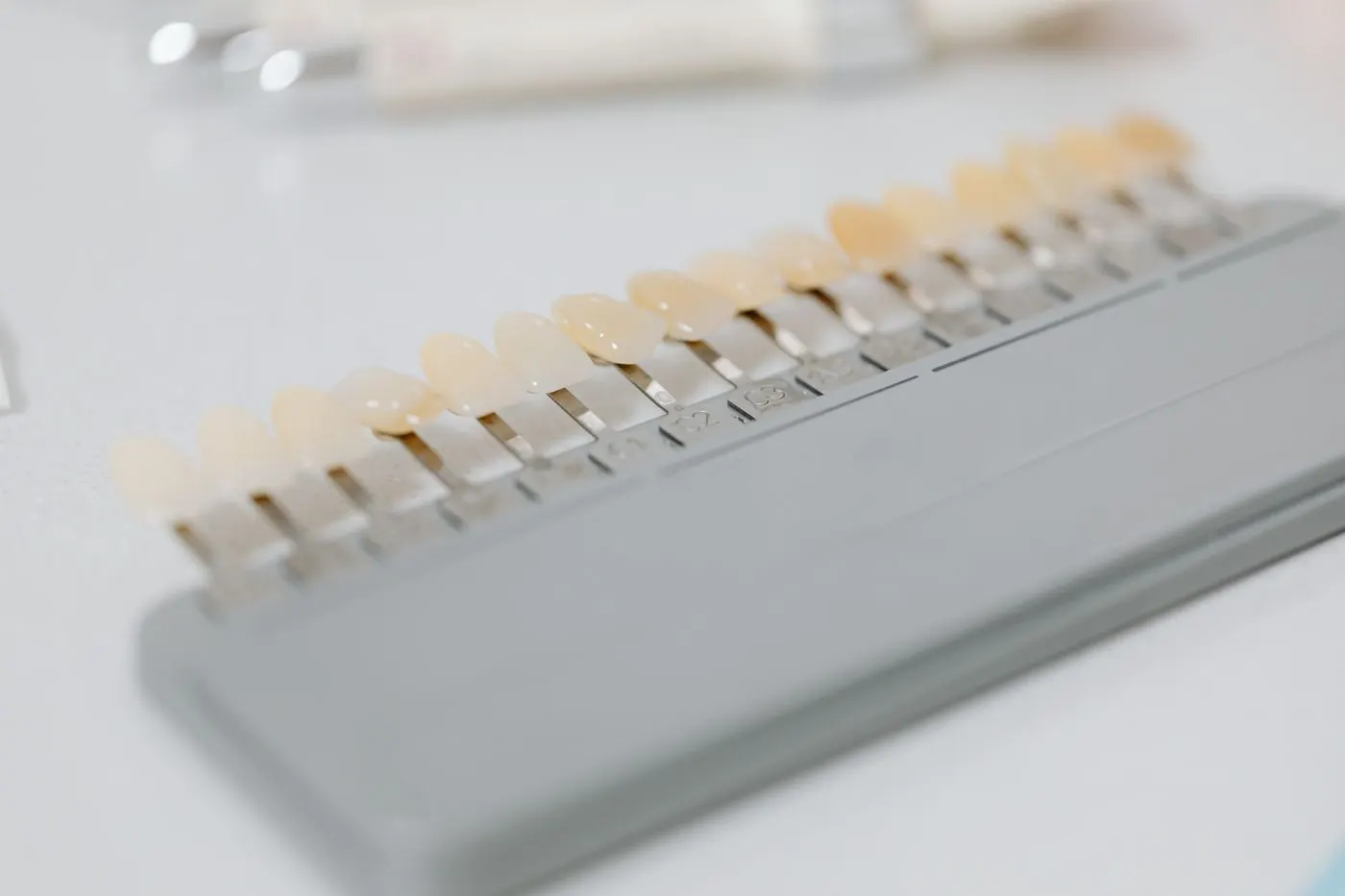
To keep the result natural, ask for a shade that suits your skin tone and the whites of your eyes, keep subtle differences between central and side teeth, and judge the mock-up in daylight and while talking, not just in a posed photo. Remember that whitened natural teeth and new ceramic restorations need to be matched, which is another reason to whiten first. For an overview of fees for each option, see our dental costs in Turkey page, and for what a full-mouth plan usually contains, read Hollywood smile in Turkey: what is included.
Planning a smile makeover in Istanbul with Doctor Turka
Our clinic is in Ataköy, Bakırköy, Istanbul. Before you travel, you receive a free written treatment plan that sets out which options our dentists recommend for your teeth and why. You can read how it works or reach us on WhatsApp or through our contact page.
Want a personal opinion?
Leave your contact details. Our patient coordinator will contact you to discuss your needs and explain the next steps, free and without obligation.
Discuss my options