 Dr. Hatice G
Nanofill composite bonding is composite bonding, or composite veneers, made with a nanofilled or nanohybrid resin. "Nanofill" describes the material, a tooth-coloured resin with very small filler particles, not a different treatment. These composites polish well and tend to keep their shine, but the dentist's skill and your aftercare matter more than the label.
The term is often used in adverts as if it were a premium type of bonding. In reality, nanofilled and nanohybrid composites are the materials most dentists already use for cosmetic bonding. This guide explains what the name means, what the research says and how it compares with older composites and porcelain. For how we approach this treatment, see our composite veneers page.
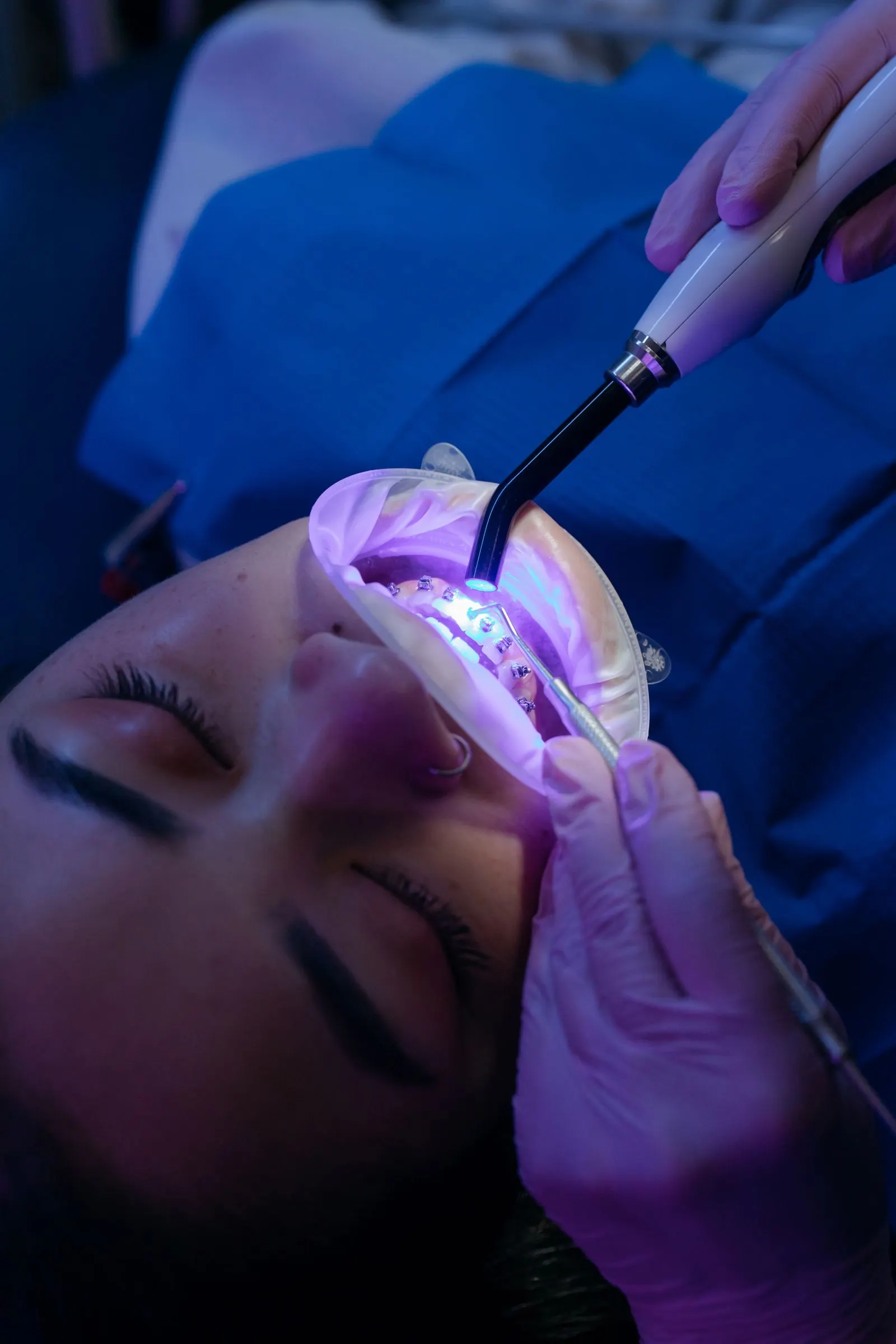
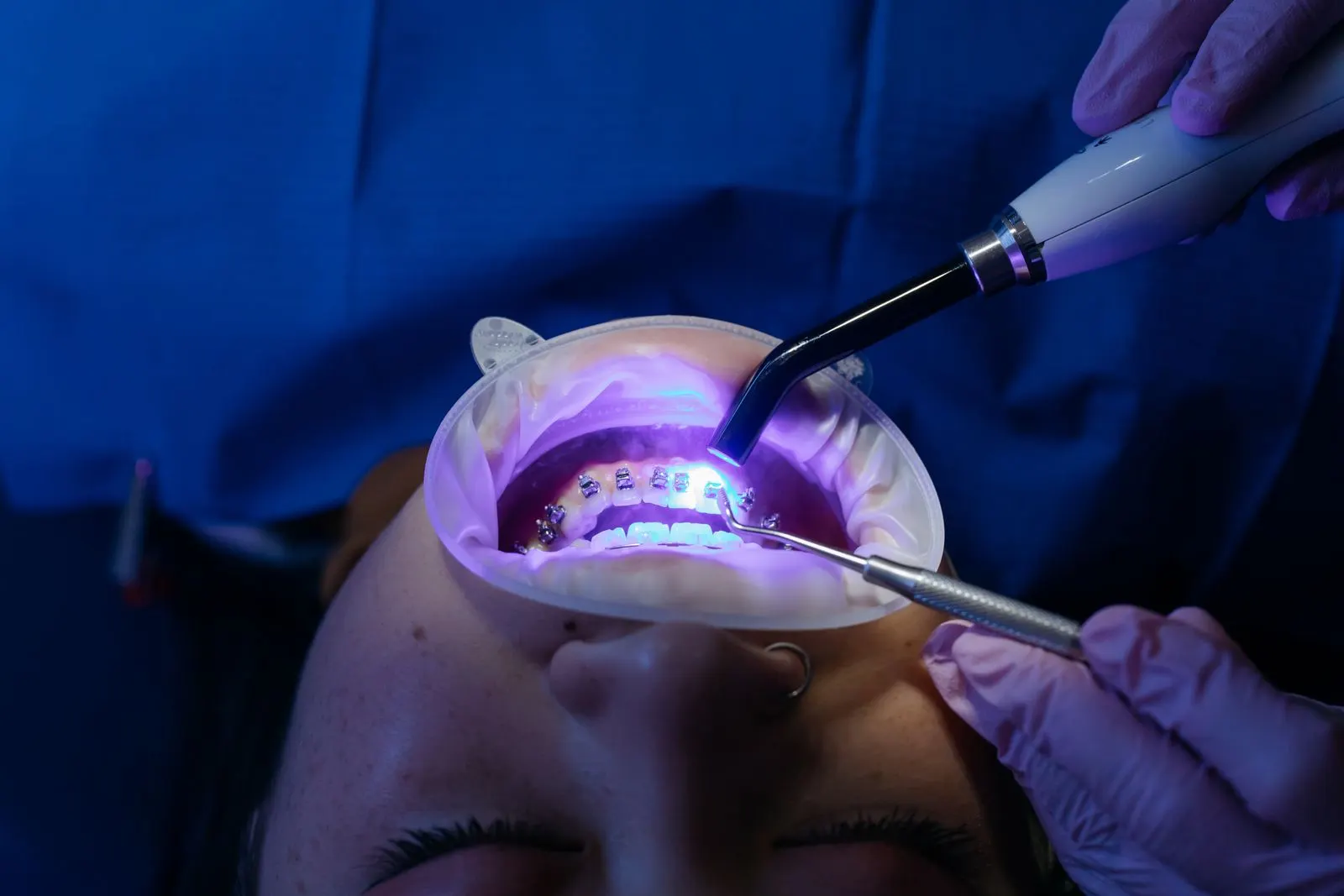
Composite bonding itself means adding resin to the surface of a tooth, shaping it by hand and hardening it with a curing light. It is used to close gaps, repair chips, lengthen short teeth or cover discolouration.
What does "nanofill" actually mean?
Dental composite is a mix of a resin matrix and tiny particles of glass or ceramic filler. The size, shape and amount of filler largely decide how the material handles, how strong it is and how well it polishes.
Nanofilled composites contain filler particles in the nanometre range. One manufacturer's technical profile defines "true" nanofiller technology as particles smaller than 100 nanometres, some of them grouped into clusters (3M technical profile). The same document lists, as its own data, silica particles of 20 nm and zirconia particles of 4 to 11 nm in its nanofilled material.
Because the word sounds technical, "nanofill" is sometimes presented as a special type of bonding or composite veneers. It is better understood as a description of the material inside the syringe. Asking for "nanofill bonding" will not by itself change how the treatment is planned, shaped or polished.
A 2016 review in the Journal of IMAB explains why this matters: nanometric particles are smaller than the wavelength of light, which supports good optical properties and a wide range of shades (Journal of IMAB).
Nanofilled, nanohybrid and microhybrid composites compared
You will see several similar names in dental marketing. They describe filler size, not treatment quality.
| Composite type | Filler | Typical strengths | Typical limitations |
|---|---|---|---|
| Nanofilled | Mainly nanoparticles and nanoclusters | High polish, good gloss retention | Behaviour varies between brands |
| Nanohybrid | Nanoparticles mixed with larger particles | All-round use, good strength and polish | Gloss may fade faster than nanofilled in some tests |
| Microhybrid | Mostly larger particles | Strong, long established | Lower gloss after polishing |
| Microfilled | Very fine particles, lower filler content | Excellent polish | Less strong, mainly for low-stress areas |
The Journal of IMAB review summarises the aim of nanocomposites as combining the strength and wear resistance of hybrid composites with the polish and gloss retention of microfilled composites. Not every product achieves that equally, and manufacturers do not always use the terms consistently.
What does the research say about polish and gloss?
Most comparisons are laboratory studies on discs of material, not long-term studies in patients. They are still useful for understanding the differences.
A 2021 study in the Journal of Dental Sciences compared polished nanofilled, nanohybrid and microhybrid composites. After polishing, there was no significant difference in surface roughness between the groups, but the microhybrid composite had lower gloss than the nanofilled and nanohybrid materials (Journal of Dental Sciences, 2021).
A 2023 study from the same journal simulated toothbrushing on one nanofilled, two nanohybrid and one microhybrid composite. The nanofilled material's roughness and gloss did not change significantly until 8,000 brushing cycles, while the other materials lost smoothness and gloss after 4,000 and 8,000 cycles. The authors concluded that surface changes were material dependent (Journal of Dental Sciences, 2023).
Manufacturer data point the same way: the 3M profile reports high gloss retention for its nanofilled composite after 6,000 brushing cycles in its own tests. Because this is the maker's data, it should be read as supporting rather than independent evidence.
Is nanofill composite stronger?
Strength depends on the specific product as much as the filler category. The Journal of IMAB review notes that flexural strength depends on filler content and chemistry, and that several nanocomposites showed wear resistance comparable to universal hybrid composites.
In practice, composite of any kind is less hard and less stain-resistant than porcelain. It can chip at thin edges, especially if you bite nails, open packets with your teeth or grind at night. The advantage is that small chips can usually be repaired in the chair without replacing the whole restoration. Our guide to how long composite bonding lasts explains what affects lifespan.
Nanofill composite veneers vs porcelain veneers
When bonding covers the whole front surface of a tooth, it is usually called composite veneers. Here is how they compare with porcelain.
| Feature | Nanofill composite veneers | Porcelain veneers |
|---|---|---|
| How they are made | Built up directly on the tooth | Made in a laboratory, then bonded |
| Visits | Often one | Usually two or more |
| Tooth preparation | Little or none in many cases | Often some enamel reduction |
| Stain resistance | Good when polished, but can stain | Very good |
| Repair | Easy to add or polish in the chair | Usually needs replacing if damaged |
| Maintenance | Periodic re-polishing | Mainly routine check-ups |
Neither option is better for everyone. Composite suits people who want a conservative, adjustable result, while porcelain suits people with heavier discolouration or who prefer long-term colour stability. On the NHS, veneers are generally only available privately unless there is a clinical need (NHS). Our porcelain veneers page covers the ceramic option.
Why the dentist matters more than the label
Two dentists can use the same nanofilled composite and achieve very different results. What makes the difference is mostly technique:
- Planning: a mock-up or wax-up so you can approve the shape before it is placed.
- Isolation and bonding: keeping the tooth dry and clean so the resin bonds well.
- Layering: using different shades and opacities to copy natural enamel and dentine.
- Shaping and finishing: careful contouring of edges and margins to reduce chipping and staining.
- Polishing: a multi-step polish, which is where nanofilled materials show their advantage.
When comparing clinics, it is more useful to ask about these steps than about the brand name of the composite. You can also read whether composite bonding damages teeth before deciding. For an overview of fees, see our dental costs in Turkey page.
When is composite bonding not the right choice?
Composite bonding, nanofilled or not, has limits. It works best on healthy teeth that need small to moderate changes in shape, length or colour. It is less suitable in some situations:
- Heavy grinding or an edge-to-edge bite: thin composite edges are more likely to chip under high forces.
- Severe discolouration: very dark teeth may need more opaque layers or porcelain to mask the colour.
- Large existing fillings or weakened teeth: a crown or onlay may protect the tooth better.
- Untreated gum disease or decay: these must be treated first, because bonding on an unhealthy base is unlikely to last.
- Significant crowding: straightening the teeth first with aligners often gives a better and more conservative result than masking crooked teeth with resin.
A careful dentist will tell you when bonding is likely to struggle, rather than adapting the plan to the material you asked for. Whitening, if you want it, should normally be done before bonding, because composite does not lighten with bleaching and is matched to the shade of your teeth at the time it is placed.
How to look after composite bonding
Good care helps any composite keep its polish for longer. Brush twice a day with a non-abrasive fluoride toothpaste, clean between the teeth, and attend regular check-ups and hygiene appointments where the bonding can be polished.
Limit staining foods and drinks where you can and rinse with water afterwards. If you grind your teeth, ask your dentist about a night guard, and avoid using your front teeth as tools.
Very abrasive whitening toothpastes can roughen a polished composite surface over time, so ask your dentist which toothpaste suits bonded teeth. If a small chip appears, have it smoothed or repaired promptly, because a rough edge collects plaque and stain more easily. Composite bonding is not a once-in-a-lifetime treatment: plan for polishing, small repairs and eventual replacement, and agree who will provide that care near your home.
Composite bonding in Istanbul with Doctor Turka
Our clinic is in Ataköy, Bakırköy, Istanbul. Before you travel, you receive a free written treatment plan that explains whether composite or porcelain is the better fit for your teeth and why. You can read how it works or reach us on WhatsApp or through our contact page.
Sources
- Surface roughness and gloss of polished nanofilled and nanohybrid resin composites (Journal of Dental Sciences, 2021)
- Surface roughness and gloss alteration of polished resin composites with various filler types after simulated toothbrush abrasion (Journal of Dental Sciences, 2023)
- Physical properties of nanocomposites in relation to their advantages (Journal of IMAB, 2016)
- 3M Filtek Universal Restorative: Technical Product Profile (manufacturer document)
- Dental treatments (NHS)
Want a personal opinion?
Leave your contact details. Our patient coordinator will contact you to discuss your needs and explain the next steps, free and without obligation.
Discuss my options