 Dr. Taha G
In the dentures vs implants decision, there are really three options: a conventional denture held by suction, a snap-on denture that clips onto two or more implants but still comes out for cleaning, and a fixed bridge on implants such as All-on-4. Each step up gives more stability and chewing confidence, but also more surgery, cost and maintenance.
This comparison explains how each option works, who it suits and what the trade-offs are, so you can have a better-informed conversation with your dentist. Our implant-supported dentures page describes the snap-on treatment in detail.
There is no single best option. The right choice depends on your jawbone, gums, general health, the jaw involved and how well your current denture works.
Dentures vs implants: how do the three options compare?
| Conventional denture | Snap-on denture (implant retained) | Fixed All-on-4 bridge | |
|---|---|---|---|
| How it stays in | Suction and fit to the gums | Clips onto implant attachments | Screwed to implants |
| Removable by you | Yes | Yes | No, only by the dentist |
| Implants needed | None | Often 2 in the lower jaw, more in the upper | 4 per jaw |
| Stability | Can move, especially lower | Much more stable, slight movement possible | Firm, like fixed teeth |
| Chewing | Most limited | Improved | Closest to natural teeth |
| Palate covered (upper) | Usually yes | Sometimes reduced | No |
| Cleaning | Out of mouth, easy | Out of mouth plus around implants | In the mouth, under the bridge |
| Surgery | None | Implant placement | Implant placement, often with extractions |
| Bone | Continues to shrink over time | Implants carry load in the areas where they sit | Implants carry load in the areas where they sit |
| Maintenance | Relines and replacement | Attachment parts wear and need changing | Check-ups, hygiene visits, possible repairs |
The table is a general guide. Your dentist may recommend a different number of implants or a different design after examining you.
How do conventional dentures work, and where do they fall short?
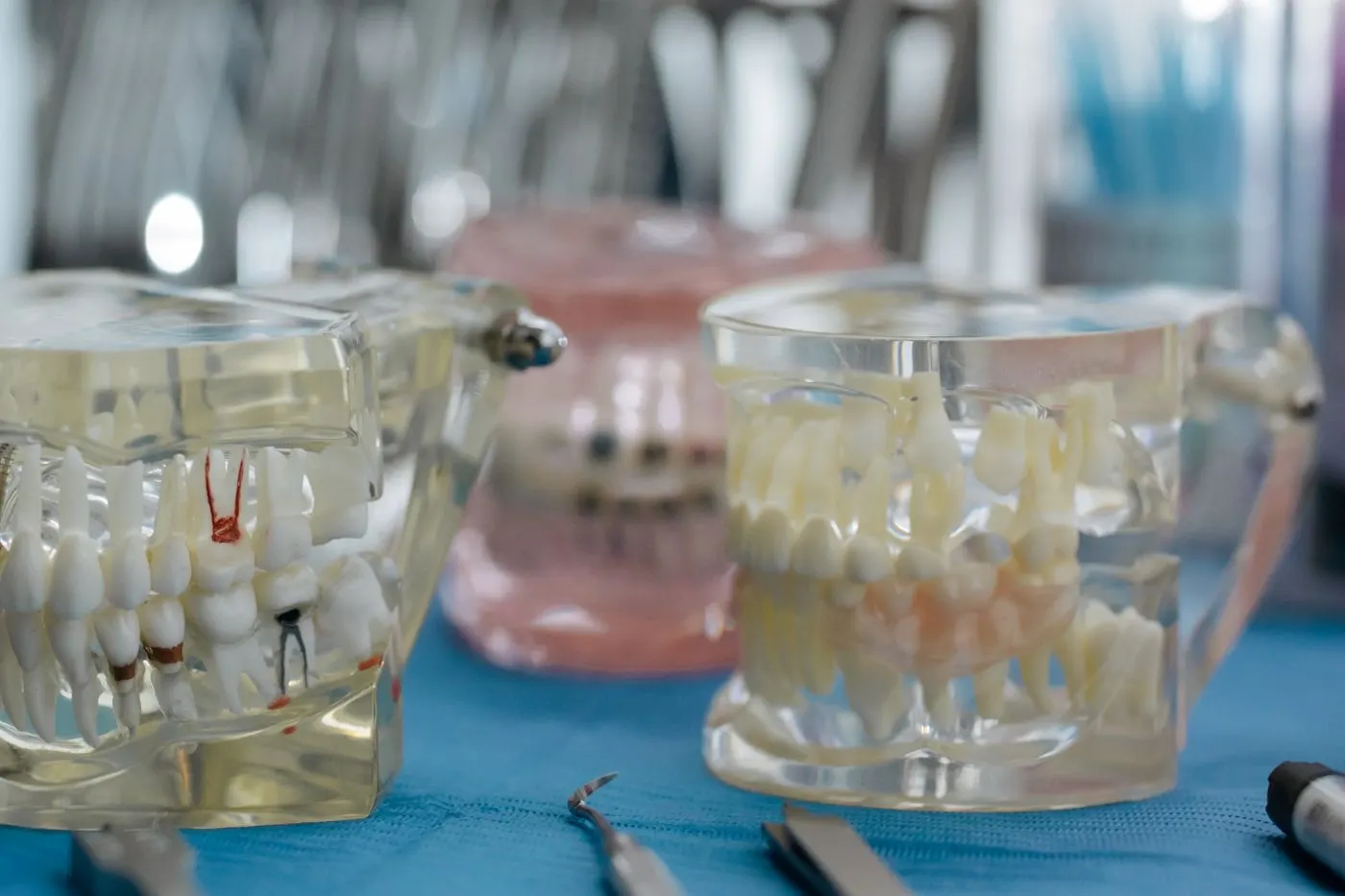
A conventional complete denture replaces all the teeth in one jaw. The Oral Health Foundation explains that full acrylic dentures stay in place by suction, and partial dentures use small metal clasps on the remaining teeth.
Their advantages are real: no surgery, relatively quick to make, easy to adjust and easy to clean outside the mouth. Many people manage well with an upper denture, which benefits from suction against the palate.
The weak spot is usually the lower jaw. A lower full denture has a small, narrow ridge to sit on and the tongue and cheeks move it during eating and speaking. The NHS notes that dentures may become loose as the gums and jawbone change shape with age, and the Oral Health Foundation says dentures often need replacing every five to eight years. If you are comparing prices, our guide to dentures cost in the UK covers NHS and private fees.
What are snap-on dentures (implant retained dentures)?
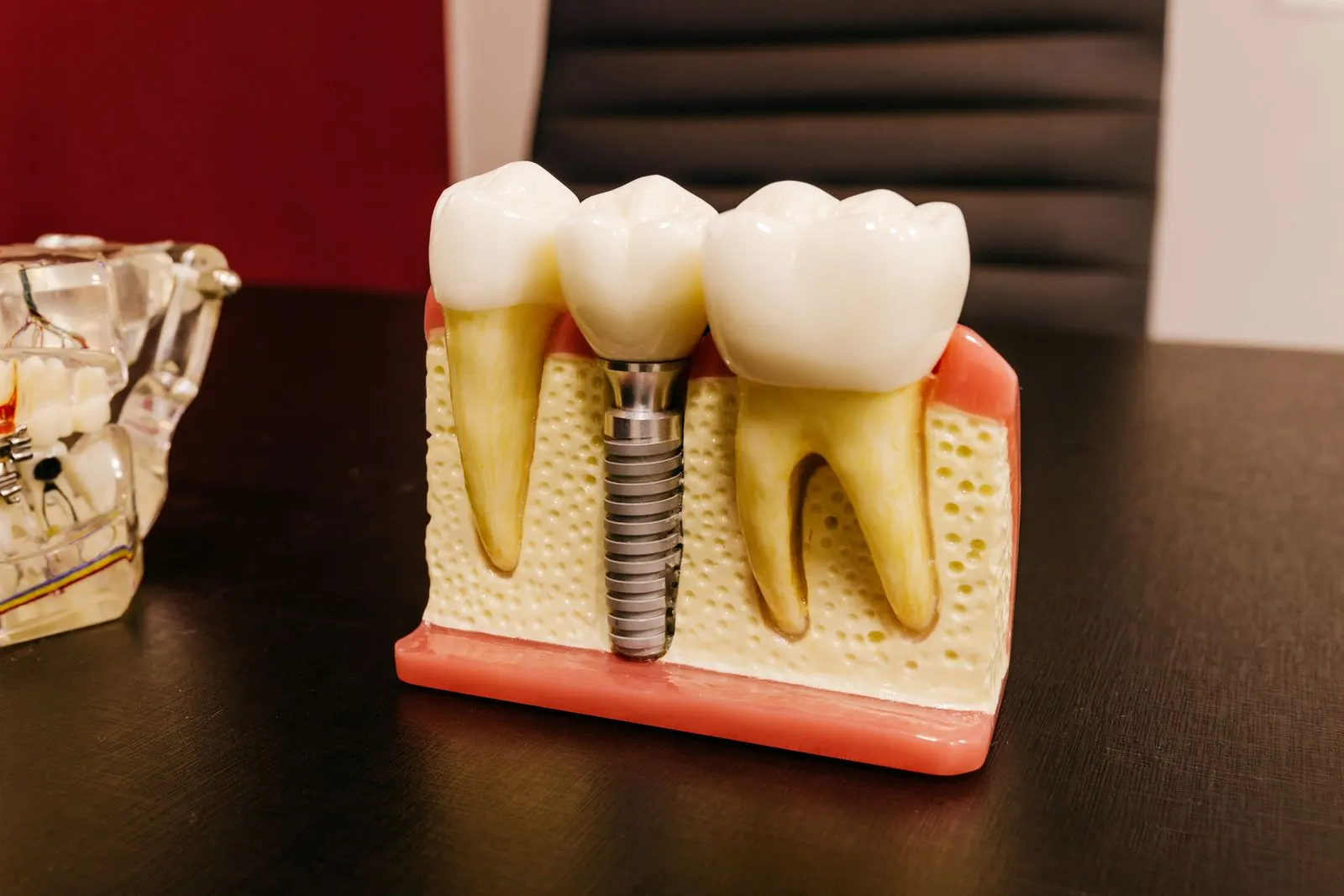
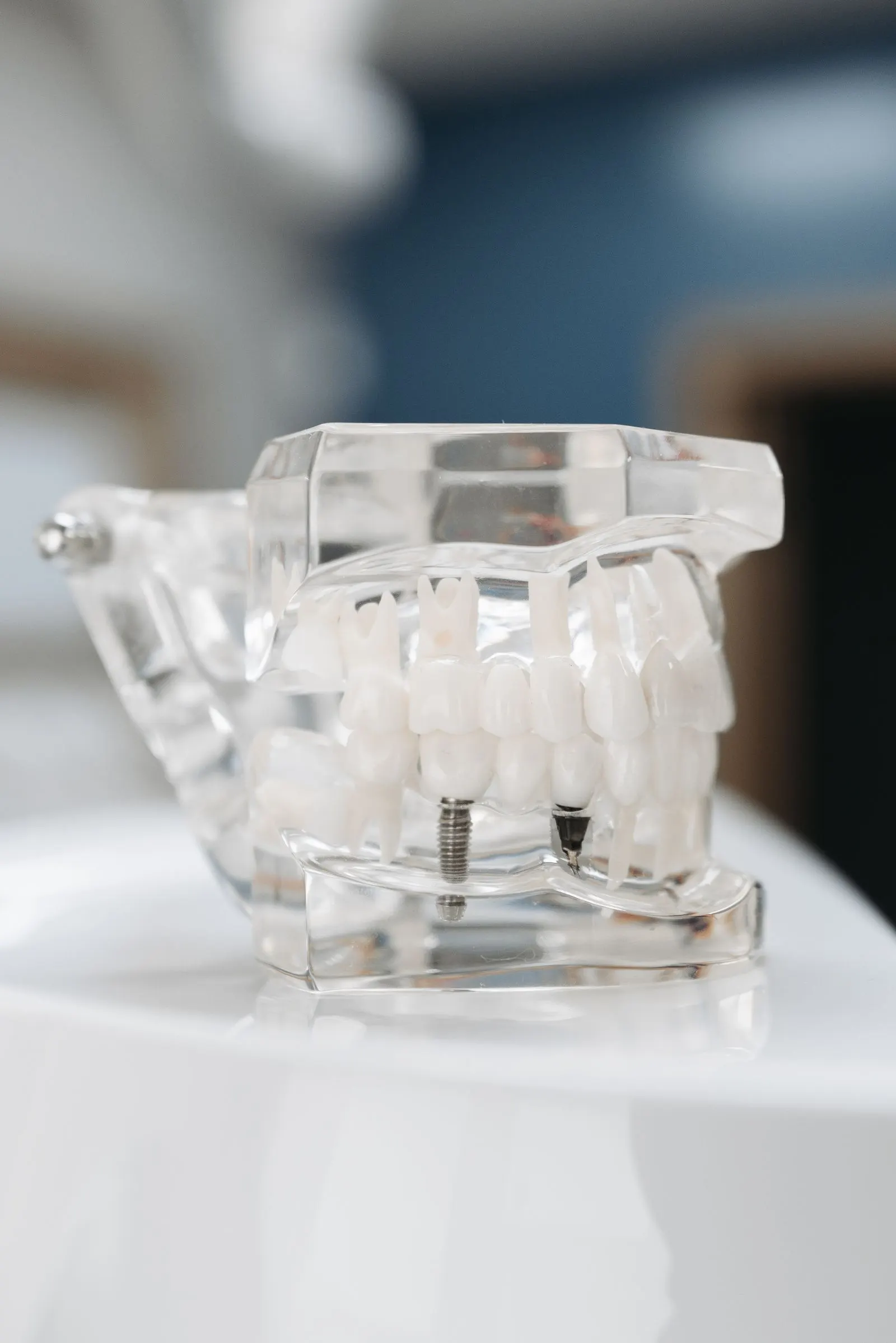
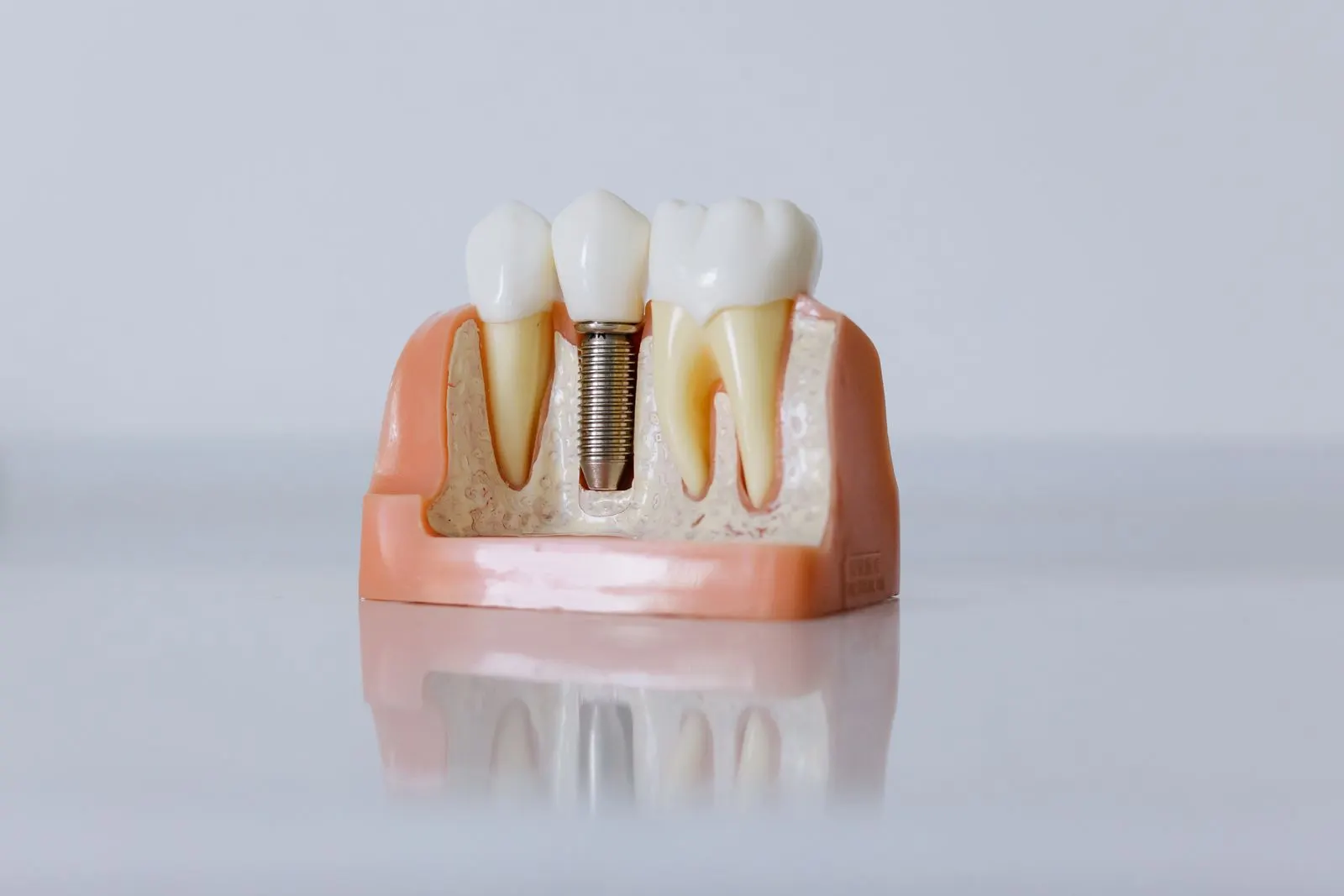
Snap-on dentures, also called implant retained dentures or overdentures, are removable dentures with attachments built into the fitting surface. These attachments clip onto matching parts on dental implants placed in the jaw. The denture still rests on the gums, but the implants stop it lifting or sliding.
In the lower jaw, two implants are a common starting point. The Royal College of Surgeons of England's guidance on NHS-funded implant treatment refers to an overdenture supported by two dental implants for people without teeth whose conventional dentures have failed. Randomised trials of lower overdentures, summarised in a 2024 systematic review, commonly used two standard-diameter implants as the comparison group, and quality of life improved from baseline in the groups studied.
The upper jaw is different. The denture already benefits from palate suction, and dentists usually plan more implants there, particularly if the aim is to reduce palate coverage. Your dentist will advise on this after a scan.
Who are snap-on dentures best suited to?
Snap-on dentures often suit people who:
- have a loose lower denture despite a good fit,
- want more confidence when eating and speaking,
- prefer a removable option that is easy to clean,
- have enough bone for a small number of implants, or can have a graft,
- want fewer implants and less surgery than a fixed full arch.
They are less suitable if you strongly want teeth that never come out, or if you know you will not keep up with cleaning around the implants. The NHS rarely funds implants: the RCS guidance says implants should only be considered when all other means of making a conventional denture have failed, and that disliking dentures alone does not justify NHS-funded implants.
What is a fixed All-on-4 bridge, and how is it different?
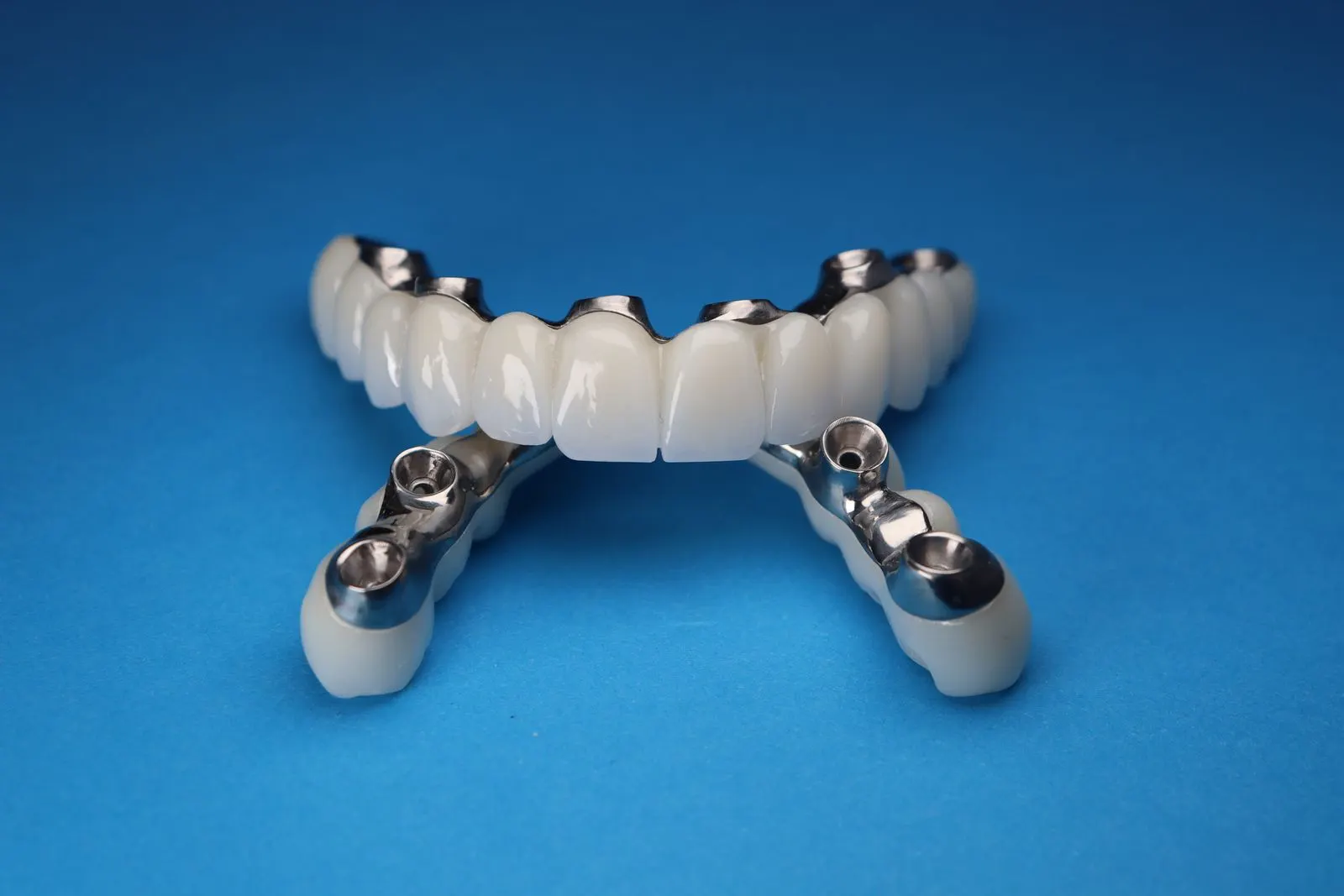
With All-on-4, a full-arch bridge of teeth is screwed onto four implants in one jaw. You cannot remove it yourself; only the dentist can take it off for maintenance. It does not cover the palate and feels closer to natural teeth than any removable option. Our page on All-on-4 implants explains the treatment.
The trade-offs are more implants, a larger operation (often including extractions), and cleaning that has to be done in the mouth with brushes and floss designed for bridges. If you are weighing up fixed options, our article All-on-4 vs All-on-6: which is right for you? compares the two most common designs.
Chewing, comfort and confidence: what changes in daily life?
The biggest everyday difference between dentures vs implants is security. With a conventional lower denture, many people avoid certain foods or use adhesive. Snap-on dentures reduce lifting and sliding, so eating and speaking usually feel more controlled. A fixed bridge removes the worry of movement entirely, which many people value most in social situations.
Comfort also depends on coverage. An upper conventional denture covers the palate, and the Oral Health Foundation notes that some people find acrylic dentures bulky. Implant options can allow a smaller denture base or none at all.
Expectations matter, though. Any new set of teeth takes adjustment, and the NHS notes that getting used to dentures can take a few weeks.
How do you decide between dentures and implant options?
A good decision starts with an honest look at what is not working today. If your upper denture is comfortable and only the lower one moves, a lower snap-on denture may solve most of the problem with the least treatment. If both jaws trouble you, or you want teeth that never come out, a fixed option may be worth discussing.
Questions worth asking your dentist:
- How much bone do I have, and will I need a graft before implants?
- How many implants would each option need in my upper and lower jaw?
- What happens during healing: will I have a temporary denture?
- How often will attachments or screws need checking or replacing?
- What does the maintenance plan look like over the long term, and who provides it at home?
- What happens if an implant does not integrate?
Your general health matters too. Guy's and St Thomas' notes that some medical conditions and medicines change the advice given, and strongly recommends stopping smoking before implant treatment. Be open about both at the assessment.
Finally, consider your hands and habits. Removable options are easier to clean for many people, while a fixed bridge needs careful daily cleaning in the mouth. The best option is the one you can look after well for years, not simply the most advanced one.
What are the risks and long-term maintenance of implant dentures?
Implants need surgery and healing time. Guy's and St Thomas' NHS Foundation Trust lists risks including an implant failing to join the bone, which is more likely in smokers, and implant parts loosening or wearing out over time. The Oral Health Foundation warns that plaque around implants can cause peri-implantitis, which may lead to bleeding, infection and, in some cases, loss of the implant.
Maintenance differs by option:
- Conventional denture: relines as the gums shrink, replacement every several years.
- Snap-on denture: clean the denture and the implant attachments daily; the retention parts wear and are replaced periodically.
- Fixed bridge: daily cleaning under the bridge and regular professional check-ups; the bridge may need removal for maintenance.
If you are wondering what the surgery itself involves, our step-by-step guide to the dental implant procedure walks through each stage.
Implant dentures with Doctor Turka in Istanbul
At our clinic in Ataköy, Bakırköy, Istanbul, our dentists assess which option suits you after an examination and plan implant treatment with 3D CBCT imaging. You receive a free written treatment plan before you travel, and our starting prices are listed on the dental costs in Turkey page. Read how treatment with us works or contact us via WhatsApp or our contact page.
Sources
- Dentures (Oral Health Foundation)
- Dentures (false teeth) (NHS)
- Dental implants (Oral Health Foundation)
- Dental implants (Guy's and St Thomas' NHS Foundation Trust)
- Guidance on the standards of care for NHS-funded dental implant treatment (Royal College of Surgeons of England, 2019)
- Retention of mandibular complete overdentures using mini dental implants and standard diameter implants: systematic review and meta-analysis (2024)
Want a personal opinion?
Leave your contact details. Our patient coordinator will contact you to discuss your needs and explain the next steps, free and without obligation.
Discuss my options