 Dr. Taha G
In England, NHS dentures cost £332.10, because they are a Band 3 treatment and that one charge covers a full or partial denture. Private dentures cost more and vary widely: the price depends on whether you need a full or partial set, the material (acrylic, chrome or flexible), the laboratory and the practice. Implant-supported dentures sit in a higher price bracket again.
This guide breaks down what dentures cost in the UK, what you get for the NHS charge, why private quotes differ so much and when an implant-supported option is worth considering. If you want to understand the treatment itself, our dentures treatment page explains the types we offer and how they are planned.
All UK prices below come from official NHS information or the sources listed at the end. Where no reliable current figure exists, we say so instead of guessing.
How much do dentures cost on the NHS?
NHS dental care in England uses three charge bands. According to the NHS page on dental charges, the current charges are:
| NHS band (England) | Charge | What it includes for denture wearers |
|---|---|---|
| Band 1 | £27.90 | Examination, plus minor adjustments such as smoothing rough parts or tightening clasps |
| Band 2 | £76.60 | Adding a clasp or a tooth, or extensive adjustments such as relining and rebasing |
| Band 3 | £332.10 | New dentures made from plastic or metal, plus everything in Bands 1 and 2 |
Which? lists the same Band 3 figure for dentures and bridges, with prices correct as of 30 April 2026. The Band 3 charge is the same whether you need a full set of dentures or a small partial denture, so for many people the NHS route is by far the cheapest option.
Two rules are worth knowing. If you need treatment from different bands in one course, you pay only the highest band. And if you need further treatment within 2 months in the same or a lower band, you pay nothing extra. Some people, for example those on certain benefits, are entitled to free NHS dental treatment. Scotland, Wales and Northern Ireland have their own charges.
What do NHS dentures include, and what are the limits?
The NHS dentures page explains that most people pay for NHS dentures under Band 3, and that you may be able to pay extra for different denture types on the NHS. Which? notes that NHS dentures are usually made of solid acrylic, while private dentures may use a more expensive flexible acrylic or chrome.
The process usually involves impressions (a putty mould or sometimes a scan), a few weeks of laboratory work and a separate fitting appointment. Immediate dentures, fitted straight after extractions, can be made within a few days, but the NHS notes that they often need adjusting or replacing up to a year later as the gums heal and shrink.
Repairs are a point in the NHS's favour: the NHS says denture repairs are free if the denture can be repaired. If it cannot, you pay for new ones. The main limitation is access, as finding an NHS dentist accepting new adult patients is difficult in many areas.
How much do private dentures cost in the UK?
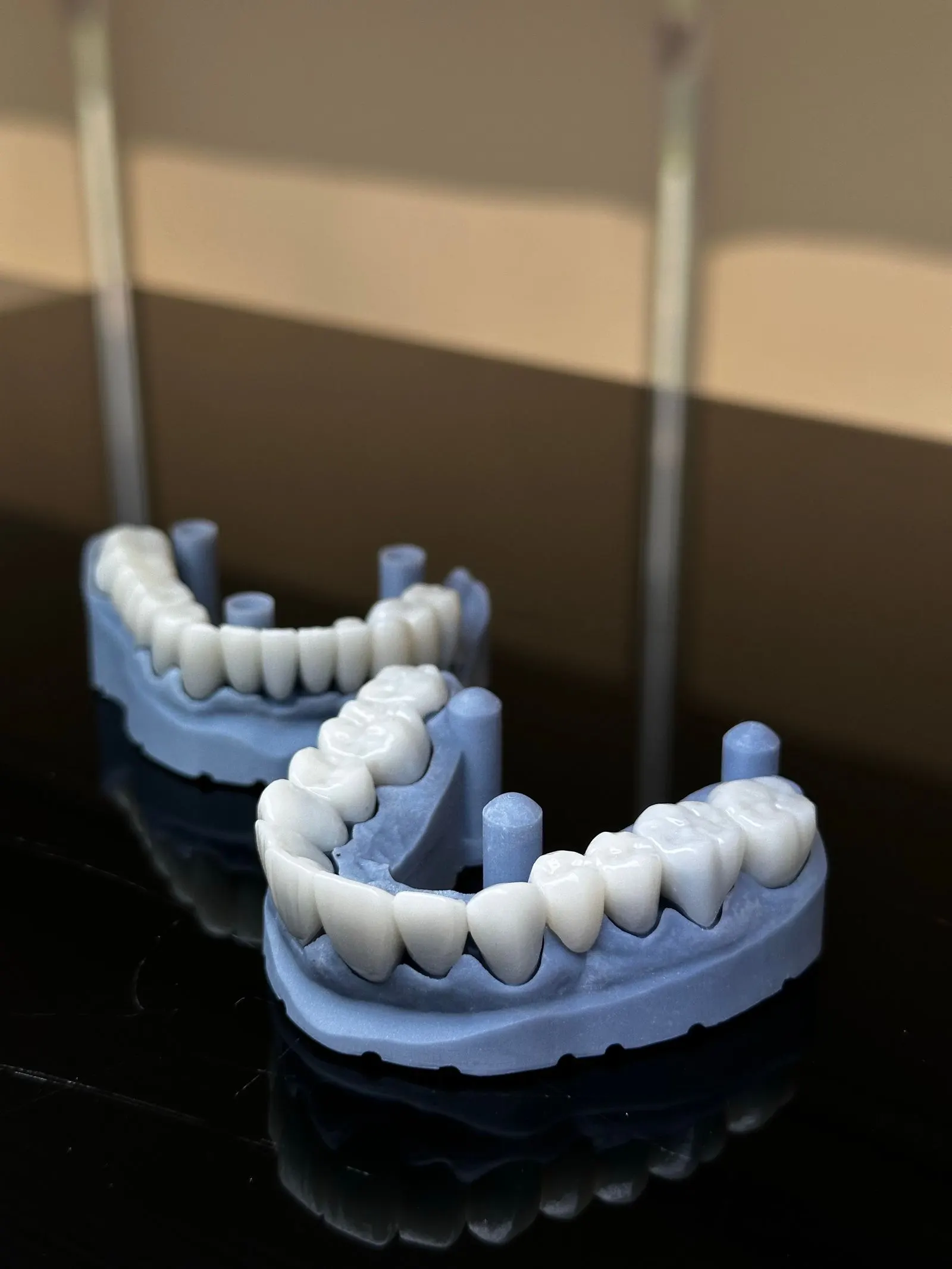
There is no official national price list for private dentures, and the NHS itself says private denture costs vary widely depending on type and material. Which? collected private prices from practices in May 2026, but the figures sit behind its member paywall, so we cannot quote them here.
The most specific public figures we found are dated. A fees survey published by Dentistry.co.uk in 2016, using 2015 data, reported average private fees of £759 for complete dentures and £565 for partial dentures across the UK (excluding Northern Ireland). Treat these as a rough historical reference only: laboratory and practice costs have risen since then.
What pushes a private quote up or down:
- Full or partial: a full set means upper and lower complete dentures, often priced per arch.
- Material: standard acrylic is the entry point; chrome cobalt and flexible dentures cost more.
- Laboratory work: premium denture teeth and more detailed characterisation add cost.
- Number of appointments: more try-in stages mean more chair time.
- Extractions and healing: immediate dentures followed by a reline or a second denture add to the total.
Always ask for a written estimate that lists every stage, including adjustments and relines in the first months.
Full vs partial dentures: what is the difference in cost?
Complete (full) dentures replace all the teeth in the upper jaw, the lower jaw or both. Partial dentures fill gaps when some natural teeth remain. On the NHS, both are covered by the same Band 3 charge in England. Privately, a single partial denture is often cheaper than a full set, but a chrome partial can cost more than a basic acrylic full denture.
Stability differs too. The Oral Health Foundation explains that full acrylic dentures stay in place by suction, while partial dentures use small metal clasps on the remaining teeth. An upper full denture benefits from the palate for suction; a lower full denture has much less surface to hold on to, which is why lower dentures are the most common source of complaints about movement.
Acrylic, chrome or flexible: which denture material is right?
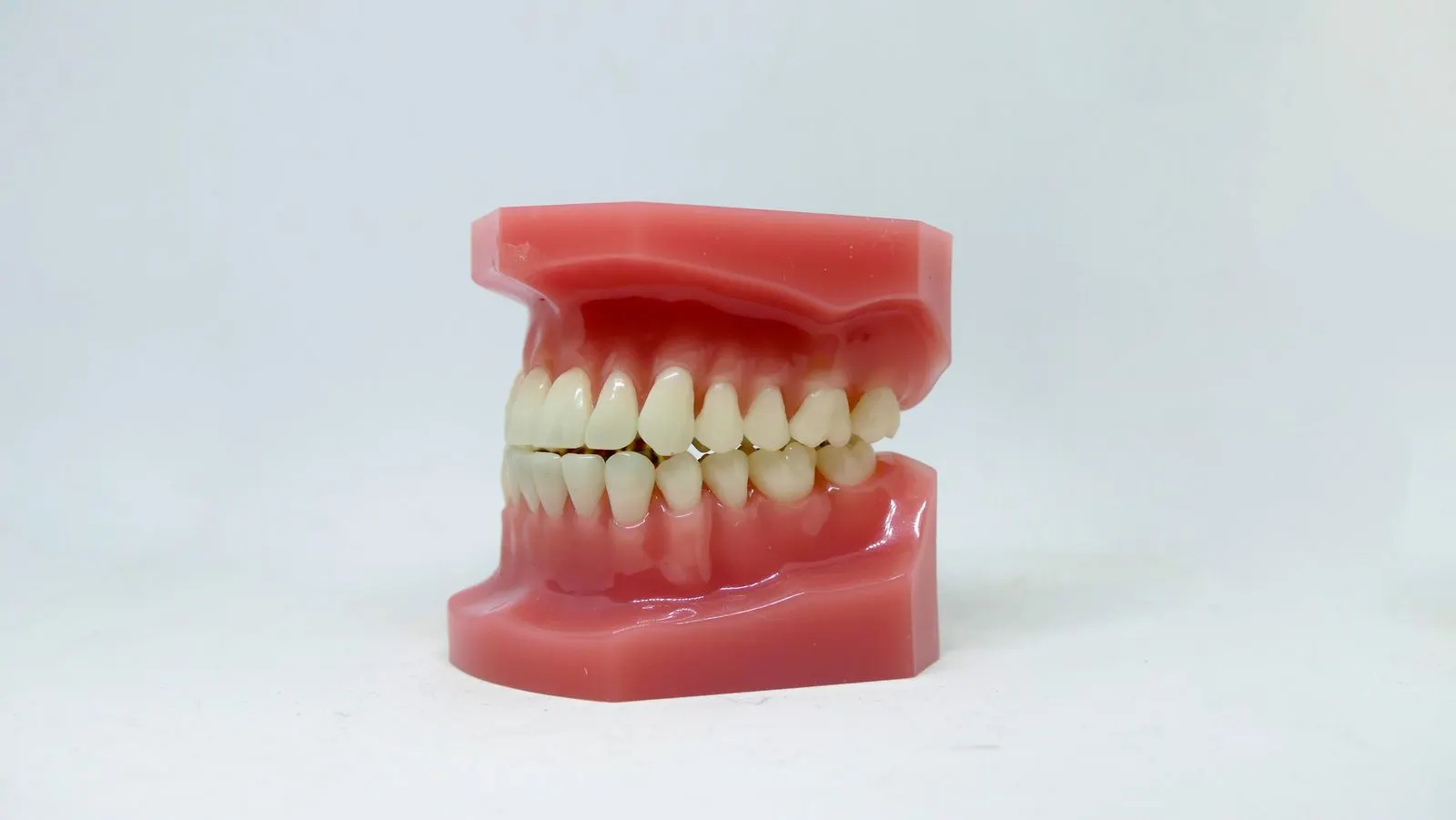
| Material | Typical use | Pros | Cons |
|---|---|---|---|
| Acrylic (plastic) | Full and partial dentures | Most common, easy to adjust and add teeth to, used for NHS dentures | Can feel bulky; partials need clasps |
| Chrome cobalt (metal) | Partial dentures | Thin, light and very stable | Needs strong natural teeth for support; usually more expensive |
| Flexible | Mainly partial dentures | Thinner, less noticeable, no metal clasps, often does not cover the palate | Usually a private option; harder to adjust |
The descriptions above follow the Oral Health Foundation's guide to dentures. Your dentist will recommend a material based on how many teeth remain, their condition and your bite. Price should not be the only factor: a well-fitting acrylic denture is better than a poorly fitting premium one.
How long do dentures last, and what are the ongoing costs?
The Oral Health Foundation says dentures often need replacing every five to eight years because the mouth changes over time. The NHS adds that dentures may become loose as the gums and jawbone change shape with age, and that they can wear or break.
So the real cost of dentures includes more than the first set:
- relines or rebases as the gums shrink (Band 2 on the NHS),
- small adjustments for sore spots (Band 1),
- denture cleaning products and, for some people, adhesive,
- a replacement set every several years.
Regular check-ups matter even with no natural teeth left, because your dentist also examines the gums and soft tissues.

Implant-supported dentures: what does the upgrade involve?
If a conventional denture keeps moving, implants can help. An implant-supported (or implant-retained) denture clips onto a small number of implants placed in the jaw. It is still removable for cleaning, but it is far less likely to lift when you eat or speak. Our implant-supported dentures page explains how this works. To weigh a snap-on denture against fixed All-on-4 for stability, cleaning and upkeep, read dentures vs implants.
The next step up is a fixed full-arch bridge on implants, such as All-on-4 implants, which only the dentist can remove. In our guide to full-arch implant costs and All-on-8 we compare the fixed options in more detail.
On the NHS, implants are the exception. The Royal College of Surgeons of England's guidance says that, for people without teeth, an overdenture supported by two implants should only be considered when all other means of making a conventional denture have failed, and that disliking dentures does not justify NHS-funded implants. Our article on dental implants on the NHS covers who qualifies. For most people, implant-supported dentures are therefore a private treatment, and we found no reliable public UK average price for them.
How does the cost compare abroad?
A conventional denture is planned case by case, and the cost depends on how many teeth are missing and whether extractions are needed first.
For fixed full-arch treatment, All-on-4 starts from €3,310 per arch at our clinic. That is a different treatment from a removable denture, with surgery, healing and maintenance to consider. The final price is always in the written treatment plan after assessment. You can see the full list of starting prices on our dental costs in Turkey page.
Dentures and implant options with Doctor Turka in Istanbul
Our clinic is in Ataköy, Bakırköy, Istanbul. Implant-based options are planned with 3D CBCT imaging, and you receive a free written treatment plan before you travel, so you can compare it with any UK quote. Read how treatment with us works or contact us via WhatsApp or our contact page to ask whether a denture or an implant option suits your situation.
Sources
- How much will I pay for NHS dental treatment? (NHS)
- Dentures (false teeth) (NHS)
- Dentures (Oral Health Foundation)
- Dental treatment checklist (Which?)
- Dentistry fees survey results: dentures (Dentistry.co.uk, 2016)
- Guidance on the standards of care for NHS-funded dental implant treatment (Royal College of Surgeons of England, 2019)
Want a personal opinion?
Leave your contact details. Our patient coordinator will contact you to discuss your needs and explain the next steps, free and without obligation.
Discuss my options