 Dr. Taha G
Screwless dental implants are not implants without a post in the bone. The implant itself is still a titanium or ceramic post anchored in the jaw. "Screwless" describes how the crown is attached on top: cemented in place, with a friction-fit (taper-lock) connection, or as a one-piece implant, so no screw access hole shows in the tooth. Each option has its own trade-offs.
The term is common in UK advertising, which is why it causes confusion. This guide explains what sits behind it, how it compares with screw-retained crowns, and what to ask before you agree to a plan. For an overview of how we plan implant treatment, see our dental implants treatment page.
We cover the types of dental implants and connections only as far as they matter for this choice. The decision about which design suits your mouth can only be made by a dentist after an examination and imaging.
What does "screwless dental implants" actually mean?
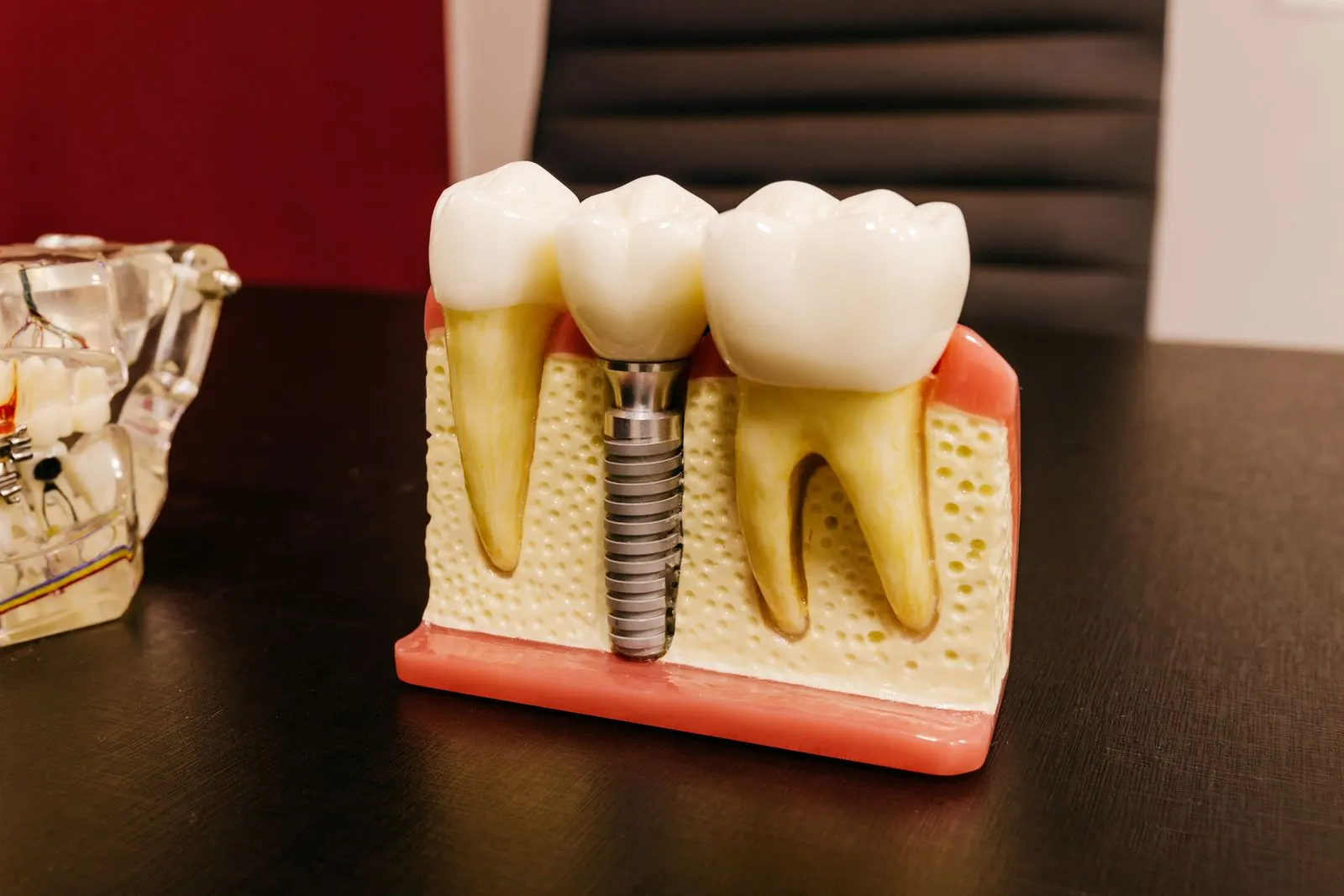
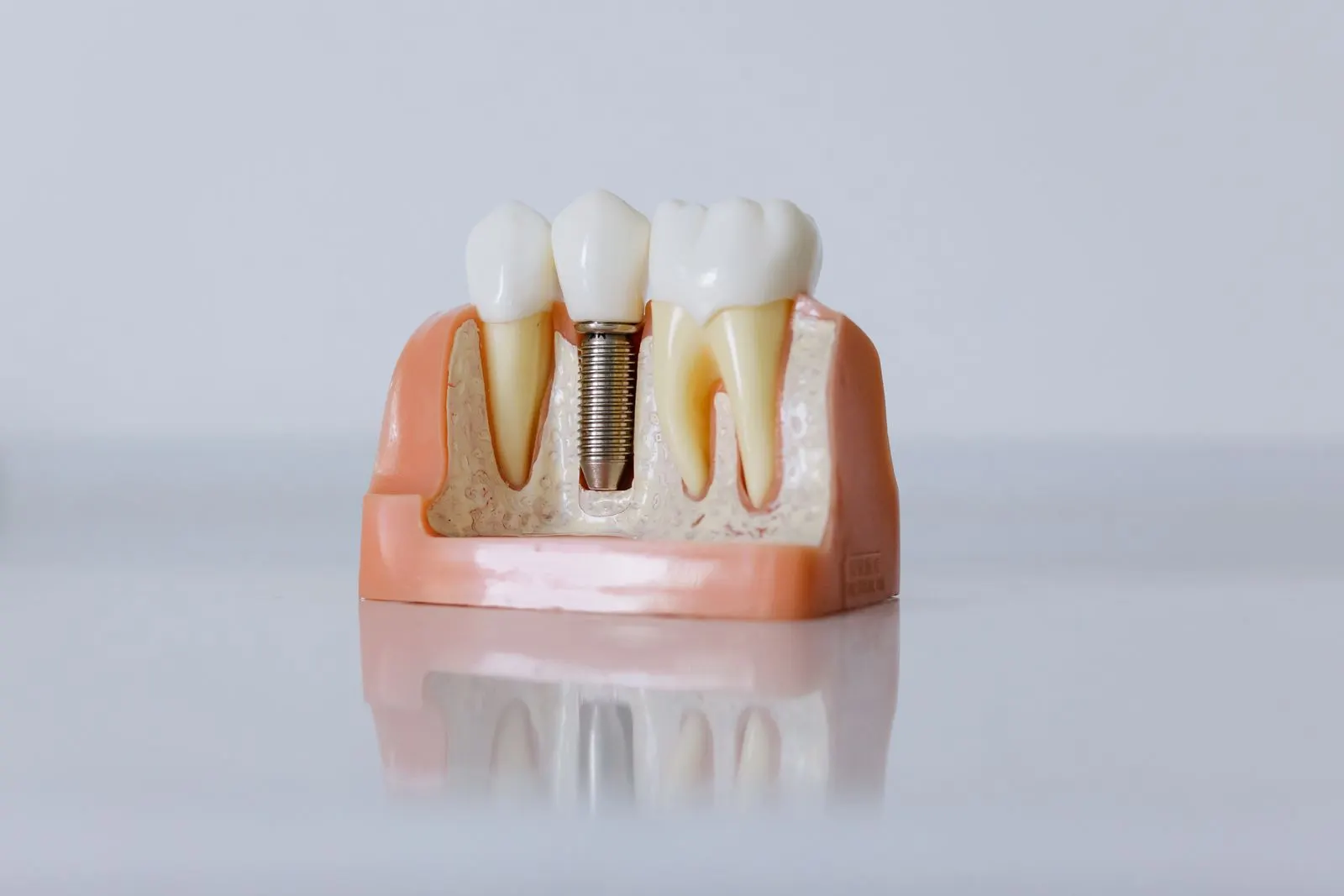
A conventional implant restoration has three parts. The European Federation of Periodontology (EFP) describes the implant as a titanium or zirconia screw or cylinder placed in the jawbone, the abutment as the connector on top of it, and the crown as the visible tooth. The crown is then "cemented or screwed" onto the abutment.
When a clinic advertises "screwless" implants, it usually means one of three things:
- A cement-retained crown: the crown is glued onto the abutment using cement instead of being held by a small screw.
- A taper-lock (friction-fit) connection: the abutment is pressed or tapped into a tapered opening in the implant and held by friction, rather than by an abutment screw.
- A one-piece implant: implant and abutment are made as a single piece, so there is no separate connecting screw. The EFP mentions these designs, in which "the abutment and the implant are part of a single piece".
In all three cases, the part in the bone remains. The Oral Health Foundation describes a dental implant as a small titanium screw placed into the jawbone. So "screwless" never means that nothing is placed surgically.
Is the implant in the bone still a screw?
In most cases, yes. Most implant bodies are threaded, and the EFP notes that some are cylinders instead. Threads or a textured surface help the implant to be stable when it is placed and give bone a large surface to grow onto during healing.
What can be missing is the small screw between implant and abutment, or between abutment and crown. That screw is small and sits inside the restoration. You never see it, except as a filled access hole on the biting surface or the back of a front tooth.
This distinction matters, because some adverts suggest that screwless implants avoid surgery, drilling or a "metal screw in the jaw". That is not the case: placing the implant is the same surgical step whichever way the crown is attached later. The crown on top works much like a crown on a natural tooth, which our guide on what a dental crown is explains.
Screw-retained vs cement-retained implant crowns: how do they compare?
The most common real-world choice is between a crown held by a screw and a crown held by cement. Both are established methods, and the EFP lists both as standard ways of fitting crowns to implants.
| Feature | Screw-retained crown | Cement-retained ("screwless") crown |
|---|---|---|
| How it is held | Small screw through the crown into the implant or abutment | Dental cement between crown and abutment |
| Visible access hole | Yes, sealed with a tooth-coloured filling | No |
| Can the dentist remove it? | Yes, by unscrewing it | Often difficult; may need cutting off if permanent cement is used |
| Risk of cement under the gum | None from the crown fixing | Possible if excess cement is not fully removed |
| Typical concern | Screw loosening, chipping around the access hole | Cement residue, harder repairs |
| Hygiene access for the dentist | Crown can be taken off for cleaning or checks | Crown usually stays in place |
The table summarises general principles. How much each point matters depends on where the tooth is, the angle of the implant, the space available and the material.
What are the advantages of a cement-retained crown?
The main appeal is appearance and simplicity. Without an access hole, the biting surface or the back of a front tooth is made entirely of crown material, which some patients and dentists prefer for visible teeth.
Cementing also works much like fitting a crown on a natural tooth. When an implant is placed at an angle that would bring a screw hole out through the front of a tooth, a cemented crown on a suitable abutment can be a practical solution.
Some patients also like the idea that there is no screw that might loosen. In practice, a cemented crown still sits on an abutment that is connected to the implant, so connection problems can still happen underneath.
What are the risks: cement residue and peri-implantitis
The best-known concern with cemented crowns is excess cement. When the crown is seated, cement can be pushed below the gumline. If it is not removed completely, it can stay hidden next to the implant.
The EFP S3 clinical practice guideline on peri-implant diseases lists submucosal cement as a possible local risk factor, while describing the evidence as "less conclusive" than for other factors and citing only "some limited evidence" for a link with peri-implantitis. The same guideline advises considering local factors that limit hygiene access and, where possible, electing screw-retained restorations.
Peri-implantitis is inflammation with bone loss around an implant. The Oral Health Foundation lists warning signs such as red, sore or swollen gums, bleeding, infection and loosening of the implant. The EFP names poor oral hygiene, a history of periodontitis and smoking as the most common causes of implant failure, so cement is only one part of the picture.
Clinics that cement implant crowns can reduce the risk by keeping the crown margin where it can be cleaned, using custom abutments, removing excess cement carefully and checking with an X-ray after fitting.
What are taper-lock and one-piece implants?
Taper-lock (friction-fit) connections
Some implant systems join the abutment to the implant through a precisely matched cone. The abutment is seated into the implant and held by friction, a principle engineers call a locking taper. These systems are often the ones marketed in the UK as "screwless", and Bicon is one brand known for this design. The crown itself may be cemented to the abutment or joined to it in the laboratory.
The idea is a tight connection without an abutment screw that could loosen. Taper-lock systems are less widely used than screw-connected designs, so not every dentist stocks the parts. If you choose one, check that a dentist near home can maintain or repair that specific system later.
One-piece implants
In a one-piece implant, the part in the bone and the abutment are a single unit. Some ceramic (zirconia) implants are made this way. Because there is no joint between implant and abutment, the crown is usually cemented on top. The disadvantage is less flexibility: the abutment angle and height are fixed at placement and cannot be swapped later.
Are screwless implants the same as mini implants or snap-on dentures?
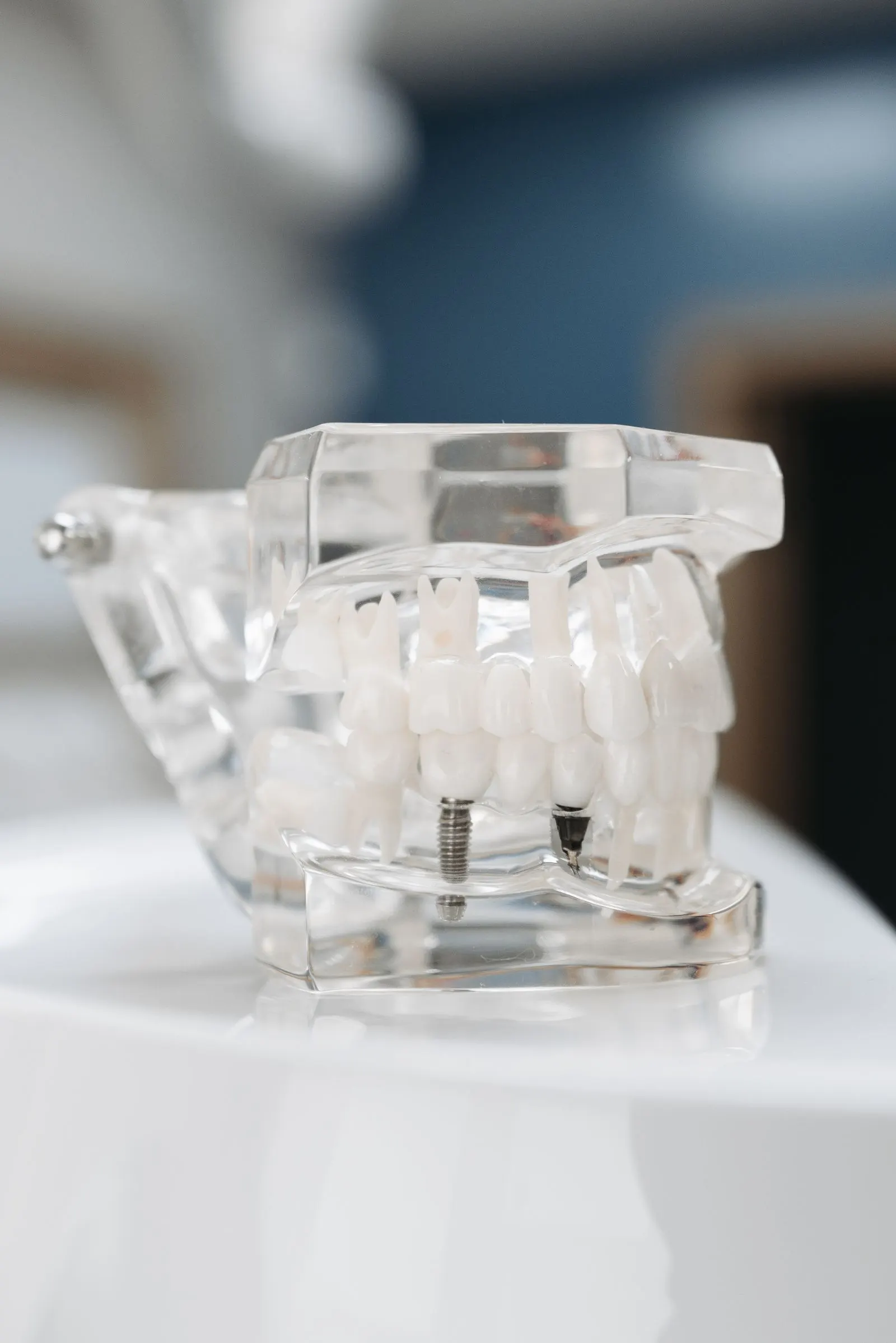
No, although adverts sometimes blur the terms. Mini implants are narrower implants, often used to stabilise a lower denture. Snap-on dentures clip onto implants with attachments and can be taken out for cleaning. Neither is what "screwless" normally refers to.
If you are looking at a removable option, our page on implant-supported dentures explains how they work. A screwless claim, by contrast, usually concerns a fixed single crown or bridge.
How long do screwless implants last, and what can go wrong?
There is no reliable evidence that the word "screwless" makes an implant last longer. Survival depends mainly on bone, gum health, bite forces, smoking, general health and maintenance. Our guide on how long dental implants last looks at these factors in detail.
Problems can occur with any design. Guy's and St Thomas' NHS Foundation Trust notes that parts of an implant can loosen or wear out with time and that you are responsible for its long-term care. With a screw-retained crown, a loose screw can often be retightened. With a cemented crown, the same problem may mean the crown has to be cut off and remade.
Maintenance is the same for all types. The EFP's implant FAQs recommend brushing twice a day for at least two minutes, cleaning between the teeth once a day and professional cleaning at least twice a year.
Questions to ask a clinic offering screwless implants
Before you agree to treatment, ask questions that turn the marketing term into specifics:
- Is the crown cemented, or is the implant connection a taper-lock or one-piece design?
- Why is this approach better for my tooth position than a screw-retained crown?
- If the crown is cemented, how is excess cement removed and checked?
- Can the crown be removed later for repairs or cleaning, and how?
- Which implant system is used, and can dentists in the UK obtain its parts?
- What records (implant type, size, abutment) will I receive?
A clear written answer to each point is a good sign. If the answer is only "there are no screws", ask again. Comparing costs is a separate step; our dental costs in Turkey page lists our starting prices.
Implant crowns with Doctor Turka in Istanbul
At our clinic in Ataköy, Bakırköy, Istanbul, our dentists plan implants with 3D CBCT imaging and explain in a free written treatment plan, before you travel, whether a screw-retained or cemented crown is proposed for each tooth and why. Read how treatment with us works or contact us via WhatsApp or our contact page with your questions.
Sources
- Dental implants explained (European Federation of Periodontology)
- Dental implants: FAQs (European Federation of Periodontology)
- Prevention and treatment of peri-implant diseases: the EFP S3 level clinical practice guideline (Herrera et al., J Clin Periodontol 2023)
- Dental implants (Oral Health Foundation)
- Dental implants (Guy's and St Thomas' NHS Foundation Trust)
Want a personal opinion?
Leave your contact details. Our patient coordinator will contact you to discuss your needs and explain the next steps, free and without obligation.
Discuss my options