 Dr. Hatice G
The dental bridge cost in the UK depends on whether you are treated on the NHS or privately. On the NHS in England, a bridge falls under Band 3, which costs £332.10 from April 2026 for the whole course of treatment. Private fees are set by each practice and vary with the type of bridge, the number of units and the material.
A bridge replaces one or more missing teeth with a false tooth anchored to the teeth or implants on either side. This guide covers NHS and private costs, the main types of bridge, how long they last and how a bridge compares with an implant over the long term. To see how we plan this treatment, visit our dental bridges page, or compare all options on our tooth replacement overview.
How much does a dental bridge cost on the NHS?
The NHS band guide lists bridges under Band 3, alongside crowns, dentures and other lab-made work. According to the NHS Business Services Authority, from 1 April 2026 the charges in England are:
| NHS band (England) | Charge from 1 April 2026 | What it covers |
|---|---|---|
| Band 1 | £27.90 | Check-up, advice, X-rays where needed, basic gum care |
| Band 2 | £76.60 | Band 1 plus fillings, root canal treatment, extractions |
| Band 3 | £332.10 | Bands 1 and 2 plus crowns, bridges, dentures and other lab-made items |
The NHS explains that if you need a mix of treatments from different bands, you pay the charge for the highest band only. So a three-unit bridge plus any fillings needed at the same time costs one Band 3 charge, not a charge per tooth. The NHS also says that if you need more treatment within two months, you pay nothing extra for treatment in the same or a lower band.
Charges differ across the UK. According to Which?, patients in Scotland and Northern Ireland pay 80% of the dentist's fee up to a maximum of £384, and Wales moved to fixed-price care packages in 2026, also with a maximum total charge of £384 for a course of treatment.
The NHS provides what is clinically necessary. On back teeth, for example, the NHS says you may be offered a metal-coloured crown, and your dentist can discuss private alternatives if you want a different material.
What does a private dental bridge cost in the UK?
There is no official private price list. Each practice sets its own fees, and quotes depend on the type of bridge, how many units it has, the material (metal-ceramic, all-ceramic or zirconia) and whether extractions, root canal treatment or temporary teeth are needed first. The Oral Health Foundation advises asking for a written treatment plan and a clear cost estimate before treatment starts.
For implant-supported bridges, the most detailed published fee survey we could find is older. A survey of more than 25 UK implant dentists in autumn 2016, reported by Dentistry.co.uk, found:
| Treatment (2016 survey) | Lowest | Highest | Mean |
|---|---|---|---|
| Single implant and crown | £1,700 | £3,000 | £2,334 |
| Implant-supported three-unit bridge | £3,200 | £6,624 | £5,023 |
These figures excluded consultations, scans, extractions and bone grafting, and fees have risen since, so treat them as a floor rather than a current price. For a more recent look at implant fees, see our guide to dental implant costs in the UK.
What types of dental bridge are there?
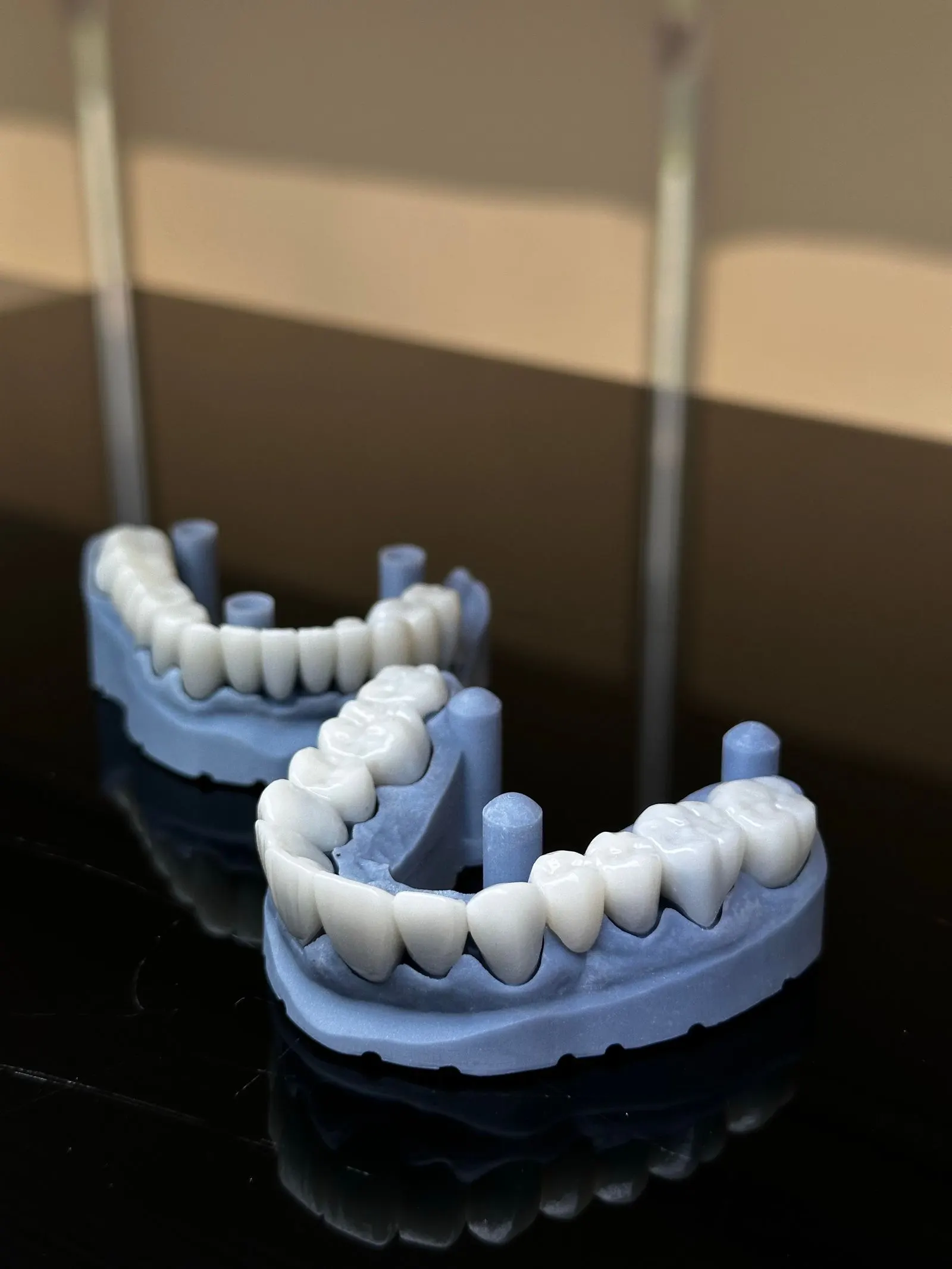
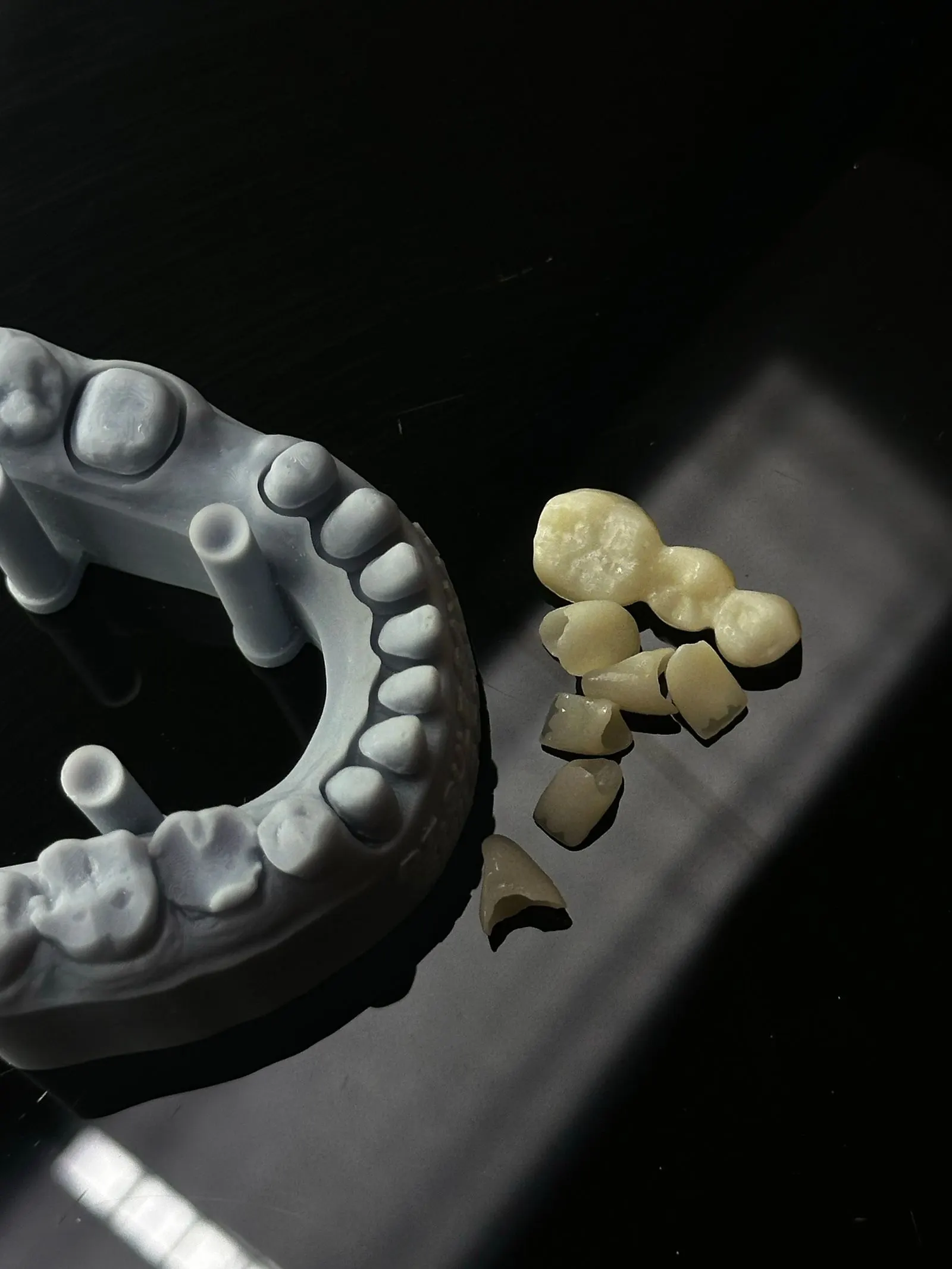
The type of bridge affects the cost, how much tooth has to be removed and how long it is likely to last.
| Type | How it is held | Tooth preparation | Typical use |
|---|---|---|---|
| Conventional (fixed) bridge | Crowns on the teeth either side of the gap | Neighbouring teeth are drilled down to take crowns | Front or back teeth with strong neighbours |
| Adhesive (Maryland, resin-bonded) bridge | Small wing bonded to the back of a neighbouring tooth | Little or no drilling | Often front teeth, where biting forces are lighter |
| Cantilever bridge | Supported from one side only | Preparation of the supporting tooth | Selected cases with lower biting load |
| Implant-supported bridge | Anchored to dental implants | No preparation of natural teeth | Several missing teeth in a row |
According to Leeds Teaching Hospitals NHS Trust, a conventional bridge can also change the shape and appearance of the neighbouring teeth, which can help if they are already heavily filled or discoloured.
How long do dental bridges last?
Patient information from Leeds Teaching Hospitals NHS Trust gives the clearest UK figures: 80% of conventional bridges last ten years or longer with relatively minor complications, and around 80% of adhesive bridges last five years or longer. Complications with adhesive bridges tend to be simpler to manage; the most common is the bridge coming unstuck, which can usually be re-bonded.
The same source sets out the main risks for the supporting teeth. With conventional bridges, in up to 10 to 15% of cases the nerve of a supporting tooth is irreversibly damaged and may need root canal treatment. A small proportion of supporting teeth also develop decay along the bridge margin or gum disease. With adhesive bridges, the supporting tooth can look slightly greyer.
Good cleaning makes a difference. The Oral Health Foundation recommends brushing for two minutes twice a day with fluoride toothpaste, cleaning under the false tooth with special floss or other aids, and attending regular check-ups so problems are found early.
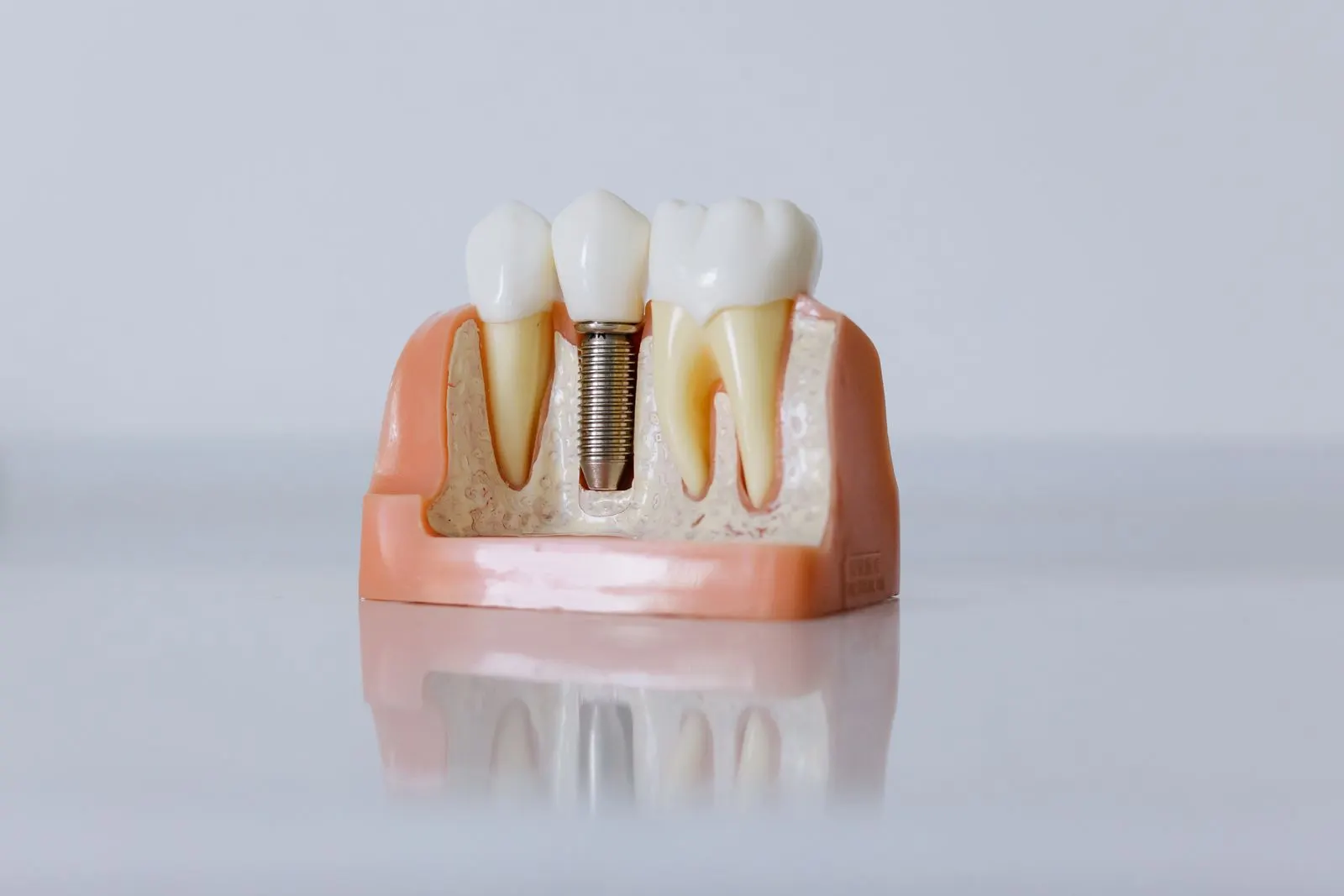
Dental bridge vs implant: which costs less over 15 years?
For a single missing tooth, the bridge or implant question is really about the neighbouring teeth and the long-term costs.
| Factor | Conventional bridge | Single implant with crown |
|---|---|---|
| Neighbouring teeth | Cut down for crowns | Left untouched |
| Surgery | None | Implant placement; sometimes bone grafting |
| Upfront cost | Usually lower | Usually higher |
| Main long-term risk | Supporting teeth: nerve damage, decay, gum disease | Gum and bone problems around the implant; crown or screw repairs |
| If it fails | Often a larger bridge, implant or denture | Repair or replacement of the implant or crown |
Over a 15-year horizon, the comparison is not simply the first invoice. Because 80% of conventional bridges reach ten years with relatively minor complications, a minority will need significant repair or replacement within that time, and a failed supporting tooth can turn a three-unit bridge into a bigger, more expensive problem. An implant costs more at the start and needs surgery, but it does not depend on neighbouring teeth.
A bridge often makes most sense when the teeth either side already have large fillings or crowns, because preparing them is less of a loss. An implant is usually preferred when the neighbours are healthy and there is enough bone. A dentist needs to examine you, and usually take a 3D scan for implants, before recommending either.
When is an adhesive (Maryland) bridge a good option?
A Maryland bridge is the most conservative fixed option because it needs little or no drilling. It suits gaps where the neighbouring tooth is strong and healthy and where biting forces are lighter, which is why the Oral Health Foundation says it is often used for front teeth. Because so little tooth is removed, it also keeps future options open if you later decide on an implant.
Its limits are the bond and the biting load. Leeds Teaching Hospitals NHS Trust notes that cement failure is the most common complication. If you grind your teeth or the gap is at the back of the mouth, a conventional or implant-supported bridge may be more reliable.

How much does a dental bridge cost in Turkey?
At Doctor Turka, dental bridges start from €460 per bridge, and single implants start from €235 per implant. The final price depends on the number of units, the material and any preparatory treatment, and it is set out in a written treatment plan after assessment. Our dental costs in Turkey page lists all starting prices, and our article on dental implant costs in Turkey explains how implant plans are priced.
The Oral Health Foundation notes that gums usually need time to heal after an extraction, which can take around six months, before a final bridge is fitted. If a tooth still needs to be removed, the plan may involve more than one trip, and that should be part of the cost comparison.
Having a bridge or implant in Istanbul with Doctor Turka
Our dentists in Ataköy, Bakırköy (Istanbul) assess the gap and the neighbouring teeth before recommending a bridge or a single tooth implant, using 3D (CBCT) planning for implants. You receive a free written treatment plan before you travel. Read how it works or contact us via WhatsApp or our contact page.
Sources
- What is included in each NHS dental band charge? (NHS)
- View the current NHS dental charges (NHS Business Services Authority)
- Private and NHS dental charges (Which?)
- Bridges: patient information (Leeds Teaching Hospitals NHS Trust)
- Dental bridges (Oral Health Foundation)
- If the price is right: implant fee survey (Dentistry.co.uk)
Want a personal opinion?
Leave your contact details. Our patient coordinator will contact you to discuss your needs and explain the next steps, free and without obligation.
Discuss my options