 Dr. Taha G
All-on-4 dental implants in Turkey are priced per jaw, and the price is typically a third to a half of what UK and Irish private practices commonly charge for the same concept. It is also the treatment where quotes vary most, because "All-on-4" describes an approach (a fixed bridge of ten to fourteen teeth on four implants) rather than a fixed shopping list. The bridge material, the implant system, the number of extractions and the number of trips can change a quote substantially. At Doctor Turka, All-on-4 starts from €3,310 per jaw and All-on-6 from €3,775 per jaw, compared with around £10,000 to £18,000 per jaw privately in the UK; current prices are on our dental costs page.
This guide breaks an All-on-4 quote into its parts, explains why the treatment is expensive everywhere, sets out what home-country clinics typically charge and shows how to budget two trips to Istanbul. Our starting price per jaw is published on the dental costs page; the aim here is to help you judge any All-on-4 price you are offered.
All-on-4 dental implants Turkey price: what drives the number
Four factors account for most of the difference between two All-on-4 quotes:
- The final bridge material. An acrylic-hybrid bridge and a monolithic zirconia bridge are very different products, both in laboratory cost and in lifespan.
- The implant system. Value, mid-range and premium systems differ in price per implant and per multi-unit abutment.
- What happens before the implants. The number of extractions, removal of infected tissue and any bone levelling.
- One jaw or two. Treating both arches in the same trips shares the scans, anaesthesia and travel, so the second arch costs less than the first.
The treatment itself is described in detail on the All-on-4 page.
What a complete All-on-4 quote contains
| Line item | What it is | Notes |
|---|---|---|
| Consultation and 3D CBCT scan | Measures bone volume and maps nerves and sinuses | Essential for implant positions |
| Extractions | Removing remaining teeth | Priced per tooth; surgical extractions cost more |
| Bone levelling | Smoothing the ridge after extractions | Usually part of the surgery |
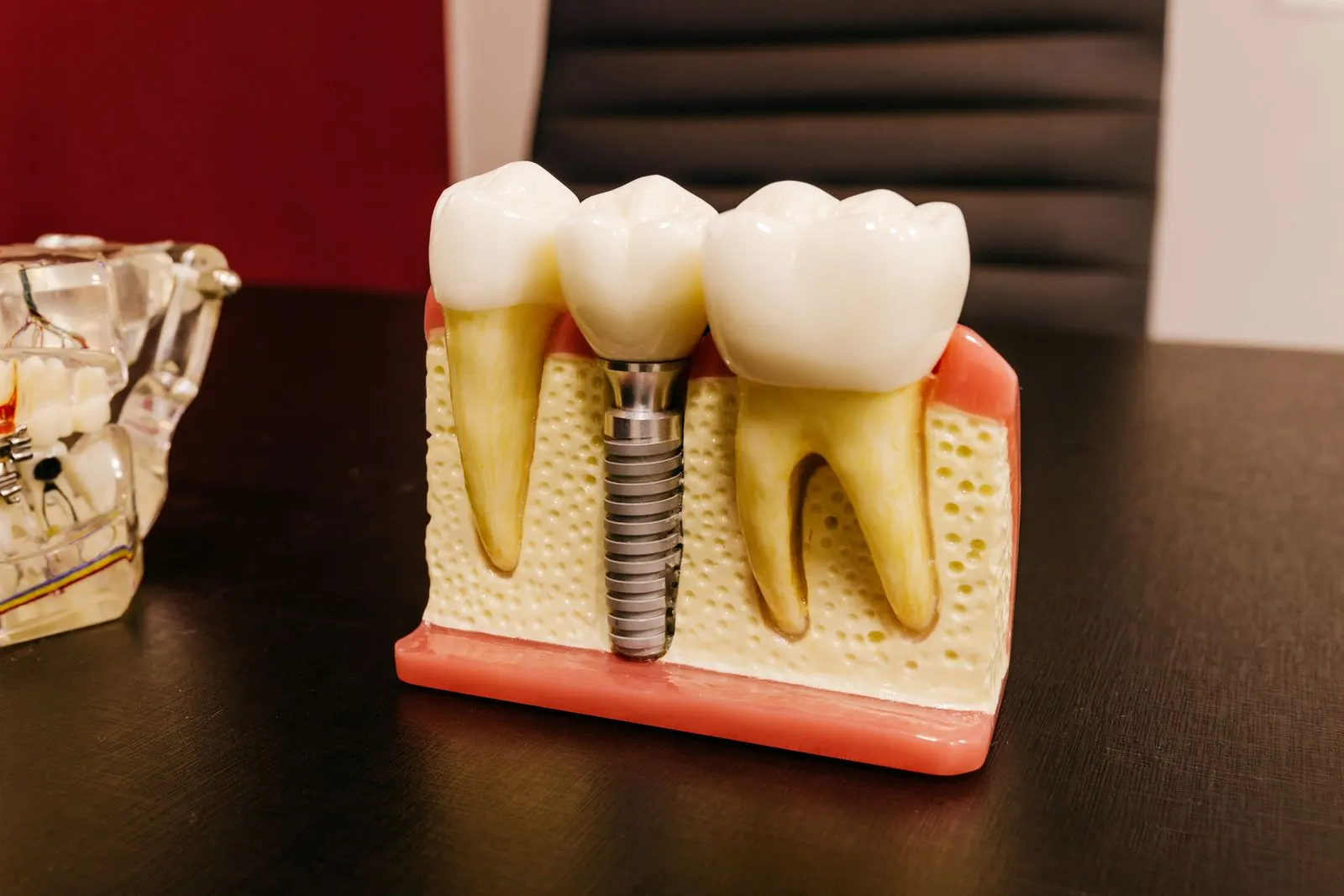
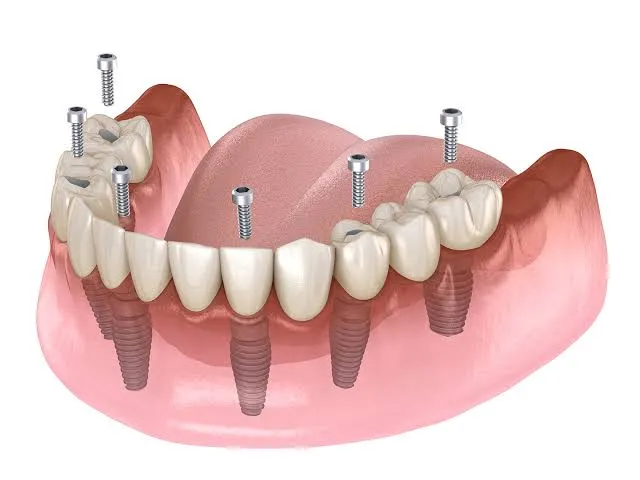
| Four implants | Two straight at the front, two tilted at the back | Brand should be named |
| Multi-unit abutments | Angled connectors that let the bridge screw on | Four per jaw; often overlooked in cheap quotes |
| Immediate temporary bridge | Fixed acrylic teeth fitted within days | You leave trip one with fixed teeth |
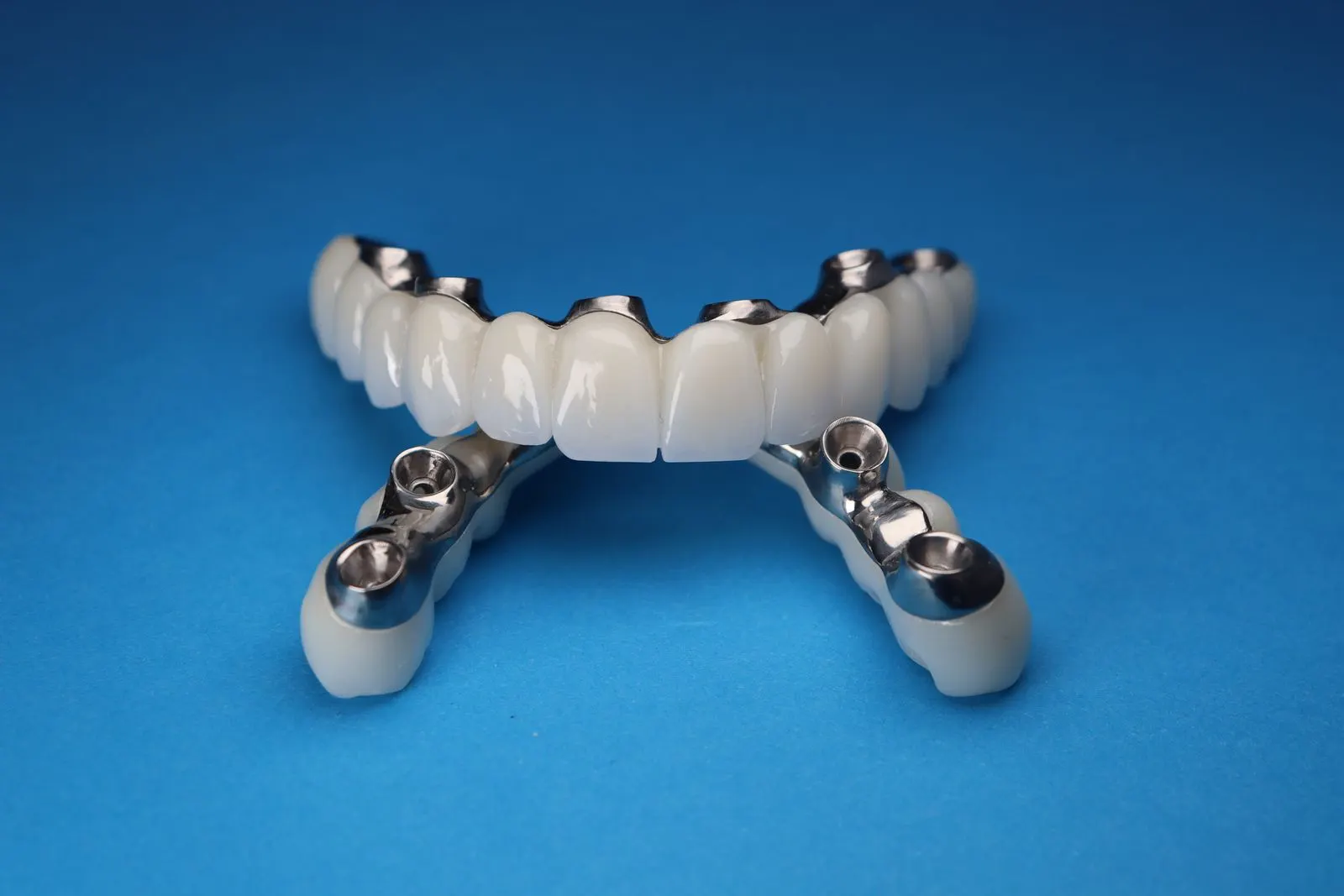
| Final bridge | Acrylic hybrid, PMMA, or zirconia (sometimes on a titanium bar) | The biggest variable |
| Anaesthesia or sedation | Local anaesthetic standard; IV sedation optional | Sedation usually a separate line |
| Hotel nights and transfers | For both trips | Check trip two is covered |
| Night guard, follow-up checks | Protects the final bridge | Sometimes included |
If a quote does not mention the multi-unit abutments or the temporary bridge, ask. Both are needed for a standard immediate-load All-on-4.
Bridge materials compared
| Final bridge | What it is | Typical lifespan | Relative fee |
|---|---|---|---|
| Acrylic hybrid | Acrylic teeth on a metal or titanium framework | Teeth commonly re-made after around 5-10 years | Lowest |
| PMMA (milled acrylic) | Denser, milled acrylic; sometimes used as a long-term provisional | Similar to hybrid, less staining | Low to mid |
| Monolithic zirconia | Milled from a single block of zirconia, stained and glazed | Long-lasting, very stain- and wear-resistant | Higher |
| Layered zirconia on a titanium bar | Zirconia with porcelain layering for maximum aesthetics | Long-lasting; layering can chip | Highest |
The acrylic option costs less on the day but usually needs re-teething within a decade. Zirconia costs more initially, resists staining and wear better, and often works out similar or better per year of use. The bridge type also affects the bite: zirconia is very hard, so a night guard is sensible for anyone who grinds.
Implant tiers and multi-unit abutments
The implant systems we list fall into broad tiers. All are established manufacturers; the differences are price, the depth of long-term data and parts availability in your home country.
- Value: Aggressor (Turkey), Osstem (Korea), Hiossen (USA).
- Mid-range: Swiss Implant (Switzerland), Straumann Group Medentika (Germany).
- Premium: Nobel Biocare (Switzerland), Straumann SL Active (Switzerland).
For All-on-4 the tier matters twice, because each implant needs a matching multi-unit abutment and screws. If you want the widest choice of dentists at home able to service the bridge, a system with good UK and Irish distribution is worth paying for.
One jaw or both, and the lower-budget alternatives
Many patients need only one arch. The upper jaw is more often the problem, because upper bone is softer and upper dentures cover the palate. Treating one jaw is fine; the other arch can stay natural, or be treated later.
When both jaws are done together, the second arch usually costs noticeably less than the first. The CBCT scan, sedation, hotel nights, transfers and flights are shared, and the laboratory designs both bridges to meet in one balanced bite. Doing the arches a year apart means two separate treatment journeys, four trips instead of two, and a bite that has to be matched to an existing bridge.
If a fixed bridge is beyond your budget, two cheaper routes exist:
- A removable denture on two to four implants (an overdenture). It clicks onto the implants, stays put when you eat and costs considerably less, but it comes out for cleaning. See implant-supported dentures.
- An acrylic final bridge now, zirconia later. Some patients start with acrylic and upgrade the bridge years later, keeping the same implants.
Why are All-on-4 implants so expensive?
People often ask why a treatment with "only four implants" costs so much. The implants are the smaller part of the bill. What drives the cost everywhere is:
- Surgical time. Extractions, bone levelling and placing four implants at precise angles take several hours.
- Laboratory time. Two bridges (temporary and final), each individually designed, tried in and adjusted.
- Components. Four implants, four multi-unit abutments, screws and titanium or zirconia frameworks.
- Two stages. Healing checks, a second set of scans and a second fitting several months later.
Turkey is lower mainly because laboratory fees, rent and salaries are much lower, while implants and zirconia come from the same manufacturers. We explain this in why dental work is cheaper in Turkey.
What UK, Irish and European clinics typically charge
These ranges are commonly quoted private fees for All-on-4 on one jaw, including the final bridge. They vary with city, clinic and bridge material, so treat them as typical ranges.
| Market | Typical fee per jaw | Both jaws, typical |
|---|---|---|
| UK | £10,000 to £18,000 (zirconia often higher) | £20,000 to £35,000 |
| Ireland | €12,000 to €20,000 | €24,000 to €38,000 |
| Germany | €12,000 to €25,000 | €24,000 to €45,000 |
| Switzerland | CHF 20,000-35,000 | CHF 40,000-65,000 |
The NHS very rarely provides All-on-4, and most UK dental insurance plans cap annual benefits well below the cost of a full arch.
How the two trips work, and what they cost you
A standard All-on-4 plan in Istanbul has two visits.
| Stage | Duration | What happens |
|---|---|---|
| Trip 1 | about 5-7 days | CBCT scan, extractions, four implants, fixed temporary bridge fitted within days |
| Healing at home | 3-6 months | Soft diet at first, then normal eating with care; the implants fuse with the bone |
| Trip 2 | about 5-7 days | New scans, try-in, final bridge fitted and bite adjusted |
Budget beyond the treatment:
- Two sets of return flights, commonly around £150 to £400 each from the UK or Ireland.
- Two to three weeks off work in total across both trips.
- A companion, if you choose sedation or want support; their flights and meals are extra.
- A soft-food diet for the first weeks, and a hygiene visit at home between trips.
A clinic that fits a final zirconia bridge in the first week on a standard plan is skipping the healing period that protects the implants. How long each step takes is covered in more detail in how long do dental implants take in Turkey.
How to compare two All-on-4 quotes
| Question | Quote A | Quote B |
|---|---|---|
| Implant brand named? | ||
| Multi-unit abutments included? | ||
| Temporary fixed bridge included? | ||
| Final bridge material named (acrylic, PMMA, zirconia)? | ||
| Titanium bar or framework specified? | ||
| Number of extractions included? | ||
| Sedation included or extra? | ||
| Hotel and transfers for both trips? | ||
| Night guard and follow-up checks? | ||
| Dentist named on the plan? | ||
| Guarantee terms in writing, including who pays travel for a remake? |
Red flags in All-on-4 quotes
- "All-inclusive" with no itemised list.
- No bridge material stated, or acrylic quoted but zirconia shown in the photos.
- Extractions left off although you still have teeth.
- A final bridge promised in a single trip without a clinical explanation.
- No mention of what happens if an implant does not integrate.
- A quote given before anyone has looked at your bone.
Guarantee, maintenance and long-term costs
An All-on-4 bridge is fixed; only a dentist can unscrew it. It should be taken off for professional cleaning and checks at intervals your dentist recommends. Over the years, expect some maintenance: screws can loosen, acrylic teeth wear, and a night guard may need replacing.
At Doctor Turka the guarantee terms are written into the plan before you book. Whatever clinic you choose, ask what is covered (implant failure, bridge fracture, screw loosening), what is required of you (check-ups, hygiene, no smoking during healing) and who covers travel if a remake is needed.
When All-on-4 in Turkey is not the better option
- Thin upper bone without enough length for tilted implants. You may need grafting, All-on-6 or zygomatic implants, which changes the plan and the price.
- Several healthy teeth remain. Removing sound teeth to fit a full arch is rarely good value; individual implants or bridges may be better.
- Heavy smokers and uncontrolled diabetics. Higher failure risk and more follow-up, ideally close to home.
- You cannot make two trips. A single-trip compromise increases the risk to the implants.
If you are weighing four implants against six, read All-on-4 vs All-on-6. To get your personal figure, leave your contact details; our coordinator calls you, a dentist assesses your case and you receive a written, itemised plan per jaw and per material.
Sources
- Survival rates of axial and tilted implants in the rehabilitation of edentulous jaws using the All-on-four concept: A systematic review (Gaonkar et al., J Indian Prosthodont Soc 2021)
- Dental treatments: NHS
- Safe Smiles: Dental tourism explained: Oral Health Foundation
- Health, Turkey travel advice, GOV.UK
Want a personal opinion?
Leave your contact details. Our patient coordinator will contact you to discuss your needs and explain the next steps, free and without obligation.
Discuss my options