 Dr. Taha G
Veneers get the headlines. Dental implants almost never do, because a well-made implant crown looks and behaves like a natural tooth. That makes lists of celebrities with dental implants tricky: many circulating online are guesses.
We have kept this list to cases that have been widely reported, and we say plainly where an implant has been confirmed and where only the lost tooth and its repair are public. We did not treat any of these people. After the seven cases, the rest of the article explains how implants work, how long they last, what can go wrong and how to plan them properly in Istanbul.
The seven cases at a glance
| Person | What has been widely reported | Implant confirmed? | Lesson |
|---|---|---|---|
| Ed Helms | Missing front tooth since childhood, replaced with an implant | Yes, he has discussed it | Implant crowns can be removed and refitted |
| Shane MacGowan | Full-mouth reconstruction with implants in 2015 | Widely reported | Even severe tooth loss can be restored |
| Kanye West | Titanium prosthesis shown in 2024 | Type not clearly established | Full-arch work needs careful explanation |
| Jim Carrey | Chipped front tooth covered with a crown | No, a crown | Not every missing piece needs an implant |
| Steven Tyler | Front teeth injured in a 2011 fall | Method not detailed | Trauma needs fast, staged care |
| Tiger Woods | Front tooth damaged in 2015 | Method not detailed | Quick temporary, careful permanent fix |
| Nicolas Cage | Teeth reportedly removed for a film role | Not publicly detailed | Removing teeth is easy, replacing them is not |
Seven celebrities and their teeth, case by case
1. Ed Helms: the gap in The Hangover
The most famous implant in film. Helms has said in interviews that one of his upper front teeth never developed, a common condition called congenital absence (hypodontia), and that he had it replaced with an implant. For The Hangover (2009), the crown on his implant was reportedly unscrewed so his character could appear with a gap, then refitted after filming.
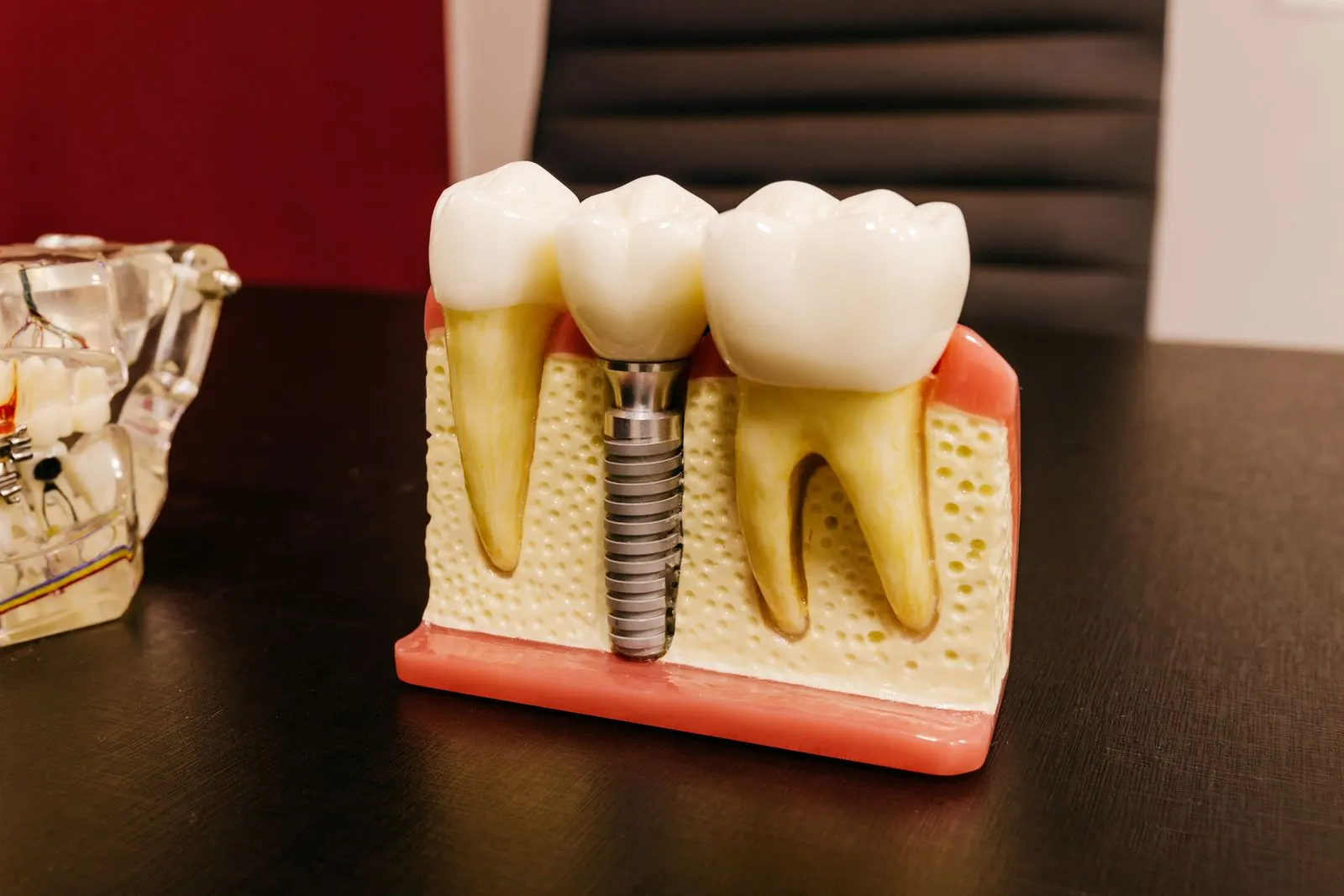
Lesson: an implant has three parts: the titanium post in the bone, a connector called an abutment, and the crown. A screw-retained crown can be removed and refitted by a dentist, which makes later repairs much easier than with a cemented bridge.
2. Shane MacGowan: a full mouth rebuilt
For years the late Pogues singer was known for having very few teeth. In 2015 it was widely reported, and filmed for a television programme, that he underwent a long procedure to receive a full set of implant-supported teeth, including a gold-coloured tooth as a personal touch.
Lesson: people with very few or no teeth left can often still receive fixed teeth on implants, sometimes with bone grafting. Full-arch concepts such as All-on-4 were developed for exactly this situation.
3. Kanye West: titanium teeth
In early 2024 Kanye West appeared with a set of titanium teeth. Media reports described it as a permanent titanium prosthesis rather than a removable grill, and some coverage suggested that natural teeth had been replaced. Whether the work is implant-supported has not been clearly established in public. We look at the case in detail in our article on Kanye West’s titanium teeth.
Lesson: titanium is the standard material for implant posts, but it is almost never used as the visible tooth surface. Visible teeth on implants are normally zirconia or ceramic.
4. Jim Carrey: a crown, not an implant
It is widely reported that Carrey chipped a front tooth as a child and later had it covered with a cap, and that he removed the cap to play Lloyd in Dumb and Dumber (1994).
Lesson: a chipped or broken tooth whose root is healthy does not need an implant. A crown or veneer keeps the natural root, which is almost always better. Implants are for teeth that are missing or cannot be saved.
5. Steven Tyler: a fall and damaged front teeth
In 2011 the Aerosmith singer reportedly fell in a hotel bathroom during a South American tour and injured his face and front teeth. Reports said he was back on stage soon afterwards with the teeth repaired. How the teeth were restored has not been detailed publicly.
Lesson: after trauma, the first step is to stabilise and protect. If a tooth is knocked out or split below the gum, dentists usually extract, allow healing, and place an implant when the bone is ready, often using a temporary in the meantime.
6. Tiger Woods: a front tooth lost on the slopes
In 2015 Woods was photographed with a damaged front tooth in Italy; his representatives said it was hit by a video camera. The exact treatment has not been published.
Lesson: a same-week repair is often a temporary solution. The permanent choice between a crown, a root treatment and an implant depends on the root, which only an X-ray or 3D scan can show.
7. Nicolas Cage: teeth removed for a role
For the 1984 film Birdy, Cage has been widely reported to have had teeth removed to feel his character’s pain. Accounts of the details vary, and how the teeth were later replaced has not been publicly detailed.
Lesson: a tooth is removed in minutes; replacing it well takes months of healing and planning. Each missing tooth also lets the bone shrink, which is why timing matters.
How dental implants work
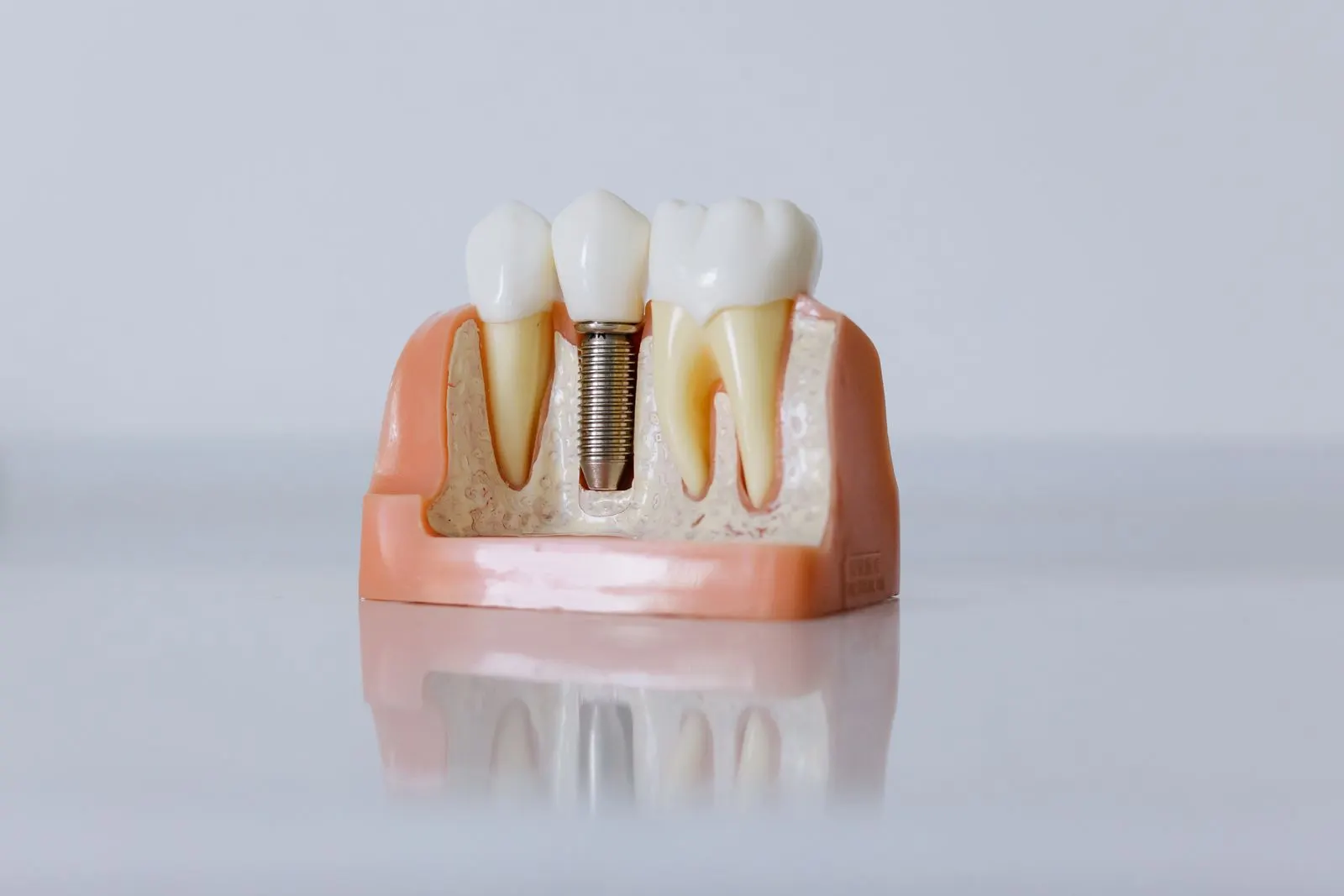
An implant is a small screw, usually titanium (grade 4 or grade 5 alloy) or occasionally zirconia, placed into the jawbone. Over roughly 3 to 6 months the bone grows tightly onto its surface, a process called osseointegration. An abutment is then connected and a crown, bridge or full-arch bridge is fitted on top.
Key facts:
- Bone is essential. A typical implant is 3.5 to 5 mm wide and 8 to 13 mm long and needs enough bone around it. If there is not enough, bone grafting or a sinus lift is done first or at the same time.
- 3D planning. A CBCT scan shows bone height, width and the position of nerves and sinuses before surgery.
- Brands matter. Established systems have long-term research and spare parts available worldwide. Doctor Turka works with systems such as Straumann, Nobel Biocare, Osstem, Hiossen, Medentika, Swiss Implant and Aggressor.
More on our dental implants and single tooth implant pages.
Implants compared with the alternatives
| Option | Neighbouring teeth | Bone preservation | Typical lifespan | Trips to Istanbul |
|---|---|---|---|---|
| Single implant + crown | Untouched | Yes, loads the bone | Implant often decades; crown 10 to 15 years or more | 2 |
| Conventional bridge | Two teeth prepared for crowns | No, bone under the gap shrinks | About 10 to 15 years | 1 |
| Adhesive (Maryland) bridge | Minimal preparation | No | Variable, can debond | 1 |
| Removable partial denture | Clasps on teeth | No | 5 to 10 years | 1 |
| Full-arch on 4 to 6 implants | Replaces the whole arch | Yes | Implants often decades; bridge renewed over time | 2 |

Lifespan, success rates and risks
Studies typically report 10-year implant survival above 95 % in healthy, non-smoking patients. That does not mean nothing can go wrong. The main risks:
- Failure to integrate: a small percentage of implants do not bond to bone, usually in the first months. It is normally replaced after healing.
- Peri-implantitis: gum and bone inflammation around an implant, similar to gum disease. Cleaning and regular check-ups are the defence.
- Nerve or sinus complications: rare with proper 3D planning.
- Aesthetic problems in the front: thin gum or bone can lead to a grey shadow or a longer-looking tooth.
Higher risk groups: heavy smokers, poorly controlled diabetes, a history of radiotherapy to the jaw, some bone medications (bisphosphonates, denosumab), and untreated gum disease. These do not always rule implants out but must be discussed.
Who implants are not suitable for, and the alternatives
- Growing teenagers: implants wait until jaw growth is complete, often around 18 to 20 or later. Ed Helms-type cases use a temporary bridge or retainer until then.
- Patients who cannot have minor surgery for medical reasons.
- Patients unwilling to stop or reduce smoking around surgery.
For them a bridge, an adhesive bridge or a denture may be the better choice.

How implants are planned in Istanbul
You start by leaving your contact details. A patient coordinator who speaks English and German calls or writes, a dentist assesses your case, and you receive a written, itemised plan. An existing X-ray can be useful if you have one, but the CBCT is taken in the clinic.
| Stage | What happens | Time in Istanbul |
|---|---|---|
| Trip 1 | CBCT scan, planning, extractions if needed, implant placement, temporary if in the smile zone | Usually 3 to 5 days |
| Healing at home | Osseointegration | About 3 to 6 months |
| Trip 2 | Scan, try-in and fitting of the final crown or bridge | Usually 5 to 7 days |
Full-arch cases often receive fixed temporary teeth within days of surgery. Our guide on how long dental implants take in Turkey covers the timelines.
What to ask a clinic, and red flags
- Which implant brand and system, and will I receive its documentation?
- Will a CBCT scan be done, and is the surgery guided?
- Is bone grafting needed, and is it in the quote?
- What is the final crown or bridge made of, and who is my dentist?
- What does the written guarantee cover once I am home, and how are problems handled?
Red flags: one-trip promises for single implants in all cases, no 3D scan, unbranded implants, no named dentist, and pressure to decide on the day. Our article on whether dental implants in Turkey are safe goes further.
What implants commonly cost at home
A single implant with crown is commonly quoted at roughly £2,000 to £3,000 or more in the UK, about €2,000 to €3,500 in Germany and often $3,000 to $5,000 in the US, before grafting. Our starting prices are on the costs page, and your plan lists every component.
Doctor Turka has not treated the person named in this article. Details about their dental work come from public interviews and media reports; we comment only on what the treatments involve in general.
Sources
- Ed Helms: Tag Me In (NPR, Ask Me Another)
- Shane MacGowan shows off brand new set of teeth after undergoing 'Everest of dentistry' (NME)
- Steven Tyler Says Nasty Fall in the Shower Not a Relapse (ABC News)
- Long-term (10-year) dental implant survival: A systematic review and sensitivity meta-analysis (Howe et al., Journal of Dentistry 2019)
Want a personal opinion?
Leave your contact details. Our patient coordinator will contact you to discuss your needs and explain the next steps, free and without obligation.
Discuss my options