 Dr. Hatice G
What is composite bonding? It is a cosmetic dental treatment in which tooth-coloured composite resin is sculpted directly onto your teeth, hardened with a curing light and polished. Composite bonding is used to repair chips, close small gaps, even out edges and refine tooth shape. It usually needs little or no drilling and can often be finished in a single appointment.
The same material is used for white fillings, so bonding is essentially cosmetic sculpting with filling resin. When bonding covers the whole front surface of a tooth, it is often called a composite veneer, which we describe on our composite veneers treatment page. This guide explains what bonding can and cannot do, how the appointment works, how it compares with veneers and how to look after it.
What is composite bonding made of?
Composite resin is a mix of fine glass or ceramic particles in a plastic (resin) base, with a setting agent that hardens it. The Oral Health Foundation describes white fillings in exactly these terms. The material comes in many shades and translucencies, so a dentist can layer it to imitate enamel and dentine.
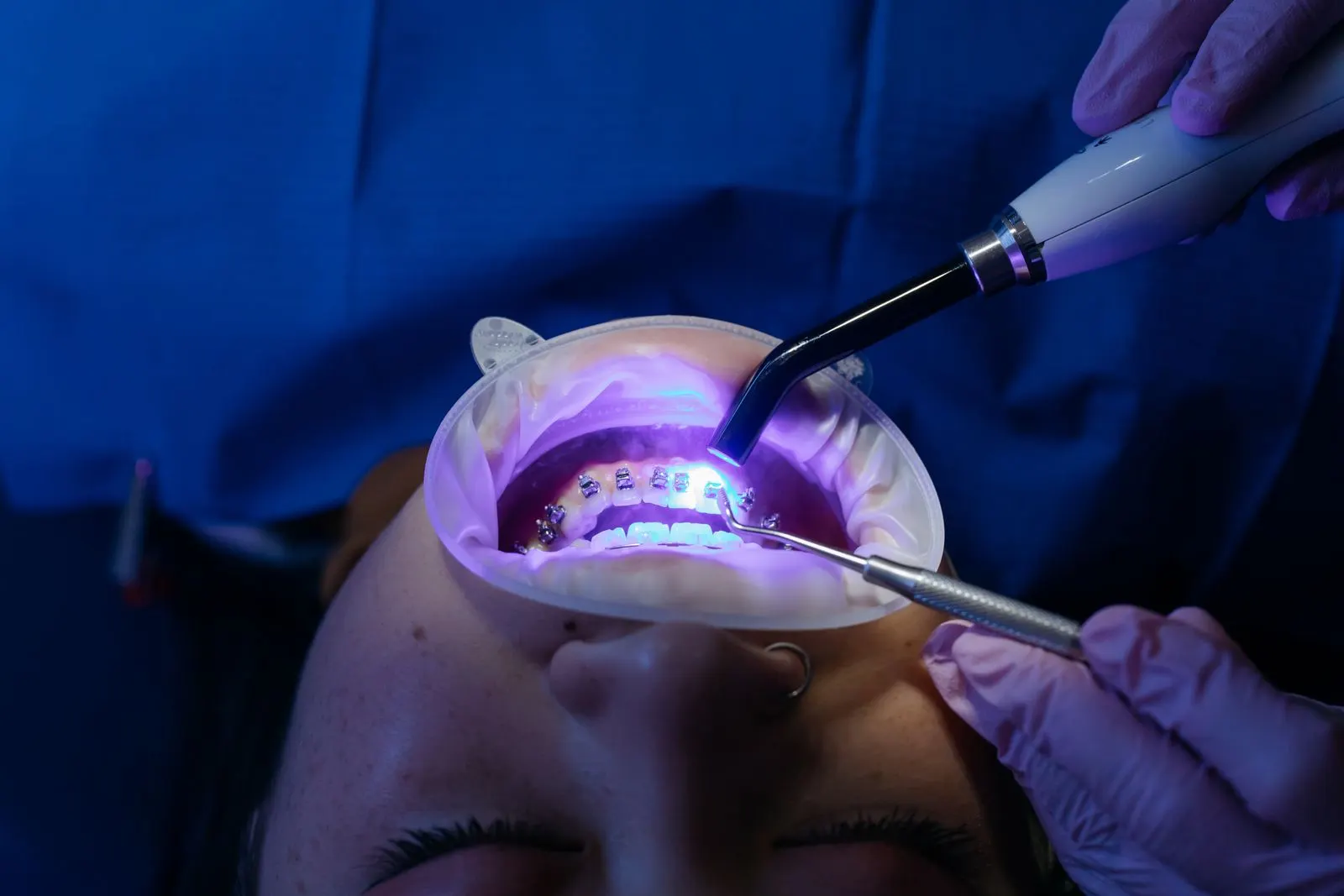
Bonding works because the resin attaches to the tooth surface. The dentist cleans the enamel, roughens it slightly and applies a conditioning liquid and adhesive. The resin is then added in thin layers, each hardened with a blue curing light, before the final shape is refined and polished. Because the material is added rather than the tooth being cut down to fit a pre-made shell, natural tooth structure is usually preserved.
What can composite bonding fix?
Composite bonding teeth treatment suits small to moderate cosmetic problems on otherwise healthy teeth:
- Chipped or worn edges, for example a corner knocked off a front tooth.
- Small gaps between front teeth, including a gap in the centre.
- Uneven lengths or shapes, such as one tooth that looks shorter or narrower than its neighbour.
- Minor discolouration on a single tooth that does not respond to whitening.
- Slightly rotated or crowded teeth, where the visual effect can be softened without moving the tooth.
- Exposed root surfaces, which Colgate lists as another use.
The Oral Health Foundation also notes that white filling material can be used much like veneers to cover unsightly marks on front teeth.
What composite bonding cannot fix
Bonding is a surface treatment, so it has real limits:
- Bite problems. Colgate notes bonding is not suitable when the bite itself is misaligned and needs correcting, for example a large overbite. Adding resin to teeth that hit heavily can lead to repeated chipping.
- Badly broken or heavily filled teeth. If too little tooth remains to build on, a dental crown or onlay usually gives more strength.
- Significant crowding or spacing. Large gaps or crooked teeth may need clear aligners first; bonding alone would make teeth look bulky.
- Dark, root-filled or heavily stained teeth. Thin resin may not mask strong discolouration well.
- Active decay or gum disease. These must be treated first, because bonding over them hides the problem rather than solving it.
A dentist needs to examine your teeth, gums and bite before saying whether bonding is a sensible option.
Questions to ask before you agree to bonding
- Are my gums healthy, and is there any decay that needs treating first?
- Does my bite put heavy force on the edges you plan to build up?
- Will any enamel be removed, and if so, how much and why?
- Should I whiten first so the resin matches my final shade?
- How many teeth really need bonding for a balanced result?
- How often will it need polishing, and what would a repair involve?
- Which alternative would you choose for my teeth, and why?
A good consultation also explains when bonding is not the best choice. Be cautious of anyone who promises a specific result without examining you.
How does the composite bonding appointment work?
A typical appointment follows these steps:
- Assessment and planning. The dentist checks the health of your teeth and gums, looks at your bite and discusses the result you want. Some practices use a digital smile design or a quick trial in resin so you can see the proposed shape.
- Shade selection. The resin colour is chosen to blend with your natural teeth, ideally before teeth dry out during treatment.
- Preparation. The enamel is cleaned and roughened, then a conditioning gel and adhesive are applied. Drilling is usually minimal or unnecessary, and local anaesthetic is often not needed.
- Layering and curing. Resin is applied in layers and hardened with the curing light.
- Shaping and polishing. The dentist refines the outline, checks how your teeth meet and polishes the surface to a natural shine.
How long does composite bonding take?
Colgate, citing Cleveland Clinic, puts treatment at roughly 30 to 60 minutes per tooth. A small chip can be faster, while bonding on six or eight front teeth is a longer session and is sometimes split over two visits. If you plan to whiten your teeth, that is done before bonding, which adds time to the overall plan.

Edge bonding vs full bonding vs composite veneers
These terms describe how much of the tooth surface is covered:
| Type | What is covered | Typical use | Points to weigh |
|---|---|---|---|
| Edge bonding | The biting edges only | Chipped, worn or uneven edges | Least material; edges take the most force, so chips can recur |
| Partial bonding | Part of the front surface or sides | Closing small gaps, adding width | Blends well when the tooth colour is already good |
| Composite veneer (full bonding) | The whole visible front surface | Changing shape and shade of several teeth | More material to maintain; more prone to staining over time |
Whichever version you have, the material and technique are the same. The more surface that is covered, the more polishing and maintenance it will need.
Composite bonding vs veneers: how do they compare?
Bonding is often weighed against porcelain veneers. The Oral Health Foundation describes veneers as thin coverings fixed to the front of a tooth, made from porcelain or composite, usually over more than one visit with a small amount of enamel removed.
| Factor | Composite bonding | Porcelain veneers |
|---|---|---|
| Tooth removal | Usually little or none | Usually a small amount of enamel |
| Appointments | Often one | Usually two or more, with lab work |
| Stain resistance | Lower; resin can pick up stains | Higher |
| Repair | Chips can often be repaired in the mouth | Small chips may be repaired, larger damage often means a new veneer |
| Maintenance | Regular polishing and occasional touch-ups | Less frequent maintenance |
Colgate notes that bonding removes less natural tooth than crowns or veneers but is less stain-resistant and more prone to damage. For a fuller comparison, including how costs differ, see composite bonding vs veneers. On the NHS, veneers are generally only available privately unless there is a clinical need, so ask your dentist whether any part of your treatment would qualify.

How long does composite bonding last, and what affects it?
Colgate, citing Cleveland Clinic, reports that bonding materials can last between three and ten years, depending largely on oral hygiene. The Oral Health Foundation notes that the lifespan of white filling material depends on its location, its size, your bite and chewing habits and how well you look after your teeth.
The honest limits to know before you start:
- Staining. Resin can absorb colour from coffee, tea, red wine and smoking, especially at the margins.
- Chipping. Edges can chip, particularly with nail biting, chewing pens or grinding.
- No whitening later. The Oral Health Foundation states that whitening will not work on fillings, crowns or veneers. Bonding keeps its shade, so whiten first if you want lighter teeth.
- Wear and dulling. The surface gloss fades over time and needs re-polishing.
Our separate article on how long composite bonding lasts goes into maintenance and replacement in more detail.
Aftercare: how to look after bonded teeth
- Brush twice a day for two minutes with a soft brush and a non-abrasive toothpaste.
- Clean between the teeth daily; check that floss passes smoothly at the bonded edges.
- Limit strongly coloured drinks and rinse with water afterwards.
- Do not bite nails, pens, ice or packaging with bonded teeth.
- Ask about a night guard if you grind or clench.
- Keep regular check-ups and hygiene visits so the bonding can be polished and small chips repaired early.
For any cosmetic treatment, the Oral Health Foundation's Safe Smiles campaign advises choosing a registered dental professional and a licensed practice.
Composite bonding in Istanbul with Doctor Turka
Our dentists in Ataköy, Bakırköy, check your teeth, gums and bite first and tell you honestly whether bonding, veneers or another option suits your goals. You receive a free treatment plan in writing before you travel, and current prices are on our dental costs page. Read how treatment with us works or contact us on WhatsApp or through the contact page.
Want a personal opinion?
Leave your contact details. Our patient coordinator will contact you to discuss your needs and explain the next steps, free and without obligation.
Discuss my options