 Dr. Hatice G
How long does teeth whitening last? Professional whitening is not permanent. The NHS says that if you follow your dentist's advice, the effect may last for around three years, and the Oral Health Foundation gives a similar "up to three years". How long your own result lasts depends mostly on what you eat and drink, whether you smoke and how you look after your teeth.
That three-year figure is a rough guide, not a promise. Some people keep a noticeably lighter shade for longer, while others see it drifting back within months. This guide explains why, how the main whitening methods compare, what top-ups involve and why some teeth, such as veneers and crowns, never change colour at all. If you are considering treatment, our professional teeth whitening page explains how we approach it.
How long does teeth whitening last with each method?
UK health sources describe whitening longevity in the same way for all professional methods: temporary, variable and heavily influenced by habits. The NHS and the Oral Health Foundation do not give a separate lifespan for in-practice versus home whitening, so be wary of any provider that promises one method will "last twice as long".
What differs is how the result is reached:
| Method | How it works | Typical course (UK sources) | Notes |
|---|---|---|---|
| Dentist-supplied home trays | Custom trays filled with a prescribed gel and worn at home | Around 2 to 6 weeks (NHS) | The most common professional method according to the Oral Health Foundation; trays can be kept for later top-ups |
| In-practice (power or laser) whitening | Gel applied in the chair and activated with a light or laser | Usually 1 appointment of around 1 to 2 hours (NHS) | Faster; results still fade at a rate set by your habits |
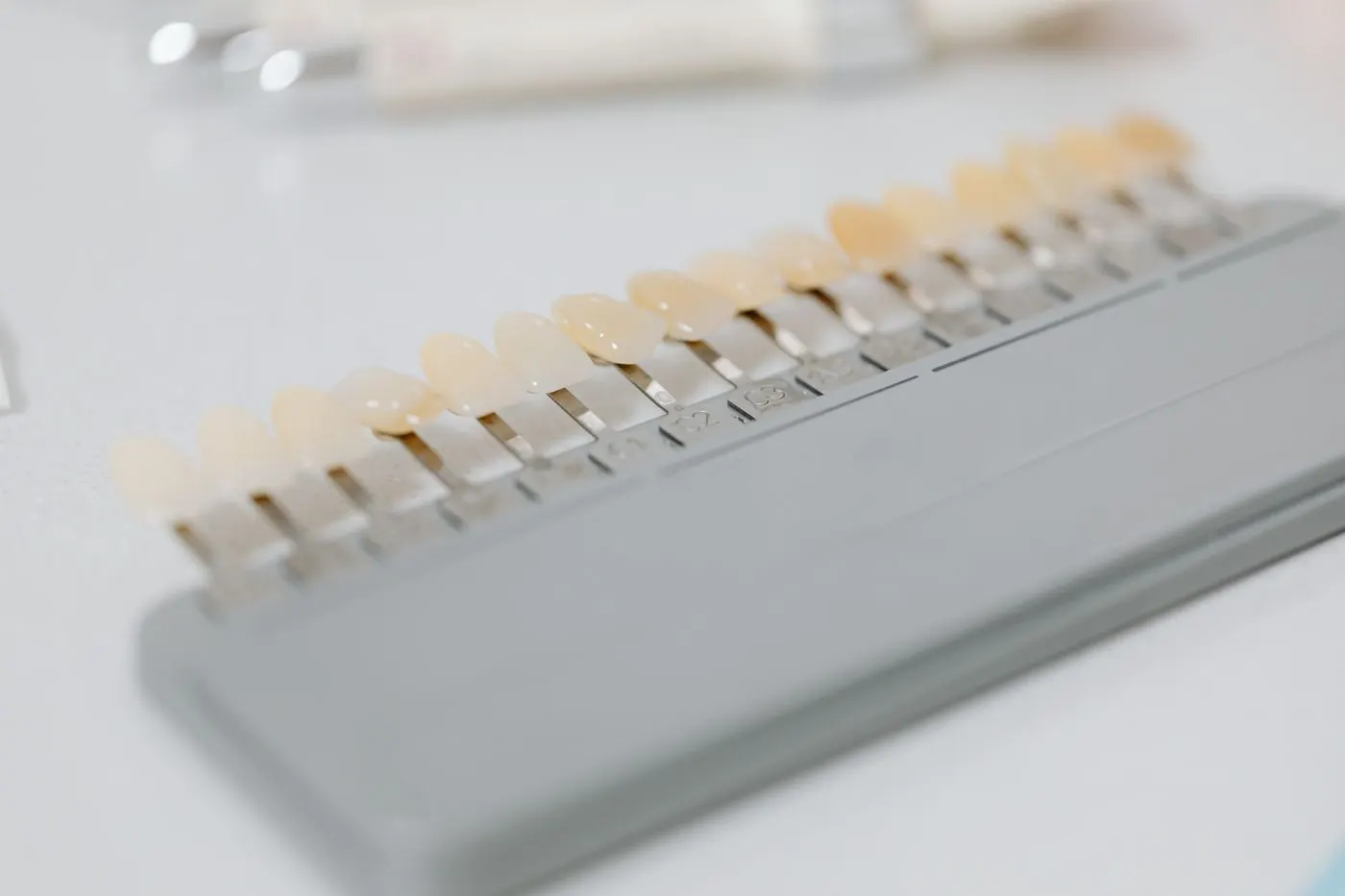
| Combined approach | A session in the chair followed by home trays | Several weeks overall | Often used to reach a lighter shade more evenly |
| Over-the-counter kits | Strips, paint-on gels and generic trays | Varies | Limited to 0.1% hydrogen peroxide in the UK, which the Oral Health Foundation describes as too weak to be effective |
The Oral Health Foundation notes that a full course with trays usually takes two to four weeks and involves two or three dental visits, with gel worn for anything from 30 minutes to overnight depending on the product.
Why does whitening fade?
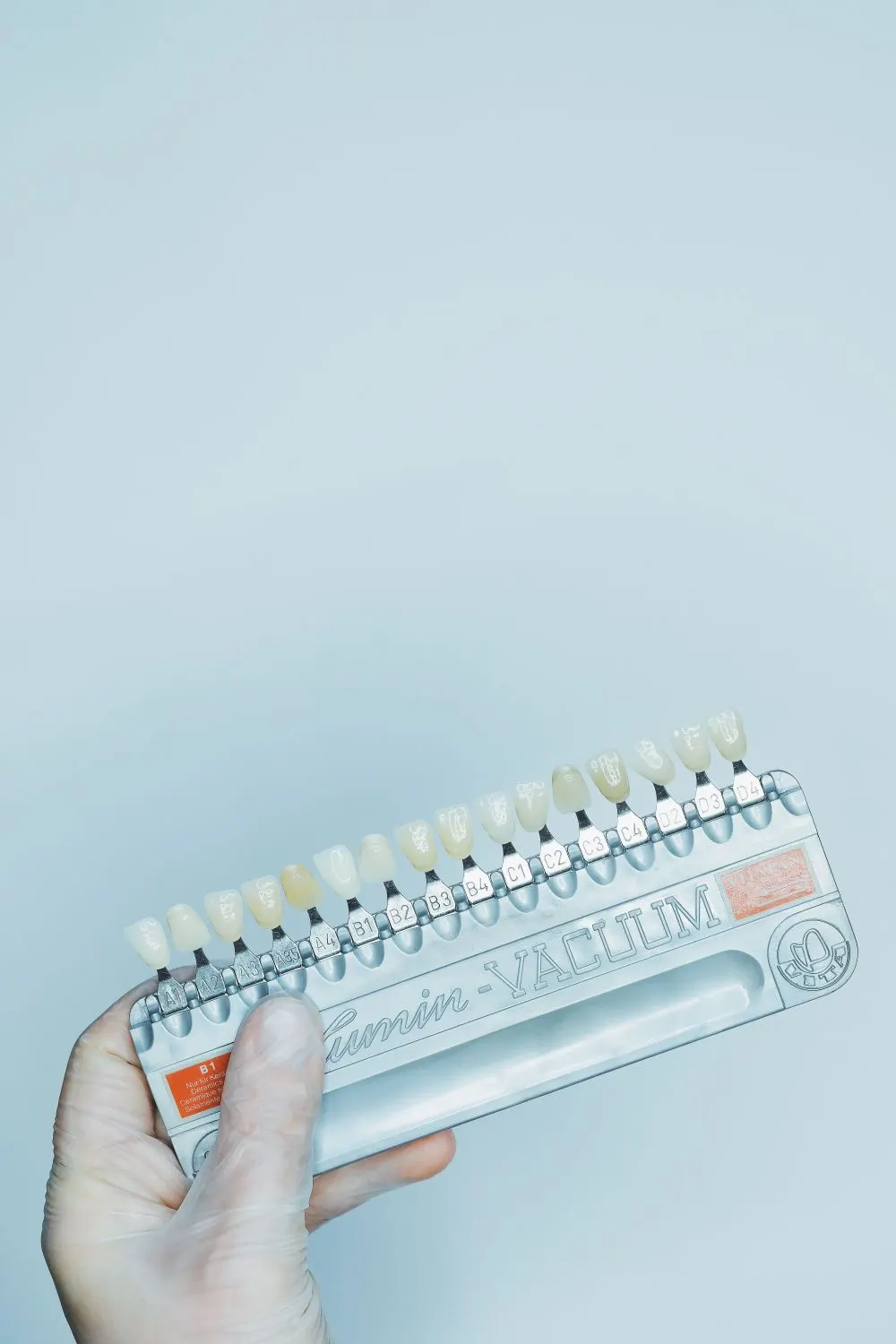
Whitening gels release oxygen that breaks down coloured molecules inside the tooth. Once the course stops, nothing prevents new pigment from building up again. The Oral Health Foundation lists tea, coffee, red wine and blackcurrant as common staining drinks and names smoking as a major cause of discolouration. It also says that smoking and staining food and drink shorten the effect of whitening.
Some staining comes from inside the tooth rather than the surface. The Oral Health Foundation mentions deeper staining from certain antibiotics and from tiny cracks in the teeth. This type of discolouration may respond less predictably, which is one reason a dentist needs to examine your teeth before you start.
Natural ageing also plays a part. Enamel wears gradually over the years and the darker dentine underneath shows through more, so even without any staining habits, teeth tend to darken slowly over time.
How can you make teeth whitening last longer?
There are no shortcuts, but a few habits make a real difference:
- Cut down on staining drinks such as tea, coffee and red wine. Rinsing with water afterwards can help limit how long they sit on the teeth.
- Stop smoking. Tobacco is one of the strongest causes of surface staining and also harms gum health.
- Brush twice a day with fluoride toothpaste and clean between your teeth, so plaque does not trap pigment.
- Keep up regular check-ups and hygienist visits. Professional cleaning removes surface stain before it becomes noticeable.
- Do not rely on shop-bought products to maintain the shade. The Oral Health Foundation notes that over-the-counter kits are limited to 0.1% peroxide and are often too weak to be effective, and some are more acidic, which can harm teeth and gums.
Do you need top-ups, and how do they work?
Most people who want to keep a lighter shade will need occasional top-ups. The usual approach is to reuse the custom-made trays from your original course with a fresh supply of gel from your dentist. How often depends on your habits and the shade you are happy with, so your dentist should set the plan rather than a fixed calendar.
The legal rules also shape top-ups. The General Dental Council's position statement explains that for each whitening cycle, the first use must be carried out by a dental practitioner or under their direct supervision, and that use must be limited in frequency and duration. In other words, a top-up is a short, supervised course, not unlimited gel at home.
Over-whitening is not a good idea. Repeated courses without a dentist's oversight increase the risk of sensitivity and gum irritation, and there is a natural limit to how light each person's teeth can go.
What happens before and during professional whitening?
Safe whitening starts with an examination rather than with the gel. The General Dental Council's position statement makes a clinical examination a condition of using professional-strength products, so that risk factors and oral disease can be ruled out first. Decay, leaking fillings and gum disease need treating before any bleaching, and the dentist should explain what will and will not change colour.
A typical course with a dentist follows a familiar pattern:
- an examination and, often, a clean to remove surface stain, so that the starting shade is clear,
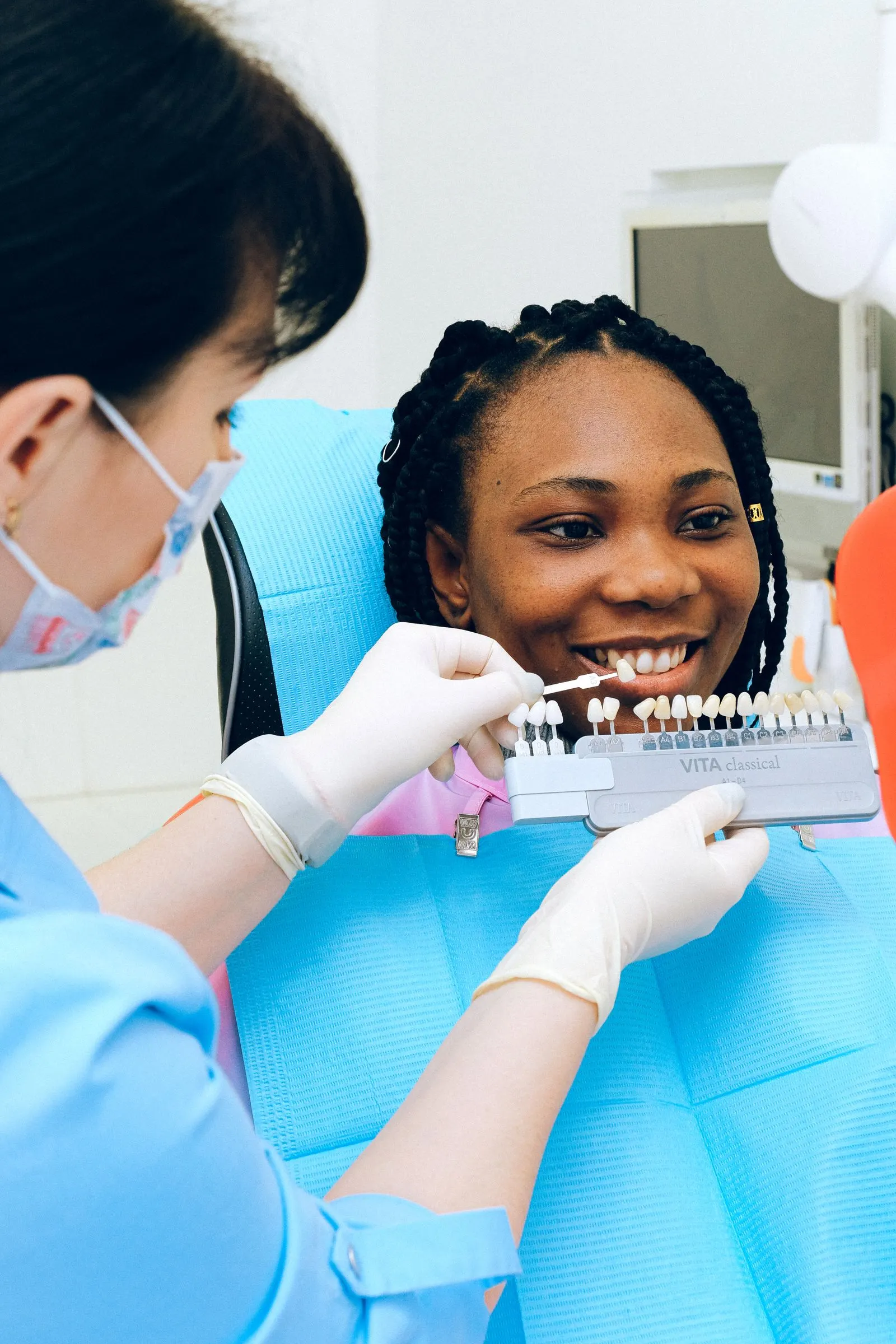
- recording the starting shade, so that progress can be judged honestly,
- protecting the gums with a shield or paste, which the NHS says your dentist should use,
- either an in-chair session or impressions for custom trays, followed by home use as instructed,
- a review to check the result and any sensitivity.
It is worth discussing expectations at this stage. Every tooth has a natural limit, existing restorations will not change colour, and some types of internal discolouration respond less predictably. A good dentist will tell you if whitening is unlikely to give the result you want.
Can you whiten veneers, crowns or composite bonding?
No. Whitening only works on natural teeth. The Oral Health Foundation states that whitening will not change the colour of crowns, veneers or dentures, and the NHS says whitening is not recommended for people with crowns, dentures or implants because it can only lighten natural teeth. Composite bonding and tooth-coloured fillings are made of resin, so they will not lighten either.
This matters in two situations:
- If you already have veneers, crowns or bonding, whitening your natural teeth may leave the restorations looking darker by comparison. Your dentist may need to replace or adjust them afterwards to match, so discuss this before you start.
- If you are planning new restorations, whitening is usually done first. Once the shade has settled, veneers, crowns or bonding can be matched to the new colour. You can read more about how long veneers last and about what composite bonding involves.
Porcelain veneers hold their colour well, but they cannot be bleached lighter later. If you want a much brighter smile on several front teeth, a dentist may discuss veneers as an alternative, which involves preparing the teeth and is a bigger, less reversible decision than whitening.
Is sensitivity after whitening normal?
Sensitivity is the most common side effect. The NHS and the Oral Health Foundation both mention teeth becoming sensitive to cold, along with sore gums, a sore throat and white patches on the gum line. The Oral Health Foundation says these effects are usually temporary and should disappear within a few days of treatment finishing.
Your dentist can reduce the risk by protecting the gums during in-practice whitening, adjusting how long you wear home trays and suggesting a toothpaste for sensitive teeth. If sensitivity is severe or lasts beyond a few days, stop and contact your dentist.
Whitening is not suitable for everyone. The NHS says it is not done for anyone aged 17 or younger, or for people with unhealthy teeth or gums, and is not recommended during pregnancy or breastfeeding. Decay and gum disease should be treated first.
Who can legally whiten teeth in the UK?
In the UK, teeth whitening is a dental procedure. According to the General Dental Council, products containing more than 0.1% and up to 6% hydrogen peroxide can only be supplied through dental professionals, and only after a clinical examination. Products above 6% are prohibited for cosmetic use. Whitening may be provided by a registered dentist, or by a dental hygienist, dental therapist or clinical dental technician working to a dentist's prescription.
The Oral Health Foundation warns that whitening from unqualified providers, such as beauty salons, can harm teeth and gums. Before booking, check that the person treating you is on the GDC register and that an examination is part of the process.
Whitening in Istanbul with Doctor Turka
Our dentists in Ataköy, Bakırköy (Istanbul) examine your teeth and gums first and confirm whether whitening is suitable, and you receive a free written treatment plan before you travel. Starting prices are listed on our dental costs in Turkey page. To understand the steps, read how it works or get in touch through our contact page or WhatsApp.
Want a personal opinion?
Leave your contact details. Our patient coordinator will contact you to discuss your needs and explain the next steps, free and without obligation.
Discuss my options