 Dr. Hatice G
Root canal treatment removes infected or inflamed pulp from inside a tooth, cleans and disinfects the canals, then seals them so the tooth can be kept instead of extracted. It is done under local anaesthetic, usually over two or more visits, and most root-treated teeth survive for many years, especially when they are protected with a crown afterwards.
This guide walks through each stage of the root canal procedure, what it feels like, and what the evidence says about success. If you are considering treatment abroad, our root canal treatment page explains how we assess and plan it at our clinic in Istanbul.
Root canal treatment is one of the most common ways of saving a tooth, yet it still has a reputation it does not really deserve. The sections below separate what actually happens from what people fear.
When do you need root canal treatment?
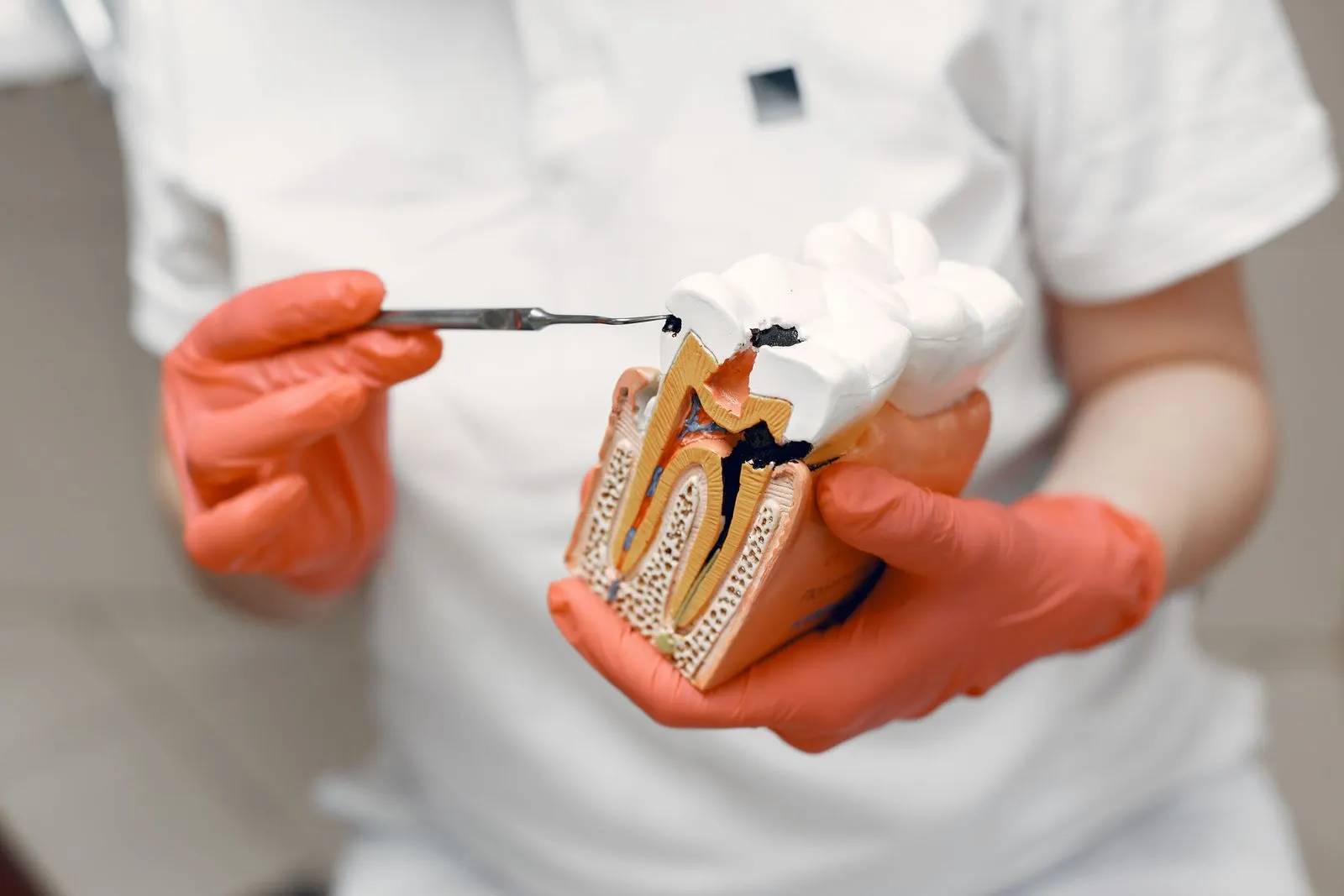
The pulp is the soft tissue in the centre of a tooth, containing nerves and blood vessels. The NHS lists the usual causes of pulp infection as tooth decay, gum disease, a chipped, broken or cracked tooth, or a dental abscess. The American Dental Association adds that repeated dental work on the same tooth or an injury can also damage the pulp, even without a visible crack.
Common warning signs include:
- lingering pain, especially when biting or after hot or cold food and drinks,
- throbbing pain that wakes you at night,
- swelling of the gum or face near a tooth,
- a small "spot" on the gum that leaks pus, which can mean an abscess,
- a tooth that has darkened after a knock.
Some infected teeth cause no symptoms at all and are only found on an X-ray. Equally, a sensitive tooth does not automatically need a root canal. Only a dentist can decide, using tests and imaging.
The root canal procedure step by step
The details vary between teeth and dentists, but the sequence below reflects what the NHS, the Oral Health Foundation and the British Endodontic Society describe.
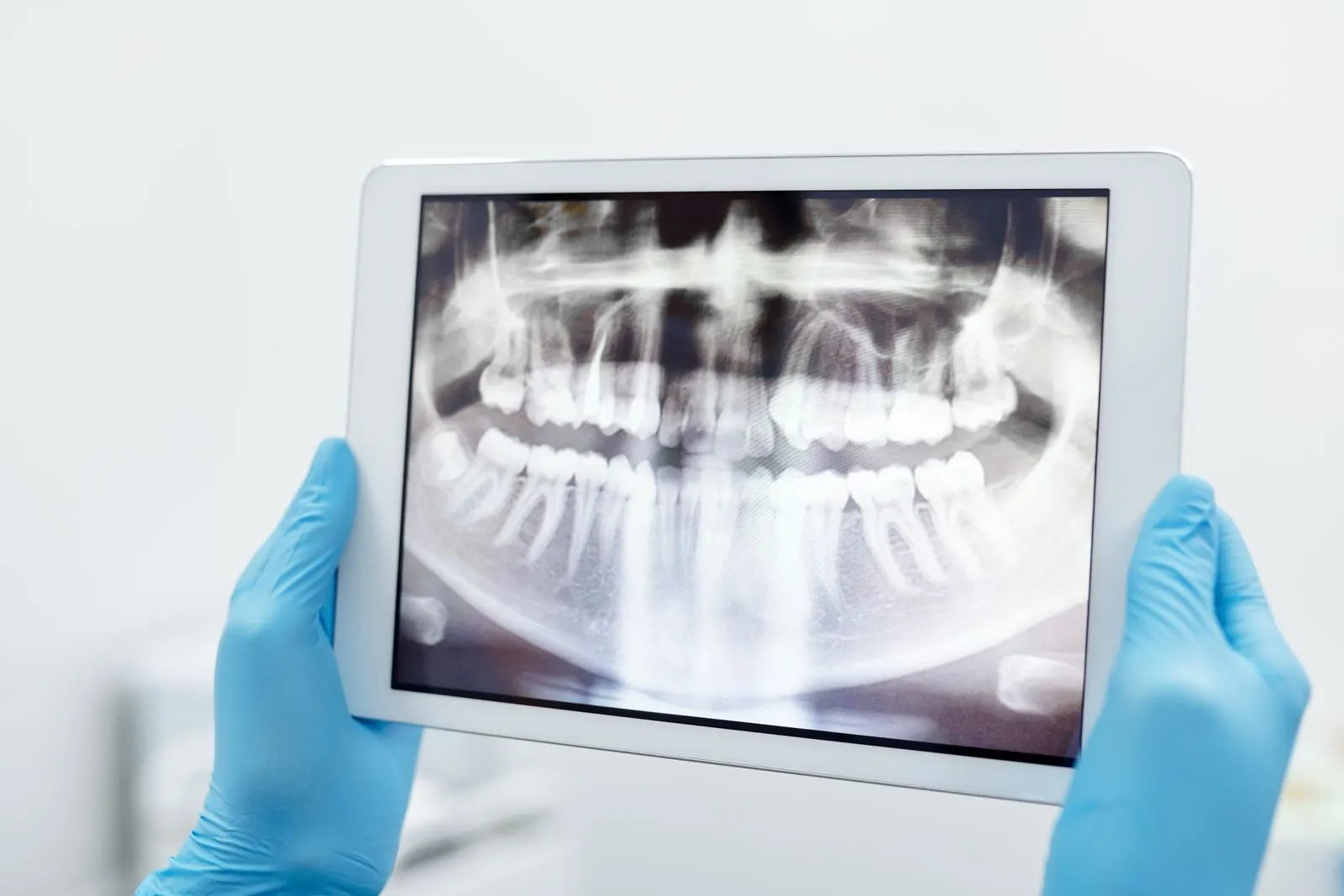
1. Examination and X-ray
The dentist checks the tooth, tests how it responds, and takes an X-ray to see the roots and the bone around them. At this stage they also decide whether the tooth can be restored at all. The British Endodontic Society notes that predictable results need enough healthy tooth above the gum: at least 2mm of structure all the way round, and not less than 30% of the original crown.
2. Local anaesthetic
The area is numbed with local anaesthetic. You stay awake, but you should not feel pain during the treatment.
3. Isolation with a rubber dam
A thin sheet of rubber (or a latex-free alternative) is placed around the tooth. This keeps saliva and bacteria out of the canals and stops instruments or solutions reaching your throat. The British Endodontic Society describes rubber dam use as mandatory for root canal treatment.
4. Access opening
The dentist makes a small opening through the top of the tooth to reach the pulp chamber and the entrances of the canals.
5. Cleaning and shaping
The infected or dead pulp is removed with fine instruments. The canals are then shaped so they can be disinfected and filled. If there is an abscess, it may be drained at this stage. Molars usually have several canals, some of them narrow or curved, which is why they take longer.
6. Disinfection
Throughout cleaning, the canals are rinsed with antibacterial solutions. If the infection is significant, a medicated dressing may be left inside the tooth under a temporary filling until the next visit.
7. Root filling
Once the canals are clean and dry, they are filled and sealed, usually with a rubber-like material called gutta-percha and a sealer. A temporary or permanent filling then closes the access hole.
8. Final restoration and crown
The tooth needs a durable seal on top to stop bacteria getting back in. Depending on how much tooth is left, this is a filling, an onlay or a crown. The Oral Health Foundation notes that a tooth without a living nerve can become more brittle, which is why back teeth are often crowned. Our guide to what a dental crown is and how it is made covers that final step in more detail.
How many visits does root canal treatment take?
| Situation | Typical number of visits | Why |
|---|---|---|
| Front tooth, no active abscess | Often one or two | Usually a single, straight canal |
| Molar with several canals | Usually two or more | More canals, often narrow or curved |
| Active infection or abscess | Two or more | A medicated dressing may be left between visits |
| Retreatment of an old root filling | Two or more | Old filling material must be removed first |
| Crown after the root canal | One or more extra | Preparation and fitting of the final restoration |
The NHS says treatment usually takes two or more appointments, each lasting about one to two hours. The ADA describes one or two visits for the root canal itself, followed by a separate appointment for the permanent filling or crown.
Does root canal treatment hurt?
For most people, the honest answer is: less than they expect. The procedure is done under local anaesthetic, and the Oral Health Foundation says it should feel similar to having a filling. In practice, the pain people associate with root canals is usually the pain of the infection beforehand, which the treatment is designed to relieve.
Afterwards, it is normal for the area to feel tender:
- numbness can last several hours while the anaesthetic wears off,
- the tooth may be sore when biting for a few days,
- the gum can feel swollen.
The NHS says the area should improve within a couple of weeks and that paracetamol or ibuprofen can help. Contact your dentist if swelling increases, pain gets worse rather than better, or you develop a fever. Antibiotics are not a substitute for root canal treatment, but the ADA notes they may be prescribed if infection has spread.
How successful is root canal treatment?
Success is usually measured in two ways: whether the tooth is still in the mouth (survival) and whether any infection around the root has healed (success). The evidence on survival is reassuring.
In a prospective study of more than 1,600 root canal treatments, Ng, Mann and Gulabivala (International Endodontic Journal, 2011) reported that about 95% of teeth were still present four years after either a first root canal or a retreatment. The same paper cites their earlier systematic review, which found pooled tooth survival of 86% to 93% between two and ten years after treatment.
That review ranked four factors linked to better survival, in order of influence:
- the tooth being restored with a crown after treatment,
- the tooth having neighbouring teeth on both sides,
- the tooth not being used to support a bridge or denture,
- the tooth not being a molar.
The Oral Health Foundation gives a more cautious average of five to ten years for a root-filled tooth, while noting that many last much longer with good care. The British Endodontic Society lists a well-sealed final restoration among the factors linked to a good outcome, which is one reason a temporary filling should never be left in place for months.
What if a root canal fails? Retreatment and apicectomy
A root-treated tooth can become reinfected, for example if a canal was missed, bacteria leak back in under a broken filling, or a crack develops. Signs can include renewed pain, swelling or a gum boil, although some failures only show on an X-ray.
There are usually three options:
- Retreatment: the old root filling is removed, the canals are cleaned again and refilled. In the Ng study, survival after retreatment at four years was similar to first-time treatment.
- Apicectomy: a small surgical procedure in which the tip of the root and the infected tissue around it are removed through the gum, and the end of the canal is sealed. It is mainly used when retreatment through the crown is not possible.
- Extraction: if the tooth is cracked or too damaged to restore, removal and replacement may be the more predictable choice.
An endodontist (a root canal specialist) is often involved in retreatments and complex cases.

Root canal vs extraction: which is better?
| Factor | Root canal treatment | Extraction and replacement |
|---|---|---|
| Keeps your natural root | Yes | No |
| Number of visits | Usually two or more, plus a crown | Extraction, then healing, then an implant, bridge or denture |
| Effect on neighbouring teeth | None | A bridge needs neighbouring teeth to be prepared |
| Bone in the area | Preserved around the root | Bone can shrink after extraction |
| When it is the better choice | Tooth is restorable and gums are healthy | Tooth is cracked into the root, badly broken or has failed repeated treatment |
When a tooth can be saved, root canal treatment is usually the first choice, because no replacement behaves quite like your own root. That said, saving a tooth at any cost is not always sensible. A tooth with very little structure left, or a vertical root fracture, may be better replaced, and our guide to root canal costs in the UK explains how the overall costs of each path compare. For our own starting prices, see the dental costs in Turkey page.
Why unnecessary crowns can lead to root canals
Root canal treatment is not only caused by decay. Preparing a healthy tooth for a crown removes a layer of enamel and dentine all the way round, and the heat and trauma of heavy preparation can irritate the pulp. In some teeth the pulp later dies, and a root canal becomes necessary under a crown that was never medically needed.
This is one of the hidden risks behind so-called "Turkey teeth", where full sets of crowns are placed on healthy teeth for purely cosmetic reasons. If your teeth are healthy and you want a cosmetic change, ask whether veneers, bonding or whitening could achieve it with less tooth removal. Our article on what "Turkey teeth" means and how to avoid it explains the questions to ask before any crown or veneer treatment.
Having root canal treatment in Istanbul with Doctor Turka
At our clinic in Ataköy, Bakırköy, our dentists examine the tooth and its X-rays before deciding whether it can be saved, and you receive a free written treatment plan before you travel. Because root canals often need more than one visit and a crown afterwards, the plan sets out the timing so you know how long to stay. You can read how treatment with us works or contact us via WhatsApp or our contact page.
Sources
- Root canal treatment (NHS)
- Root canal treatment (Oral Health Foundation)
- Root Canals (American Dental Association, MouthHealthy)
- Ng, Mann, Gulabivala: A prospective study of the factors affecting outcomes of nonsurgical root canal treatment, part 2: tooth survival. International Endodontic Journal 2011
- British Endodontic Society: A Guide to Good Endodontic Practice (2022)
Want a personal opinion?
Leave your contact details. Our patient coordinator will contact you to discuss your needs and explain the next steps, free and without obligation.
Discuss my options