 Dr. Hatice G
Search for Cristiano Ronaldo's teeth and the before-and-after pictures are striking. The teenager who arrived at Manchester United in 2003 had a visibly crowded upper arch, uneven front teeth and a darker natural shade. The Ronaldo on today's billboards has straight, evenly proportioned and bright teeth that still look like real teeth rather than a row of identical tiles.
Ronaldo has never published a list of treatments, and nothing here should be read as confirmed fact about his dental records. What follows is what photos over two decades suggest, and, more usefully, the order in which a careful dentist would plan a similar change for you.
Cristiano Ronaldo's teeth before and after: what the photos suggest
Comparing images from his early career with recent ones, three changes stand out:
- Alignment. The crowding and slightly rotated front teeth of the early photos are gone. The arch is broader and the teeth sit in an even curve.
- Colour. The shade is noticeably brighter, but still has some natural variation rather than a flat white.
- Shape and edges. The front teeth appear more uniform in length and width, with a smooth, even edge line.
Each of these changes corresponds to a different treatment. Alignment comes from orthodontics, colour from whitening or ceramics, and uniform shape usually from veneers or bonding. The fact that his result still looks natural suggests they were done in a sensible order.
What has and has not been confirmed
It is widely claimed online that Ronaldo wore braces as a young player, and photos suggest his teeth became straighter within his first few seasons in England. Many cosmetic dentists commenting on his smile believe that porcelain veneers were later placed on the upper front teeth, based on the uniform shape and shade. He has not publicly confirmed the details.
So treat the sequence below as an informed reading of photos, and as a template for good practice rather than his treatment record.
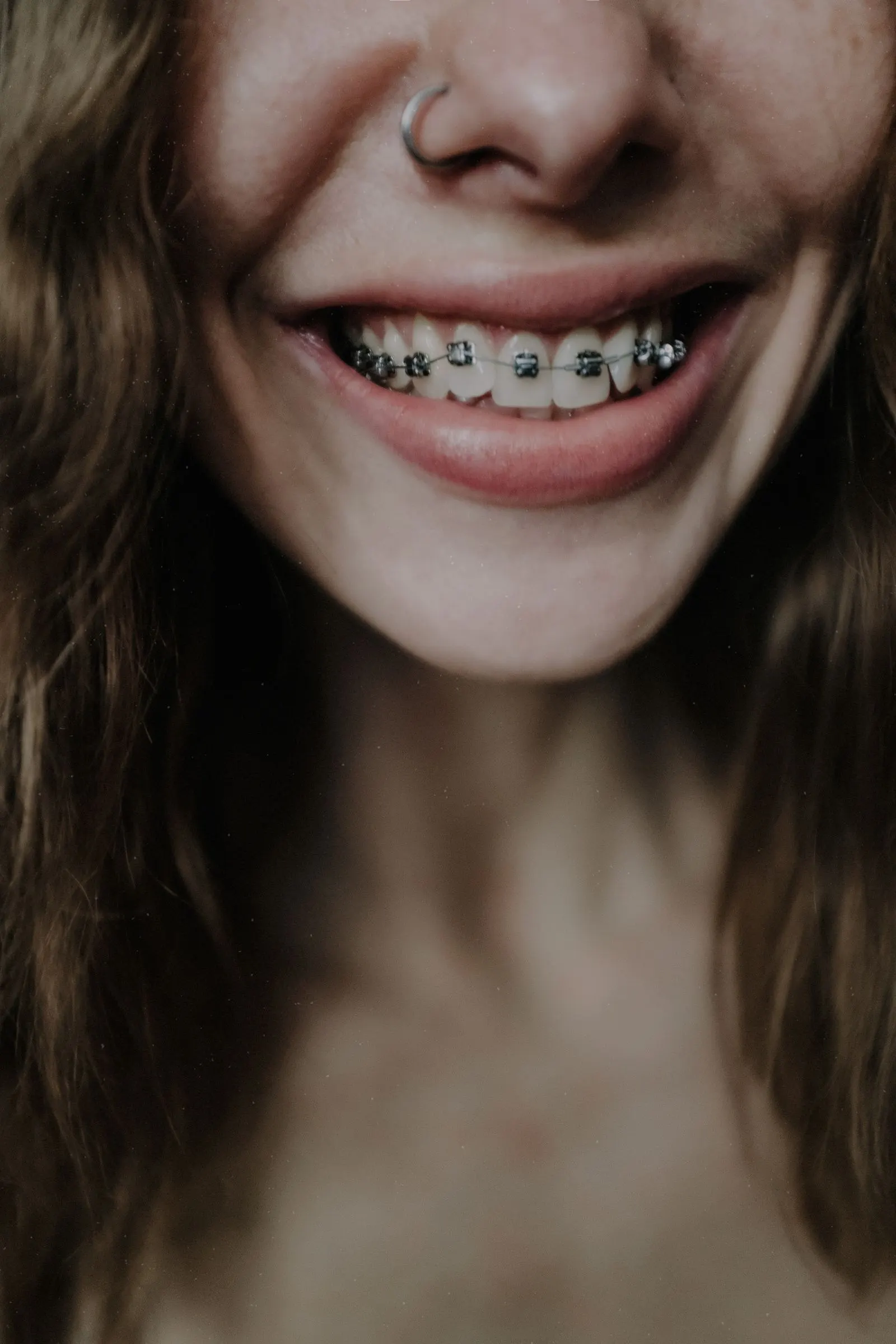
Step 1: straightening the teeth first
Crowding is a position problem. It can be solved by moving teeth or by covering them. Moving them is almost always the better option for healthy teeth, because it preserves enamel.
| Fixed braces | Clear aligners | |
|---|---|---|
| How it works | Brackets and wires, adjusted every 4-8 weeks | A series of removable plastic trays changed every 1-2 weeks |
| Visibility | Visible, though ceramic brackets are discreet | Nearly invisible |
| Typical duration for mild to moderate crowding | 12-24 months | 6-18 months |
| Best for | Complex movements, bite correction | Mild to moderate crowding and spacing in adults |
| Needs | Regular in-person adjustments | Discipline: 20-22 hours of wear per day |
Straightening before cosmetic work means that veneers, if needed at all, can be thin and follow the natural surface of the tooth. Without it, a dentist must grind crooked teeth down to create a straight line, which is the start of many overtreated smiles. Our clear aligners page explains how aligner treatment can be combined with a later trip.
After orthodontics, a retainer is essential. Teeth tend to drift back throughout life, and veneers do not stop that.
Step 2: whitening
Once the teeth are straight, professional whitening lifts the natural shade. It uses hydrogen or carbamide peroxide to break down stain molecules inside the enamel, either in the chair over about an hour or at home with custom trays over one to two weeks.
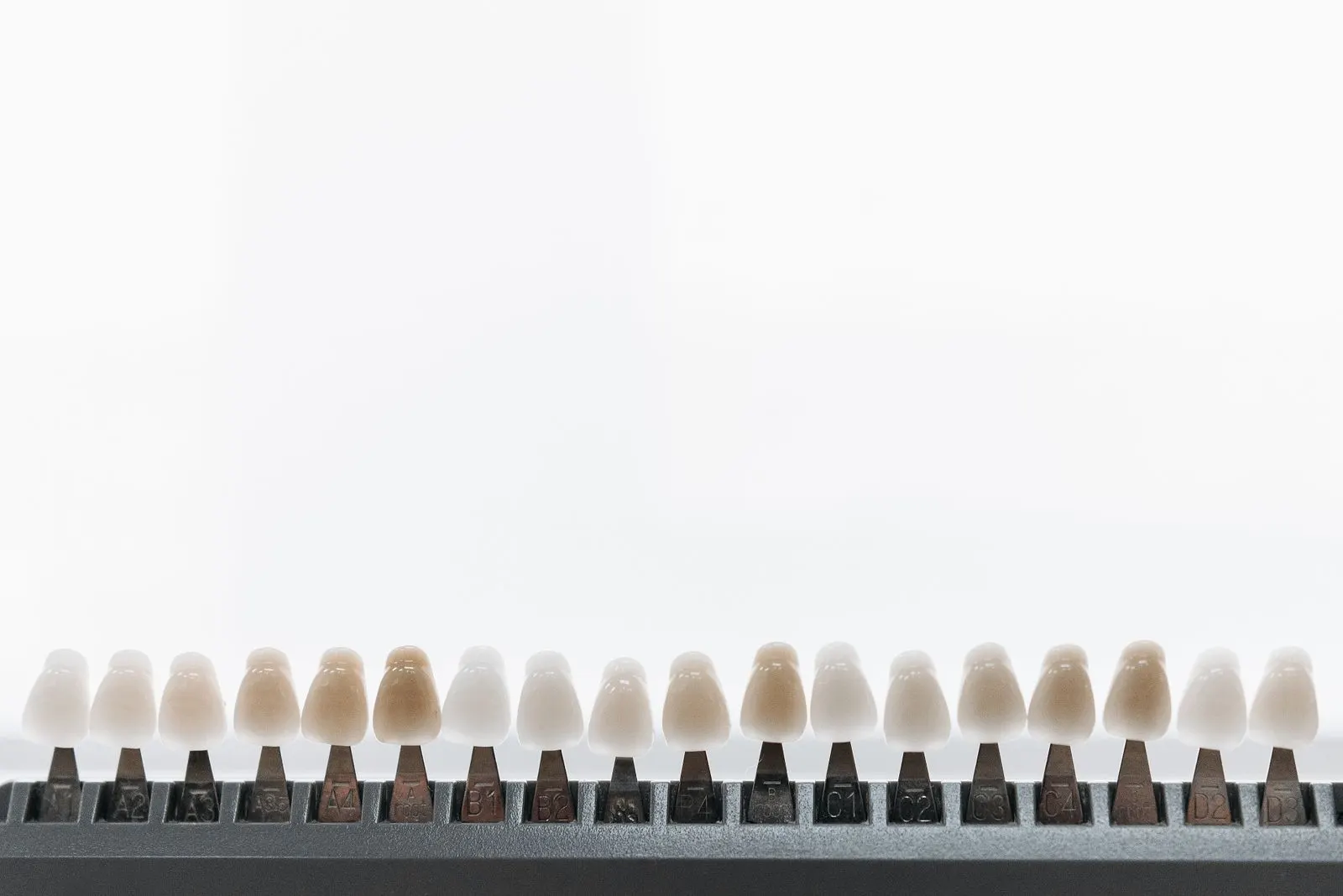
For some people, straightening plus whitening is the whole plan. Whitening also matters before veneers for a practical reason: the ceramic shade is matched to the neighbouring teeth, so the lower teeth and the back teeth should be whitened first. Ceramic does not respond to whitening later. More on teeth whitening.
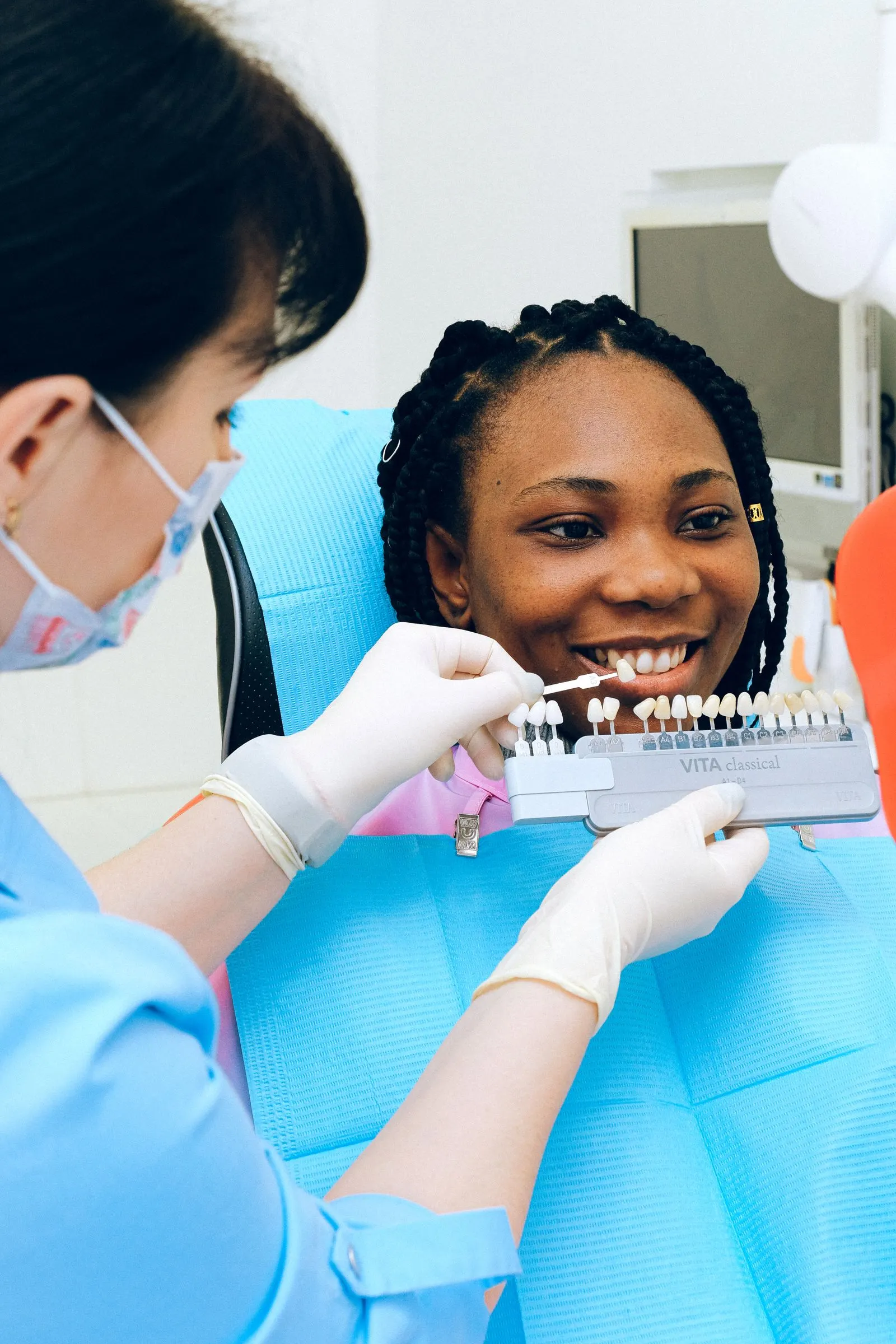
Step 3: porcelain veneers on the front teeth
The final uniformity in Ronaldo's smile, with a consistent edge line, closed small gaps and even shade, is what porcelain veneers are typically used for. A veneer is a thin ceramic shell, usually lithium disilicate (E.max) of 0.3-0.7 mm, bonded to the front of the tooth.
A typical veneer process:
- Digital smile design from photos and a 3D scan, planning each tooth relative to the lips and face.
- Mock-up in the mouth to see and approve the design before any preparation.
- Minimal preparation of the front surface under local anaesthetic; on well-aligned teeth this can be very little.
- Temporaries for a few days while the lab makes the ceramic.
- Try-in and bonding with resin cement, followed by a bite check.
Well-made veneers keep a slight translucency at the edges, which is one reason a good result looks natural rather than opaque. See our porcelain veneers guide for materials and details.
What makes a veneer smile look natural
Ronaldo's smile is often described as perfect, yet it does not look artificial. That comes down to details a good dentist and technician plan deliberately:
- Proportion. The central incisors are slightly longer and wider than the lateral incisors, and the canines step back. A row of teeth of identical width is one of the clearest signs of an overdone result.
- Shade gradient. Natural teeth are a little darker near the gum and more translucent at the edge. Good ceramic copies this; a single flat shade looks like plastic.
- Surface texture. Fine ridges and a soft lustre reflect light like enamel. Very glossy, perfectly smooth surfaces look fake in daylight and in photos.
- Gum line. An even, healthy gum contour frames the teeth. Sometimes small gum reshaping is part of the plan, but only after checking the bone underneath.
- Thickness. Veneers that follow an aligned tooth do not push the lips forward. Bulk is what makes people look as though they have too many teeth.
Timing between aligners and veneers
If you straighten first, allow a short settling period before the veneer trip, usually a few weeks, and keep wearing your retainer. Bring the retainer to Istanbul: after veneers are bonded, a new retainer or night guard is normally made to fit the new tooth shapes, because the old one will no longer fit correctly.
Why the order matters
The same final picture can be reached in two very different ways:
| Align first, then veneers | Veneers only, no alignment | |
|---|---|---|
| Enamel removed | Minimal, often 0.3-0.5 mm | Much more on teeth that stick out |
| Number of veneers | Often 6-10 | Often more, to hide the crowding |
| Risk to the nerve | Low | Higher on heavily reduced teeth |
| Look | Natural thickness | Can look bulky |
| Total time | Months (aligners) plus one trip | One trip |
The fast route is tempting because it takes a week. The slower route is usually the one that still looks good and keeps the teeth healthy 15 years later. If a clinic offers to fix crowding with veneers alone in a few days, it is fair to ask whether aligners first would give a better result.
Who this approach suits, and who it does not
A straighten, whiten and veneer plan suits adults who:
- have healthy teeth and gums
- have mild to moderate crowding or spacing
- want a brighter, more uniform smile but still natural
- can wear aligners or braces consistently for several months
It is not the right plan if you have active gum disease or decay, which must be treated first; if teeth are already heavily filled or broken, in which case crowns may be more suitable; or if the main issue is a skeletal bite problem that needs specialist orthodontics or surgery. If your teeth are already straight and a good shape, whitening alone may be enough.
Lifespan, maintenance and risks
Orthodontic results are permanent only with a retainer. Whitening fades gradually and can be topped up. Porcelain veneers in studies typically show survival rates of about 90 % or more at ten years, and many last 15 years or longer.
For veneers, the main risks are temporary sensitivity, chipping from grinding or trauma and, rarely, nerve irritation after deeper preparation. For anyone playing contact sports, as footballers do, a custom sports mouthguard protects both natural teeth and ceramics. Grinders should wear a night guard.
Timeline for a Ronaldo-style smile, with Istanbul
| Phase | Where | Duration |
|---|---|---|
| Assessment and planning | Istanbul or local dentist | 1 visit |
| Aligners or braces | Close to home, with remote check-ins where suitable | 6-18 months |
| Whitening | Before or during the veneer trip | 1 session or 1-2 weeks at home |
| Porcelain veneers | Istanbul | 1 trip of about 5-7 days |
| Retainer and check-ups | Home | Ongoing |
At Doctor Turka, the process starts when you leave your contact details. Your coordinator, who speaks English and German, calls or writes to discuss what you want. In the clinic a dentist examines you and takes a 3D CBCT scan, then you receive a written, itemised plan with the quote. You see a mock-up before any preparation. Hotel nights and airport-hotel-clinic transfers are included in the packages. Full details on how it works.
What to ask a clinic before starting
- Would my teeth benefit from straightening first, and how long would that take?
- How many veneers do I need to cover my smile line?
- How much enamel will be removed on each tooth?
- Will I see a mock-up and wear temporaries?
- Which ceramic will be used, and what shade range suits my face?
- What do the written guarantee terms cover, and who do I contact from home?
Typical fees at home compared with Turkey
Commonly quoted private fees are roughly:
- UK: clear aligners £2,500-5,500; porcelain veneers £600-1,200 each; professional whitening £300-700.
- Ireland: clear aligners €3,000-6,000; porcelain veneers €700-1,200 each.
- US: clear aligners $3,000-8,000; porcelain veneers $1,000-2,500 each.
In Istanbul veneers and whitening are priced per tooth or per treatment with the same ceramics, while aligners are often best done close to home because of the regular check-ups. Our current starting prices are on the costs page.
The takeaway
Cristiano Ronaldo's smile is the best argument for patience in cosmetic dentistry. Whatever exactly he had done, his result shows the logic: align first, whiten next, and use thin ceramic only where it adds something. That sequence protects the teeth and produces a smile that looks natural at close range.
Doctor Turka has not treated the person named in this article. Details about their dental work come from public interviews and media reports; we comment only on what the treatments involve in general.
Want a camera-ready smile like this? See how we plan a Hollywood smile.
Want a personal opinion?
Leave your contact details. Our patient coordinator will contact you to discuss your needs and explain the next steps, free and without obligation.
Discuss my options